The biggest AI skill of 2026 isn't prompt engineering.
It's AI literacy.
Because the people getting ahead aren't the ones with better prompts.
They're the ones who understand what's happening under the hood.
Harvard just made 5 AI courses free:
→ Introduction to Generative AI
https://t.co/ZcvZ5TDd7g
→ Prompt Engineering
https://t.co/JwU1mLcpU5
→ System Prompts & RAG
https://t.co/XDk1ZBc0tz
→ Basics of Generative AI
https://t.co/26Vxituhnu
→ CS50's AI with Python
https://t.co/tSWXW8Y0IO
Most people won't take these.
That's exactly why they're valuable.
Bookmark it
Which of these 5 courses would you start with first? 👇
Free Harvard AI courses? That's a huge opportunity.
Prompt Engineering or Python—what's the better starting point?
The biggest AI skill of 2026 isn't prompt engineering.
It's AI literacy.
Because the people getting ahead aren't the ones with better prompts.
They're the ones who understand what's happening under the hood.
Harvard just made 5 AI courses free:
→ Introduction to Generative AI
https://t.co/ZcvZ5TDd7g
→ Prompt Engineering
https://t.co/JwU1mLcpU5
→ System Prompts & RAG
https://t.co/XDk1ZBc0tz
→ Basics of Generative AI
https://t.co/26Vxituhnu
→ CS50's AI with Python
https://t.co/tSWXW8Y0IO
Most people won't take these.
That's exactly why they're valuable.
Bookmark it
The biggest AI skill of 2026 isn't prompt engineering.
It's AI literacy.
Because the people getting ahead aren't the ones with better prompts.
They're the ones who understand what's happening under the hood.
Harvard just made 5 AI courses free:
→ Introduction to Generative AI
https://t.co/ZcvZ5TDd7g
→ Prompt Engineering
https://t.co/JwU1mLcpU5
→ System Prompts & RAG
https://t.co/XDk1ZBc0tz
→ Basics of Generative AI
https://t.co/26Vxituhnu
→ CS50's AI with Python
https://t.co/tSWXW8Y0IO
Most people won't take these.
That's exactly why they're valuable.
Bookmark it
🎥 Struggling to keep your AI influencer looking the same in every video?
It's not just about which AI tool you use—it's about following the right workflow.
Here’s the 5-step process top creators use to get consistent, high-quality results:
✨ Choose the right AI model
🖼️ Create a strong first-frame image
📌 Use the same reference image for every generation
✍️ Write detailed, descriptive prompts
🎬 Generate your video
Why does this work?
✅ Maintains a consistent character across every scene
✅ Produces realistic facial expressions and natural movement
✅ Creates smooth, seamless transitions between shots
✅ Delivers polished, professional-quality videos
The best AI creators don't rely on luck—they rely on a repeatable system.
If you want to create stunning AI influencer videos without the guesswork, now's the perfect time to start.
🚀 Start for free: https://t.co/KCQ3b1ciEk
Most people think AI agents are just smarter chatbots.
They're not.
The companies winning with AI are building systems, not prompts. 👇
🧠 Orchestration Layer
Breaks goals into tasks, routes work, manages state, and enforces guardrails.
👥 Specialized Agents
Research agents. Reasoning agents. Action agents. Data agents. Communication agents.
Each agent does one job exceptionally well.
🔧 Tools & Integrations
APIs, databases, code execution, documents, web search, external services.
This is where agents stop talking and start doing.
📚 Memory Layer
Short-term context + long-term knowledge + event history.
Without memory, every conversation starts from zero.
📊 Observability & Monitoring
Track costs, latency, failures, and agent behavior in production.
What gets measured gets improved.
🛡️ Governance & Reliability
Authentication, security, fallback agents, audit trails, human oversight.
Required for enterprise-scale AI.
💡 The biggest misconception in AI today:
People focus on the model.
Top AI teams focus on the architecture.
Because the difference between a demo and a production AI system isn't the LLM...
It's everything around it.
📌 Save this architecture
🔁 Repost for AI builders
➕ Follow @elora_khatun
for practical AI engineering breakdowns 🚀
YOU'RE BORED BECAUSE YOUR LIFE HAS NO SIDE QUESTS.
Here are 33 side quests to complete before July:
1. Visit a part of your own city you've never been to.👇
If you have an iPhone 13, 14, 15, or 16, do NOT update to iOS 26. Apple's new "Liquid Glass" design is destroying older phones.
If you already updated, here are 6 settings that fix it:👇
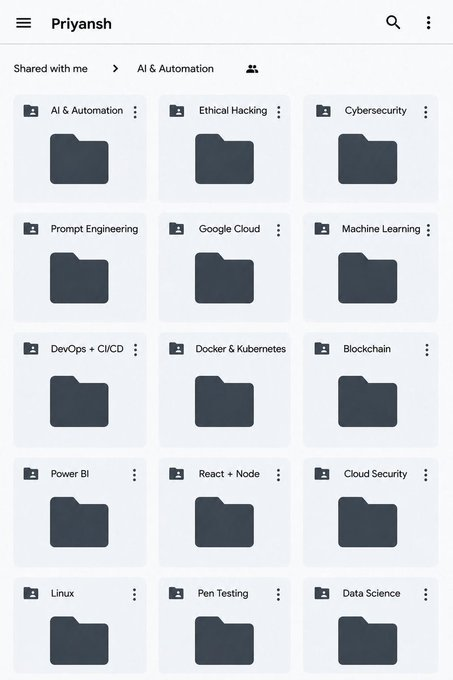
All Paid Courses (Free for First 4500 People)
Includes:
Artificial Intelligence
Machine Learning
Prompt Engineering
Claude,Chatgpt,Grok
Data Analytics
AWS Certified
Data Science
Python
Ethical Hacking
To Get:
Like + Repost
Reply "Drive"
Follow me for the download link via DM.
11M+ people use Claude every day
I created a guide with 100 real Claude skills that separate beginners from pros
💡 AI • Business • Automation • Coding • Writing • Research & more.
🎁 FREE for the next 24 hours
❤️ Like + 💬 Comment "SKILLS + ➕ Follow me to get it via DM
Most people want to become an AI Engineer.
Very few know what to learn... and in what order.
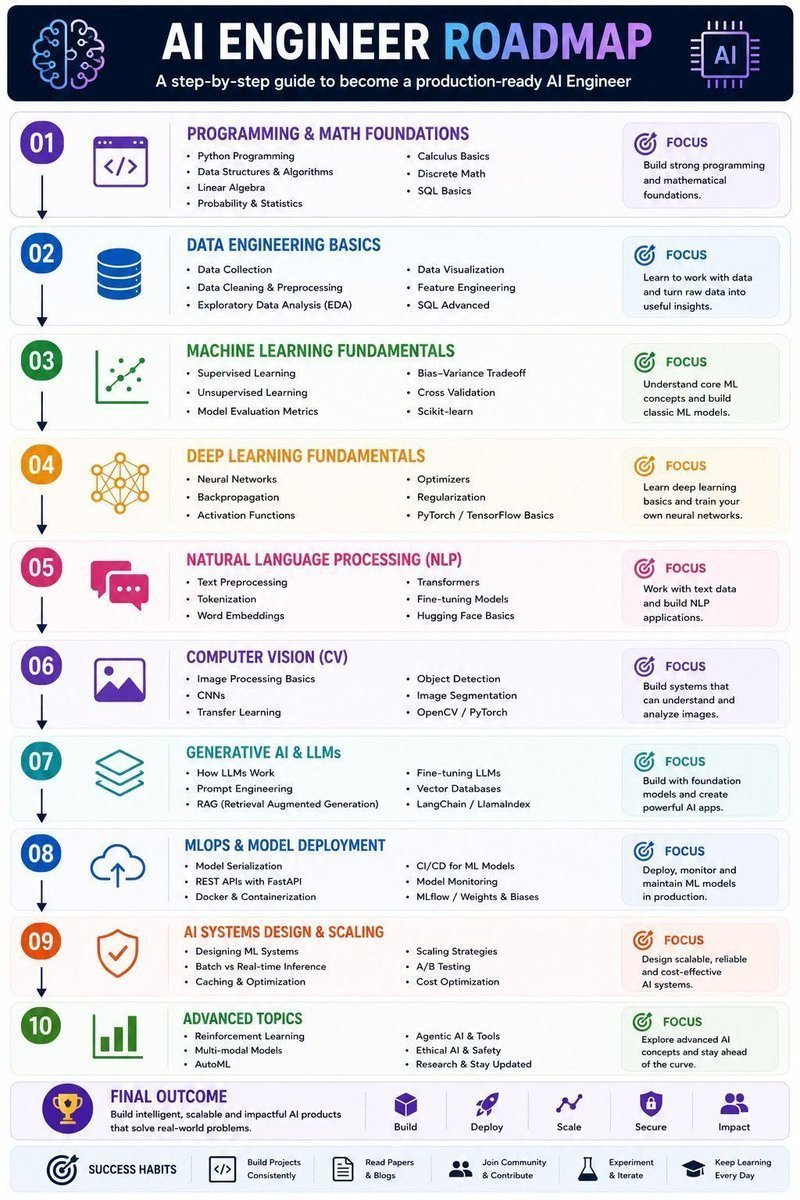
Here’s a roadmap that takes you from beginner → production-ready AI Engineer 👇
1️⃣ Master the foundations
• Python programming
• Data structures & algorithms
• Linear algebra
• Probability & statistics
• SQL basics
Without this, everything else becomes harder.
2️⃣ Learn data engineering
• Data collection
• Cleaning & preprocessing
• EDA
• Feature engineering
• Data visualization
AI is only as good as the data behind it.
3️⃣ Understand machine learning
• Supervised learning
• Unsupervised learning
• Model evaluation
• Cross-validation
• Scikit-learn
Learn how models actually make decisions.
4️⃣ Dive into deep learning
• Neural networks
• Backpropagation
• Activation functions
• PyTorch / TensorFlow
This is where modern AI starts.
5️⃣ Learn NLP
• Tokenization
• Embeddings
• Transformers
• Fine-tuning
The foundation of ChatGPT, Claude, and Gemini.
6️⃣ Explore computer vision
• CNNs
• Object detection
• Image segmentation
• OpenCV
Teach machines to understand images.
7️⃣ Master GenAI & LLMs
• Prompt engineering
• RAG
• Fine-tuning
• Vector databases
• LangChain & LlamaIndex
This is the highest-leverage skill stack today.
8️⃣ Learn MLOps
• FastAPI
• Docker
• CI/CD
• Monitoring
• MLflow
Because models are useless if they can't be deployed.
9️⃣ Study AI system design
• Scaling strategies
• Real-time inference
• Caching
• Cost optimization
The difference between demos and production systems.
🔟 Stay ahead
• Agentic AI
• Multimodal models
• AutoML
• AI safety
• Latest research
The field changes every week.
💡 Reality check:
Most people spend months consuming AI content.
The top 1% spend that time building projects.
Build. Deploy. Iterate. Repeat.
📌 Save this roadmap
🔁 Repost for aspiring AI engineers
➕ Follow @Sia_TechAi practical AI breakdowns & learning resources 🚀
20 useful AI GitHub repos every software engineer should
bookmark 🔖 (you'll thank me later):
1 OpenClaw
↳ Runs a personal AI agent locally that can browse, plan & take actions on your device.
2 TensorFlow
↳ Provides a production-ready framework to build, train & deploy ML models at scale.
3 AutoGPT
↳ Automates multi-step tasks by chaining LLM reasoning into autonomous agents.
4 n8n
↳ Automates workflows with a visual builder that integrates APIs, data & AI tools.
5 Ollama
↳ Runs open LLMs locally with simple commands & optimized performance.
6 Stable Diffusion WebUI
↳ Generates images locally with a powerful UI for Stable Diffusion models.
7 Hugging Face Transformers
↳ Offers thousands of pretrained models for NLP, vision & multimodal AI tasks.
8 Dify
↳ Creates production-ready AI apps with built-in orchestration, prompts & APIs.
9 Langflow
↳ Builds & tests LLM pipelines visually using a drag & drop interface.
10 LangChain
↳ Orchestrates LLM workflows, tools, memory & agents in applications.
11 Open WebUI
↳ Delivers a self-hosted ChatGPT-style interface with local & API model support.
12 DeepSeek-V3
↳ Provides a high-performance open-weight LLM optimized for reasoning & coding.
13 PyTorch
↳ Builds & trains deep learning models with flexible, research-friendly APIs.
14 Gemini CLI
↳ Interacts with Google’s Gemini models directly from command line.
15 llama cpp
↳ Runs LLaMA-style models efficiently on CPUs & local hardware.
16 Whisper
↳ Transcribes & translates speech with high accuracy using deep learning.
17 ComfyUI
↳ Designs advanced image generation workflows using node-based pipelines.
18 CrewAI
↳ Coordinates multiple AI agents to collaborate on complex tasks.
19 RAGFlow
↳ Implements retrieval-augmented generation pipelines for enterprise search & QA.
20 Claude Code
↳ Assists coding with deep repository understanding & agent-style workflows.
What else should make this list?
1 Save & RT to help others learn AI engineering.
2 Follow @promptparag + turn on notifications.
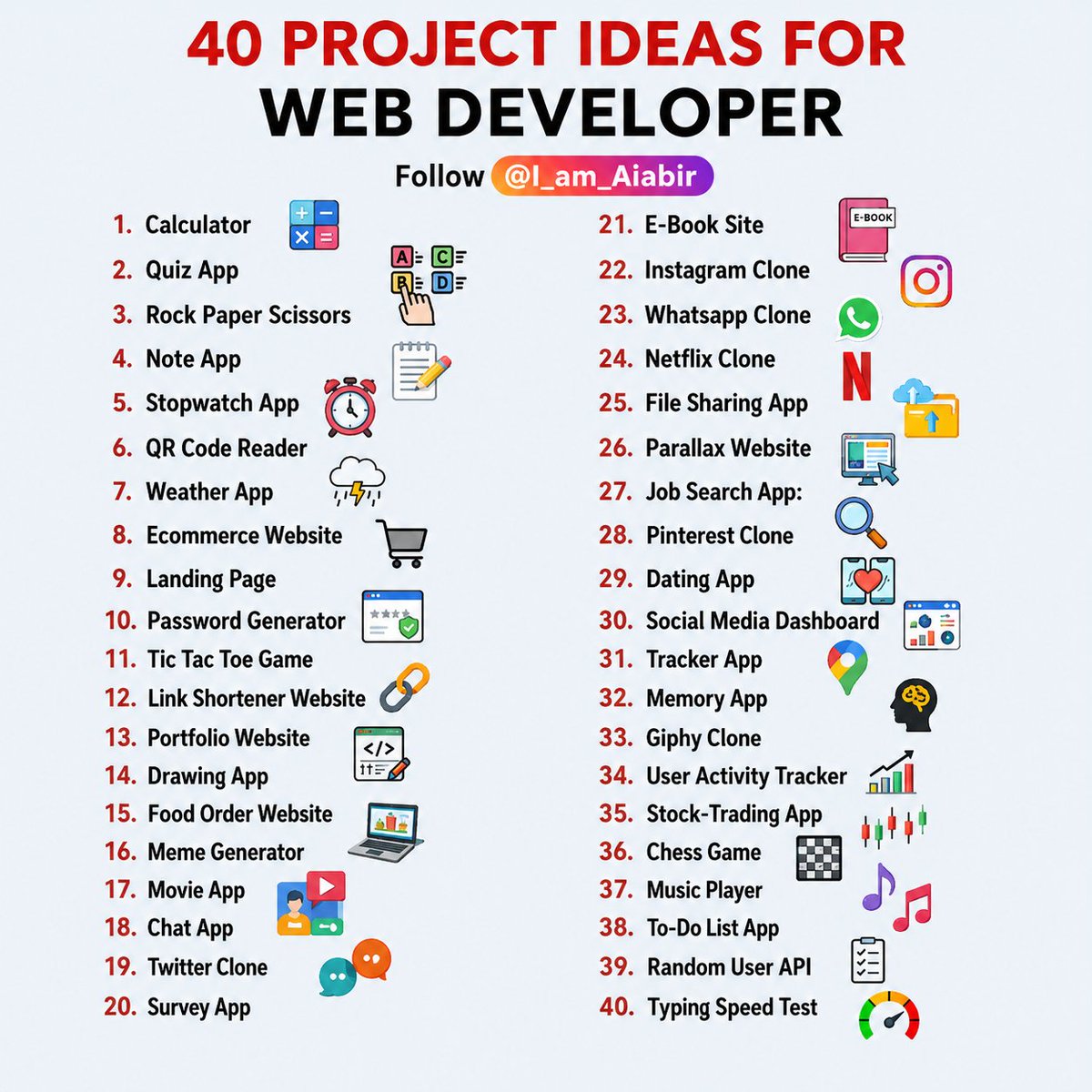
Web Development Projects for Beginners to boost their resume!
1. Portfolio Website
https://t.co/pIt1gR3S1E…
2. Landing Page
https://t.co/j5dxRgYYKa…
3. Cinema Website
https://t.co/vMuUxmEIlV…
4. Quiz Web App
https://t.co/9zw1en6nrV…
Follow @I_am_Aiabir
🚨DEAD INTERNET THEORY JUST WENT FROM MEME TO REALITY.
This proof-of-concept World of Warcraft private server, built by an independent developer on a custom emulator, is now running entirely on 1,800 DeepSeek-powered AI bots that chat naturally, level characters, run dungeons, form groups, and battle each other in PvP—just like real players would.
The developer behind it is Reddit user u/Mr-Nilsson_85, who shared the project on r/wowservers. It uses a Wrath of the Lich King-era private server emulator (common in the WoW private server community) combined with the long-existing “playerbots” module. These playerbots are not simple scripted NPCs — they actively navigate the world, complete quests, level up, work on professions, run dungeons and raids in groups, and even engage in PvP. They pathfind, equip gear, and behave like autonomous players in a living MMORPG world.
The real breakthrough is the chat system. Instead of the usual static or rule-based dialogue, the creator built a custom Python bridge that connects the bots to the DeepSeek API (an efficient, cost-effective large language model). This lets the bots generate natural, context-aware conversations — they greet each other, discuss quests, banter, form groups, and react dynamically. The bridge often routes through Ollama locally for management, but hands heavy conversation generation to DeepSeek via API for better intelligence and lower local hardware demands.
All 1,800 bots can run on a single upgraded personal computer. To keep costs and performance reasonable, the advanced AI chat only fully activates when a real human player logs in; otherwise the world stays relatively quiet with bots going about their routines. The result is a server that feels persistently populated and alive even when almost no humans are present.
The video attached to the original post shows exactly this in action: a player character walking through a bustling city (classic WoW architecture, cobblestone streets, lanterns) while the general chat channel scrolls with dozens of bot messages — quest talks, random player-like banter, greetings, and coordination. The “Who” list reveals page after page of active “players,” all controlled by AI. It looks and sounds like a normally populated realm, except there are no real humans driving it.
It is explicitly a proof-of-concept and test server created by one person using existing open-source tools + modern AI, not an official Blizzard product or a takeover of live servers. Community notes on the viral post correctly highlight this. Reactions range from amazement at the technical achievement (“this turns WoW into a living single-player MMO”) to unease about where AI-populated spaces are heading (“soon we won’t know who’s real”). Some see it as a glimpse of future games with persistent AI populations or fully dynamic worlds; others view it as a dystopian preview of blurred human-AI boundaries.
Coding does not have to feel like suffering.
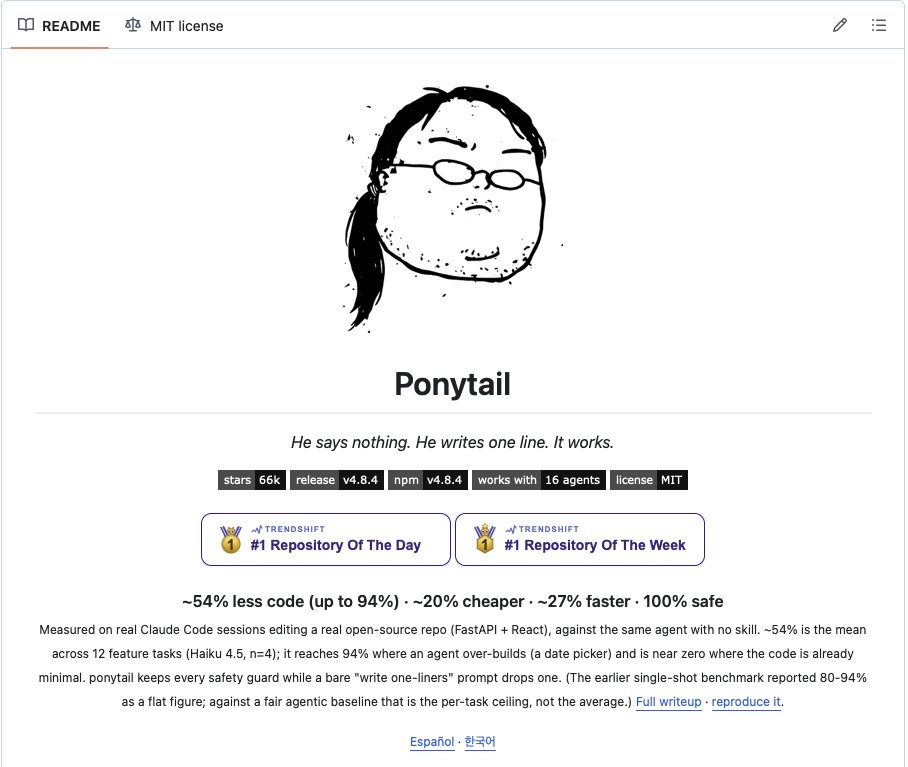
5 GitHub repos that make the experience of building software genuinely more enjoyable.
Not productivity tools. Not optimization frameworks. Tools that make you actually want to keep your terminal open.
🧵
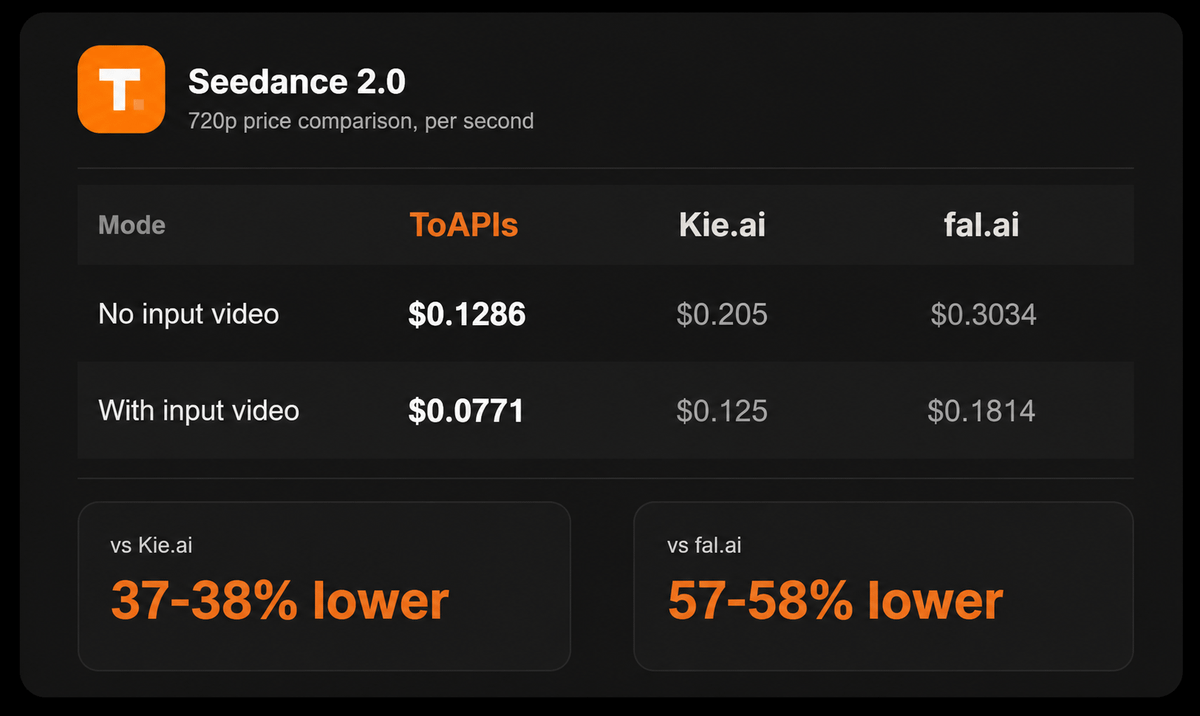
I compared the cheapest channels for using Seedance 2.0 in bulk.
The answer is here:
Seedance 2.0 720p on @toapisai costs only $0.1286/s.
37% cheaper than https://t.co/T9hFtqm16m
58% cheaper than https://t.co/qzIqzRMJYR
Same model access. Same output. Lower cost.
One API for Seedance-2, Veo, Kling, GPT, Claude, Gemini, and more.
Try ToAPIs now: https://t.co/VCgJqn1pEh
Google owns one of the most powerful learning tools in the world.
It’s free. It’s been available for months.
Yet 95% of people still use it the wrong way.
Here are 8 NotebookLM use cases that can save you hours of time.
🔖 Bookmark this — you’ll thank yourself later.