ℹ️ BlockBlock v2.5.0 adds a new feature that can alert you whenever a downloaded script is about to execute.
Designed to complement "Notarization" Mode, it provides an additional layer of protection against potentially unsafe content before it runs. 🛡️
https://t.co/JFIPg35zZq
Introducing Cohere's first open-source coding model: North Mini Code
Small & efficient, designed for agentic performance and built for community input.
🔥 An AI worm used a local open-weight LLM to find targets, choose attack paths, and copy itself.
> No human help.
> No OpenAI or #Anthropic API.
> No API key to shut off.
In 7 days, it replicated to 62% of a 33-host test network.
It also used fresh CVE advisories to find new attack paths.
Read full story: https://t.co/NVZZjUGZXF
We'd love to be proven wrong here. As a red team, few things are more exciting than a reliable nginx RCE.
For some context: we discovered at least two nginx 0-days and successfully weaponized one into a full RCE, bypassing ASLR with no external dependencies.
We were thrilled, until we realized both bugs appear to require highly unusual nginx configs that we've yet to encounter in the wild.
That's why we built ngxray: https://t.co/OSD6xYI4PI. After analyzing 35,000+ nginx configurations from GitHub, we found exactly one instance vulnerable to nginx-rift, in an abandoned project. We found none vulnerable to nginx-poolslip.
Users should absolutely patch. But from a red team perspective, these exploits have been worthless. We've never encountered a target where they'd have been useful.
If anyone has evidence that these configs are common in real-world deployments, we'd like to see it.
Everybody wants their five minutes of Twitter fame. That's fine. But extraordinary claims still require extraordinary evidence.
BYOVD and LSASS Dumping in the Era of Modern EDR
The author examines the BYOVD (Bring Your Own Vulnerable Driver) technique as a method to bypass modern Windows protections and EDR solutions. The article demonstrates how using a vulnerable but signed driver (e.g., "PDFWKRNL.sys") enables access to kernel operations through insecure IOCTL interfaces, effectively creating primitives for kernel-level memory manipulation.
The exploitation is structured as a chain of techniques: loading a vulnerable driver, obtaining a kernel-level primitive, disabling LSASS protection, and subsequently dumping its memory. To evade EDR, additional stealth methods are employed, including process cloning via "NtCreateProcessEx" (instead of direct access to LSASS), hooking "MiniDumpWriteDump" via a callback to perform in-memory dumping only, and applying XOR obfuscation before writing data to disk.
📎 Article: https://t.co/H4VPGMGk7d
#dbugs_attacks
The creator of Linux just publicly called out the AI hype. Word for word.
Linus Torvalds took the stage at Open Source Summit 2026 and said this:
"When I see people saying 99% of our code is written by AI, I literally get angry. Because those same people — I can pretty much guarantee — 100% of their code is written by compilers. But they never say that."
He is not anti AI. The Linux kernel saw a 20% jump in submissions this release because of AI tools. He uses it. He gets it.
His point is something most people are too afraid to say.
AI is a productivity tool exactly like compilers were. Compilers boosted programming by 1000x. AI adds another 10x on top. Enormous. But nobody says "the compiler wrote my code." So why are we saying AI wrote it?
He also flagged something nobody is talking about.
AI is flooding small open source projects with drive-by bug reports. Someone runs a prompt, files a report and disappears when asked for a patch. Maintainers with one or two people are drowning trying to keep up.
"Sometimes AI reports a bug and when you ask for more information the person has done that drive-by and does not even answer your question. That is the real burnout issue."
And his final warning was the sharpest of all.
"People who do not understand the complexity of systems will prompt systems and write processes that will fail."
The AI hype crowd is very loud right now.
Linus has been building real systems for 35 years. When he talks, engineers listen.
Full interview here:
https://t.co/LmXJtvKc4O
The world’s largest residential proxy network runs on consent, TLS and vibes. The TV is always watching and apparently it is also available for contract work in surveillance or data acquisition? Bright Data sells access to a residential proxy network, the kind customers use to route requests through real home IP addresses instead of datacenter IPs that Cloudflare, DataDome and HUMAN are trained to block. The supply comes from an SDK embedded in consumer apps. So: CTV games, messengers, mobile apps and screensavers. With consent somewhere upstream, the device becomes an exit node. The TV is perfect for this job. It is plugged in, on WiFi, often unattended and barely supervised. It also asks for consent through a privacy policy and a remote-control UI, which is one way to make “informed choice” look like an endurance sport. One config flag tells the SDK to ignore whether the screen is on. Another tells it to ignore whether the user is on a call. In this economy, watching TV counts as downtime. https://t.co/WvFVvEFrzY
LPE in the Linux kernel's CIFS client implementation
CVE: CVE-2026-46243
PT ID: PT-2026-45478
Vendor: Linux
Product: Linux
CVSS: 7.8
Credits: Asim Viladi Oglu Manizada
Description:
A privilege escalation vulnerability was found in the Linux kernel's CIFS client implementation. This could allow a local attacker to impersonate other users, bypass authentication in SMB mount operations, and potentially gain unauthorized access to network file shares or escalate privileges.
References:
• https://t.co/L5OiuPXz4B
• https://t.co/mIieH2yll0
PoC/Exploit:
• https://t.co/a8NDymy5TB
• https://t.co/baod4Pqm2z
#dbugs_vuln
Pragma is one of Starknet's main oracles, pricing collateral and liquidations for lending protocols holding tens of millions on-chain.
@u_0x8888 explains how a missing access-control check could have let anyone disable its core price feeds for a few cents.
Building autonomous agents for scientific discovery? 🧬🤖
@GoogleDeepMind Science Skills is now available on GitHub. We've open-sourced this specialized toolkit to accelerate your agentic workflows with scientific grounding and higher token efficiency.
Download now ↓
https://t.co/cwp1HOeKvo
The bug bounty program has received a high volume of submissions since launch.
To give each report the attention it deserves, we're pausing new submissions while we work through the queue. We'll share an update when the program reopens.
Thanks to everyone who's engaged so far.
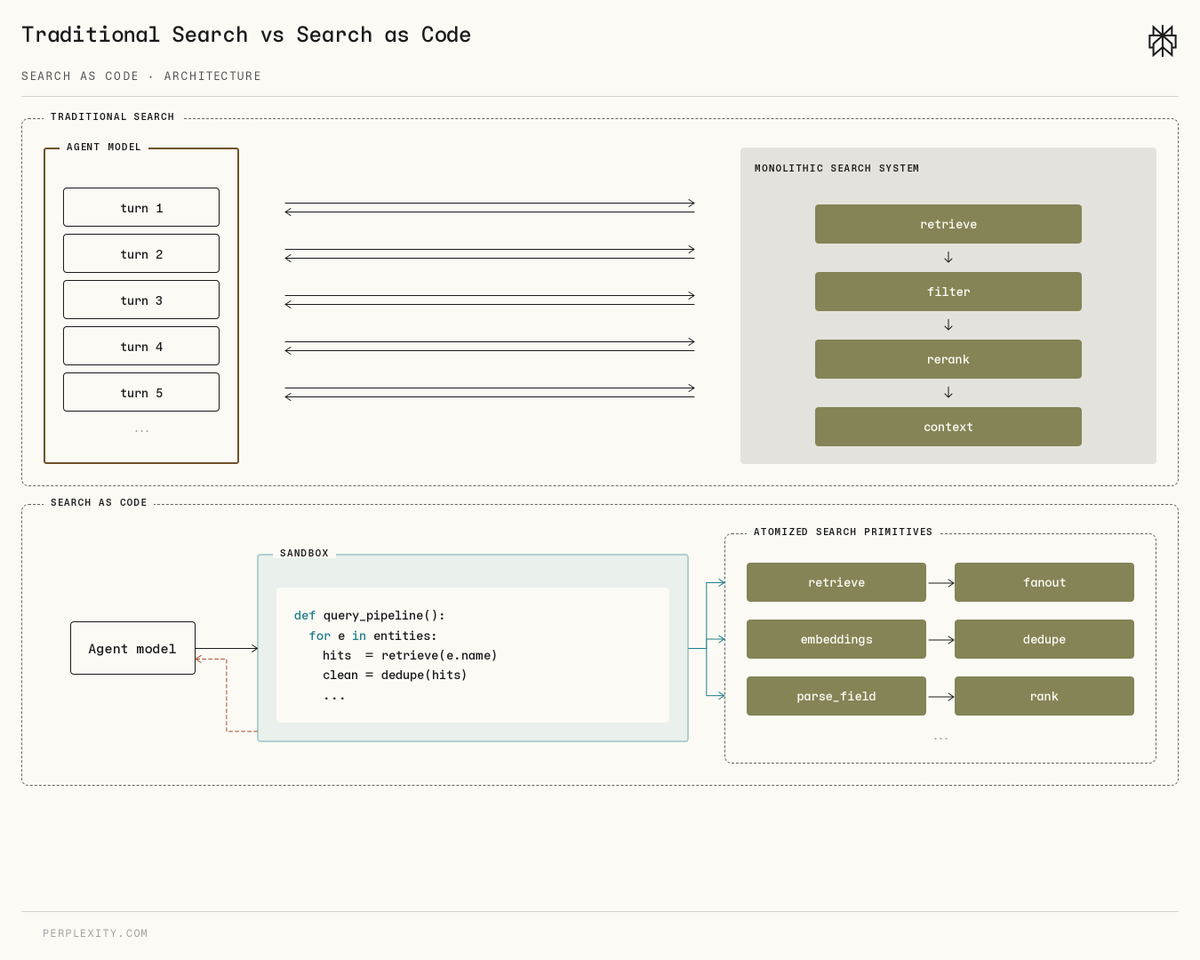
Introducing Search as Code, our new search architecture for AI agents.
It writes Python that calls our search stack directly, instead of looping through function calls one at a time.
Available in the Perplexity Agent API, and now default in Computer.
https://t.co/ut6GGWQTVO
🚨 Windows Netlogon 0-Click RCE Vulnerability Now Actively Exploited In The Wild | Source: https://t.co/Iym37fFkgU
The critical Windows Netlogon remote code execution (RCE) vulnerability tracked as CVE-2026-41089 is now under active exploitation in the wild, significantly raising the risk profile for unpatched Windows Server environments.
The flaw affects Windows servers configured as domain controllers and allows unauthenticated remote attackers to execute arbitrary code with SYSTEM-level privileges by sending specially crafted Netlogon network requests.
To exploit CVE-2026-41089, an attacker only needs network access to a vulnerable domain controller’s Netlogon service.
#cybersecuritynews #windows
Escaping the Browser Sandbox via the Windows Kernel Vulnerability CVE-2026-40369
PT ID: PT-2026-40204
The article examines the vulnerability CVE-2026-40369 -> (https://t.co/efthrw5oI5), which enables a browser sandbox escape due to an error in handling a system call. The author shows how even a limited ability to write to kernel memory can be turned into a full exploitation primitive.
The material подробно demonstrates the exploitation process, including gaining SYSTEM privileges and bypassing security mechanisms. Ultimately, the vulnerability allows an attacker to move from code execution inside the browser to full control over the operating system.
References:
• https://t.co/zrGmYG6677
📎 Article: https://t.co/gJCxigHaom
#dbugs_attacks
🐧 Linux Kernel Defence Map — Visual Guide to Linux Security Hardening 🛡️
Linux kernel security is complex. This project makes it easier to understand.
• Maps vulnerabilities, exploits & kernel defenses
• Covers mitigation technologies and hardening features
• Links security concepts with real CWE categories
• Helps navigate Linux kernel security documentation
• Built with GraphViz for easy exploration and updates
• Includes Kernel Hardening Checker to audit your kernel config
A valuable resource for Linux security engineers, kernel researchers, red teamers, and defenders looking to understand how modern kernel protections work.
🔗 https://t.co/sbby5o2HRw
#Linux #KernelSecurity #CyberSecurity #OpenSource #LinuxHardening #Infosec #SecurityResearch
It’s likely because there was a massive Instagram / Meta exploit over the weekend that was just patched.
Basically the Meta AI support is garbage and has lots of access perms which allowed you to reset passwords to any user without 2FA and did not verify who you are.
Telegram channels on Instagram offering IG black market services made lots of $$$