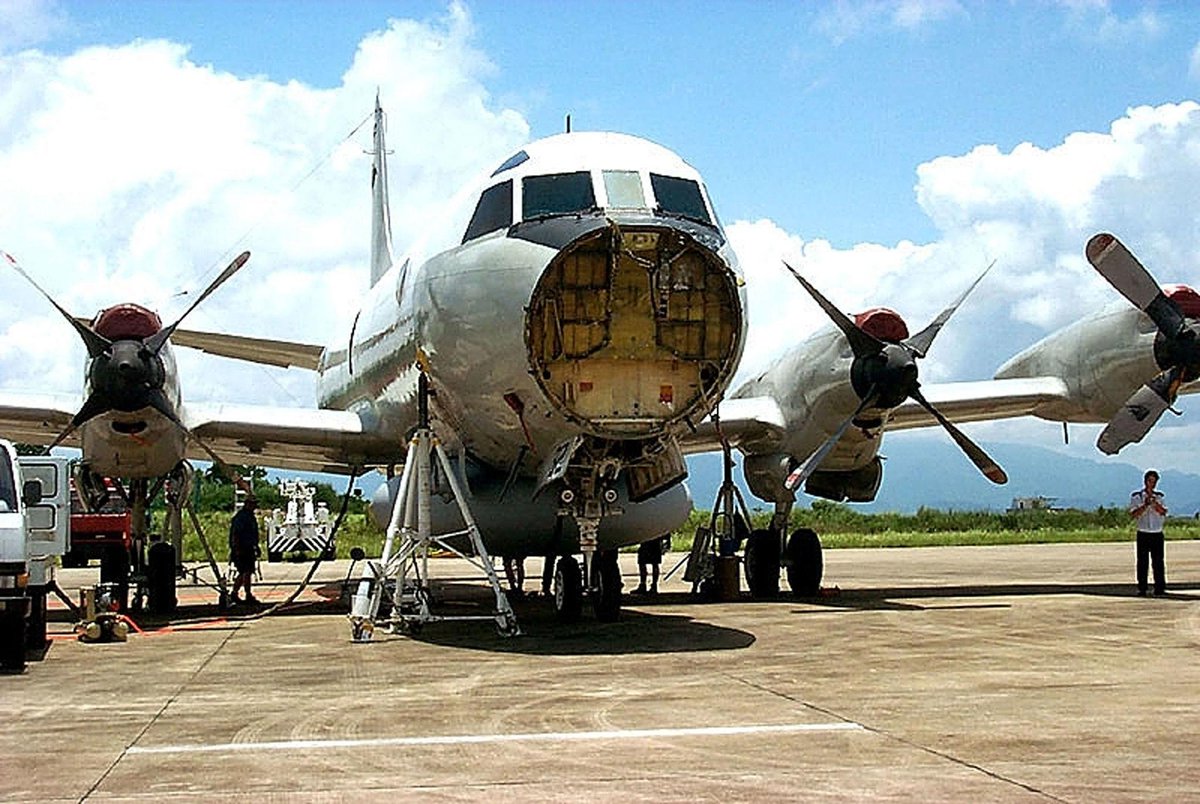
In 2001, a Chinese fighter jet hit a U.S. Navy plane carrying 24 Americans.
The pilot, Lt. Shane Osborn, was 26.
The fighter had already come within 3 to 5 feet of them. Twice.
On the third pass, it came in too fast and struck his propeller.
The nose cone was torn away.
The EP-3E snap-rolled to 130 degrees. Nearly upside down.
Osborn lifted his head and saw water.
"The first thing I thought was this guy just killed us."
Full rudder. Full aileron.
Nothing.
They fell 7,500 feet toward the South China Sea.
Then the controls bit. Slowly, slowly, the wings came level.
He called for bailout. Then he weighed ditching.
"Ditching the plane would kill everyone."
No airspeed indicator.
A hole in the cabin roaring so loud they couldn't hear the radio.
A broken propeller still spinning.
The pilot beside him said the plane shook "like a single wet towel in a washing machine on spin cycle."
"I knew it wasn't going to hold together indefinitely."
The closest runway was a Chinese military base on Hainan Island.
He turned for it and gave the order: destroy everything secret.
At least 15 maydays. No answer they could hear.
He figured his speed off the navigation system.
Final approach.
The front of the plane was so torn up, he didn't know if he still had a nose wheel.
Gear down.
He waited.
"Three down and locked."
That's when he knew they'd live.
But 109,000 pounds. Overweight.
No flaps.
"Way over the maximum no-flap landing speed."
He put it on the runway.
It rolled.
It stopped.
"I just can't believe we're alive!"
All 24.
Then he stepped out and saw his plane from the outside.
Gashes in the wing. A bent elevator. An engine chewed up by shrapnel.
Red paint from the fighter across the belly.
"I realized I was looking at a miracle."
After 11 days in Chinese custody, they came home.
And the 26-year-old said:
"America should be very proud of these 23 airmen."
There were 24 Americans on that plane.
He counted everyone but himself.