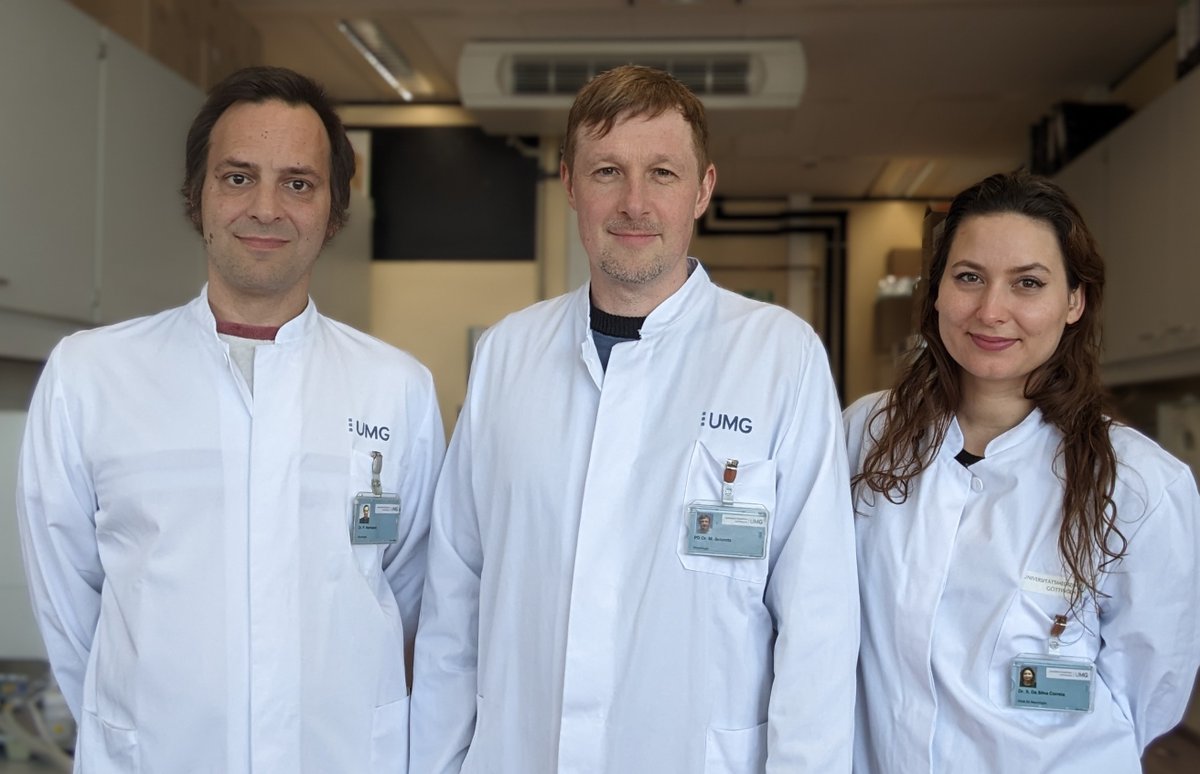
Susana Margrida, Matthias Schmitz, and Peter Hermann in Inga Zerr's Lab have successfully identified abnormal prion proteins in the tear fluid of patients with Creutzfeldt-Jakob disease and other prion disorders.
This project focuses on exploration of biomarkers that predict prion disease onset or track its progression, critical for future therapeutic trails.
Individuals at risk (healthy mutation carriers) are seen in open protective clinical registries at our centers.
This project focuses on exploration of biomarkers that predict prion disease onset or track its progression, critical for future therapeutic trails.
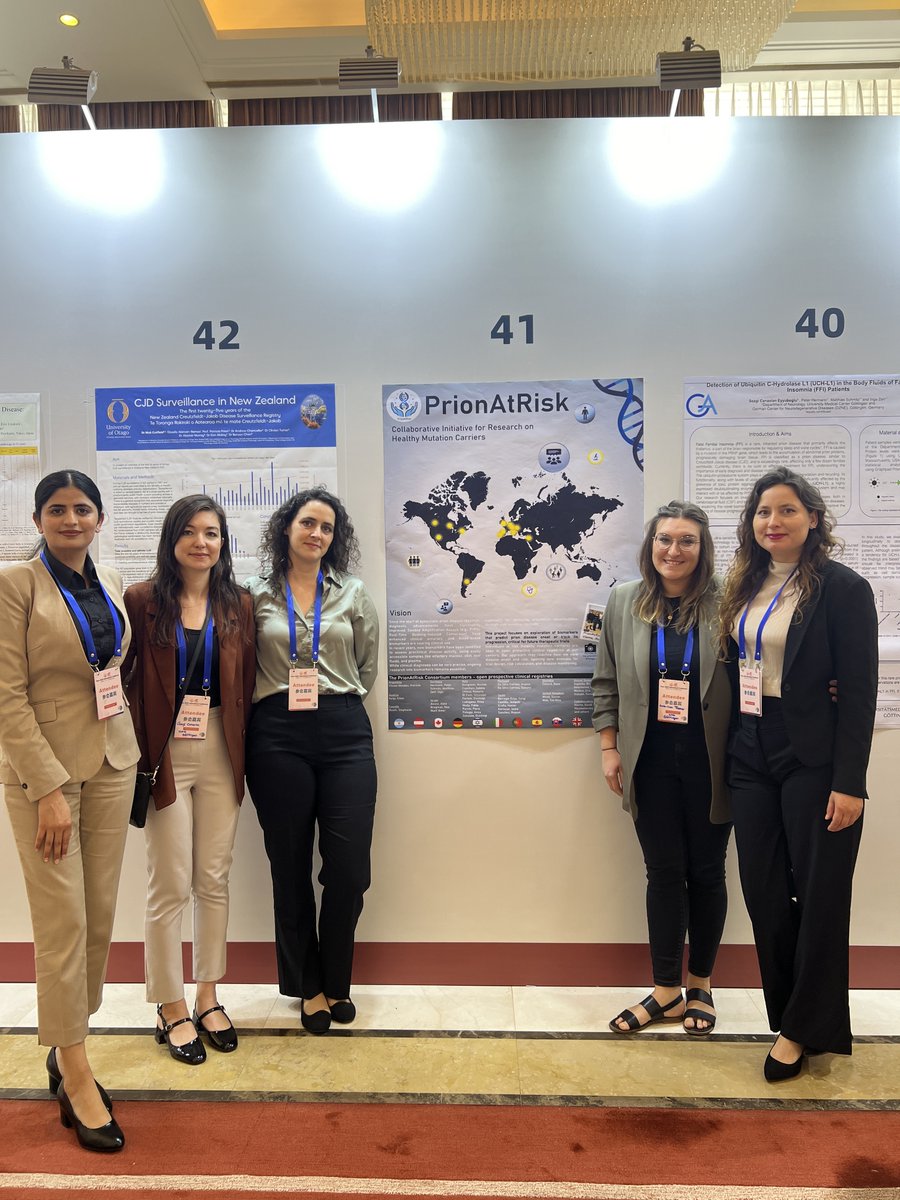
PrionAtRisk poster displayed at PRION2024 Nanchang, China 💡
Since the start of systematic prion disease research, diagnostic advancements have significantly improved.
Seeded Amplification Assays (e.g. PrPSc, PrPSc Real-Time Quaking-Induced Conversion) have enhanced clinical accuracy, and blood-based biomarkers are nearing clinical use.
especially for detecting preclinical abnormalities through non-invasive methods.
This project focuses on exploration of biomarkers that predict prion disease onset or track its progression, critical for future therapeutic trails.
In recent years, new biomarkers have been indentified to assess preclinical disease activity, using easily accessible samples like olfactory mucosa, skin, tear fluids, and plasma.
While clinical diagnoses can be very precise, ongoing research into biomarkers remains essential.
This significant breakthrough provides a less invasive diagnostic method, potentially leading to earlier detection and better management of these complex conditions. They have published their research in The New England Journal of Medicine.
DOI: 10.1056/NEJMc2214647
Susana Margrida, Matthias Schmitz, and Peter Hermann in Inga Zerr's Lab have successfully identified abnormal prion proteins in the tear fluid of patients with Creutzfeldt-Jakob disease and other prion disorders.