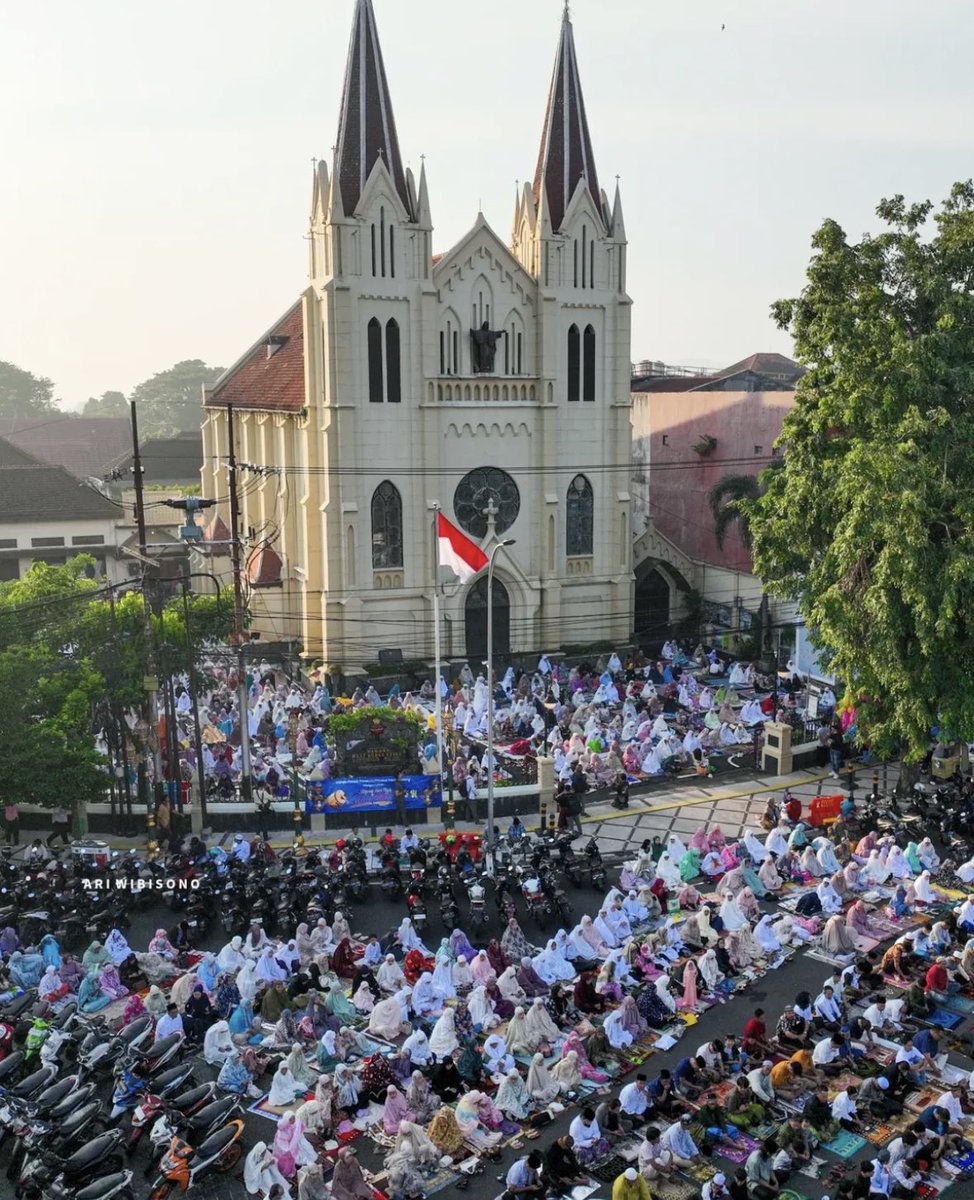
Ketika kotamu membuka banyak kesempatan untuk mencapai penghidupan, eksplorasi diri, komunitas, that's a blessing.
Tapi ketika semua atau mayoritas kesempatan itu terpusat di satu atau beberapa kota besar, we can say it's a curse for a nation.
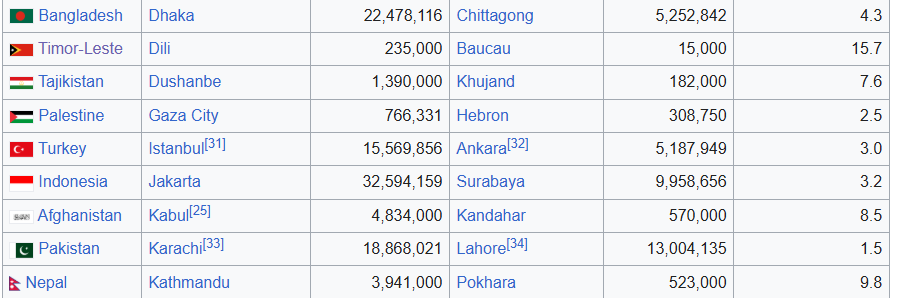
Dalam statistik rank size rule, Jakarta itu cukup primate/dominan. Penduduk Jakarta itu 3,2x nya penduduk Surabaya. Angka ini sebenarnya cukup 'normal' karena Inggris, Malaysia, Korea Selatan itu angkanya hampir sama.
Masalahnya adalah bagaimana infrastruktur antara kota terbesar pertama dan kedua ini cukup jomplang. Infrastruktur mempengaruhi minat investor untuk membuka usaha, sekaligus membantu warga memperoleh kehidupan yang layak.
Akhirnya apa? Talent-talent dan lulusan-lulusan kampus terbaik kaya ITB, ITS, Unair mayoritas 'tersedot' ke Jakarta dan menciptakan brain drain di kota-kota tier 2 tier 3.
Setiap Idul Adha selalu teringat kelakar Gus Dur.
"Gus, mana yang benar. Yang disembelih Nabi Ibrahim itu Ismail atau Ishak?"
Di ajaran Islam, Ismail yang disembelih. Sementara ajaran Kristen, Ishak.
Kata Gus Dur, "Ndak perlu diributkan. Wong tidak ada yang jadi disembelih."
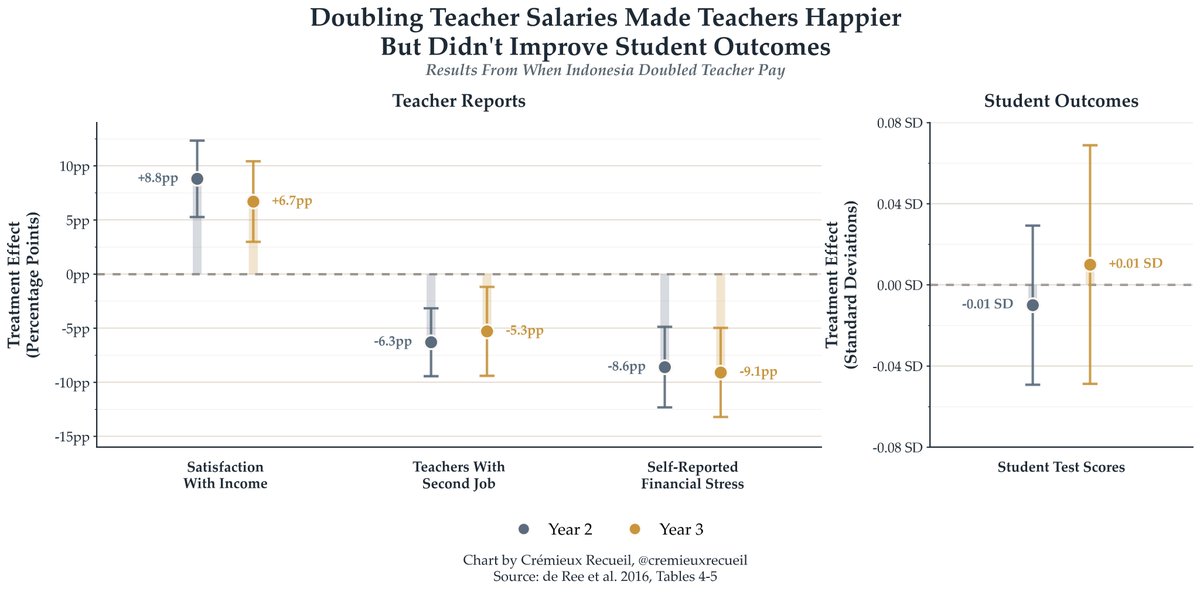
Indonesia once doubled teacher salaries.
The result of doing this was that teachers were happier about their income, less likely to have second jobs, and they reported less financial stress.
But student test scores were completely unaffected.
@AwalilRizky Opini pribadi: pergerakan growth M2 salah satunya dipengaruhi loan to value. 2012, diperketat agar tdk terjadi bubble khususnya properti. Pandemi direlaksasi. 2023, selektif. 2025 sd mar 2026 digenjot, meski msh di bawah rata2 prapandemi.
> be Alexandra Elbakyan
> be born in Kazakhstan in 1988
> start coding at 12
> hack your internet provider at 14
> hack MIT Press at 16 to download neuroscience books you can't afford
> get a CS degree from Satbayev University
> intern in neuroscience at Georgia Tech
> speak at Harvard on brain-computer interfaces
> notice researchers can't read the papers they need
> notice academic publishers charging $30 a paper
> notice peer reviewers worked for free
> notice editors worked for free
> notice universities funded the research with billions of dollars of public money
> build Sci-Hub in 2011
> upload nearly every paywalled research paper ever published
> give it away for free
> get sued by Elsevier
> get hit with a $15 million judgment
> don't give a flying f*ck
> keep Sci-Hub up
> get domain after domain seized
> register a new one
> keep Sci-Hub up
> get investigated by the US Department of Justice
> don't give a flying f*ck
> get accused of working for Russian intelligence
> don't give a flying f*ck
> have the FBI subpoena your iCloud
> get named one of Nature's ten people who mattered in science
> get a parasitoid wasp named after you
> get a deep-sea snail named after you
> get the Electronic Frontier Foundation Award for Access to Scientific Knowledge
> become a legend
Didorong oleh I Made Wiryana dalam webinar persiapan CROSS di UNJAYA Yogyakarta, saya menulis buku Panduan Praktis Pengadaan Barang dan Jasa Bidang IT: open source, TKDN tinggi, aman, patuh regulasi, dan siap audit.
Unduh:
https://t.co/SBFhIh2VxH
Buku Python utk AI & Machine Learning 500+ Halaman bisa di download dari
https://t.co/WRPuYqdGg5
Buku sekitar 70% coding python, teori mulai dari statistik, AI, model machine learning dll dari sisi praktis.
Dear @Kemdikdasmen
Indonesia’s position on this chart is concerning because it sits near the bottom left quadrant, indicating weak performance in both mathematics and creative thinking relative to global peers. While lower income countries often lag in math scores due to resource constraints, Indonesia’s creative thinking score is also significantly below the OECD average of 33, suggesting the issue is not purely economic but structural within the education system.
What stands out is that several countries with comparable or even lower income levels, such as Jordan, Brazil, and Mexico, score meaningfully higher in creative thinking. This suggests that Indonesia’s challenge is not only funding, but the way education emphasizes memorization over problem solving, experimentation, and independent reasoning. Creative thinking is closely linked to future productivity growth, particularly in an economy transitioning toward higher value industries such as technology, advanced manufacturing, and services.
This has direct economic implications. Countries that perform well in both math and creative thinking, such as Singapore, Korea, and Estonia, tend to move up the value chain faster, attract higher quality foreign investment, and sustain stronger wage growth. By contrast, weak cognitive and creative skill formation limits the ability of the workforce to absorb advanced technologies, including AI, automation, and digital infrastructure.
In Indonesia’s case, this reinforces a broader structural pattern where capital intensive investments, such as mining and downstream processing, drive GDP growth without proportionate gains in labor productivity or wages. Without substantial improvements in education quality, particularly in analytical and creative skill development, the country risks remaining competitive primarily in resource extraction and low value added segments rather than becoming a high productivity, innovation driven economy.