This is one of those things you have to see it to believe it🤯
On November 9, 1970, a 45-foot, roughly 8-ton sperm whale washed ashore near Florence on the Oregon coast.
Three days later, the situation was getting worse. The carcass was decomposing, the smell was becoming unbearable, and curious people were coming down to the beach just to see it.
At the time, Oregon’s beaches were under the responsibility of the Oregon State Highway Division, so somehow the job of getting rid of an 8-ton whale landed in the hands of highway officials.
Assistant District Highway Engineer George Thornton was put in charge of figuring out what to do with something that was far too large to simply haul away.
On November 12, reporters and spectators gathered on the beach to watch. KATU reporter Paul Linnman and cameraman Doug Brazil were there recording the whole thing.
It did not go according to plan.
More than 50 years later, the footage is still almost impossible to believe.
What would you have done with an 8-ton whale you couldn’t move?
The golden pheasant is a colorful bird from China’s mountain forests. Males have a golden crest, red body, and long barred tail, while females are mottled brown.
The resplendent quetzal is a colorful bird of Central American cloud forests. Males have shimmering green plumage, a red breast, and very long tail feathers.
The laughing kookaburra is a large terrestrial kingfisher native to eastern Australia (and introduced elsewhere), famous for its loud, laughing call. Males and females look similar, with a stout bill, brown upperparts, and a pale head with a dark eye-stripe.
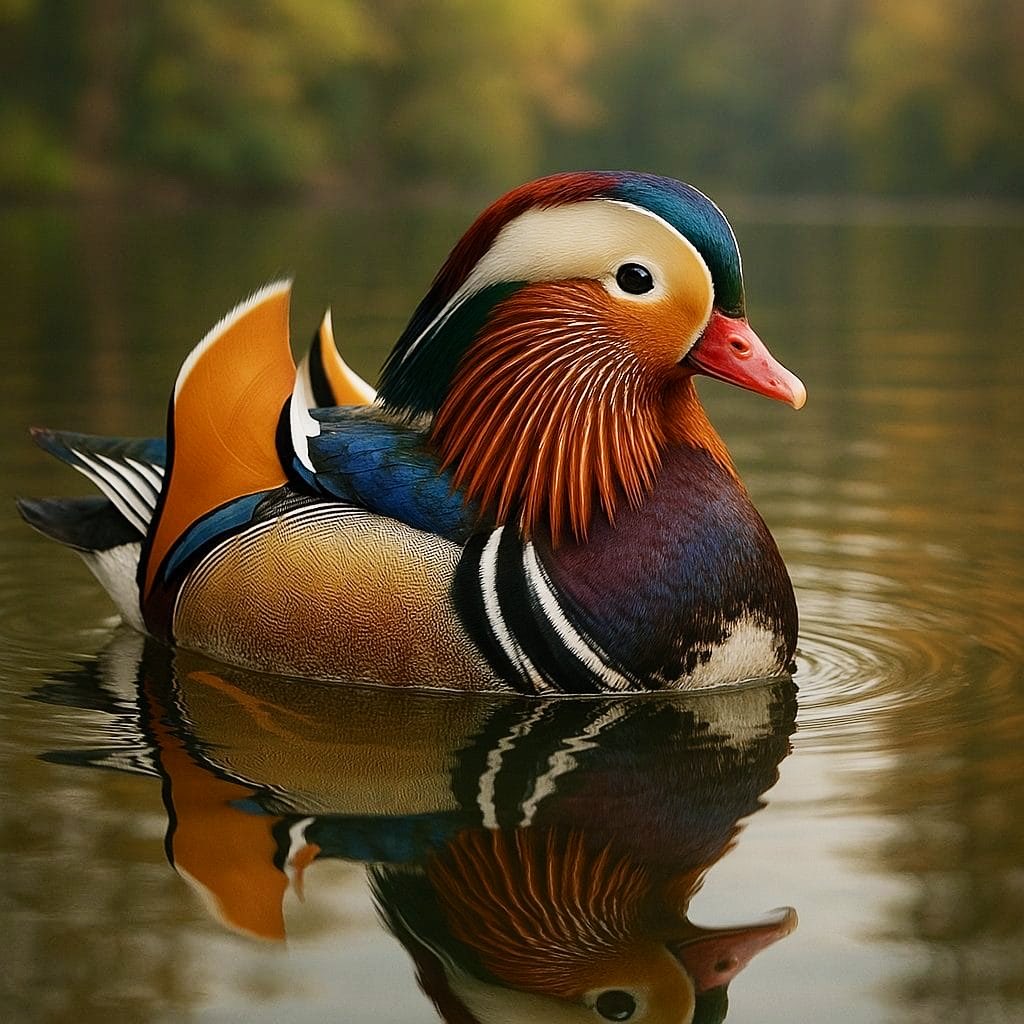
The Mandarin duck is a colorful perching duck native to East Asia. Males sport ornate plumage with orange sails, a purple crest, and bright markings, while females are gray-brown with a white eye-ring.
Wilson’s bird-of-paradise is a small, brightly colored bird found only on two islands in Indonesia. The male has a crimson back, yellow neck, turquoise crown, and curly blue-green tail feathers used in courtship displays.
Meet the Lionfish (Pterois volitans) — a stunning Indo-Pacific beauty turned Atlantic invader.
With bold red-brown stripes, long fan-like fins and 13 venomous dorsal spines, it is a master of ambush. Native to the Indo-Pacific and Red Sea, it has rapidly colonised the western Atlantic, Caribbean and Gulf of Mexico, where it has few predators and can reduce native reef fish by up to 80 %. Females release tens of thousands of eggs every few days. Venom causes intense pain but is rarely fatal to humans.
Gorgeous. Voracious. Highly invasive.
#Lionfish #Wildlife #Ocean #MarineLife #IndoPacific #Caribbean
Meet the Flowerhorn cichlid — a bold, man-made hybrid that never existed in the wild.
Created in Malaysia in the mid-1990s by crossing Central American cichlids (mainly Red Devil Amphilophus labiatus, Trimac, and Blood Parrot lines), it was selectively bred for its dramatic nuchal hump (“kok”), intense colours, and unique side markings. Highly aggressive and territorial, these fish quickly became aquarium stars across Asia, prized for feng shui beliefs linking the head bump to luck and prosperity. Escaped or released specimens have since become invasive in parts of Malaysia and Singapore.
Artificial. Striking. Unapologetically extra.
#Flowerhorn #FlowerhornCichlid #Cichlid #AquariumFish #Wildlife #Malaysia #Singapore #SoutheastAsia #Nature #FishKeeping
Meet the Discus fish (Symphysodon spp.) — the “King of Aquarium Fishes” and a true Amazon original.
Native to the slow, acidic blackwater and clearwater floodplains of the Amazon Basin, these cichlids have a perfectly disc-shaped, laterally compressed body that glides with quiet elegance. Both parents produce a nutrient-rich skin mucus known as “discus milk,” which the fry feed on exclusively for their first weeks of life — one of the most devoted forms of parental care among fish. Found mainly in Brazil (especially the Rio Negro and surrounding tributaries), with populations also in Colombia and Peru.
Graceful. Colourful. Uniquely parental.
#Discus #DiscusFish #Symphysodon #Cichlid #Wildlife #Amazon #Brazil #RioNegro #AquariumFish #Nature
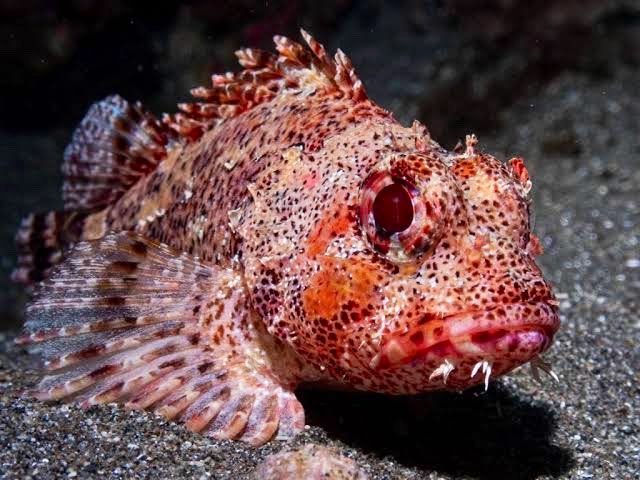
Meet the Scorpionfish (family Scorpaenidae) — the reef’s ultimate ambush artist.
Masters of camouflage, their warty skin, fleshy flaps and colour-changing ability make them nearly invisible against rocks and coral. When threatened they raise venomous dorsal spines capable of delivering a powerful sting. They wait motionless, then explode open a cavernous mouth to suck in prey in a fraction of a second. Found mainly on Indo-Pacific reefs, with species also in the Atlantic and Mediterranean.
Hidden. Armed. Patient.
#Scorpionfish #ReefFish #Wildlife #Ocean #MarineLife #IndoPacific
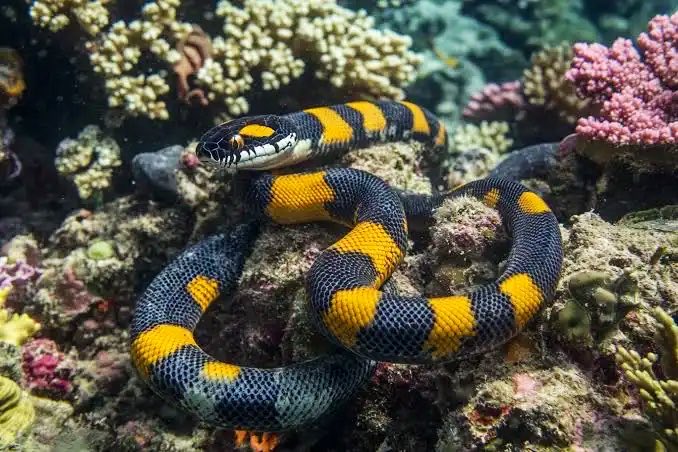
Meet the Sea Snake — among the most venomous snakes on Earth, yet rarely a threat to humans.
Fully adapted to marine life with paddle-shaped tails and the ability to absorb oxygen through their skin, they can stay submerged for hours. Their venom is a potent mix of neurotoxins and myotoxins, often more toxic than a cobra’s, but they are generally docile and deliver little venom when they bite. Over 60 species live in the warm coastal waters of the Indian and Pacific Oceans (absent from the Atlantic).
Ocean specialist. Extremely toxic. Surprisingly gentle.
#SeaSnake #Wildlife #Ocean #MarineLife #IndoPacific
Meet the Box Jellyfish (Chironex fleckeri) — one of the deadliest creatures in the ocean.
Its near-transparent, cube-shaped bell trails tentacles up to 3 metres long packed with millions of stinging cells. The venom can cause cardiac arrest and kill a human in as little as 2–5 minutes. Uniquely among jellyfish, it has 24 eyes arranged in four clusters and can actively swim rather than just drift. Found in the tropical Indo-Pacific, especially northern Australian waters, the Philippines and Southeast Asia.
Almost invisible. Extremely fast-acting.
#BoxJellyfish #Wildlife #Ocean #MarineLife #IndoPacific