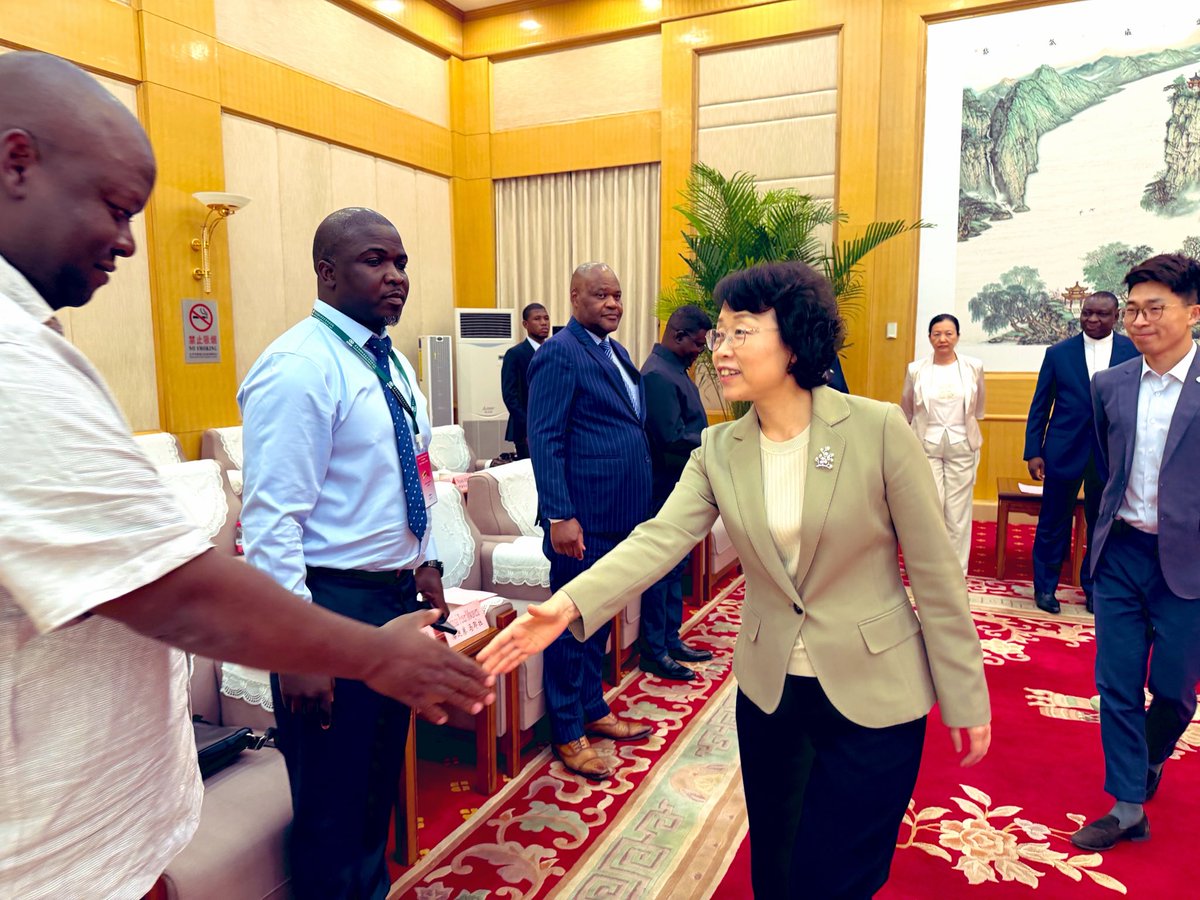
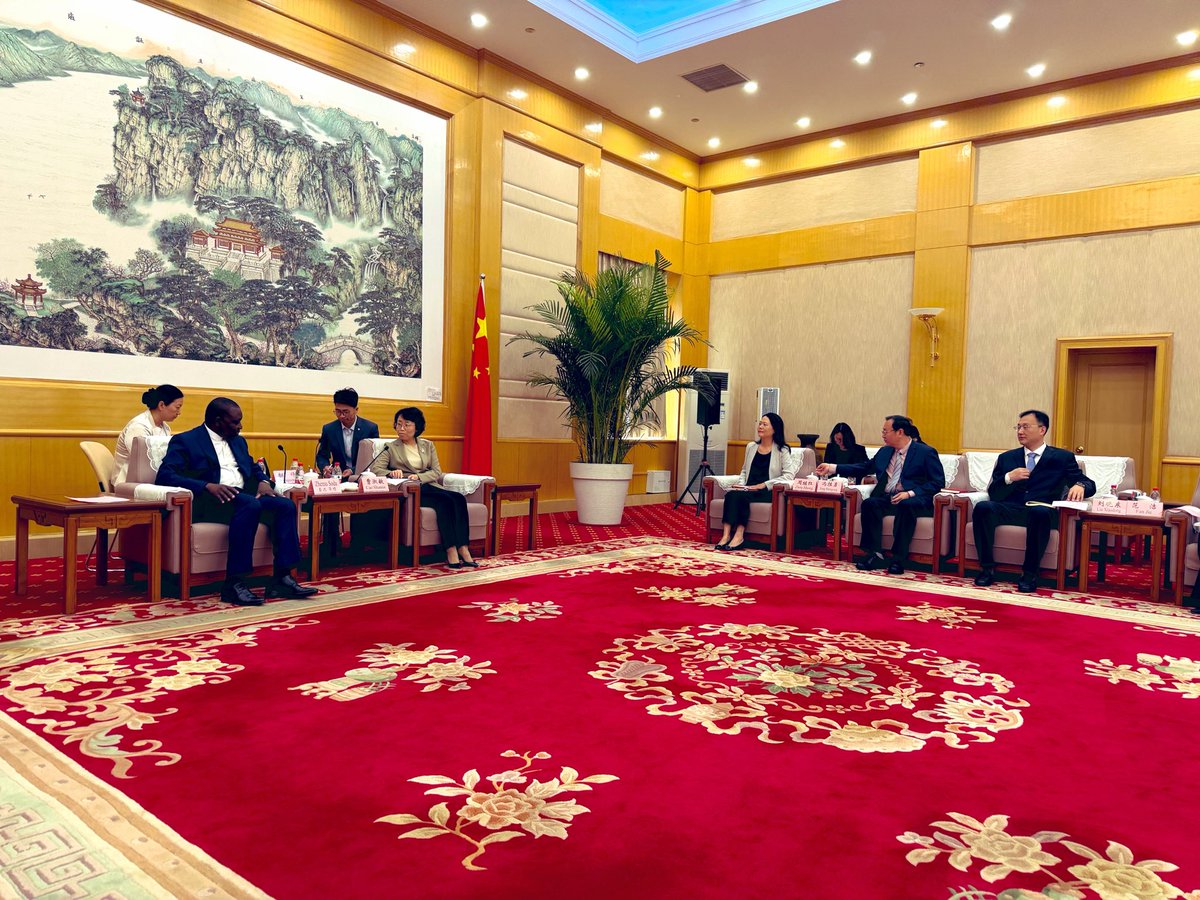
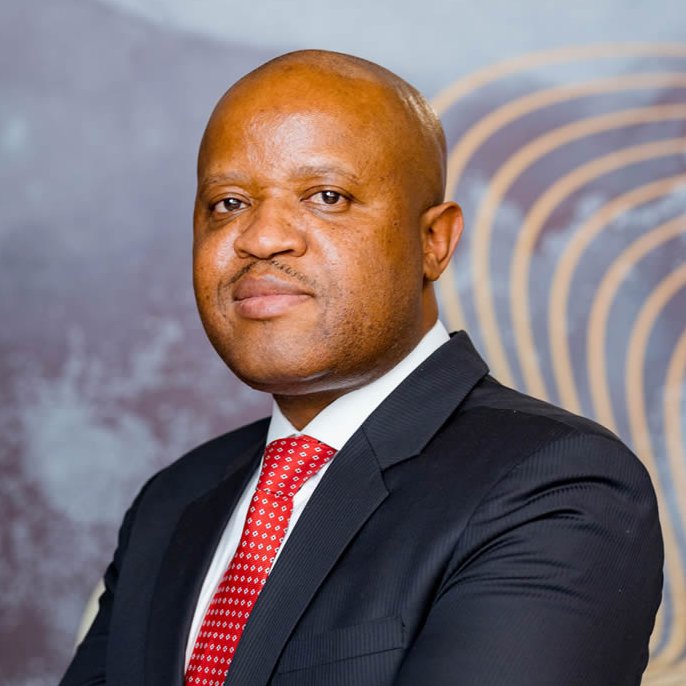
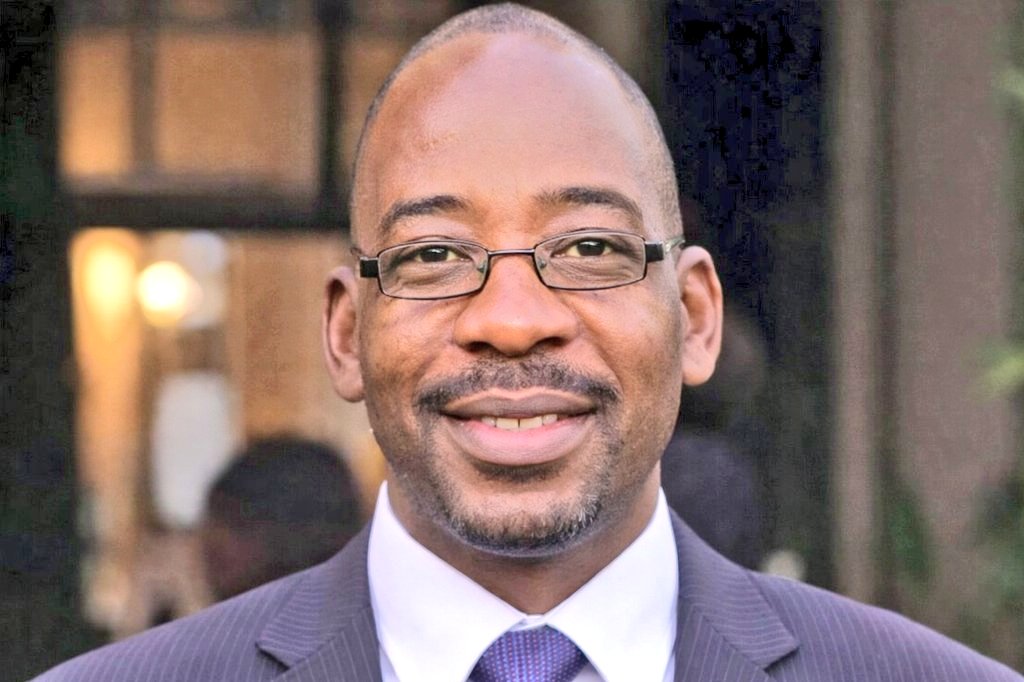
Today, I had the distinct honour of participating in a highly productive engagement led by Zimbabwe’s Hon. Minister of Information, Publicity and Broadcasting Services, Hon. Soda Zhemu, with the Minister of the National Radio and Television Administration of the People’s Republic of China, H.E. Cao Shumin.
The discussions focused on strengthening Zimbabwe-China cooperation in the areas of broadcasting, television production, content sharing, digital media development, and technical and professional skills exchange within the media sector.
The Chinese delegation included senior officials from the National Radio and Television Administration, among them Director-General of the Television Drama Department, Mr. Feng Shengyong; Director-General of the International Cooperation Department, Ms. Zhou Jihong; Deputy Director-General of the Publicity Department, Mr. Liu Xiaodong; Deputy Director-General in the Department of Management of Online Audio-Video Contents, Ms. Fan Jie; and Director of the External Relations Division, Ms. Qi Xiaochao.
Accompanying Hon. Soda Zhemu on the Zimbabwean side were Zimbabwe’s Ambassador to China, Her Excellency Ambassador Abigail Shoniwa; Minister Counsellor at the Embassy of Zimbabwe in China, Mr. Pedzisai Peter Mwayera; the Chief Director in the Ministry of Information, Publicity and Broadcasting Services, Mr. Jonathan Gandari; ZBC News and Current Affairs Director, Mr. Effort Magoso; and myself.
The engagement reflected the deepening strategic partnership between Zimbabwe and China, particularly in the fields of media cooperation, communication infrastructure, content development, and the exchange of professional expertise between the two nations.
@dereckgoto $165 million. That is what Zimbabwe's 2023 elections cost. That money could have built schools, hospitals and roads. But sure - let us keep having the same expensive, divisive election cycle while our development stalls. Tell me again how CAB3 is the real problem. #CAB3
Cde Chinamasa Said 'Prove Me Wrong' on Liberation History and CAB3 - No One Has
There is a peculiar intellectual dishonesty at work among the loudest critics of Constitutional Amendment Bill 3. Faced with a substantive constitutional debate, they have chosen to fight a phantom - brandishing historical documents as weapons while fundamentally misreading what those documents actually say. Worse, in their rush to weaponise the liberation struggle, they have inadvertently exposed their own shallow grasp of the history they claim to defend.
Cde Chinamasa's central claim deserves to be stated clearly and evaluated fairly: that the precise mechanism by which a President is selected - whether by direct popular vote or by parliamentary mandate - was never a settled ideological commitment of the liberation struggle. His critics, armed with photocopied pages of the 1973 Mwenje No. 2 ZANU Political Programme and the 1963 ZANU Policy Statement, believe they have demolished this argument. They have not. They have, in fact, confirmed it.
Reading What the Documents Actually Say
Examine the Mwenje No. 2 document that critics thrust forward so triumphantly. It states that every citizen of Zimbabwe shall have the right to exercise a free vote to elect members of the National Assembly and all other state institutions. This is a guarantee of universal franchise - the foundational democratic right that colonialism denied to black Zimbabweans. It is a statement about who gets to vote, not a constitutional blueprint for how an executive is structured.
Similarly, page 65 of the 1963 ZANU Policy Statement - the other favourite exhibit - declares that the only franchise the ZANU republic would recognise is one based on one man, one vote. Read that sentence carefully. It speaks to the basis of franchise, not the architecture of executive selection. "One man, one vote" was the battle cry against a racist weighted voting system that reduced black Zimbabweans to political nonentities. It was a demand for equal citizenship - a rejection of the colonial order in which black skin meant zero representation. It was never, in any of its iterations, a technical prescription for how an executive president should be chosen.
To argue that these passages mandate a direct presidential ballot is to commit a category error of breathtaking proportions. A document demanding that all citizens have the right to vote does not, by logical necessity, specify that those citizens must vote directly for a president rather than for representatives who then form a government. Such an interpretation would disqualify virtually every parliamentary democracy on earth - including South Africa, Botswana, Germany, India and the United Kingdom - from claiming fidelity to the principle of popular sovereignty. Are we prepared to argue that Botswana, which has never held a direct presidential election and remains one of Africa's most stable democracies, has betrayed its people? The suggestion is absurd.
The 1987 Precedent Cuts Both Ways
Critics lean heavily on the 1987 constitutional amendment, arguing that ZANU-PF's own move to introduce direct presidential elections proves the party was always ideologically committed to this model. But this argument backfires with considerable force. If a democratically elected Parliament could legitimately introduce direct presidential elections in 1987 - based on evolving national priorities and the imperative of post-Gukurahundi national unity - then the same constitutional logic permits Parliament to reconfigure that arrangement in 2026 based on equally pressing developmental imperatives. The critics cannot simultaneously celebrate 1987 as a democratic triumph and declare 2026's parliamentary process illegitimate. The constitutional mechanism is identical. The principle is the same. Only the political convenience has changed.
Moreover, the 1987 shift was itself a pragmatic response to specific historical conditions - principally the need to transcend the regional and tribal fractures that had nearly torn the young nation apart. Edison Zvobgo, one of the sharpest legal minds ZANU ever produced, argued persuasively that a nationally elected executive would be accountable to the whole country rather than to sectional interests. That was a valid argument for its time and context. But arguments are not eternal laws. Circumstances evolve. Constitutions, by their very nature, are designed to accommodate that evolution. The 1987 Parliament understood this. So does the 2026 Parliament.
The Cde Chinamasa Challenge Stands
Cde Chinamasa challenged his critics to produce, from pre-independence archives, any evidence that the liberation movement debated and resolved the specific question of whether the president should be elected directly or by parliament. The response has been to produce documents that speak to universal suffrage and majority rule - principles which nobody disputes and which CAB3 does not touch. Not a single document produced shows the liberation movement convening to debate parliamentary versus direct presidential selection as a distinct and deliberate constitutional question.
Because it was not debated. Cde Chinamasa is correct. The liberation struggle was fought for the right of the majority to govern - full stop. The form that governance would take was always understood to be a matter for free Zimbabweans to determine through their own sovereign constitutional processes, generation by generation. To retroactively inscribe a specific electoral mechanism into that struggle - to claim that the fighters in the bush were dying for a particular ballot format - is not history. It is fabrication dressed in revolutionary clothing.
The Practical Stakes: Development, Stability and the Cost of Division
Beyond the historical argument lies a more urgent question that Cde Chinamasa's critics conspicuously avoid: what are the real-world consequences of the constitutional arrangement we choose?
Zimbabwe's 2023 harmonised elections cost the government in excess of USD 165 million to administer - resources that could have built hospitals, funded irrigation schemes, expanded the national road network or equipped rural schools. That is not a trivial sum for a developing economy still clawing its way out of decades of sanctions and economic turbulence. Elections, by their nature, are also divisive events - they inflame factional tensions, suspend developmental focus and redirect national energy toward political contest rather than productive enterprise. The more frequently a country holds high-stakes national elections, the more it pays - not only in direct financial cost but in the incalculable cost of social fragmentation.
Zimbabwe is, by every honest developmental measure, still catching up. The country ranks among the top ten fastest-growing economies in Sub-Saharan Africa, with projected growth of five percent in 2026 and inflation reduced to single digits - achievements that reflect genuine policy discipline and should not be squandered on premature political disruption. The stability that has made this trajectory possible is not accidental. It is the product of deliberate, consistent leadership. Continuity is not an abuse of democracy. In a developing economy, it is often its most important enabler.
Parliamentary systems are not merely a different electoral format - they are architecturally designed for governmental stability. Cabinet is drawn from and remains accountable to the legislature. Policy continuity is structurally protected. The kind of executive paralysis that afflicts directly elected presidencies - where a president and a hostile parliament deadlock over national priorities - is substantially reduced. For a country at Zimbabwe's stage of development, these are not abstract constitutional preferences. They are practical necessities.
On the Question of Democracy
The most intellectually serious objection to CAB3 is not the historical one - which, as shown, collapses under scrutiny - but the democratic one: does a parliamentary selection model dilute popular sovereignty? This is a legitimate question and it deserves a serious answer. Under CAB3, Zimbabwean citizens still vote. They vote for Members of Parliament and councillors. Their elected representatives then exercise a mandate on their behalf - including the formation of government. This is not the abolition of democracy. It is one of democracy's oldest, most stable and most widely practised forms. The franchise is not diminished. It is channelled through representative institutions - precisely the model the liberation struggle's own documents described when they spoke of citizens electing members to all state institutions.
What CAB3 does remove is the spectacle of a fractious, expensive, destabilising direct presidential contest every five years - a contest that, in Zimbabwe's specific political ecology, has historically generated more heat than democratic light.
Conclusion
Those who call Cde Chinamasa a "sellout" for making this argument have substituted insult for analysis. They have waved documents they have not read carefully, invoked history they have not understood fully, and dressed narrow political opposition in the borrowed costume of constitutional scholarship. The liberation struggle deserves better than to be reduced to a factional talking point.
The historical record, read honestly and in full, vindicates Cde Chinamasa's core position. The liberation struggle gave Zimbabwe the right to govern itself. How it structures that self-governance - in ways that best serve its people's development, stability and prosperity - is, and always was, a question for each generation of free Zimbabweans to answer for themselves.
This generation's answer is CAB3. And it is a defensible one.
I spent my early years in Sanyati, Kadoma. I learned at Chiguvare Primary School and later did my secondary education at Sanyati Baptist High School. That’s why I’m still active in several local whatsapp groups from the area.
One of those groups has recently uncovered the truth: Knox is not a war veteran. He was nowhere near our liberation war. His real surname is Mutimusakwa. He only became friends with Geza when he worked as an ARDA manager in Sanyati.
Right now, he’s hiding in South Africa. Let there be no doubt - the man is an outright phony.
The Rise of Digital Mercenaries and the Threat to Party Discipline
There is a dangerous illusion taking root on Zimbabwean social media - the illusion that noise is authority, that proximity can be manufactured, and that a following is a substitute for ideological grounding. It is an illusion sustained by noise, but beneath that noise lies something far more serious: an erosion of institutional discipline masquerading as participation.
What we are witnessing is counter-revolutionary digital opportunism - an infiltration eating away at the ideological integrity of ZANU PF from within. The tragedy is that many have mistaken this for harmless activism. It is not. It is a distortion that, left unchecked, fragments authority and replaces institutional clarity with performative chaos.
The modern political communication landscape has been flattened by technology. Today, the cost of entry into public discourse is effectively zero. Anyone with a smartphone can construct an identity, project influence, and claim alignment with power. But what has been lowered is access - not legitimacy. That distinction is where many have failed, deliberately or otherwise.
What has emerged is a class of political mercenaries - individuals who trade in perception rather than principle. They manufacture proximity, curate credibility, and weaponise association. To the untrained eye, they appear embedded. In reality, they are external actors operating without ideological anchor, institutional accountability, or discipline.
Visibility is not, and cannot be, authority. A following built on sensation is a house of sand. Those who brand themselves as ZANU PF without the baptism of ideological rigour will always expose their true nature. They lack the one quality that has defined the movement’s success against colonialism, sanctions, and every other onslaught: discipline.
ZANU PF, by contrast, has never been a creature of noise. It is a product of structure. Its endurance was not forged in digital ecosystems, but in the crucible of struggle, where cohesion was not optional and discipline was not negotiable. That tradition did not disappear with independence - it evolved into a political culture anchored on institutions. Debate is not suppressed; it is structured. It occurs within defined platforms - the Conference, the Congress, and Party organs. Once a position is adopted, it ceases to be personal opinion and becomes collective doctrine.
This is the central misunderstanding of the mercenary class. They interpret discipline as weakness and uniformity as suppression. In truth, discipline is what transforms a collection of voices into a movement. Without it, there is no coherence. Without coherence, there is no direction. Without direction, there is no power.
What we are witnessing now is not dissent. It is distortion. The tactics employed are neither organic nor benign. There is a clear pattern - extortion disguised as influence, ghost accounts deployed to simulate consensus, algorithmic manipulation designed to mislead leadership, and calculated double-dealing where individuals play multiple sides for personal gain. This is not engagement. It is infiltration driven by opportunism.
Left unchecked, such behaviour does not democratise communication - it fragments authority. It creates the false impression that the Party is defined by its loudest voices rather than its legitimate structures. That cannot be allowed to stand.
ZANU PF is not a platform for self-appointment. It is an institution governed by rules, hierarchy, and doctrine. Representation is not seized - it is conferred. Credibility is not declared - it is earned and recognised within the system.
This is precisely why the Party’s Social Media Policy exists - not as a symbolic document, but as a regulatory instrument designed to align digital engagement with institutional discipline. The current moment demands not revision, but enforcement.
Clarity must be restored. Only authorised structures speak for the Party. Any individual operating outside those structures does so in a personal capacity, not as a representative voice. This must be stated plainly, and that distinction must be enforced decisively.
The objective is not to silence participation, but to protect integrity. A movement cannot afford ambiguity about who it is, what it stands for, and who speaks on its behalf. Once that ambiguity sets in, the space is quickly captured by those with the least loyalty and the strongest incentives.
The movement has faced greater challenges than digital opportunism and prevailed because of one principle - unity anchored in discipline. That principle must now be reasserted in the digital arena with the same firmness that defined it in the past.
The era of mercenary communication is not sustainable in a system built on ideological clarity.
The choice is simple. Either the Party defines its voice, or it is defined by noise.
The ideological fortress is not for rent. And history has already shown which path ZANU PF takes.
Trial by Headline Is Not Justice
Zimbabwe is not a lawless frontier where rumours are laundered into verdicts through repetition. It is a constitutional republic governed by institutions, procedures, and due process. Any attempt to suggest otherwise is not merely careless - it is reckless, destabilising, and dangerous.
This must be stated plainly at the outset. This is not an argument against investigation. Allegations of corruption, wherever they arise, must be examined thoroughly, independently, and without fear or favour by legally mandated authorities. If wrongdoing is established, the law must act decisively. No individual, no company, and no institution is immune. That principle is settled and non-negotiable.
What is contested is the irresponsible manner in which allegations are increasingly framed, amplified, and weaponised in the public domain long before investigations are concluded. Such conduct risks inflicting premature and potentially irreversible reputational damage on critical national institutions. When this behaviour is presented as “accountability”, it ceases to be legitimate oversight and begins to resemble sabotage.
Recent reporting by NewsHawks, driven by narratives publicly associated with Senziwani Sikhosana, illustrates this concern. The language deployed does not merely inform the public of the existence of an investigation by the Zimbabwe Anti-Corruption Commission. It appears to presume criminal intent, treats allegation as fact, and constructs an elaborate storyline of corruption, greed, and conspiracy in the absence of any judicial finding or regulatory determination. That is not neutral reporting. It is pre-judgment.
Words matter. Headlines matter. Framing is not neutral.
The repeated portrayal of the Central Intelligence Organisation, the National Social Security Authority, and private financial institutions as active participants in a so-called “looting spree” is not objective journalism. It is prosecutorial theatre conducted outside the courtroom. Once such narratives are released into the public domain, they cannot be easily recalled or neutralised, even if later contradicted by investigative or judicial outcomes.
The press statement issued by Chigama Architectural and Project Management is instructive, not because it exonerates anyone - that authority lies exclusively with investigators and courts - but because it highlights a fundamental ethical lapse in the reporting process. The company states that it was not approached for comment prior to publication. That omission alone undermines a core principle of professional journalism. Verification is not discretionary. Right of reply is not a courtesy. It is an obligation.
More concerning are the accumulating indicators suggesting that certain narratives may not have been merely reported, but curated. Claims of prior knowledge of alleged “illegalities”, possession of confidential institutional communications, and apparent advance awareness of impending publications raise legitimate questions about narrative construction rather than dispassionate inquiry.
Confidential documents belonging to statutory bodies are not public commodities. If such material was accessed unlawfully, selectively disclosed, or distorted to create the appearance of proof, that would constitute abuse rather than journalism. If the documents are genuine but incomplete, publishing them without full institutional context or verification is equally irresponsible. In either scenario, public trust is weakened.
This is where personal grandiosity risks becoming a national liability. Transitional societies often produce actors who mistake proximity to influence, donor networks, or media platforms for permanent authority and immunity. They begin to believe they can drag State institutions into scandal at will, that the national brand is expendable, and that collateral damage is acceptable so long as the spectacle is loud enough. History is unforgiving to such arrogance.
Zimbabwe’s international standing is not theoretical. Investor confidence, regulatory credibility, and compliance with global financial standards are fragile, cumulative assets. Reckless allegations involving pension funds, intelligence institutions, and banks - framed as established fact rather than contested claims under lawful investigation - risk attracting heightened scrutiny from global oversight bodies, not because wrongdoing has been proven, but because irresponsibility has been broadcast.
That is the real danger. Not investigation, but inflation. Not accountability, but exaggeration. Not transparency, but theatre.
The country is experiencing measurable economic stabilisation, infrastructure development, and renewed international engagement. This progress is collective. It does not belong to politicians, corporations, journalists, or activists alone. It belongs to the nation. Those who, through over-excited opportunism or unresolved personal disputes, seek to derail it should be challenged firmly and lawfully.
Zimbabwe is not a circus. Its institutions are not props. Its future is not fodder for click-driven crusades.
If investigations establish wrongdoing, the law must act with firmness. If they do not, reputations unjustly damaged must be restored with equal resolve. What must never be tolerated is the substitution of due process with performance, or evidence with insinuation.
The rule of law and institutional strength will always outlast monkeys in giant robes. As a citizen of Zimbabwe, I state this as a matter of principle: no individual has the right to recklessly broadcast unsubstantiated allegations against vital State institutions. Authority to determine guilt does not come from volume, access, or bravado. It comes from the law.
Zimbabwe deserves better than noise. It deserves discipline, responsibility, and respect for its institutions and the rule of law.
Chamisa’s Ritual of Failure – ZANUPF’s Enduring Insurance Policy
Nelson Chamisa’s latest re-emergence is not a comeback but a ritual repetition. His interview with the South African Broadcasting Corporation merely reaffirmed what has long been evident to serious observers of Zimbabwean politics. He speaks fluently of “structures, systems, and institutions” while embodying their negation. Across every political formation he has led, Chamisa has governed by personal decree rather than constitutional process. These movements did not collapse solely due to external pressure; they disintegrated because authority was never delegated, never contested, and never renewed.
The consequence has been a lost decade of opposition development. This is not because Zimbabwe lacks intellectual or organisational talent, but because that talent has been systematically expelled, discouraged, or rendered redundant. After each electoral cycle, the same choreography unfolds - purges, abrupt dissolutions, and ideological resets marketed as “renewal.” In practice, these episodes function as rolling institutional amnesia. Lawyers, economists, organisers, diplomats, and administrators - those capable of building durable political machinery - are either marginalised or pushed out entirely. Chamisa does not merely inherit institutional weakness; he reproduces it, ensuring that every cycle begins poorer in experience than the last.
This reality invites a darker, though increasingly plausible, hypothesis. Have Chamisa’s serial failures, by disposition if not by design, become ZANUPF’s most reliable insurance policy? A fragmented opposition is useful to incumbents; a hollowed-out one is invaluable. Nowhere is this more evident than in Chamisa’s systematic elimination of the opposition’s intellectual and strategic backbone.
By sidelining figures such as Tendai Biti, Thokozani Khupe, Douglas Mwonzora, Morgan Komichi, and more recently Jameson Timba and Charlton Hwende, Chamisa presided over a deliberate excision of institutional memory. These were not mere personalities; they were repositories of constitutional practice, statecraft, and organisational discipline. Replacing them with politically agile but institutionally thin figures such as Ostallos Siziba and Fadzayi Mahere has produced a leadership layer that is loyal but lightweight - fluent in social media and gobbledygook, barren in systems.
The contrast with ZANUPF is instructive. For all the criticism it attracts, ZANUPF has demonstrated continuity across generations. It respects its veterans, some politically active since the 1960s, and anchors authority in structured organs such as the Politburo and Council of Elders. Institutional memory is preserved rather than purged. Authority is layered, not personalised. Leaders rise, fall, and retire, but the organisation endures because it understands a foundational truth of political longevity - movements survive by remembering, not by endlessly starting over.
The comparison with Lovemore Madhuku is equally revealing. Madhuku is combative and electorally marginal, yet his politics are structurally disciplined. His organisations possess constitutions, congresses, and defined leadership pathways. Both men lose elections, but Madhuku’s institutions persist. Chamisa excels at hashtags and theatre while leaving behind organisational ruins. One builds structures capable of surviving their founder; the other builds vehicles that collapse the moment the driver exits.
Chamisa’s own language exposes the pathology. He speaks of “my project,” “my movement,” “my plan.” This possessive reflex is fatal to democratic growth. Authority that is claimed rather than conferred must be defended through purges and perpetual suspicion - hence the obsession with infiltration narratives and the serial sidelining of peers. Zimbabwe does not suffer from a shortage of opposition energy. It suffers from an opposition leadership deficit rooted in personalism, opacity, and unresolved questions of integrity. Until leadership submits to rules it cannot override, and until financial and organisational accountability replace improvisation, Chamisa will remain what he has become - not a challenger to solid ZANUPF power, but its most reliable crowd-control foil.
95682 impressions, 215 replies, 7485 engagements, 2757 detailed expands, yet noone seems to know which university Tungwaz attended and studied for the PhD he claims to have.
Let me ask again:
1. From which university did Tungwaz earn the PhD he claims to have?
2. At what point did he become Dr Tungwarara?
Serious answers only 😂
The way South Africans hate and mock other Africans you would think they are from another continent. They are like Moroccans 🇲🇦.
And yet this is reality of most South Africans
Mazowe–Masvingo: President Mnangagwa Launches A1 Booster Kit‼️
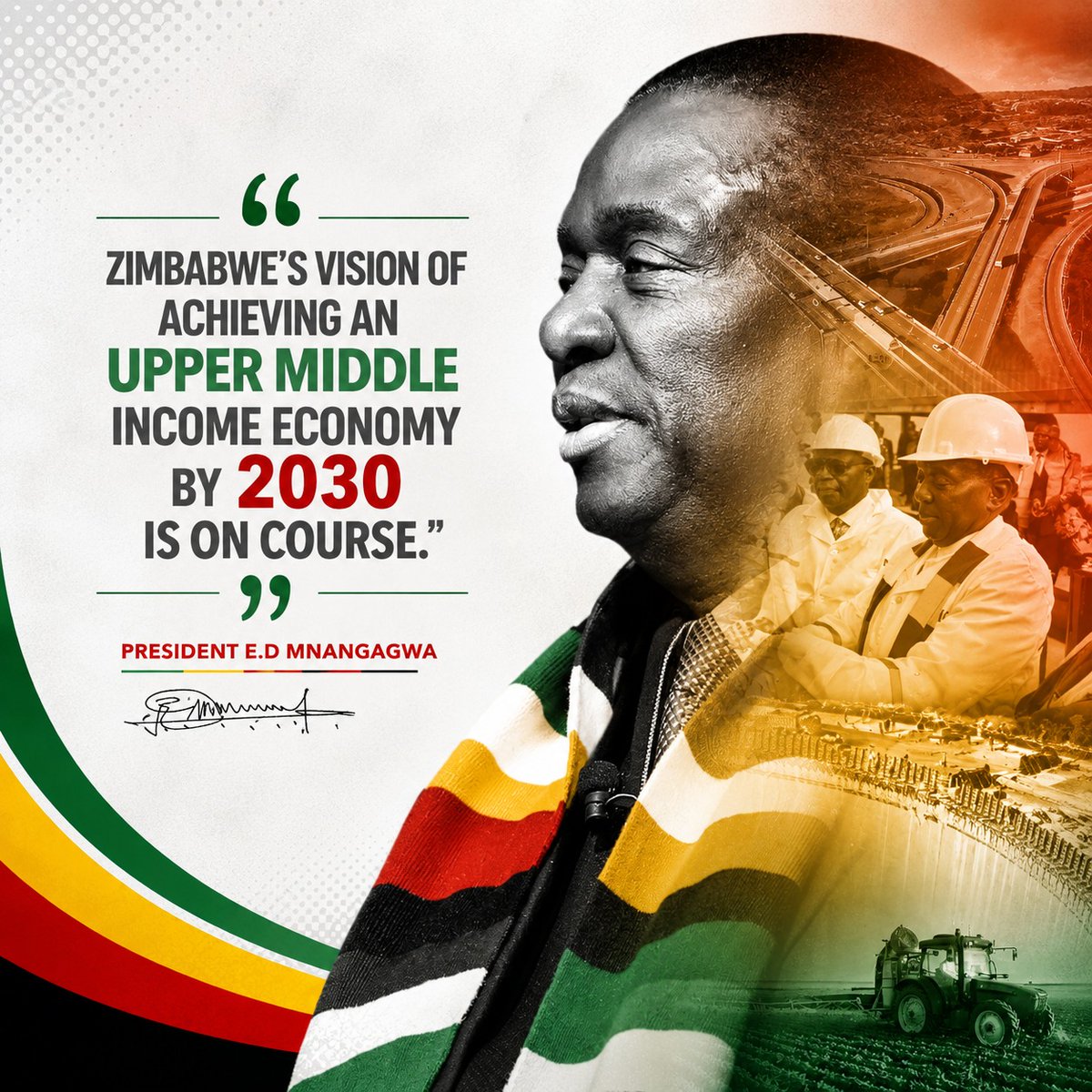
President Mnangagwa will launch the A1 Booster Kit in Masvingo Province, following its initial launch in Mazowe in August last year, to empower A1 farmers, strengthen land tenure security, and boost agricultural productivity under Vision 2030.