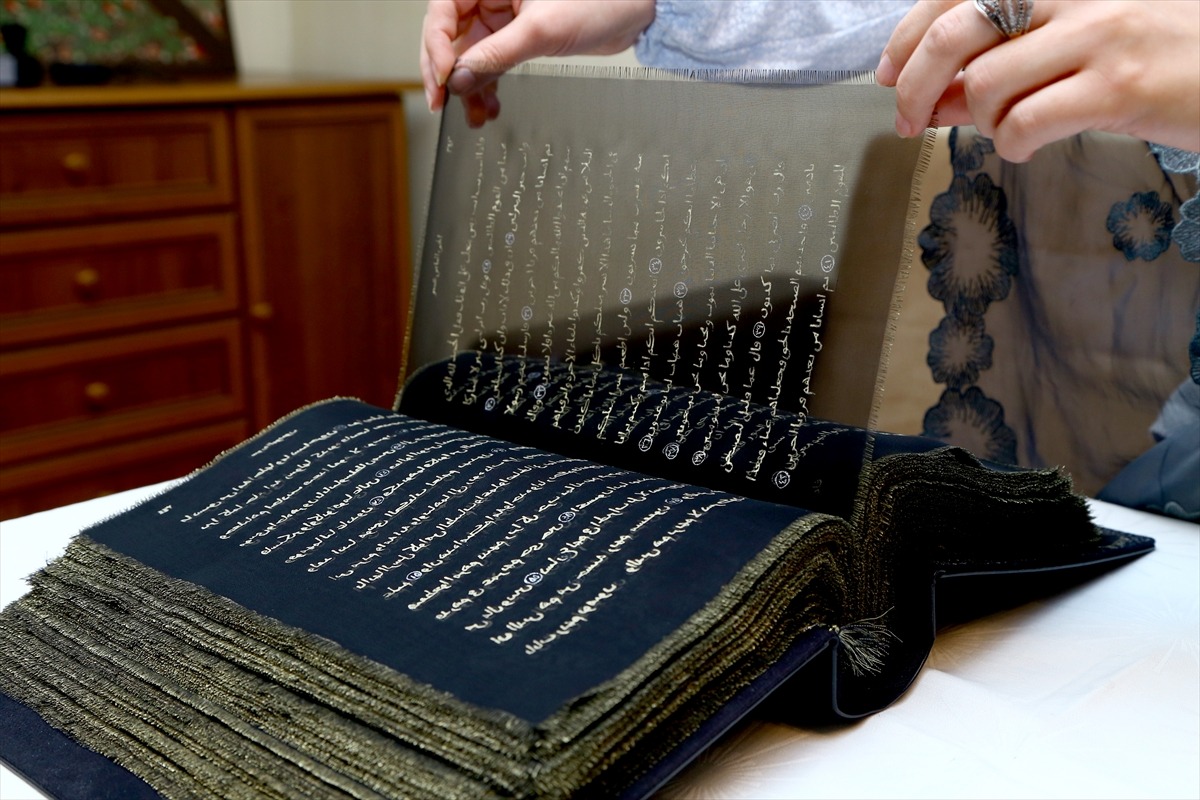
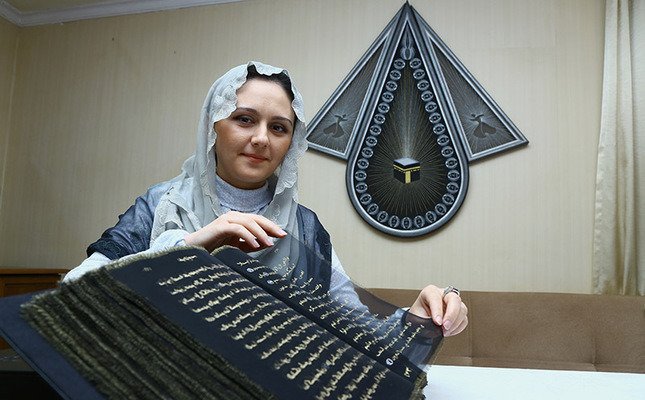
When a Russian woman met a Nigerian mother, she smiled and said:
“She’s from Nigeria, I’m from Russia. We don’t speak the same language… but we pray with the same one. We are sisters in faith.” ❤️
Everyone Muslims included has absorbed a flattened version of Andalusia as interfaith utopia. That’s mostly a 19th-century European Romantic and Jewish reform-movement invention, useful for arguing against their own antisemitism at home, not an accurate picture of the Umayyad or Almohad courts. The real story is more interesting and more useful: Islamic law gave a structured, legally codified framework for governing religious difference; dhimma wasn’t “everyone’s equal,” rather a covenant with specific obligations on both sides, and it produced centuries of relative stability precisely because it didn’t pretend difference didn’t exist. It managed it.
It’s relevant today because it cuts directly against two things happening right now: Western liberal universalism’s assumption that pluralism only works when it’s procedurally “neutral” and difference-blind, and the reactive Muslim tendency (post-colonial defensiveness) to either oversell convivencia as proof Islam invented tolerance, or reject the whole history as irrelevant to modern statecraft. You can position it as: the Andalusian model is neither the fairy tale nor something to be embarrassed about but a functioning alternative political theology for governing plural societies that nobody’s seriously revisited because both apologetics and orientalism flattened it for their own purposes.
🚨A Modern Epigraphic Discovery unveils an Inscription where Zayd Bin Hassan (The Grandson of the Prophet) Writes the following:
"I, Zaid bin Al-Hasan, believe in God alone with no partner, and I bear witness that there is no god but God alone, and that Muhammad is His servant and Messenger. Upon this I live as long as I live, and upon it I die when I die. And I ask God to bring me close to Muhammad in the Hereafter as He brought me close to him in this world, and to make me one of his beloved ones, his chosen ones, and his elite. O God, bless us in this abode of ours and ward off from us its evil and the evil of every evildoer."
The Muslim world’s financial “backwardness” is actually proof that classical Islamic scholars were the most sophisticated macroeconomic thinkers of the pre-modern era and the West accidentally proved it in 2008.
The prohibition of riba was never primarily a moral injunction against greed alone rather It was a systemic design principle to prevent the decoupling of money from productive economic activity. When you ban interest-bearing debt as the engine of capital accumulation, you force wealth to remain tethered to real assets, real partnerships, real risk-sharing.
The entire 2008 financial crisis was a textbook demonstration of what happens when you build an economy on the exact mechanism Islamic jurisprudence spent centuries arguing against: the multiplication of money through money, completely detached from underlying value. CDOs, mortgage-backed securities, credit default swaps: pure riba architecture collapsing under its own abstraction.
Islamic banks largely weathered 2008 better than conventional ones because the structural rules prohibited the specific instruments that caused the collapse.
The insane part: Western economists spent the 20th century mocking Islamic finance as a medieval relic. Then they spent the 21st century slowly reinventing through “stakeholder capitalism,” ESG investing, and calls to link executive pay to long-term performance, the core intuition that capital must carry risk to be legitimate.
Fuqaha in the 9th century called it. No gain without exposure to loss.
They just didn’t have the PowerPoint.
وَمَن احسن من الله حكما لقوم يوقنون؟
73 years before the official fall of the Abbasid Caliphate and 46 years before the fall of Granada, the last Arab-Islamic stronghold in Andalusia, a man with great political will emerged. He founded the Sheikhdom of Diriyah in the heart of the Arabian Peninsula, transforming it into a successful and stable commercial center. From this foundation, he built a great and prosperous centralized state.
Manie’ bin Rabiah Al-Muraidi founded Diriyah in 1446 in Wadi Hanifa, it was not just an ordinary village in Najd. From the beginning, it possessed several foundations for early prosperity:
Fertile agricultural land in Wadi Hanifa, famous for palm trees and dates.
A stop for trade caravans crossing central Arabia.
Close to pilgrimage routes used by pilgrims traveling from Iraq, Central Asia, and even Muslims from Russia and China on their way to Mecca.
The presence of kuttab (Qur’anic schools) and learning circles in mosques where people studied the Qur’an, reading, and basic Islamic sciences.
This early agricultural, economic, and educational stability later helped transform Diriyah into an important political and intellectual center in Arabia, eventually becoming the capital of the First Saudi State in the 18th century.
ONLY A FOOL WOULD TRY IT!
Take your pick for a ground invasion of Iran:
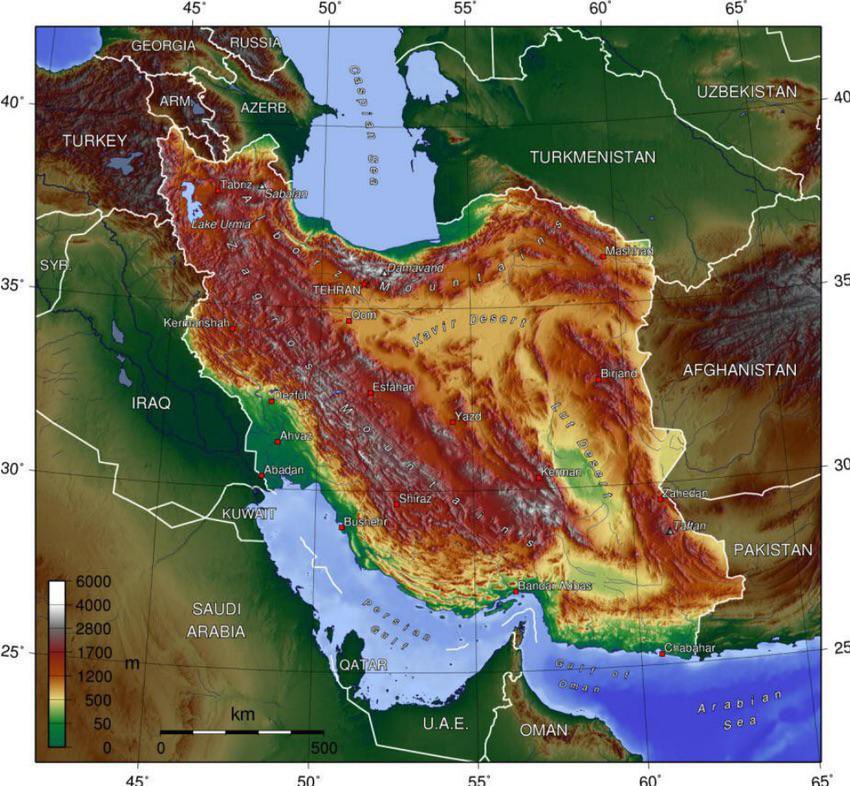
Amphibious assault from the south -- through waters mined to fuck, with trillions of missiles aimed at them, followed immediately by a wall of mountains where two battalions can hold off an entire corps at the narrow passes.
The Kermanshah corridor from the west, that's how Saddam invaded Iran; he made it a whopping 50 kilometers before getting completely bogged down for 8 years. Again, mountains, the Zargos, then another 500 kilometers to Tehran through mountainous terrain. Plus, you know, Shiites live there, all the pro-Iranian Iraqi militias, and the current Iraqi government would never in a million years allow it.
Khuzestan may look promising with how close it is to Kuwait and the Arab minority living there and all that, but, again, you'll run into the Saddam problem.
Azerbaijan, from the north. No port infrastructure, no rail link with NATO, few military airfields. And again, damn mountains. A thousand kilometers through mountainous terrain that includes passes over Damavand, the highest mountain in the Middle East. And even then, the Kremlin, liberals as they may be, still wouldn't allow that. Also, Iran can easily go beast mode and destroy the oil infrastructure in Azerbaijan with a few dozen drones, wiping out 2/3 of the Azeri economy.
Turkmenistan, the northeast. 1,000km across desert with no supply lines whatsoever. Then more mountains. Also the political problem.
Pakistan, the southeast. Fifteen hundred kilometers through a region with zero infrastructure, just desert, fuck-all nothing, and then you run into... yeah you guessed it, mountains. And of course Pakistan would never allow it.
The only RELATIVELY viable option in terms of geography and logistics is Turkey, but the Turks aren't idiots either and don't want to get involved with this.
Russians with Attitude
Che Gu Bard
Well-known Muftis and a wealthy businessman are among those in the past who were accorded the title of Tokoh Maal Hijrah on every Muharram, the Muslim New Year. The recipient received a hefty cash payment and a certificate in recognition of his contribution to the country and the Muslim world
I want to propose Che Gu Bard as the next recipient.
His courage and selfless sacrifice in exposing the wrongdoings of our elites are well known. Cartels are in every corner, and his relentless pursuit of them is legendary. He is a true warrior of the Muslim community.
The frequent stories of corruption and wrongdoings of Muslims who hold high office in the country would make one cringe with shame. It makes us wonder why, in this religious country, where morals and high principles are preached from dusk to dawn, we cannot instil integrity in our top decision-makers. Where have we gone wrong
We have plenty of Commissions to select our judges, Police Chiefs, Armed Forces Chiefs and the top civil servants. Yet it would appear that due diligence has failed many times, and the same mediocre, corrupt ones keep getting promoted.
It’s in this helpless moment that some seek divine intervention and pray that leaders from the competing camp are genuine and authentic Muslims who can correct the excesses before us. Will they disappoint us, too?
Sunnism never needed secularism to limit power. It limited power by refusing to sanctify it. Here's how that works.
Apart from Shia messianic movements, Islamic political history did not produce a clerical class that claimed superior authority over rulers. A premodern Abbasid or Andalusian observer wouldn't understand a phrase like “secular system of government” because it's already a reality. Islam produced some of the finest statesmen and bureaucrats in the world for a thousand years, and their offices governed worldly affairs, including through juristic reasoning and negotiation with the scholarly class.
Infallibility of rulers is not a Sunni concept; it belongs more clearly to Shia or Catholic traditions. Even the Prophet's Companions were subject to disagreement and revision. Their conflicts, severe as they were, had a paradoxical effect: they desacralized political authority very early, making Islamic history unusually resistant to fixed political dogma. If figures as central as Ali and Muawiya could contest power, then no political form could claim final sanctity. In this sense, Sunni history “secularized” politics through sacred law, not through the modern doctrine of popular sovereignty.
The problem with contemporary Arab secularism is that it reproduces an idealized, purifying logic inherited from Christian and Shia (both originally Platonic) political theology: the belief in a correct founding moment, a clean conceptual rupture, after which proper governance can finally begin. Ironically, both communist and Islamist movements borrowed much of their political grammar of the “new society” from the same messianic traditions. History does not unfold this way. Political life is a continuous process of negotiation, compromise, and repair. Demands for pure egalitarianism or fully realized conceptual justice are ahistorical.
Moreover, secularism in Muslim societies did not arrive as a neutral principle. It arrived through authoritarian states that marginalized Arabic and Persian classical traditions, severed their shared scholarly and literary continuities, and recast linguistic sciences into secular, ahistorical forms modeled on Latin paradigms. These states persecuted religious movements, dismantled Sufi institutions, centralized knowledge in state universities, and reduced social life to government-controlled associations. In practice, secularism functioned as a doctrine of state domination, and even by its own standards, it largely failed.
Secularism also aligns easily with military logic. Armies seeking mass mobilization across religious difference require a rigid, nonreligious identity capable of producing sacrifice and discipline. Such identities are never neutral; they rely on myth, exclusion, and sacralized narratives of threat. This makes for fascistic impulses deeply hostile to cultural pluralism. The claim that secularism bears no responsibility for the crimes of Baathist atrocities in Baghdad, Damascus and Beirut is defensible only in the abstract world of concepts, not in lived political history.
At the social level, Muslim secularism has tended to attach itself to elites hostile to religion as a lived practice, or to projects that reduce religion to folklore without normative authority. This creates a permanent ideological escalation. There is no stable “moderate secularism” because more radical versions can always accuse it of inconsistency. Secularism thus becomes an arena of symbolic competition rather than a workable political settlement.
By contrast, significant Islamic currents have already produced serious alternatives. The Egyptian Wasat Party’s insistence on being “civic” rather than secular or Islamist was not rhetorical evasion. It reflected an attempt to ground the state in civic life while recognizing Islamic culture as a historical and social reference, not a legislative straitjacket. Law, on this view, is not imposed from theology but emerges from social practice within a shared civilizational horizon.
This opens the way for a social theory centered on cities rather than ideologies. Cities are economic, commercial, and social systems before they are identity projects. Trade, as Montesquieu observed, softens manners. Urban life produces citizenship precisely because it moves people from land-based belonging to exchange-based association, from inherited roles to negotiated interests. Civic life precedes abstract sovereignty.
Civic also means removing the military from governance and pushing war to the margins as much as possible. It means institutions and initiative in both economic and cultural life. It means placing civil society above both the market and the state: protecting social vitality without abandoning contractual order. And it means, above all, resisting the sentimental nationalism that manufactures identity and dictates collective emotion based on fabricated history and mass delusion. In a land shaped by over five millennia of civilization, it is remarkably naïve to attempt to build a state like the United States or Australia, one that defines a people’s doctrine, project, and moral posture within a single modern layer of history.
What is needed, therefore, is not secular but civil relations: contractual and ethical norms rooted in material life and civilizational memory. Secularism is a long European historical process, and it made sense when “the secular” referred most people outside the clergy. In Muslim societies, the secular refers to a globalized elite of culutral actors who are largely hostile to their own people. The more moderate advocates engage with it as a frozen abstraction, detached from its actual social history and power dynamics. Civility and urbanity, by contrast, cannot be thought outside concrete conditions.
Imported political doctrines must be dismantled into methodological and moral components and then reassembled into serious political theology suited to local histories. Syria, as one of Islam's civilizational centers, requires intellectual elites capable of this work. Appeals to secularism that ignore cultural politics, social histories, and psychological power structures will continue to fail - not for moral reasons, but for analytical ones.
@tjerealjoker Parti politik sejak bilanya urus sampai dalam rumah orang?
Ni kejadian terpencil kot, bukan normal masyarakat.
Dekat banyak tempat dalam dunia ni ada kejadian macam ni berlaku.
@PklongZ@ashkravat Dia ni pendaftar mahkamah saja.. taraf kerani saja boleh jadi jawatan sampai tinggi macam ni.. padahal tak pernah tulis penghakiman pun sepanjang hidup.. gila..