@WhatsApp my WhatsApp has been hacked for more than two weeks and I’m locked out of receiving verification codes. Please help. Support emails aren’t responding. Please DM me.
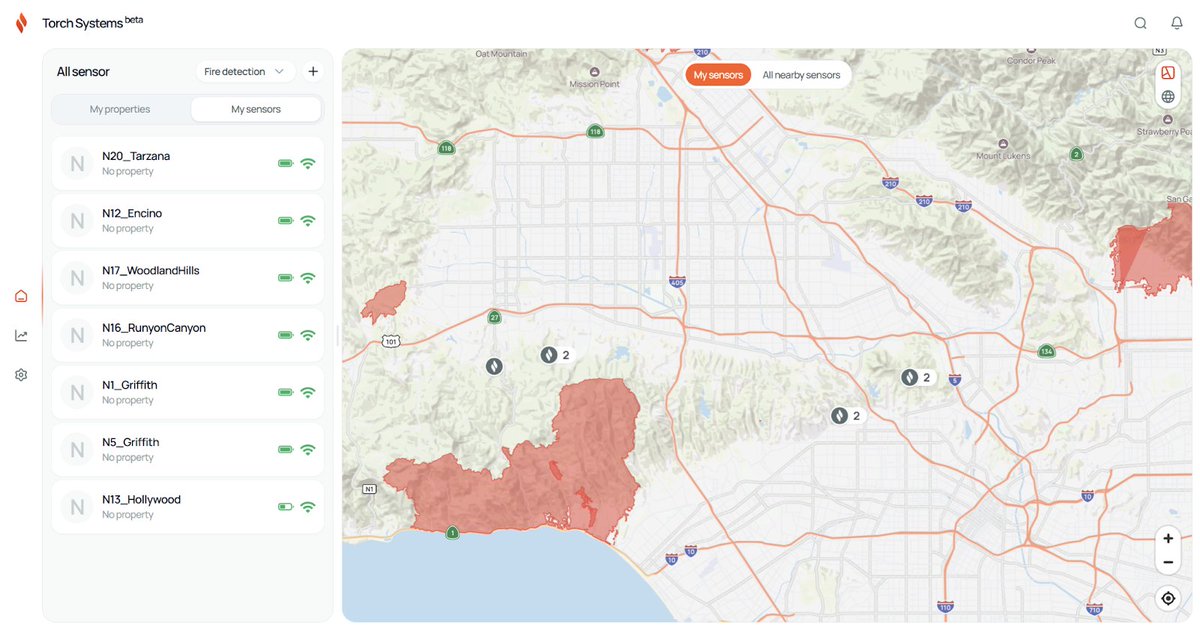
Huge thank you to @helium@fmong@amirhaleem along with @Starlink for providing the network coverage for our sensors to stay online and protect the areas around them 24/7!
We want to help protect you and your property. We’ve released a waiting list specifically for LA County residents who want a Torch sensor asap.
Sign up now👇
https://t.co/pzulL4B6Kg
What we’ve learned from this disaster is that wildfires are not a summer-only problem.
This is the time to cover ALL of California, and Torch is making it happen today.
Our mission is to protect every community, household, and business from wildfires.
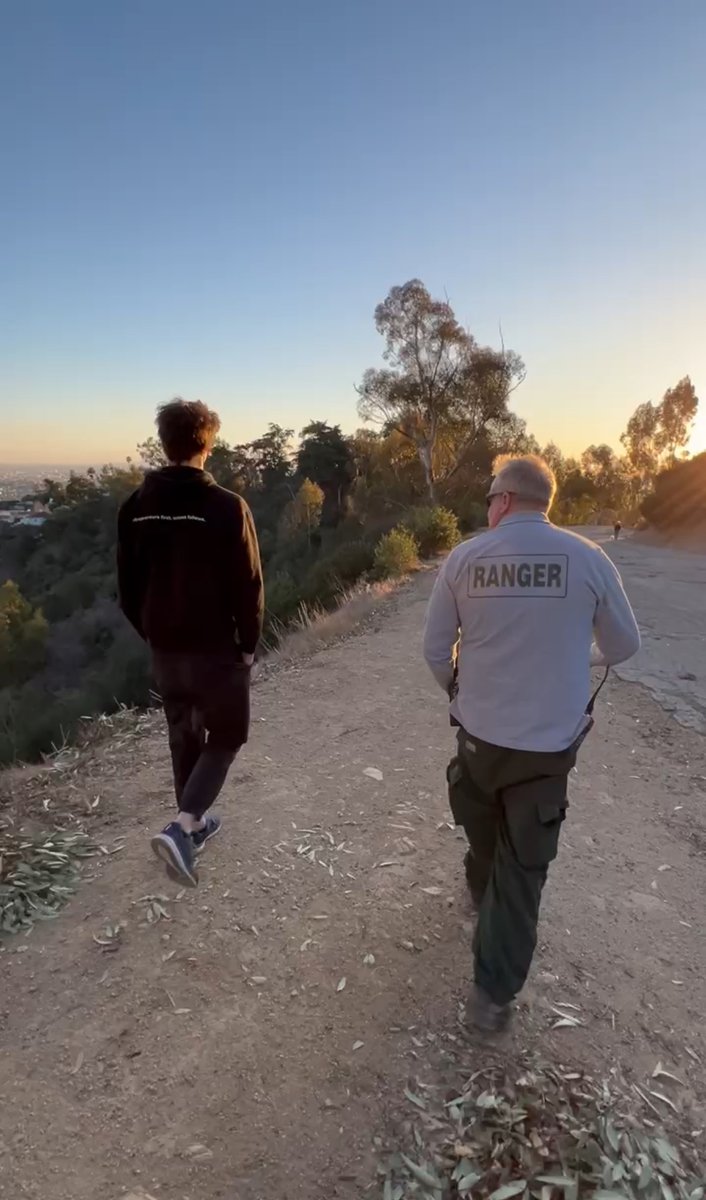
As soon as we heard about the LA wildfires, the Torch team immediately drove down to help on the ground in LA.
We’ve since worked with first responders, the City of LA, and concerned citizens to make sure we monitor as many at-risk areas as we can.
Live LA Torch sensor fire map is live: https://t.co/FK7RX5wi93
No one deserves to have their house burned down. Memories wiped. Possessions gone.
At Torch, we’ve built the world's best early fire detection sensor. The Ring camera for wildfires.
Here’s how 👇
The wildfires devastating Los Angeles City and County are a heartbreaking reminder of the immense toll these disasters take on lives, homes, and ecosystems. Our thoughts are with those affected, and we extend our deepest gratitude to the first responders and volunteers working tirelessly to protect LA.
One company, Torch (@torchsensors), is currently deployed in Los Angeles, doing what they can to help. Let’s dive in.
Torch, founded in San Francisco, California, has developed solar-powered sensors to detect flames in wildfire situations. Their detection methods can pinpoint spot fires in minutes, as every moment is critical in a wildfire scenario. Detection is multivariable - the first technology used is infrared, which relies on infrared radiation to detect, measure, or visualize heat and objects invisible to the naked eye. Second, Torch utilizes spectral analysis, which examines signals or materials across frequencies to reveal their properties. In a wildfire, spectral analysis enables the identification of gases, flames, or particulates. Lastly, the sensor is equipped with gas sensing, which is particularly useful when objects block the sensor’s camera.
Compared to other fire detection methods, Torch's technology is much faster. Traditional gas sensors often take 30–60 minutes to detect a fire, cameras take 1–5 hours, and satellites take 5–24 hours. Torch’s sensors, however, detect fires within 1–10 minutes. The faster aerial firefighting assets can be deployed, the more effectively the fire's spread can be mitigated. Additionally, Torch's sensors offer directional detection, providing critical information about the flames' location.
Beyond the sensors, Torch has developed a data platform that provides 24/7 visibility and cross-user connectivity, creating a virtual safety net across neighborhoods. Their comprehensive analytics suite includes customized graphing, historical comparisons, heat maps, key fire-related events, and timelapses. The platform also integrates third-party data, such as terrain analysis, mapping, and APIs, creating a direct link to emergency responders.
Torch is building the outdoor equivalent of smoke detectors but with the most advanced technology. One major issue with wildfires is hotspots - localized areas of elevated heat often detected through thermal imaging or infrared sensors. These indicate active combustion, smoldering debris, or residual heat from a fire. Hotspots are often caused by embers, small, glowing fragments of burning or smoldering material, such as wood or vegetation. Embers can travel miles, depending on wind conditions, and ignite nearby flammable materials. Torch's sensors can detect small embers and flames as small as 2x2 inches, far from the wildfire's main area.
In terms of the team, Torch was founded by Vasya Tremsin (@VasyaTrem - CEO), Anton Tremsin (CTO), and Joseph Morris (@0xpingouse - COO). Vasya has been deeply involved in sensor technology from an early age, developing the idea to detect fires using sensors while in high school, which led to him winning first place at Intel’s International Science Fair. He went on to earn degrees in Computer Science and Economics from the University of California, Berkeley, and the University of Pennsylvania. Anton is a researcher with 30+ years of experience at elite institutions, including UC Berkeley and the University of Leicester. Joseph, a graduate of Columbia University, has extensive experience across sales and finance functions, from early-stage startups to large institutions.
In the United States alone, more than 55,000 wildfires occur annually, burning over 2.6 million acres. The economic damages of wildfires range widely year by year. In 2018 alone, wildfires caused $22.7 billion in economic damage in the United States. The market for wildfire protection systems sits at $8.6 billion and has a CAGR of 12.6%. Torch’s end markets vary across government, commercial, and consumer sectors. The company’s technology can be deployed at large-scale infrastructure sites as well as outside small homes, with the team priding itself on hands-on deployment.
In closing, Torch is developing critical sensor technology for one of the most important use cases: wildfire detection. The team is on the ground in Los Angeles, deploying this technology to assist in detection efforts.
Website: https://t.co/gJ9oVhi5sf
Watch our interview here:
Ultra early fire detection sensors NEED to be deployed right now in LA and then complete coverage through the rest of California.
Listening to founders cough from smoke exposure on the phone while they push hardcore to get sensors up with LA rangers into strategic locations and hearing that capital has been a bottleneck for getting more sensors to people that want them, makes me question how the VC industry works.
Don't back some shitty app for wasting time, back serious things that make a difference.
Also cool to see @helium being useful as well on the decentralized radio front.