A NETWORK PRICE POLL FOR $ANET
What if we ask you to sell your $ANET coin today that you are still mining for the last 3-4 months .
How much will you sell it for ?
Remember there are buyers in the market .
Vote Below 👇
#ANetwork#ANet#wANet
📢 StarX Network — STRX Halving Successfully Completed ⛏️🚀
We are pleased to announce that the Phase 4 STRX mining halving has been successfully completed, in accordance with the StarX Network Whitepaper and its planned mining rate reduction schedule.
As outlined in Section 9 — Halving & Mining Rate Reduction of our Whitepaper, the STRX mining rate is designed to decrease over time to gradually reduce token emissions, promote scarcity, and support the long-term sustainability of the StarX Network ecosystem.
⛏️ Updated Mining Rate
Previous Mining Rate: 0.1563 STRX/hour
New Mining Rate: 0.0391 STRX/hour
👥 Updated Referral Boost
Previous Referral Boost: 0.1850 STRX/hour
New Referral Boost: 0.0925 STRX/hour
These updated rates are now active following the scheduled 19 August 2026 UTC halving phase.
📖 According to the StarX Whitepaper
The StarX Network Whitepaper establishes a fixed, time-based mining reduction schedule. The purpose of this mechanism is to gradually reduce new STRX emissions as the network develops, while rewarding early participation and supporting long-term token scarcity.
The Phase 4 reduction was scheduled as follows:
Phase 4 — 19 August 2026 (UTC)
Mining Rate: 0.0391 STRX/hour
This milestone has now been implemented.
💡 Tip: Increase Your Mining Potential
Although the base mining rate has been reduced according to the planned emission schedule, users can still increase their potential mining rate through StarX Network’s available features.
⚡ Boost your mining speed to increase your mining rate.
👥 Invite your friends to StarX Network and build your referral network to earn additional referral boosts.
📱 Stay active and continue participating in the StarX Network ecosystem and its upcoming features.
The halving is not the end of mining — it is an important part of StarX Network’s long-term emission model. As the network grows, our goal is to continue building a sustainable ecosystem around STRX with future utility, community growth, and Web3 integrations.
📖 Read the StarX Network Whitepaper:
https://t.co/c5msTkWHyh
You can review the complete Halving Schedule, Mining Roles, Tokenomics, Roadmap, Security Model, and Vision directly in the Whitepaper.
Thank you to our community for your continued support, participation, and trust in StarX Network.
🚀 Keep Mining. Keep Building. Keep Growing.
🔗 Official Resources
📲 Google Play Store:
https://t.co/jBp1414gaz
📄 Whitepaper:
https://t.co/c5msTkWHyh
— StarX Network Team
🚀 StarX Network – KYC & Spin & Wheel Now Live
We are pleased to announce that the latest update for StarX Network has been successfully released, introducing key features to enhance the overall user experience.
🔐 KYC Verification – Now Available
KYC verification is now officially live inside the app. Users can complete verification through a simple face verification process, designed to be fast, secure, and user-friendly.
Updated Requirement:
• Minimum 1,000 STRX balance required
• The previous 7-day active mining requirement has been removed
📍 How to Access KYC:
• Open the app
• Go to Menu → Profile
• Tap on Verify
📲 Important:
Please make sure to update the app from the Google Play Store to access the KYC feature.
🎡 Spin & Wheel Feature – Now Live
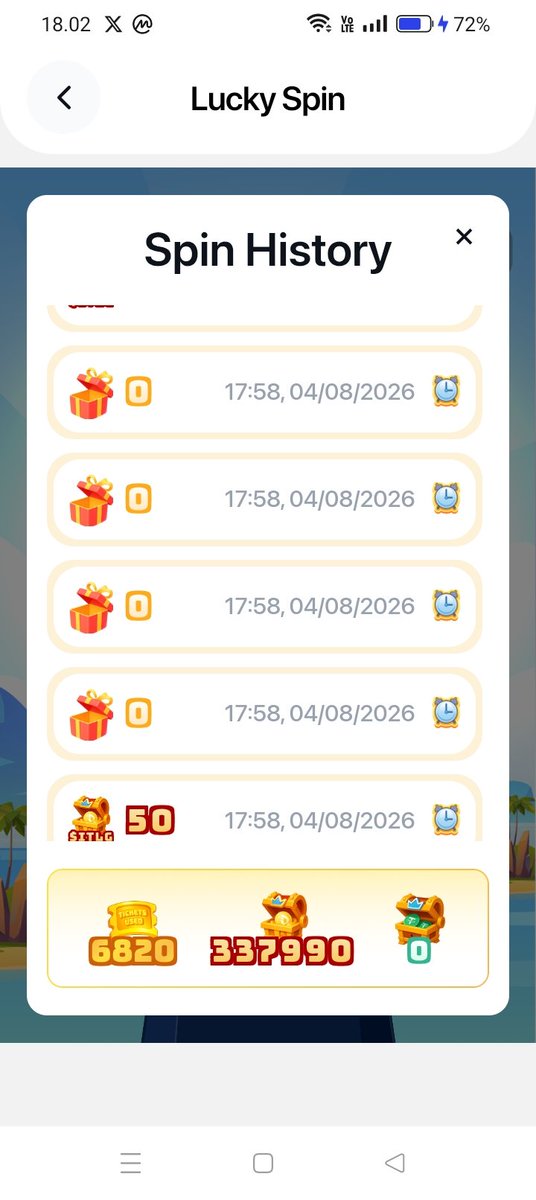
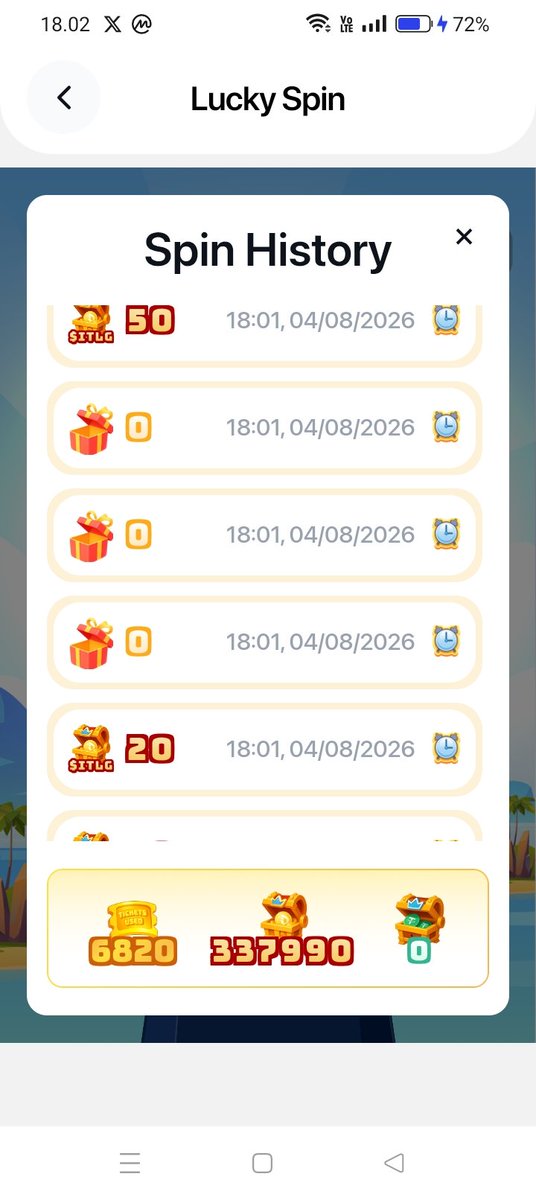
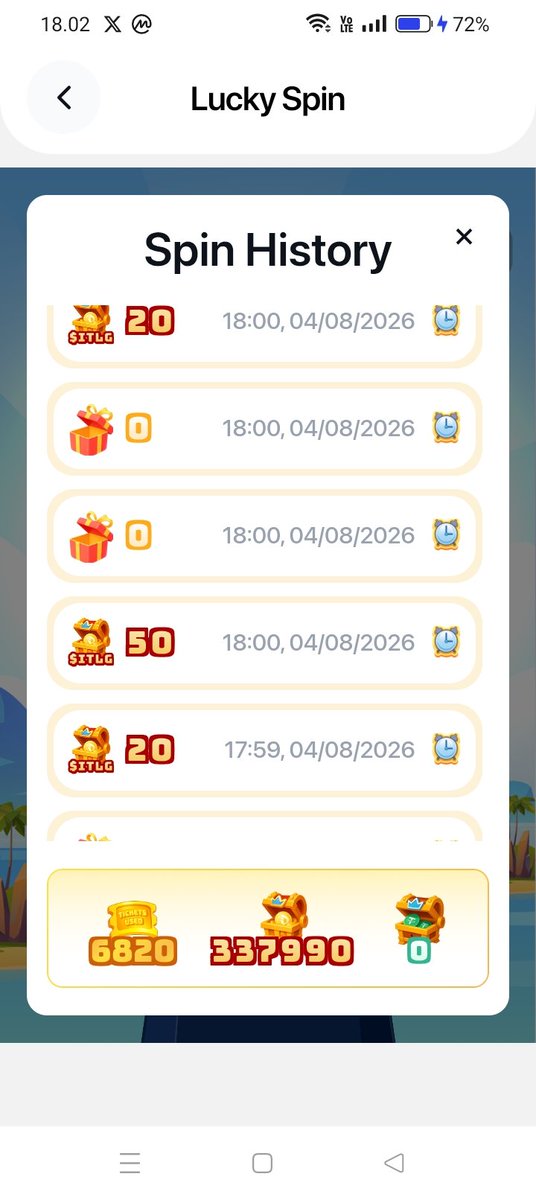
The Spin & Wheel (Lucky Spin) feature is now available, offering users a new and interactive way to engage and earn within the platform.
📍 How to Access Lucky Spin:
• Open the app
• Go to Menu
• Tap on Lucky Spin
🛠 Platform Improvements
This update also includes performance enhancements and bug fixes to ensure a smoother and more stable experience.
🔗 Official Resources
📲 Google Play Store
https://t.co/jBp1414gaz
📄 Whitepaper
https://t.co/c5msTkWHyh
We encourage all users to update their app and start using the new features.
Thank you for your continued support and participation.
— StarX Network Team 🚀
SECOND ROUND OF ITLG → vITLG IS COMING!
I know many of you may be thinking, “My KYC hasn’t been completed yet, so how will I receive my vITLG?”
Here’s what I want to say: If your KYC has been pending since April and is still not completed, comment your InterLink ID below.
I’ll try my best from my side to help get your KYC completed, so you can also have the opportunity to receive your vITLG in the upcoming round.
I can’t guarantee the outcome, but I’ll put in my maximum effort for every Linker.
Drop your InterLink ID in the comments — let’s try to get everyone ready for the next round!
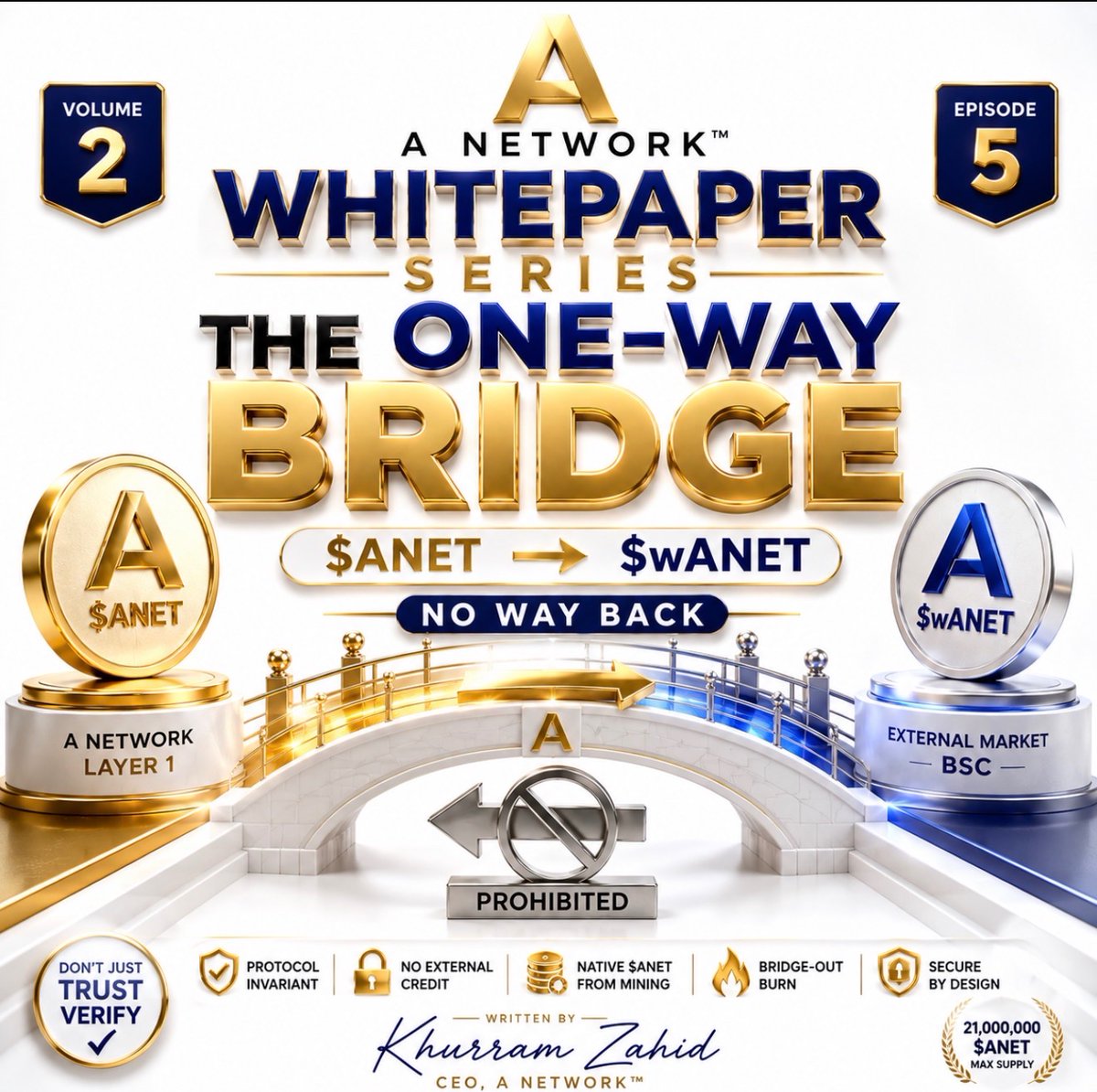
📘 A NETWORK™ WHITEPAPER SERIES
VOLUME 2 — EPISODE 5
🌉 THE ONE-WAY BRIDGE
Why Buying $wANET Can Never Create Native $ANET
A Network™ Whitepaper Version 4.4 introduces one of the most important economic rules of the network.
At the center of this update is one fundamental principle:
Native $ANET originates through the Layer 1 mining and issuance rules — not by purchasing $wANET on the external market.
This principle is now defined as a protocol invariant.
🟡 WHAT IS NATIVE $ANET?
Native $ANET is the coin of the A Network Layer 1 blockchain.
Its maximum native supply remains:
21,000,000 $ANET
Native $ANET enters the network according to A Network’s mining, activation, emission and halving rules.
Purchasing an asset on an external blockchain cannot create additional native $ANET.
🔵 WHAT IS $wANET?
$wANET is better understood as the external market representation of $ANET.
Once on the external market, people can:
✅ Buy
✅ Sell
✅ Hold
✅ Transfer
✅ Swap
✅ Participate in available liquidity pools
But there is an important distinction:
Purchasing $wANET does NOT mean purchasing native Layer 1 $ANET.
Ownership of $wANET creates no right to redeem it for newly spendable native $ANET.
🌉 WHY IS IT A ONE-WAY BRIDGE?
The permitted direction is:
⛏️ MINING
⬇️
🪙 NATIVE $ANET
⬇️
🔐 ELIGIBILITY + VESTING
⬇️
🔥 BRIDGE-OUT BURN
⬇️
🌉 EXTERNAL RELEASE
⬇️
🌎 $wANET ON THE OPEN MARKET
✅ PERMITTED
But the opposite direction:
🌎 BUY $wANET
⬇️
🌉 SEND TOWARD LAYER 1
⬇️
🪙 RECEIVE NATIVE $ANET
❌ PROHIBITED
Version 4.4 makes this direction technically unavailable at the Layer 1 issuance boundary.
🧠 AN EXAMPLE
Imagine a miner has completed 1,000 sessions and mined:
5 native $ANET
The same person separately purchases:
100 $wANET
Subject to the required eligibility and vesting rules, the miner may bridge:
5 native $ANET → 5 $wANET
The person could then hold:
105 $wANET
But the 100 purchased $wANET cannot be converted into 100 newly spendable native $ANET.
Even completing 1,000 sessions does not change this.
The 1,000-session requirement determines eligibility related to mined Layer 1 coins.
It does not create redemption rights for purchased $wANET.
🔥 WHY DOES THIS MATTER?
A Network™ has a mining-first native economy.
If native $ANET issuance is controlled by mining rules, but another route allows externally purchased tokens to create native $ANET, those two economic models would conflict.
Version 4.4 closes that inbound route.
The principle becomes extremely clear:
⛏️ THE MARKET CAN TRADE $wANET.
🚫 THE MARKET CANNOT MANUFACTURE NATIVE $ANET.
🔒 WHAT DOES “PROTOCOL INVARIANT” MEAN?
This is an important distinction.
Version 4.4 is not simply saying:
“Please don’t convert $wANET back into $ANET.”
The restriction is implemented at the protocol level.
External Layer 1 credit routes are disabled.
The spoke-portal credit gate is hard-coded off.
The state-layer external mint path refuses credits.
There is no normal administrator key, environment variable or signer set designed to reactivate the external-credit path.
In other words:
The restriction is part of the system architecture, not simply a company policy.
🌎 WHAT HAPPENS TO $wANET AFTER BRIDGING OUT?
Once $wANET reaches the external market, it begins its own market life.
It can move between wallets.
It can be bought and sold.
It can be swapped.
It can participate in available liquidity pools.
Its market price can respond to supply, demand and liquidity.
But those activities do not create a claim against native Layer 1 $ANET.
A Network™ does not guarantee price parity between $wANET and native $ANET and makes no promise regarding price, appreciation, liquidity or returns.
⚠️ WHY “WRAPPED” NEEDS CLARIFICATION
Traditionally, a wrapped crypto asset often implies two-way redemption:
Asset → Wrapped Asset → Original Asset
That is not how external $wANET should be understood under Version 4.4.
The name $wANET remains because the deployed BEP-20 metadata is immutable.
A more accurate description is:
THE EXTERNAL MARKET REPRESENTATION OF $ANET
It enters external circulation through the permitted Layer 1 bridge-out process and thereafter operates independently in the external market.
🛡️ WHAT ABOUT HISTORICAL BALANCES?
Version 4.4 does not rewrite blockchain history.
Historical inbound credits already recorded in sealed blocks remain:
✅ On-chain
✅ Auditable
✅ Recorded
✅ Spendable by their owners according to protocol rules
The new restriction is forward-looking.
No existing balance is simply erased because the bridge architecture changed.
📌 WHAT DID NOT CHANGE?
✅ 21,000,000 native $ANET maximum supply
✅ Mining and issuance rules
✅ Emission and halving schedule
✅ 1,000-session activation threshold
✅ P2P transfers
✅ v4.3 vesting schedule
✅ Validator selection
✅ Existing balances
✅ Freedom to trade $wANET externally
Version 4.4 closes one inbound door that conflicted with the mining-first economy.
📘 WHITEPAPER SERIES
VOLUME 2 — EPISODE 5
Remember the architecture:
⛏️ MINE $ANET
⬇️
🪙 NATIVE LAYER 1 $ANET
⬇️
🔐 ELIGIBILITY + VESTING
⬇️
🔥 BRIDGE-OUT
⬇️
🌎 $wANET EXTERNAL MARKET
And never the reverse.
ONE-WAY MEANS ONE-WAY.
The external market can trade $wANET.
The external market cannot manufacture native $ANET.
DON’T JUST TRUST. VERIFY.
— Khurram Zahid
A Network™ Whitepaper Education Series
#ANetwork #ANet #wANet
📘 A NETWORK™ WHITEPAPER SERIES
VOLUME 2 — EPISODE 5
🌉 THE ONE-WAY BRIDGE
Why Buying $wANET Can Never Create Native $ANET
A Network™ Whitepaper Version 4.4 introduces one of the most important economic rules of the network.
At the center of this update is one fundamental principle:
Native $ANET originates through the Layer 1 mining and issuance rules — not by purchasing $wANET on the external market.
This principle is now defined as a protocol invariant.
🟡 WHAT IS NATIVE $ANET?
Native $ANET is the coin of the A Network Layer 1 blockchain.
Its maximum native supply remains:
21,000,000 $ANET
Native $ANET enters the network according to A Network’s mining, activation, emission and halving rules.
Purchasing an asset on an external blockchain cannot create additional native $ANET.
🔵 WHAT IS $wANET?
$wANET is better understood as the external market representation of $ANET.
Once on the external market, people can:
✅ Buy
✅ Sell
✅ Hold
✅ Transfer
✅ Swap
✅ Participate in available liquidity pools
But there is an important distinction:
Purchasing $wANET does NOT mean purchasing native Layer 1 $ANET.
Ownership of $wANET creates no right to redeem it for newly spendable native $ANET.
🌉 WHY IS IT A ONE-WAY BRIDGE?
The permitted direction is:
⛏️ MINING
⬇️
🪙 NATIVE $ANET
⬇️
🔐 ELIGIBILITY + VESTING
⬇️
🔥 BRIDGE-OUT BURN
⬇️
🌉 EXTERNAL RELEASE
⬇️
🌎 $wANET ON THE OPEN MARKET
✅ PERMITTED
But the opposite direction:
🌎 BUY $wANET
⬇️
🌉 SEND TOWARD LAYER 1
⬇️
🪙 RECEIVE NATIVE $ANET
❌ PROHIBITED
Version 4.4 makes this direction technically unavailable at the Layer 1 issuance boundary.
🧠 AN EXAMPLE
Imagine a miner has completed 1,000 sessions and mined:
5 native $ANET
The same person separately purchases:
100 $wANET
Subject to the required eligibility and vesting rules, the miner may bridge:
5 native $ANET → 5 $wANET
The person could then hold:
105 $wANET
But the 100 purchased $wANET cannot be converted into 100 newly spendable native $ANET.
Even completing 1,000 sessions does not change this.
The 1,000-session requirement determines eligibility related to mined Layer 1 coins.
It does not create redemption rights for purchased $wANET.
🔥 WHY DOES THIS MATTER?
A Network™ has a mining-first native economy.
If native $ANET issuance is controlled by mining rules, but another route allows externally purchased tokens to create native $ANET, those two economic models would conflict.
Version 4.4 closes that inbound route.
The principle becomes extremely clear:
⛏️ THE MARKET CAN TRADE $wANET.
🚫 THE MARKET CANNOT MANUFACTURE NATIVE $ANET.
🔒 WHAT DOES “PROTOCOL INVARIANT” MEAN?
This is an important distinction.
Version 4.4 is not simply saying:
“Please don’t convert $wANET back into $ANET.”
The restriction is implemented at the protocol level.
External Layer 1 credit routes are disabled.
The spoke-portal credit gate is hard-coded off.
The state-layer external mint path refuses credits.
There is no normal administrator key, environment variable or signer set designed to reactivate the external-credit path.
In other words:
The restriction is part of the system architecture, not simply a company policy.
🌎 WHAT HAPPENS TO $wANET AFTER BRIDGING OUT?
Once $wANET reaches the external market, it begins its own market life.
It can move between wallets.
It can be bought and sold.
It can be swapped.
It can participate in available liquidity pools.
Its market price can respond to supply, demand and liquidity.
But those activities do not create a claim against native Layer 1 $ANET.
A Network™ does not guarantee price parity between $wANET and native $ANET and makes no promise regarding price, appreciation, liquidity or returns.
⚠️ WHY “WRAPPED” NEEDS CLARIFICATION
Traditionally, a wrapped crypto asset often implies two-way redemption:
Asset → Wrapped Asset → Original Asset
That is not how external $wANET should be understood under Version 4.4.
The name $wANET remains because the deployed BEP-20 metadata is immutable.
A more accurate description is:
THE EXTERNAL MARKET REPRESENTATION OF $ANET
It enters external circulation through the permitted Layer 1 bridge-out process and thereafter operates independently in the external market.
🛡️ WHAT ABOUT HISTORICAL BALANCES?
Version 4.4 does not rewrite blockchain history.
Historical inbound credits already recorded in sealed blocks remain:
✅ On-chain
✅ Auditable
✅ Recorded
✅ Spendable by their owners according to protocol rules
The new restriction is forward-looking.
No existing balance is simply erased because the bridge architecture changed.
📌 WHAT DID NOT CHANGE?
✅ 21,000,000 native $ANET maximum supply
✅ Mining and issuance rules
✅ Emission and halving schedule
✅ 1,000-session activation threshold
✅ P2P transfers
✅ v4.3 vesting schedule
✅ Validator selection
✅ Existing balances
✅ Freedom to trade $wANET externally
Version 4.4 closes one inbound door that conflicted with the mining-first economy.
📘 WHITEPAPER SERIES
VOLUME 2 — EPISODE 5
Remember the architecture:
⛏️ MINE $ANET
⬇️
🪙 NATIVE LAYER 1 $ANET
⬇️
🔐 ELIGIBILITY + VESTING
⬇️
🔥 BRIDGE-OUT
⬇️
🌎 $wANET EXTERNAL MARKET
And never the reverse.
ONE-WAY MEANS ONE-WAY.
The external market can trade $wANET.
The external market cannot manufacture native $ANET.
DON’T JUST TRUST. VERIFY.
— Khurram Zahid
A Network™ Whitepaper Education Series
#ANetwork #ANet #wANet
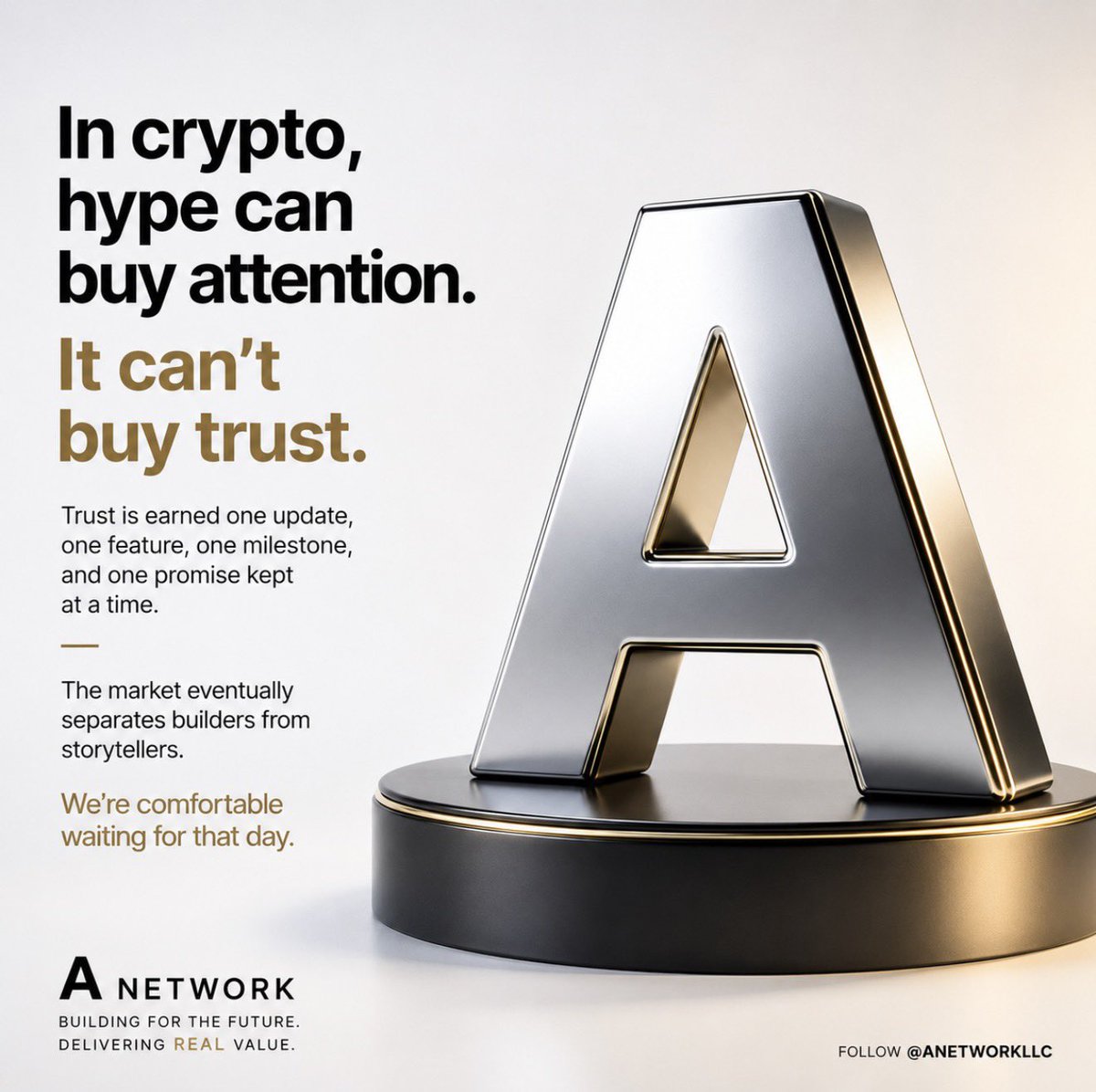
In crypto, hype can buy attention.
It can’t buy trust.
Trust is earned one update, one feature, one milestone, and one promise kept at a time.
The market eventually separates builders from storytellers.
We’re comfortable waiting for that day.
#ANetwork#ANet#wANet#Crypto
Banyak narasi yang bilang kalau ancaman Quantum Computing bakal memusnahkan sistem keamanan blockchain. Padahal kalau kita liat dari kacamata teknologinya langsung, industri kripto justru yang paling cepat beradaptasi!
Dari era Web3, munculnya AI Agent, hingga nanti memasuki Quantum Era, ekosistem raksasa seperti Bitcoin dan Ethereum selalu memperbarui roadmap serta mekanisme konsensus mereka (seperti transisi Proof of Work ke Proof of Stake).
Bukannya menjadikan ancaman teknologi baru sebagai musuh, para developer justru menerapkan strategi "Reverse Quantum" yaitu memanfaatkan kekuatan komputasi kuantum itu sendiri untuk memperkuat benteng kriptografi blockchain!
Daripada termakan gosip tanpa dasar, yuk pahami cara kerja inovasi teknologi ini secara rasional di video singkat berikut! 🔥
Lo tipe yang percaya blockchain bakal terus beradaptasi dan makin kuat, atau masih cemas sama perkembangan teknologi kuantum?
#Web3 #Ethereum #QuantumComputing #EdukasiCrypto #INDODAX
DISCLAIMER:
Segala bentuk transaksi aset kripto memiliki risiko dan berpeluang untuk mengalami kerugian. Tetap berinvestasi sesuai riset mandiri sehingga bisa meminimalisir tingkat kehilangan aset kripto yang ditransaksikan (Do Your Own Research/ DYOR).
Konten video yang INDODAX buat secara umum hanya untuk tujuan informasi saja. Konten ini tidak dimaksudkan untuk, dan tidak boleh dianggap sebagai, suatu penawaran, rekomendasi, ajakan atau nasihat untuk membeli atau menjual produk investasi apa pun dan tidak boleh dikirimkan, diungkapkan, disalin, atau diandalkan oleh siapa pun untuk tujuan apa pun.