#LetFreedomSing Remember What Others Have Done for You by Brian Tamuka Kagoro
Truth is , every human being feels somehow when their investment of time , attention , love , friendship , familial bond, or comradeship is undervalued. Selfless acts do not justify , let alone excuse selfish responses from their beneficiaries . Giving is not the same as careless throwing away . Each act of giving has two value bases, namely the cost to the giver and the worth to the recipient. These two value bases are often not aligned and in unpredictable ways . You may do something that you think is small, and the beneficiary might be blown away by your casual act to humanise them . On the other hand, you might make a huge personal sacrifice for the benefit of a friend , child , parent , relative , workmate , neighbour, or comrade who receives it with little regard or even disdain
Most people in this life only remember what they think they have done for other people. In their selective memories, only they have sacrificed , gone beyond the call of duty , done the most, and been through the most . These are symptoms of delusions of grandeur.
Very few have any recollection of what others ( great and small) have done for them , the unusual gestures of kindness , sacrifices of time , gifts , help , and the list goes on . This is a sign of narcissism and selfishness. We all suffer from several degrees of this . We keep taking and taking some more because others are kind enough to give. All of us owe lots of people who are in our lives ,truck loads of apologies for being self-absorbed , selfish , and inattentive to their sacrifices. This is a childish trait and is deeply rooted in entitlement .
When folka are on an upward trajectory in their lives , businesses , careers, or relationships , they often do an alt, control, and delete on old friendships ,colleagues, and some family trolls . Some friends are kept unattended like antique furniture or cars . Others are left out in the cold like a garden bench . Life has a way of bringing everyone back to the essential relationships , sometimes in tragic or comic ways .
So , to everyone who has been an important part of my life journey in big and small ways , thank you for all the personal sacrifices and selfless giving . I am because you are !
LIBERATION SONGS(Part3)-"MARUZA IMI"
From thursday the 16th of April to Saturday, I have been posting monolizations I did of Liberation War songs over the last few years to mark our Independence Day which is today.
Happy Independence Day
A RE-VISIT OF MONOLISED LIBERATION SONGS(Part2)-"NZIRA DZEMASOJA"
From yesterday to Saturday, I will be posting monolizations I did of Liberation War songs over the last few years to mark our Independence Day this coming Saturday.
Sometimes the most powerful thing you can say…
is one word.
“NO.”
From Zimbabwe, throughout Africa to the entire black nation, THIS is for us!
#No OUT NOW!
🎙️ @OfficialMukanya
🎺 @Owuorobi
LINK BELOW!
https://t.co/G2sL39QIih
#LetFreedomSing I always caution young discontented Africans and complacent middle classes to avoid conflating two things , the failures and excesses of post-independence leadership with the importance of Liberation from colonial rule or fighting for freedom from racial domination .
Those who paid the ultimate price for the Liberation of Africa or specific countries created conditions that we now take for granted. True , others assumed power after independence and blatantly deepened repression to levels way beyond those that obtained under racist minority rule . And some amongst these looted public coffers built very little and excelled in lying to the masses. They had-still do - fiery revolutionary rhetoric and unmistakable deeply embedded criminal pathologies . These men and women turned African countries into live crime scenes . African countries are humiliated and made to beg for Aid ,are in debt distress , and yet some African leaders living like wealthy Sheikhs and Barons . They ,their families , and clique have colonised our countries and subjected us to a new form of indigenous minority rule . Obtuse power and primitive accumulation with very little or no development at all .
Despite all this and more , we should, however, never be tempted to dishonour the sacrifices made by young men and women who fought for the liberation of our countries.
Indeed ,such sacrifices do not create a divine right to loot and misgovern .
Remember always that those who sacrificed forfeited opportunities, normal family lives , welfare , and well-being. They are worth our recognition and respect.
In fact , it is gross disrespect to the myriad of sacrifices made by freedom fighters for anyone or clique to seek to privatise power and the state . It is sacrilege against Liberation ideals to seek to create rulership with neither legitimacy nor capacity to deliver quality public services to the masses .
DID YOU KNOW
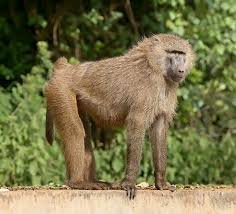
The Soko Mukanya clan is a branch (sub-totem or chidawo) of the broader Soko (also spelled Shoko or Tsoko) totem among the Shona people of Zimbabwe. The main totem, Soko, refers to the monkey or baboon and is one of the most widespread and ancient totems (mitupo) in Shona society. Mukanya (sometimes linked with Vhudzijena, meaning "white-headed") serves as a distinguishing praise name that identifies specific sub-clans within the Soko lineage.
Mythical and Early Origins
According to Shona oral traditions, totemism originated with the earliest known Shona ancestor, Mambiri, in a mythical place called Guruuswa (located north of the Zambezi River in what is now southern Tanganyika/Tanzania). Mambiri adopted the Soko totem for his followers primarily to prevent incestuous behavior (makunakuna) and enforce exogamy (marriage outside one's clan), while also providing a clear social identity. As the early Shona population grew, a second totem (often Shava/Mhofu, the eland) was later adopted to allow intermarriage between groups.
Some traditions link the Soko lineage specifically to a legendary incident in which one of Mambiri’s descendants (possibly the firstborn son) committed an abomination by impregnating a half-sister, leading to a totem change from Mhofu to Soko as a way to appease ancestral spirits and "cut" the blood relation. This branch became associated with spirit mediums (mhondoro). Soko Mukanya is often regarded in oral accounts as one of the foundational or "original" branches of the Soko totem (ndiyo yekutanga), tied to the story of Pfumojena (an ancestral figure).
Migration, Settlement, and Historical Roles in Zimbabwe
The ancestors of the Soko Mukanya clans migrated southward and settled in Zimbabwe, with strong historical ties to the Hwedza (Wedza) area. They are also linked to the Mbire dynasty (Soko Mbire yaSvosve), which played a role in early Shona polities and is sometimes associated with the builders or rulers connected to Great Zimbabwe and related stone-building traditions (though these claims vary in oral histories).
The clan is renowned in praise poetry (nhetembo dzemadzinza) for specific ancestral professions and roles:
Iron-smelters (vapfuri vemhangura) — skilled in metallurgy.
Caretakers and rain-makers (vanaisi vemvura) at Matonjeni (or Matojeni), the holy shrines associated with Mwari (the supreme deity) worship. The baboon is considered a sacred animal in Shona belief; harming it was traditionally thought to prevent rain, reinforcing the clan’s spiritual role as intermediaries at these shrines.
Many Soko totem holders, including those of the Mukanya branch, served as mhondoro spirit mediums. The clan is said to have gained chieftainships through shrewdness, diplomacy, and intelligence (ushe neuchenjeri), and they are described as original inhabitants (matangakugara) in certain regions.
Clan Identity and Praise Poetry
Soko Mukanya is distinguished within the Soko totem by its chidawo (praise name), which evokes the baboon’s distinctive galloping or pompous gait when climbing mountains or cliffs (makwiramiti, mahomu-homu). Clan members are often characterized in oral lore as intelligent, clever, cunning, agile, and socially astute—traits modeled after the monkey/baboon.
Modern Context and Significance
Today, people of the Soko Mukanya totem are found across Zimbabwe (and in related Shona communities), scattered from areas like Hwedza to Mashonaland, Matabeleland, and beyond. The totem continues to serve as a key marker of identity, kinship, and exogamy rules. Historian Aeneas Chigwedere, a leading authority on Shona dynastic history, dedicated an entire volume to the clan—The Soko Mukanya Clans (Mutapa Publishing House, 2016, part of his Dynastic History series)—underscoring its importance in Zimbabwe’s pre-colonial chiefly lineages and social structure.
HISTORICAL BACKGROUND OF ZVIDAWO
Zvidawo are the sub-totems, praise names, or principal clan identifiers used alongside the main totem in Shona culture. A single mutupo—typically an animal (e.g., Shava/elands, Shoko/monkey, Shumba/lion) or natural element—can have multiple zvidawo. These function like honorifics, sub-clan markers, or even surnames, and they are central to Shona identity, kinship, and oral traditions.
Historical Origins
The totem (mutupo) system dates back to the earliest stages of Shona culture, rooted in Bantu migrations and animistic beliefs. Clans adopted symbols (usually animals believed to embody ancestral spirits) as protectors, guardians, and markers of shared descent. This practice is linked to mythological origins, such as the ancestor Mambiri choosing the Shoko (monkey) totem in the ancient homeland of Guruuswa (north of the Zambezi). It evolved through major Shona polities like the Great Zimbabwe (c. 1250–1450), Mutapa, Torwa, and Rozvi empires.
Totems were practical as well as spiritual: they helped organize society during migrations and settlements, served as a “calling card” for recognizing kin among strangers, and enforced exogamy (marrying outside one’s own group) to prevent incest. Over time, as populations grew and clans dispersed, the need for finer distinctions arose. This is where zvidawo developed.
Why One Mutupo Can Have Multiple Zvidawo
The core reason is clan branching, population growth, and the practical need to distinguish lineages while preserving the broader totemic bond. Here’s why the system developed this way:
Early population pressure and exogamy rules: Shona society practiced strict exogamy based on the totem—people sharing the same mutupo were considered too closely related to marry. As the original clans (e.g., those under the primordial Shoko totem) expanded, finding suitable marriage partners within the limited number of totems became difficult. One response was adopting additional totems, such as the Shava/Mhofu (eland) totem, specifically to allow intermarriage between the two groups while still respecting the prohibition within each totem.
Clan fission and sub-lineage identity: Clans naturally split over generations due to migration, settlement in new areas, leadership disputes, or the founding of new branches by different sons of a common ancestor. All descendants kept the original mutupo (inherited patrilineally from the clan founder), because it represented the sacred ancestral spirit and core kinship. However, each branch needed its own identifier to avoid confusion. Zvidawo served this purpose: they act as “principal praise names” that distinguish different clans or sub-clans sharing the same totem. For example:
Shava (eland) totem has zvidawo such as Mazarura, Mufakose, Mutenhesanwa, and Museyamwa.
Shoko (monkey) has Vhudzijena, Murehwa, etc.
Shumba (lion) has Murambwi, Nyamuziwa.
In contemporary Shona society, there are roughly 25 major totems but at least 60 zvidawo, reflecting this proliferation of sub-branches.
Social and practical functions: Zvidawo function as honorific titles for adult males (e.g., addressing someone as “Chikonamombe” instead of a modern surname), family names, or markers in daily life and rituals. They allow precise kinship recognition (“Are you Shava-Mazarura or Shava-Mufakose?”) even when the broad totem is the same. Praise poems tied to each zvidawo preserve specific history, geography (e.g., references to ancestral lands), and character traits of that sub-lineage. This system maintained unity (same totem = distant relatives who might assist each other in rituals like burials) while enabling social differentiation in a growing, mobile society.
DID YOU KNOW
The resettlement history tied to Lake Kariba is one of the largest and most controversial forced displacements in 20th-century southern Africa, profoundly affecting the BaTonga (Tonga or Gwembe Tonga) people on both sides of the Zambezi River.
The Kariba Dam, a double-curvature concrete arch dam built in the Kariba Gorge between what were then Northern Rhodesia (Zambia) and Southern Rhodesia (Zimbabwe), was constructed between 1955 and 1959 (with full operations by 1960) under the Federation of Rhodesia and Nyasaland. It created Lake Kariba—one of the world’s largest man-made reservoirs by volume—primarily for hydroelectric power generation (ultimately supplying over 2,000 MW shared between the two countries). Lake filling occurred gradually from 1958 to 1963, flooding vast stretches of the fertile middle Zambezi Valley.
Scale and Process of Displacement
The project displaced an estimated 57,000 BaTonga people (also historically called Batonka) who had lived for generations along the riverbanks, practicing flood-recession agriculture on rich alluvial soils (incelela plots that allowed two harvests per year), fishing, hunting, and livestock herding. They self-identify as basilwizi (“people of the great river”).
Zimbabwe (southern bank): Approximately 23,000 BaTonga were forcibly relocated between 1957 and 1962.
Zambia (northern bank/Gwembe Valley): Roughly 34,000 were moved.
The colonial authorities carried out the resettlement with little to no consultation. Entire villages, ancestral lands, sacred sites, and burial grounds were inundated. Some who resisted or delayed moving reportedly drowned as waters rose. The process involved minimal planning; families were often moved en masse to new sites, with wildlife relocation (“Operation Noah”) receiving more international attention than human impacts in some accounts.
Compensation was inadequate and uneven:
In Southern Rhodesia (Zimbabwe), people received only short-term grain rations and basic support (roughly US$100 equivalent per person invested overall); no significant monetary payments.
In Northern Rhodesia (Zambia), compensation was slightly better at about US$270 per person, though still far from restorative.
The Tonga were moved from the ecologically rich riverine lowlands to higher, arid plateau/upland areas (often classified as marginal Natural Regions IV and V).
In Zimbabwe, the majority were resettled in what became Binga District (previously part of the Sebungwe region) in Matabeleland North Province, as well as parts of Gokwe North, Hwange, and Nyaminyami. Binga itself expanded specifically to accommodate the displaced, transforming it into the modern heartland of Zimbabwe’s Tonga community (now numbering around 300,000 descendants).
New lands proved hostile:
Poor soils, erratic/low rainfall, and extreme heat made sustainable agriculture difficult.
Tsetse fly infestations caused trypanosomiasis (nagana) in livestock; governments conducted large-scale game culling to control it.
Proximity to emerging national parks and safari areas (e.g., Chizarira,) led to chronic human-wildlife conflict—elephants, baboons, and other animals raiding crops and threatening lives.
Traditional livelihoods collapsed: river-based fishing and fertile farming gave way to precarious rain-fed millet cultivation and limited livestock rearing. Social structures, kinship ties, and spiritual practices (including reverence for the river spirit nyami nyami) were disrupted.
Long-Term Legacy and Ongoing Impacts
Decades later, the resettled communities—particularly in Binga—remain among the most marginalized in their countries. Binga is frequently described as Zimbabwe’s “forgotten district,” with extreme poverty rates (around 50% of households extremely poor), high food insecurity (62% facing cereal shortages in recent assessments), limited infrastructure, and restricted access to Lake Kariba’s resources.
INTERESTING HISTORICAL FACTS
Marondera (formerly Marandellas) derives its name from pre-colonial Shona history, specifically from a chief (or area headman) of the VaRozvi (Rozvi) people who lived in the area. The name comes directly from the Shona verb kurondera, which means “to follow” (or “to track/follow by tracking”).
The Legend Behind the Name
According to detailed oral and tribal history from the Vambire people (under Chief Svosve), the name was bestowed as a title. When Chief Svosve died, his son Mukanganise wanted to be installed as the next chief. Mukanganise’s sister, Chikombo, traveled to Mambo’s residence at Dzimbahwe to seek approval on her brother’s behalf but stayed away for a long time. Her brother Msora then went after her to find out what had happened. Mambo, impressed or simply noting the act, gave Msora the name Marondera — meaning “the one who follows” or “the follower/tracker.”
Msora (now Marondera) later succeeded Mukanganise as chief/headman. He lived at Ziwande hills (now part of Carruthersville Estate) and was involved in local power dynamics, including conflicts that led to his death at the hands of warriors sent by another chief (Mukanyadze). The name became hereditary, and a successor Marondera was appointed headman and settled at Nyameni (near the modern town). The area around his residence became known as Marondera’s Kraal.
This connects to the broader Rozvi (VaRozvi) presence in the region; some local chieftainships, including those linked to the 1896 Shona Rebellion (First Chimurenga), claimed Rozvi ancestry.
Colonial Era and the Name “Marandellas”
In 1890, British colonialists established a rest house (way station/outspan) on the wagon road from Salisbury (now Harare) to Umtali (now Mutare). They named it after the nearby Marondera’s Kraal, which their pronunciation corrupted into Marandellas (sometimes spelled Marandella’s Kraal). The settlement grew around a police station, store, and later the railway line and Marandellas Hotel. The original site was largely destroyed during the 1896 Shona uprising and the town was relocated about 6 km north to the Beira–Bulawayo railway.
Post-Independence Restoration
On 21 April 1982, shortly after Zimbabwe’s independence, the colonial name Marandellas was officially changed back to the original Marondera.f3e2fa
(Note: A minority source suggests an alternative folk etymology linking “Marondera” to “of the lion” via Shona words for lion + possessive suffix, but this is not supported by the primary historical accounts or etymological references, which consistently point to the chief and the verb kurondera.)
In short, Marondera is a classic example of a Zimbabwean place name that preserves both a Shona linguistic root and the memory of a specific pre-colonial leader and event. The modern town grew from that ancient kraal into the provincial capital of Mashonaland East.
Hard to believe it’s been 22 years since "Lonely" dropped. This record changed everything for me, but it’s the fans who made it legendary. Much love to my #KonvictFamily worldwide 🙏🏿✨
The Four Brothers rocking London, c1990, on a tour of UK, Italy, Switzerland, Denmark, Canada, Austria, Holland, Germany.
Marshall Munhumumwe was one of a few that played drums AND did lead vocals. Eddie Zulu & Alex Chipaika on guitar. On bass, working the crowd, is Never Mutare