My official statement on the budget, as read in chambers this evening, before I was muted:
"I’ve been a member of this city council going on five years now. And I’ve voted yes on the budget every year so far. All of them had problems. All of them contained things I didn’t like or agree with. But I’m not here to demand perfection, I’m here to work with what we have — within reason.
Unfortunately, this year is very different. And I must vote no.
Even in the context of our dysfunctional city government, this year’s budget represents a complete departure from reality, spending more money than we’ve ever spent — precisely when we can least afford it.
We have never seen a larger single-year increase in spending in the history of this city. Requiring not only new taxes from Albany, but pension deferrals and an eight billion dollar bailout from the Governor. And even still, the revenue projections are optimistic at best.
This isn’t a ‘balanced budget’ — it’s budget by bailout. A ticking time bomb.
And it’s the beginning of a fiscal death spiral that our current leadership will not be able to pull us out of, because they lack both the experience and the seriousness to do so.
What will we do next year? And the year after?
The only responsible way for our city to spend more is to grow the economy. New businesses, new private economic development, major investment. That’s how you grow an economy, and get more money into the city budget.
But we’re doing the opposite. Deliberately chasing away everything our city needs to sustain our spending with childish political attacks on very people we need most.
Our tax base is isn’t growing. It’s leaving.
The middle class, the financial sector, and businesses of all sizes are choosing to go elsewhere. And they’re being replaced with low-income foreigners and transplants who require significant subsidies just to survive here.
We’re trading investment banks and small businesses for delivery app drivers on welfare, and nonprofit workers whose paychecks ultimately come from government spending. That isn’t growth.
And when ordinary New Yorkers complain, they’re told to shut up and leave if they don’t like it. And that’s exactly what many are doing.
This is obviously unsustainable. But nobody in this chamber really seems to care.
And what are we getting for our money? We already spend more in real dollars AND per capita on everything from schools to housing to healthcare than anyone else in the country.
We can’t even build a public bathroom for less than three million dollars.
Why would anyone believe that shoveling even MORE money into this broken system will improve anything?
It won’t. I guarantee that we’ll all be sitting here again a year from now, with the exact same problems, listening to the exact same lectures about how the city needs even MORE money, AGAIN.
At what point do we, as a City Council, start to demand results before we allow more spending? When do we demand accountability?
The answer seems to be never. Because this spending isn’t really meant to fix anything. It’s meant to keep the machine going, keep the money flowing into the special interests and nonprofits and the political allies of the Mayor, with no real consideration for anything else.
I realize a lot of people don’t want to hear this, but we are a municipal government, not a sociology experiment or a political slush fund or the United Nations.
We are here keep the lights on, keep the water running, pave the roads, and put criminals in jail. That’s it. And we would be very well advised to get back to basics. Because we’re failing on nearly every count, other than our peerless ability to hand out free money.
Shame on this Council for pretending this budget is anything other than a disaster. I know that my single vote ultimately doesn’t matter here, but nonetheless I won’t put my name on it. I respectfully vote no."
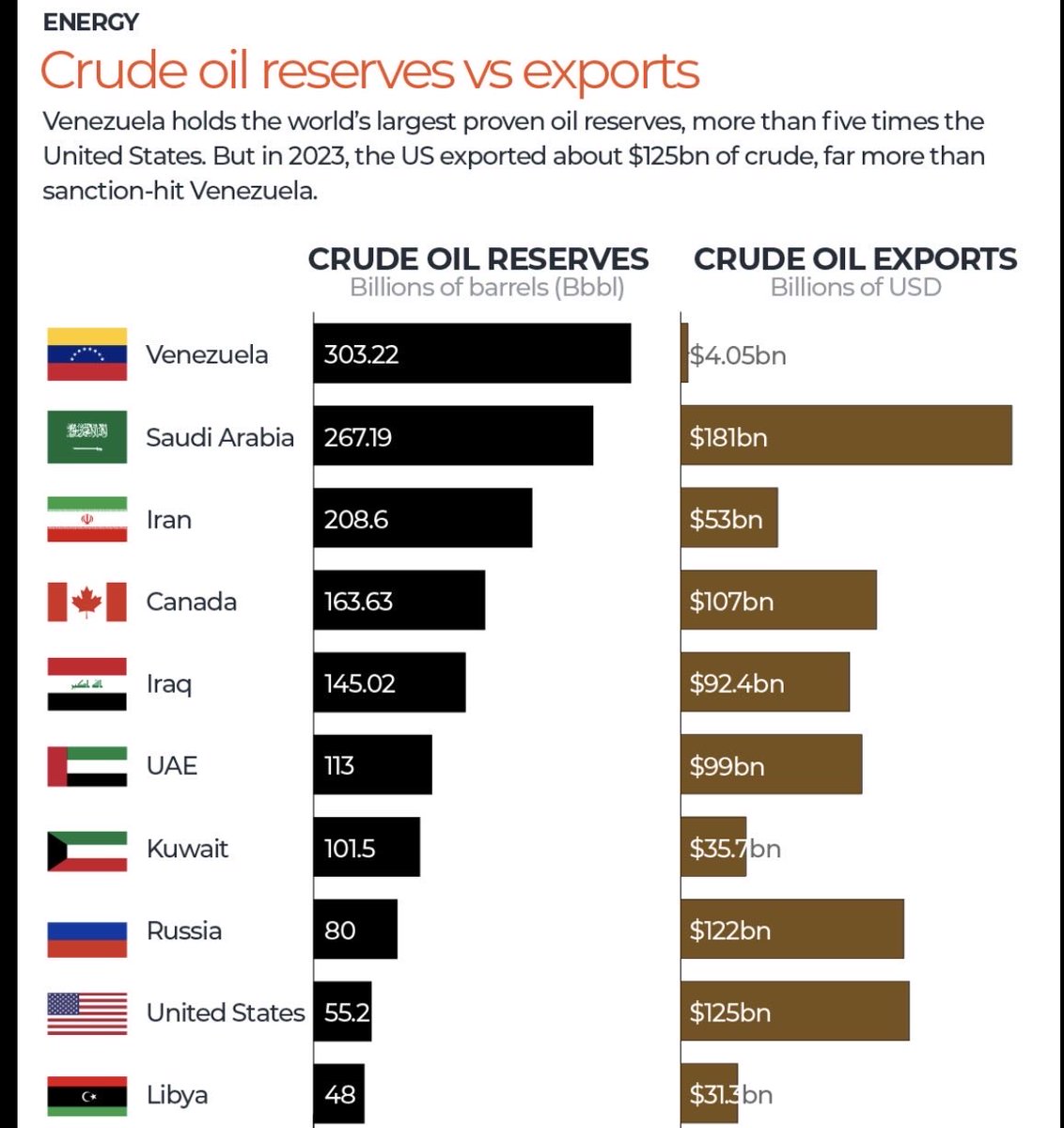
To believe this is about drug smuggling, you have to ignore Trump’s pardon of the former Honduran president for drug smuggling.
To believe it’s about Maduro’s democratic legitimacy, you have to believe Trump cares even slightly about democratic legitimacy.
Alternatively:
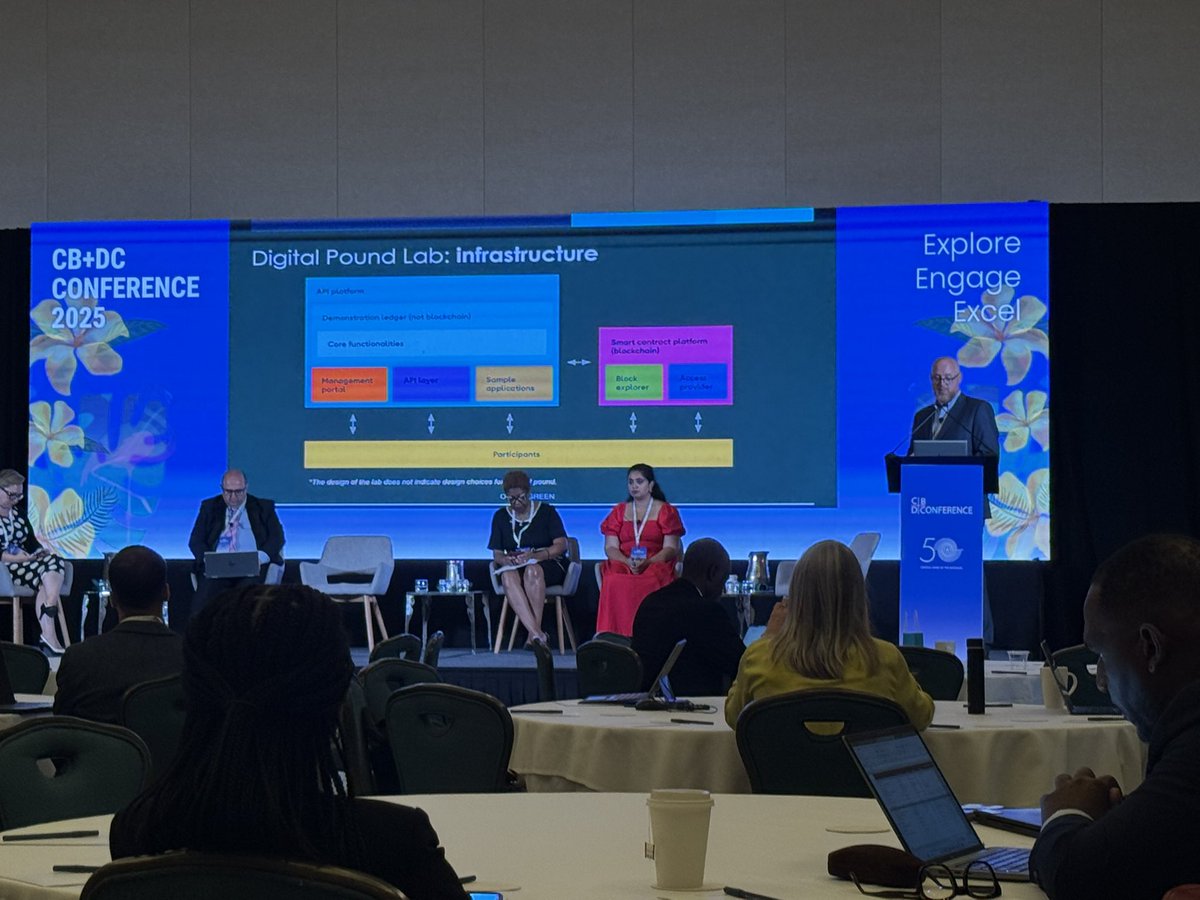
At a CBDC conference in the Bahamas
Spoke to a top German bank saying 50% working capital cost cuts are possible with 20-30% savings on all debt / treasury operations - but private blockchains. Like $50-100m of annual savings per large client. Very material
It increasingly seems like CBDCs in Europe are inevitable due to “monetary sovereignty” considerations. The Bank Of England is currently in a pilot and their chain will have a smart contract platform bolted on (you’re tired of corporate L1s anon? Wait til every country having one). Mainnet decision for BoE in 2026
I pointed out to the German banker that the working capital debt instruments could be tokenized and traded by non KYCed degenerates who were forced by Trump to keep their money in stables. He started laughing and then realized I was right
Canton network and other American players already making inroads there
But this creates a really interesting set up. Everyone saw how Pendle looping got usde $6b of TVL in a month. One thing we know about speculators is that they love carry trades
Even if usde only has 7% yields the defi primitives enable leveraged bets that make interesting returns for typical retail
There will be a situation where every corporate liability is on chain (with a yield) - and has public blockchain representations even if the core assets are on private blockchains
So the “real world asset” thesis is initially a corporate treasury optimization function, that gets turbo charged by CBDCs. One *could* view this as competitive for a lot of existing L1s and you’d be right at a surface level
If the BOE has a smart contract platform on its CBDC then why would a UK corporate use another platform
But this analysis misses the Pendle thing.
Let’s say you start looping Siemens corporate liabilities. That’s great until you realize one is denominated in euros and the other is usd. So it won’t work as well. So contracts will be created on the back end to automatically swap yields into UsD equivalents
Your eyes are rolling back at this point but basically what I’m saying is
1) the German corporations are coming on chain to save money. They can’t help it - they’re Germans and have to optimize everything
2) the Europeans and UK are coming on chain via CBDCs for political sovereignty bc they hate Trump. This is also why they’re arming themselves
3) these assets and chains will be interoperable with existing smart contract platforms
4) the resulting yield trades will have massive fx risk when juxtaposed with massive US dollar stable supply
5) people will solve this and you’ll have a system where you can literally leverage trade any fixed income spread in the world from your web browser
6) the Korean and Japanese retail trading markets are huge crypto volume drivers and already *very familiar* with fx carry trades.
ALL FUTURE ASSETS WILL BE LOOPED ON CHAIN
Nobody is talking about it which is why I’m writing about it a bit
The very simple conclusion of all the above is that
1) Ethereum is going to go deflationary bc the stablecoin ramp will be accompanied by European RWA surge
2) the RWA assets probably end up represented and traded on blockchains so all the exchanges make more money
3) this all results in huge fx trading volume increases (probably why Ripple acquired hidden road)
4) the most incremental asset is probably fixed income spreads - which is why Canton network and fixed income clearing on chain is succeeding (has Goldman Sachs already). MASSIVE CARRY TRADES
5) average Uk/ EU citizens who are already alarmed by censored internet will freak out about CBDCs and get crypto pilled. The CBDCs ironically serve as on ramps
So the entire CBDC/RWA configuration is massively bullish. Galaxy stock should work. ETH/ SOL on the RWA ramp. We need to see ripple actually articulate how this links to hidden road for xrp to pump. Bullish all exchanges and super bullish all defi protocols. Then BTC for all the blackpilled euros
Anatomy of the Milei Ponzi
In my previous piece on Milei[1] 18 days ago, I argued that the Milei administration is running a debt and inflation ponzi that is coming near its end, and that the only concrete achievement of his administration so far is that it destroyed the currency and created a shitcoin casino making bond and foreign exchange speculation the only path to financial security in Argentina. Since I wrote that piece:
-The Argentine peso is down another 10% against the US dollar, and has already breached the top of the band in which the Administration said it aims to keep the peso.[2]
-This decline in the peso comes in spite of Milei's administration officially announcing it is intervening in the foreign exchange market by buying pesos with the very few borrowed dollars it has. It's estimated they blew $540m just last week. This was all to keep the exchange rate relatively stable in anticipation of yesterday's election.[3]
-The Treasury managed to sell all of its most recent bond auction, but that came only after raising the annual rates to a 88%, and by imposing new higher reserve requirements on banks, which made them have to buy more bonds. As a result, Argentine banks's stocks on the NYSE crashed.[4]
-Argentine stocks and bonds also crashed hard.
-Milei and his sister are implicated in a massive corruption scandal involving taking kickbacks from contracts for drugs for the disabled.[5]
-Milei's party lost regional elections yesterday to the Peronists.
In conclusion:
For two years, this con artist has doubled or tripled most measures of money supply, enriched bond market speculators, and kept the carry trade ponzi going, draining the country of money, all under the pretext that this was necessary to prevent the Peronists from coming back to power. He still lost his election, and will likely lose the congressional elections next month, too. His hysterical antics won't be in power for long, but all the extra pesos he created and the debt he incurred, will haunt Argentinians for many years to come.
For the record: in the first 20 months since he took office the money supply measure have increased by: M0: 344%
M1: 152%
M2: 114%
M3: 164%
I think at this point it is very important to understand the anatomy of the Bond market ponzi which Milei has used to destroy the currency and his bond market. So let us spend a few minutes seeing how the Argentina carry trade works, and why it is such a disaster, how it has been robbing Argentines of their precious wealth, and how it is impossible to sustain, and is likely on the verge of collapse.
Since Milei came into office in December 2023 and reneged on his promise to shut the central bank, he announced that the peso exchange rate would be allowed to decline against the US dollar at a controlled pace of 2% per month. In February 2025, this was reduced to 1% per month, and by the end of April 2025, the crawling peg was removed, and the government announced its intention to keep the peso trading in the range between 1000 and 1400 pesos per dollar.
In the bond market, the Argentine government was offering its bonds with absurdly high interest rates that exceed the rate of devaluation of the peso against the dollar. This creates a huge arbitrage opportunity. Any individual can now buy bonds and make a return that exceeds the devaluation of the peso. This is particularly tempting to people who have dollar savings. If the bonds are offering 5% a month, and the peso only devalues by 2% a month, then you are making a nice 3% per month return. This is what is called the carry trade, or in Argentina, la bicicleta financiera. A true ponzi scheme, la bicicleta is currently the most important industry in Argentina. If you’re riding la bicicleta in Argentina, your children go to bed well-fed every day. If you’re not riding it, they are highly likely to go to bed hungry.[6]
The bicicleta is obviously unsustainable, because as the government offers high yields on its bonds, it needs to create more pesos, which devalues the peso. It is impossible for this bicicleta to run forever, because it’s impossible for the government to keep offering yields that are higher than the devaluation of the currency, because the higher the yields, the more currency is created, and the more the currency will face pressure to decline. There must inevitably come a point at which the peso devalues significantly, at a rate exceeding the yield on the bonds. At that point, the bicicleta breaks down and the people riding it lose money. As soon as that happens, it becomes highly likely that the devaluation will increase, and that the bicicleta riders will leave, and there ensues a mass exodus from the bicicleta ponzi. The bicicleta riders dump government bonds and pesos, and instead seek safety in dollars, or if they’re smart, bitcoin. The peso collapses, the bonds collapse, and the government is left having to beg the IMF for a bailout.
This is a quintessential ponzi, because the early entrants into this scheme will benefit from it enormously, whereas the latecomers are far more likely to get burned. But more importantly, this entire abomination is completely unproductive parasitism that produces nothing of value to society. On the contrary, it produces something of negative value because it allows the government to continue to print money, roll over its debt, and continue to spend on all the stupid things on which governments spend their money.
There are probably currently $40b to $80b in peso government debt being rolled over with maturities under 1 year. This is likely a good estimate for the size of the carry trade, and it is probably the best explanation for why Argentina continues to be mired in inflation and endless fiscal and monetary crises. Tens of billions of dollars are not going to productive enterprises that make people’s lives better, and are instead being directed to this silly ponzi. Rather than hiring workers to produce goods that society values, so much of Argentina’s capital is going into this financial game of Russian roulette. If you manage to avoid the bullet of devaluation when your money is in the bonds, you profit; but when the inevitable collapse happens, you are ruined. It is a nationwide gambling scam, reshuffling wealth across society and rewarding some gamblers at the expense of others.
But this game of Russian roulette isn’t exactly random, and it is not just reshuffling money across Argentina. The government insiders who control the game and issue the bonds are better able to know when to play it, when to go in aggressively, and when to leave. The average person, particularly ones trying to be productive by having an actual job, are always going to be at a disadvantage, and much more likely to catch the bullet. The poor, who are unable to speculate on bonds and can only hold cash as savings, witness the value of their cash constantly decline. Thanks to the liberalization of capital flows, it is now possible for foreigners to enter the game. Indeed, JP Morgan, whose alumni have the most important jobs in the Milei administration, told its clients to enter the game in April, and at the end of June, it said that it was exiting this game. It’s estimated that they made a 64% annualized profit during these three months.[7]
Random bankers from all over the world managed to outperform the vast majority of stocks and traders worldwide by simply playing this rigged game of Russian roulette, and entering and exiting at the right time.
Overall, foreign investors must have taken out of the country billions of dollars from this trade, and that is entirely parasitic profit that offers nothing of value to the people of Argentina. One does not have to be a raging leftist to see this for the parasitic scam that it is. Foreign investment that provides capital for productive enterprise that produces goods valuable to the people of the country is very different from foreign “investment” that helps the government keep its ponzi going for a few more months.
The lucrative nature of the carry trade is the best explanation for why Milei kept it going after coming into office. The amount of dollars being made by playing this rigged game likely makes it the most profitable industry in Argentina. The people profiting from it are able to make more gains than practically every other industry in the country. If Milei shuts down the central bank and stops printing money to keep the bond ponzi going, the carry trade ends, and a lot of rich people need to start doing something productive instead. The carry trade is also lucrative for the government because it allows it to keep printing money and rolling over its debt. Milei proved to be no different from his predecessors by continuing this shell game of short-term profits for the few at the expense of the future of the entire country.
The exit of JP Morgan seems to be a significant turning point in the ponzi, and it likely helped precipitate the failed auction from 4 weeks ago, which now leaves the government in a serious bind. Whether through an understanding of the dynamics of the ponzi, or through its superior connections, JP Morgan now estimates that the risk of riding la bicicleta is not worth the return. With their money out of the country, and other investors likely paying attention to them, the game may well be up. In any case, it is only a matter of time, because it is simply impossible to keep rolling over debt at these exorbitant interest rates. There have been some carry trades in the past that were unwound with little damage, but these all happened when the arbitrage opportunity was in assets that offered moderate yields, well below 20%, such as Brazil in 2016-19, Czech Republic in 2013-17, Chile in 2010-12. In alle examples where the carry trade involved government bonds with high yields, the unwind was disastrous. In Russia in 1998, Argentina in 2001-2, Ecuador in 1999-2000, Ukraine in 2014-5, Sri Lanka in 2022, the governments defaulted, and the currencies lost more than 50% of their value, in the aftermath. It is just not possible to keep rolling over high interest rate debt forever without destroying the currency.
When Austrian economists criticize Milei for not closing the central bank, we are not doing it because we are being dogmatic puritans, and we are not doing it because we do not understand the political and economic realities of the situation, as many of his moronic sycophants insist. On the contrary, it’s precisely when you understand the depravity of the scam that you realize the continuation of the central bank means the continuation of the carry trade, and the continuous bleeding of capital from the country, and the devastating misdirection of the time and talent of the country toward a completely unproductive casino instead of productive enterprise, one that is unsustainable and bound to explode with devastating consequences. The longer it goes on, the more harmful it will be. It isn’t idealism to want the ponzi stopped; it is practical material necessity. It is not idealism to want to shut down the central bank; it is delusional idealism to expect this central bank to operate in a way that benefits society when it is only able to survive by running this massively destructive ponzi.
Given the level of corruption Milei displayed in the Libra shitcoin scandal and in the disability drug contracts, is it really so far fetched to imagine that his entire libertarian act has just been a convenient ruse with which to keep the carry trade going to the benefit of his cronies?
We have spent the last two days at #SIS25 looking ahead—to new opportunities and brighter futures—so, what better way to end our time together than by announcing #SIS26?
If San Francisco is any indication, next year's gathering in Atlanta is going to be one for the ages. Thanks to everyone for showing up, engaging, and continuing to make this community truly special.
One piece of advice right now for anyone in college entering the workforce would be to get insanely good at using AI tools to get work done. You will look like a time traveler from the future to most companies, and likely can actually help the whole company modernize too.
What a wild couple of weeks since joining OpenSea.
I wish you all could see inside the walls. The team is ridiculous. The energy and passion internally at OS is contagious. The speed at which things are being built and iterated on is beyond anything I’ve experienced in my career. It’s been a long time since I’ve felt this motivated and excited.
I read the daily comments and Discord messages. First, I want to simply say thank you. Your candid feedback is important and appreciated. And I know you all have questions about the token, how the Foundation is looking at retro activity, our rewards approach and more. When I joined, I posted about the importance of communication and transparency. So in the interest of that, let me share a few things with you:
OpenSea is evolving from an NFT marketplace to the best destination to discover, own and trade on-chain. OS2 is just the canvas. The masterpiece comes next—more chains, mobile, deeper features, and innovations that will redefine what you expect from us.
Web3 doesn't need another rushed, ill-conceived token launch. The Foundation is obsessed with getting it right—from utility to distribution to timing. This will be a watershed moment not just for OpenSea but for web3 as a whole. $SEA is being designed thoughtfully with the long term in mind, not as a memecoin to be farmed and forgotten.
I’ve confirmed with the Foundation that past history will of course be rewarded. This will happen at TGE and users will receive an allocation of $SEA. This is separate from XP in OpenSea’s rewards program, which is about incentivization to explore OS2 moving forward. If you’re a long-term user of OpenSea, we see you.
Speaking to XP specifically, we’ve decided after talking deeply with the community that liquidity leaderboards will not be coming back. They drove substantial volume to OpenSea, but weren't creating healthy activity and we paused them swiftly. In their place, we've built a robust system that rewards natural engagement with OS2 over pure volume.
• The new program is launching soon.
• Wallet size won’t determine your opportunity.
• We’re taking meaningful steps to ensure that real users are rewarded, not bots.
• This rewards system will become foundational for what comes next.
I genuinely believe that OpenSea has the best team, product, and opportunity in crypto. I’m privileged to be able to play a small role in its success.
Sails up 🌊
AI OVERPRODUCTION
China seeks to commoditize their complements. So, over the following months, I expect a complete blitz of Chinese open-source AI models for everything from computer vision to robotics to image generation.
Why? I’m just inferring this from public statements, but their apparent goal is to take the profit out of AI software since they make money on AI-enabled hardware. Basically, they want to do to US tech (the last stronghold) what they already did to US manufacturing. Namely: copy it, optimize it, scale it, then wreck the Western original with low prices.
I don’t know if they’ll succeed.
But here’s the logic:
(1) First, China noticed that DeepSeek’s release temporarily knocked ~$1T off US tech market caps.
(2) Second, China’s core competency is exporting physical widgets, more than it is software.
(3) Third, China’s other core competency is exporting things at such massive scale that all foreign producers are bankrupted and they win the market. See what they’re doing to German and Japanese cars, for example.
(4) Fourth, China is well aware that it lacks global prestige as it’s historically been a copycat. With DeepSeek, becoming #1 in AI is now something they actually consider possibly achievable, and a matter of national pride.
(5) Fifth, DeepSeek has gone viral in China and its open source nature means that everyone can rapidly integrate it, down to the level of local officials and obscure companies. And they are doing so, and posting the results for praise on WeChat.
(6) Finally, while DeepSeek was obscure before recent events, it’s now a household name, and the founder (Liang Wengfeng) has met both with Xi but also the #2 in China, Li Qiang. They likely have unlimited resources now.
So, if you put all that together, China thinks it has an opportunity to hit US tech companies, boost its prestige, help its internal economy, and take the margins out of AI software globally (at least at the model level).
They will instead make their money by selling inexpensive AI-enabled hardware of increasing quality, from smart homes and self-driving cars to consumer drones and robot dogs.
Basically, China is trying to do to AI what they always do: study, copy, optimize, and then bankrupt everyone with low prices and enormous scale.
I don’t know if they’ll succeed at the app layer. But it could be hard for closed-source AI model developers to recoup the high fixed costs associated with training state-of-the-art models when great open source models are available.
Last, I agree it’s surprising that the country of the Great Firewall is suddenly the country of open source AI. But it is consistent in a different way, which is that China is just focused on doing whatever it takes to win — even to the point of copying partially-abandoned Western values like open source, which seemed like the hardest thing to adopt.
On that point: they did build censorship into the released DeepSeek AI models, but in a manner that’s easily circumvented outside China. So, you might conclude they don’t really care what non-Chinese people are saying outside China in other languages, so long as this doesn’t “interfere with China’s internal affairs.”
Anyway —this is an area I’ve been watching, and my reluctant conclusion is that China is getting better at software faster than the West is getting better at hardware.
My thesis for where we are at:
- Trump is doing a traditional PE deal. He is taking the USA of the exchange and into private hands.
- He's acquired the company, he purging senior leadership as to be able to exert full control.
- With that well underway, he's now starting to gut it to cut cost and improve the P&L and balance sheet (ie firing a bunch of people; getting rid of useless business lines; shutting down inefficient departments; lowering overhead)
- As a side note: Tariffs massively work in his favor. They are easy to administer (just ports of entry), don't require a ton of paper submissions, and crucially don't require hundreds of thousands of IRS agents to make sure that people file their taxes and pay them correctly). And moreover they are not distortive to the real economy, whereas other forms of taxes are. Tariffs are only distortive to the global econonmy but who cares.
TLDR: So the end result is that he's maintaining revenue while massively requiring the cost to produce said revenue.
- Going forward he's going to IPO the USA again. He'll probably spent 9-12 months cleaning up the accounts, but afterwards we'll see an IPO. And for that to work well he's going to inflate the top-line revenue numbers.
- I'm guessing it's going to be massive tax breaks plus helicopter money. This has worked well in previous cycles and is going to work well now.
- This will also nicely co-inside with the mid-terms which he knows he must win.
- As a side note: This just means turning on the money printer and for it to go BRRRR.
TLDR: In 9-12 months @realDonaldTrump will IPO the USA to the public markets just in time for the mid-terms in a way that'll probably melt all our faces off.





![saifedean's tweet photo. Anatomy of the Milei Ponzi
In my previous piece on Milei[1] 18 days ago, I argued that the Milei administration is running a debt and inflation ponzi that is coming near its end, and that the only concrete achievement of his administration so far is that it destroyed the currency and created a shitcoin casino making bond and foreign exchange speculation the only path to financial security in Argentina. Since I wrote that piece:
-The Argentine peso is down another 10% against the US dollar, and has already breached the top of the band in which the Administration said it aims to keep the peso.[2]
-This decline in the peso comes in spite of Milei's administration officially announcing it is intervening in the foreign exchange market by buying pesos with the very few borrowed dollars it has. It's estimated they blew $540m just last week. This was all to keep the exchange rate relatively stable in anticipation of yesterday's election.[3]
-The Treasury managed to sell all of its most recent bond auction, but that came only after raising the annual rates to a 88%, and by imposing new higher reserve requirements on banks, which made them have to buy more bonds. As a result, Argentine banks's stocks on the NYSE crashed.[4]
-Argentine stocks and bonds also crashed hard.
-Milei and his sister are implicated in a massive corruption scandal involving taking kickbacks from contracts for drugs for the disabled.[5]
-Milei's party lost regional elections yesterday to the Peronists.
In conclusion:
For two years, this con artist has doubled or tripled most measures of money supply, enriched bond market speculators, and kept the carry trade ponzi going, draining the country of money, all under the pretext that this was necessary to prevent the Peronists from coming back to power. He still lost his election, and will likely lose the congressional elections next month, too. His hysterical antics won't be in power for long, but all the extra pesos he created and the debt he incurred, will haunt Argentinians for many years to come.
For the record: in the first 20 months since he took office the money supply measure have increased by: M0: 344%
M1: 152%
M2: 114%
M3: 164%
I think at this point it is very important to understand the anatomy of the Bond market ponzi which Milei has used to destroy the currency and his bond market. So let us spend a few minutes seeing how the Argentina carry trade works, and why it is such a disaster, how it has been robbing Argentines of their precious wealth, and how it is impossible to sustain, and is likely on the verge of collapse.
Since Milei came into office in December 2023 and reneged on his promise to shut the central bank, he announced that the peso exchange rate would be allowed to decline against the US dollar at a controlled pace of 2% per month. In February 2025, this was reduced to 1% per month, and by the end of April 2025, the crawling peg was removed, and the government announced its intention to keep the peso trading in the range between 1000 and 1400 pesos per dollar.
In the bond market, the Argentine government was offering its bonds with absurdly high interest rates that exceed the rate of devaluation of the peso against the dollar. This creates a huge arbitrage opportunity. Any individual can now buy bonds and make a return that exceeds the devaluation of the peso. This is particularly tempting to people who have dollar savings. If the bonds are offering 5% a month, and the peso only devalues by 2% a month, then you are making a nice 3% per month return. This is what is called the carry trade, or in Argentina, la bicicleta financiera. A true ponzi scheme, la bicicleta is currently the most important industry in Argentina. If you’re riding la bicicleta in Argentina, your children go to bed well-fed every day. If you’re not riding it, they are highly likely to go to bed hungry.[6]
The bicicleta is obviously unsustainable, because as the government offers high yields on its bonds, it needs to create more pesos, which devalues the peso. It is impossible for this bicicleta to run forever, because it’s impossible for the government to keep offering yields that are higher than the devaluation of the currency, because the higher the yields, the more currency is created, and the more the currency will face pressure to decline. There must inevitably come a point at which the peso devalues significantly, at a rate exceeding the yield on the bonds. At that point, the bicicleta breaks down and the people riding it lose money. As soon as that happens, it becomes highly likely that the devaluation will increase, and that the bicicleta riders will leave, and there ensues a mass exodus from the bicicleta ponzi. The bicicleta riders dump government bonds and pesos, and instead seek safety in dollars, or if they’re smart, bitcoin. The peso collapses, the bonds collapse, and the government is left having to beg the IMF for a bailout.
This is a quintessential ponzi, because the early entrants into this scheme will benefit from it enormously, whereas the latecomers are far more likely to get burned. But more importantly, this entire abomination is completely unproductive parasitism that produces nothing of value to society. On the contrary, it produces something of negative value because it allows the government to continue to print money, roll over its debt, and continue to spend on all the stupid things on which governments spend their money.
There are probably currently $40b to $80b in peso government debt being rolled over with maturities under 1 year. This is likely a good estimate for the size of the carry trade, and it is probably the best explanation for why Argentina continues to be mired in inflation and endless fiscal and monetary crises. Tens of billions of dollars are not going to productive enterprises that make people’s lives better, and are instead being directed to this silly ponzi. Rather than hiring workers to produce goods that society values, so much of Argentina’s capital is going into this financial game of Russian roulette. If you manage to avoid the bullet of devaluation when your money is in the bonds, you profit; but when the inevitable collapse happens, you are ruined. It is a nationwide gambling scam, reshuffling wealth across society and rewarding some gamblers at the expense of others.
But this game of Russian roulette isn’t exactly random, and it is not just reshuffling money across Argentina. The government insiders who control the game and issue the bonds are better able to know when to play it, when to go in aggressively, and when to leave. The average person, particularly ones trying to be productive by having an actual job, are always going to be at a disadvantage, and much more likely to catch the bullet. The poor, who are unable to speculate on bonds and can only hold cash as savings, witness the value of their cash constantly decline. Thanks to the liberalization of capital flows, it is now possible for foreigners to enter the game. Indeed, JP Morgan, whose alumni have the most important jobs in the Milei administration, told its clients to enter the game in April, and at the end of June, it said that it was exiting this game. It’s estimated that they made a 64% annualized profit during these three months.[7]
Random bankers from all over the world managed to outperform the vast majority of stocks and traders worldwide by simply playing this rigged game of Russian roulette, and entering and exiting at the right time.
Overall, foreign investors must have taken out of the country billions of dollars from this trade, and that is entirely parasitic profit that offers nothing of value to the people of Argentina. One does not have to be a raging leftist to see this for the parasitic scam that it is. Foreign investment that provides capital for productive enterprise that produces goods valuable to the people of the country is very different from foreign “investment” that helps the government keep its ponzi going for a few more months.
The lucrative nature of the carry trade is the best explanation for why Milei kept it going after coming into office. The amount of dollars being made by playing this rigged game likely makes it the most profitable industry in Argentina. The people profiting from it are able to make more gains than practically every other industry in the country. If Milei shuts down the central bank and stops printing money to keep the bond ponzi going, the carry trade ends, and a lot of rich people need to start doing something productive instead. The carry trade is also lucrative for the government because it allows it to keep printing money and rolling over its debt. Milei proved to be no different from his predecessors by continuing this shell game of short-term profits for the few at the expense of the future of the entire country.
The exit of JP Morgan seems to be a significant turning point in the ponzi, and it likely helped precipitate the failed auction from 4 weeks ago, which now leaves the government in a serious bind. Whether through an understanding of the dynamics of the ponzi, or through its superior connections, JP Morgan now estimates that the risk of riding la bicicleta is not worth the return. With their money out of the country, and other investors likely paying attention to them, the game may well be up. In any case, it is only a matter of time, because it is simply impossible to keep rolling over debt at these exorbitant interest rates. There have been some carry trades in the past that were unwound with little damage, but these all happened when the arbitrage opportunity was in assets that offered moderate yields, well below 20%, such as Brazil in 2016-19, Czech Republic in 2013-17, Chile in 2010-12. In alle examples where the carry trade involved government bonds with high yields, the unwind was disastrous. In Russia in 1998, Argentina in 2001-2, Ecuador in 1999-2000, Ukraine in 2014-5, Sri Lanka in 2022, the governments defaulted, and the currencies lost more than 50% of their value, in the aftermath. It is just not possible to keep rolling over high interest rate debt forever without destroying the currency.
When Austrian economists criticize Milei for not closing the central bank, we are not doing it because we are being dogmatic puritans, and we are not doing it because we do not understand the political and economic realities of the situation, as many of his moronic sycophants insist. On the contrary, it’s precisely when you understand the depravity of the scam that you realize the continuation of the central bank means the continuation of the carry trade, and the continuous bleeding of capital from the country, and the devastating misdirection of the time and talent of the country toward a completely unproductive casino instead of productive enterprise, one that is unsustainable and bound to explode with devastating consequences. The longer it goes on, the more harmful it will be. It isn’t idealism to want the ponzi stopped; it is practical material necessity. It is not idealism to want to shut down the central bank; it is delusional idealism to expect this central bank to operate in a way that benefits society when it is only able to survive by running this massively destructive ponzi.
Given the level of corruption Milei displayed in the Libra shitcoin scandal and in the disability drug contracts, is it really so far fetched to imagine that his entire libertarian act has just been a convenient ruse with which to keep the carry trade going to the benefit of his cronies?](https://pbs.twimg.com/media/G0VwHxmWkAELChB.jpg)