Union Private Payments rely on zk proofs for private transfers. A key part of the system is the Union Attestor, which ensures compliance without compromising privacy 🧵
you'll be able to 1-click deploy a Z-asset variant (zWETH, zUSDC...) of any ERC-20 token. it'll have a constant address across evm networks and you'll be able to configure which lanes are fungible in normal mode or private mode. it's derived from UnionversalToken $U itself is based on, allowing your to instantly leverage all our bridge/indexing infrastructures.
Union will have 4 revenue sources:
- fees: active
- liquidity incentives: active
- private payments (payroll, institutional transfers) live in Q1
- yield from proprietary assets (live in Q1)
Meanwhile we're actively engaging regulators in the EU and USA to embed our technology in governmental infrastructure, fully compliant.
Team hasn't been this heads down since we founded the company and were researching our core technology stack.
Recently Union released its Private Bridging whitepaper, a major step forward in blockchain privacy. Confidential crosschain transfers, auditable for compliance, and designed to scale across networks.
Check out the blog for the rundown ↓
https://t.co/ZJ53Kd81VL
Union introduces a general solution for private transfers. Our protocol generalizes to bridge transfers and regular transfers, allowing users to stay private, even when transferring their assets across chains.
What is the problem we're actually solving here?
1. Chain specific privacy protocols are only as private as the total amount of transfers going through them within that chain. That means that if you are the only user transferring that day, you'll need to stay in the protocol for an additional day before withdrawing. 24h transfer times vs immediate with Union.
2. Privacy protocols only support majors. You can privately transfer $ETH on Ethereum, but on Sei this will be hard/impossible, once again because the anonymity set is too small. Because our protocol combines anonymity sets, all $ETH transfers on Ethereum count for Sei as well.
3. Privacy within a chain is fine, but if you need to reveal because you are bridging to another chain, you still show your hand. This allows you to permanently stay private.
This protocol has some massive implications for crypto:
No you don't need privacy features built into the L1. Ethereum, Solana, L2s, Hyperliquid, whatever you want, can be made fully private.
All connected chains contribute to the privacy of the protocol. Normally privacy protocols have poor UX because users need to wait for days due to a small anonymity set. We combine all transfers across all chains to create the largest set possible.
Neobank chains like Plasma, Stables, Noble and others can provide a bank-like confidential experience for users, while allowing bridge transfers amongst themselves.
Exchanges can support private onramps from any chain.
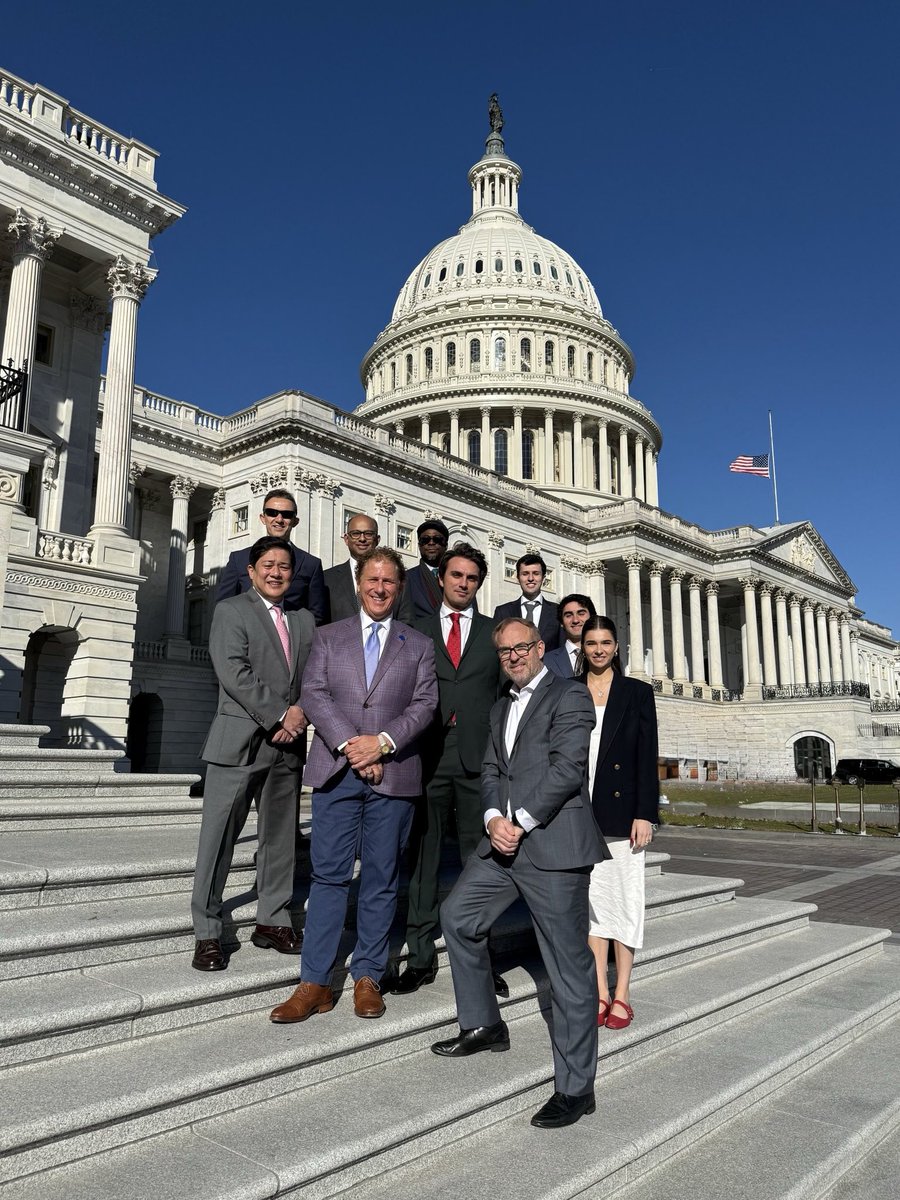
Spent the day on Capitol Hill with other leading ZK projects, engaging in open discussions with legislators about advancing privacy and security across decentralized systems.
Thanks to the offices of:
‣ Sen. Ashley Moody (@SenAshleyMoody)
‣ Rep. Brett Guthrie (@brettguthrie)
‣ Rep. Richard Hudson (@RepHudsonNC)
‣ Sen. John Cornyn (@JohnCornyn)
‣ Sen. Eric Schmitt (@Eric_Schmitt)
We have a major update to share next week. Stay tuned.
As always, zkgm!
🚨 They are bringing back #ChatControl 🚨
Hummelgaard doesn't understand that no means no.
Discussion is scheduled for tomorrow, so act now: https://t.co/cosrXcqy2p
#No2Backdoors#Privacy#Security
Source: https://t.co/UT5xXDkLvP
https://t.co/oCK7e97pvT