Netflix $NFLX 2Q26 Earnings
- Rev $12.6b +13% ↗️🟡
- GP $6.5b +13% ↗️🟡 margin 51.9% +0 bps ✅
- EBIT $4.2b +11% ↗️🟡 margin 33.4% -69 bps ↘️🔴
- Net Inc $3.4b +9% ↗️🟡 margin 27.1% -113 bps ↘️🔴
- OCF $1.7b -28% ↘️🔴 margin 13.9% -799 bps ↘️🔴
- FCF $1.5b -33% ↘️🔴 margin 12.1% -832 bps ↘️🔴
Revenue by Geography
- UCAN $5.4b +10% ↗️🟡
- EMEA $4b +14% ↗️🟡
- LATAM $1.6b +21% ↗️🟢
- APAC $1.5b +16% ↗️🟢
Biz Metrics
- 1H26 view hours +2% vs +1.5% in FY25
3Q26 Mgmt Guide
- Rev $12.9b +12% ↗️🟡
- EBIT $4.3b +31% ↗️🟢 margin 33.2% +497 bps ✅
- Net Inc $3.5b +36% ↗️🟢 margin 26.8% +471 bps ✅
FY26 Mgmt Guide
- Rev $51.4b +14% ↗️🟡 (lowered)
- Ad Revenue $3bn +100% ↗️🟢 (same)
- EBIT Margin 31.5% ↗️🟢 (same)
- Cash content spend to content amortisation 1.1X
- FCF $12.5bn ↗️🟢 24.3% margin (raised)
1 | Q3 revenue drivers remain similar to Q2. Growth in subscription revenue to come from increases in memberships, paid pricing and higher ads revenue. Slight Q2 “deceleration”, normal, management focus on full year.
The Q3 revenue drivers are very similar to Q2. It's primarily growth in our subscription revenue from increases in memberships and pricing and higher ads revenue. We continue to see healthy acquisition and retention trends on the membership side and our recent price adjustments are going well on the pricing side. Now recall, there is a little bit of quarter-to-quarter choppiness in growth because last year was more back half weighted. So that may be a little bit of what you see in the deceleration. But honestly, it's not what we manage to. We manage to the full year.
2 | Netflix still has only 7% of TAM and 5% of TV view share globally, still long growth runway.
It's roughly 800 million addressable households. We're capturing, we think, just 7% of addressable revenue market. It's about $670 billion of addressable revenue in the countries and categories in which we operate today. And we estimate that we're only about 5% of TV view share globally. So we're delivering on our 2026 plan, and we believe we've got lots and lots of runway for solid growth ahead of us.
3 | There is no linear relationship between view hours and revenue and profit, because not all viewing hours are equal. Live programming is great for acquisition, but yields lower view hours, animation costs lesser but yields more view hours.
Start by saying there is not a linear relationship between view hours and revenue and profit because all hours are not created equal. All hours don't provide the same kind of value to the business. And a really great example of this is live programming. So live events do a lot of lifting for us for acquisition. They're good for monetization. They drive ad revenue, fandom. They're also a promotional platform, but they do not yield typically as many raw view hours. So live, we expect will be 5% of our content budget this year, but we think that will only be 1% of view hours. Having said that, 6 out of top 10 new member sign-up days over the past 5 years have come from live events. And if you compare that to another content category, take animation series, kids family TV, it's also about 5% of our content spend, so the same amount of spend, but it's going to drive, we expect 8% of view hours.
4 | The vast majority of programming spend continues to go back to core TV series and film.
First, to remember is that the vast majority of our programming spend goes into the core TV series and film, where we have a really strong track record, more than a decade of translating those investments into value for our members and returns for the business. I'm going to come back to that core in just a second.
5 | Continue to grow content spend slower than revenue, but will be slightly higher this year at 10% versus the 8% 5Y average, and below 14% of the last 10Y, as they see opportunities.
But the second one is that we're really disciplined investors. So there isn't some hyper acceleration of content investment. We grow the content spend slower than revenue while we're continuing to invest in a huge addressable market. So we're forecasting content expense up about 10% this year. It's a little higher than the 8% we averaged over the last 5 years and below the 14% that we averaged over the past decade. The third thing we want you to remember here is that when we expand into new entertainment offerings, new initiatives, we do it gradually. We do it where we believe we can add more value for our members, and we do it where we believe we have the right to win.
6 | Saw strong slate in Q2 with “I Will Find You”, “Swapped”, “Teach You a Lesson”, and “The Polygamist”.
There's a lot to be happy with in Q2. I Will Find You. It was our biggest launch of original series this year. Swapped is on track to become the second biggest original animated film right behind KPop Demon Hunters, which is exciting. Speaking of K-pop, we have K-dramas like Teach You a Lesson, which is on track to become the second most watched South Korea show ever globally. And it's on track to be our biggest series in South Korea of all time. There's a show called The Polygamist. You probably -- is not on your radar, maybe, Steve, but it's out of EMEA.
7 | Season 2 drop-off from season 1 is very common in the industry, but it actually improved for Netflix this year versus last year.
in aggregate, we are not seeing any material change in our second season viewing compared to season 1. Our second seasons are performing well within our bands of expectation. Very often, we see drop-off from Season 1 to Season 2. It's very common in the industry. And it's even more so with us because we launch our shows so big. So our global reach, our discovery mechanism, releasing all at once, this enables us to find a very large audience early.
When we look across the entire portfolio, across all the regions, all the content categories, our season 2 falloff is actually slightly improved this year relative to last year. Now of course, you can pick any 5 data points to tell any story you want. But I'm going to repeat this. Our season 2 falloff is actually slightly improved this year relative to last year.
8 | World Baseball Classic on Netflix in Japan was a big hit and drove conversation and net acquisition. Look to lean more into live events, as they drive outsized positive impact.
World Baseball Classic on Netflix in Japan was a huge hit. It became our most watched program ever in Japan. It was the biggest baseball streaming event ever. World Baseball Classic is kind of like these other big live events, and they behave a lot like our returning seasons of our big shows…So we're thrilled and we're continuing to see -- to lean into live events because they have a big outsized positive on the business. They drive conversation, drive net acquisition. So we're going to continue to build out that global live event calendar and include -- expand it to include some regional live events as well.
9 | Netflix testing free trials in selected markets, they are always testing, assessing and trying to improve the service.
We are always testing. We're always assessing and trying to improve the service. That definitely includes trying to understand the best ways to bring new members into Netflix. And our investment in several product capabilities over the last several years for a variety of reasons have now given us even greater flexibility and capabilities to test different approaches in different markets, different market segments, different conditions to see how we best bring those folks on. So for example, we've tested a low-cost first month in Japan that was coincident with the World Baseball Classic. That served us incredibly well. We've been testing "upgrade on us" options in various different countries and various different conditions around the world. And as a general part of this test-and-learn strategy now, we're testing free trials for non-rejoining new members in a number of countries. And obviously, we'll see how they perform and then we'll react appropriately.
10 | Testing out live TV local programming with TF1 in France.
We see it in any kind of testing or modeling we do around the space. And I would say that fulfilling on that customer desire for more has really been the driver for growth for our business for the last 2 decades. This partnership with TF1 is yet just another approach to expanding that offering. We're just adding to the range of capabilities that we have to do that and the mechanisms we have to do that.
11 | Think Netflix might be able to expand the distribution of such live TV partnerships.
So whether through licensing or through new partnerships like TF1, we believe that we can help other producers, other services maximize the value, the relevance of the content that they invest in by finding those bigger audiences. And we have many, many examples of this effect, including now in this new model with TF1. We also believe that such partnerships are good for our members. They enhance the variety of our offering. They're also effective for our business. And it's early in the TF1 partnership. We're literally 4 weeks in. So there's a bunch that we'll learn through this process, but we are pleased with the performance we are seeing in that integration. We've been able to enhance our already compelling service for our French members with even more local French programming, programming we know that they want to watch.
12 | See video podcasting outperforming on mobile, and it helps to increase usage evening typical evening viewing hours, increasing customer stickiness.
But I am pleased with the early progress we're making with vertical clips for choosing on mobile and certainly video podcasting. We mentioned in the letter, we announced a partnership with the publishers like Conde Nast and Hearst and People. So we're going to bring on some lifestyle content on the service next month. And with the podcast, we're super encouraged with the viewing patterns that we're seeing. They have convinced us that this viewing is definitely incremental for us. We're seeing that in daytime viewing. So we're engaging our members outside of prime time where we historically have done most of the engagement on Netflix. And keeping in mind since professional longform content is a pretty small part of mobile. It's exciting to see that our video podcasts are outindexing on mobile for us.
13 | Saw strong traction in cloud games (11x MAU) and playground (3x daily players).
Another big positive sign is that since last October, so 8 months ago, when we really sort of scaled up this cloud initiative, monthly active players for cloud games have increased 11x and adoption is significantly ahead of that curve that we had for mobile games with even higher retention value. So we're definitely excited about that and focused on scaling up cloud games. We're also seeing positive signals with kids games. So Netflix Playground, which is our app for kids games, no ads, no in-app purchases, curated set of games, very safe space. We've seen 3x growth in daily players since that launch.
14 | Manages the ad business for total revenue, still have a gap between ad tier ARM and standard paid without ads tier, but the gap is narrowing. As Netflix improves ad capabilities, they expect the gap to close over time.
Maybe worth starting by noting that we manage the ads business for total revenue, total revenue growth. So those are the optimization functions, ARM and fill rates sort of come along for the ride in achieving those goals. Having said that, there's still a gap between ad tier ARM and then ARM for our standard without ads tier. But that gap is narrowing. And I think of that gap is essentially near-term underrealized revenue growth. So it represents an opportunity for us. As we improve ads capabilities, we can close that gap over the time. And you've seen us do exactly that over the last year. How have we done it? We've expanded demand sources. We continue to execute quickly on our own ad tech stack. We're adding features. We're adding more ads products. We're adding more measurement. We're making it easier for us -- for folks to transact with us. Those all drive demand. They drive competitiveness. That yields increased fill rates. It pushes ads arm higher. Those improvements are really the bulk of the opportunity we have to improve unit performance and monetization for the next few years.
15 | GenAI has been used in 300 of Netflix titles, leveraging Gen AI for really complicated shots and sequences.
Well, look, it's early days for InterPositive, but we're broadly seeing that gen AI is starting to have an impact across hundreds of our productions. So important to note that we have other gen AI tools in addition to InterPositive. We're thrilled with all the speed they're bringing to market for us. But we also have Eyeline and we have our animation lab. And what's cool is that they're all working together to drive innovation. We said in the letter, but gen AI is scaling quickly across the entire creative process, from concept to pre-vis through post and delivery. We're making higher quality output more quickly and efficiently than we could have using traditional methods. So gen AI workflows now have been used in roughly 300 of our titles with the largest concentration right to date is on postproduction. But we're leveraging gen AI for really complicated shots and sequences.
16 | AI is giving creators better tools to bring their visions to life, producing them faster and cheaper.
On the content side, we believe it takes great artists to make something great, and AI is not changing that. AI will give creators better tools to bring their visions to life. Movies are being made by people who make movies. AI provides them with better tools to make them even better. So today, our talent leverages tools for things like set references and pre-vis and VFX and sequence prep and shot planning, which all makes the production itself so much more smooth and efficient and fast. And that's just the beginning. We're seeing it across the entire production life cycle and AI -- those use cases are scaling faster and faster…Those 17 minutes, Sean, they were produced twice as fast and at half the cost of previous options
17 | Didn’t comment on NBCUniversal speculation, reiterated that Netflix are primarily builders, not buyers.
we're not going to comment on market speculation, but I'd like to take the opportunity to remind everyone about our core philosophy. We have multiple ways to achieve our goals, producing, licensing, partnering, and we're constantly seeking ways to allocate our resources in the most attractive options to maximize value for our members and delivering for a return for our investors. As we've said, we are primarily builders, not buyers, and that remains the case today. So others will speculate about our intent to -- here because they have their own reasons for that.
➡️Key Takeaway on Netflix:
Netflix continues to grow strongly driven by a mix of paid sub growth and increasing pricing over time as they deliver more value to their customers. Content spend operating leverage continues to drive EBIT profit margins higher over time, which means earnings will grow faster than topline revenue growth. Optimistic to watch Netflix executing its ad strategy thoughtful where the adding of ad subs bottomline accretive in expanding its customer segment meaningful as incremental cost of adding a subscriber is low versus the ad revenues it can generate from its ad subs. Netflix is in good hands with its two co-CEOs Greg and Ted. Not bother with slightly “slower” revenue growth and “higher” content spend.
Tesla. In hindsight Elon knew holding up the stock price at that valuation required endless carrots. 1. Cybertruck had 2 million reservations. It turned into hot air. 2. The compact car was coming (for 2 years) and Mexico factory was to build it. It friend into complete BS. 3. Operating a lithium refinery factory is license to print money. It opened and no measurable impact to bottom line. 4. The golden key was the dry battery process once it becomes a reality. It did but cell costs from China plummeted and it became a nothing burger. 5. Major manufacturers were in discussion with Tesla to license FSD and then poof it was all a dream. 6. The most famous.. half the US population will be served by robotaxis by year end 2025 (said before his comp vote). And poof .. last quarter it was replaced with “it doesn’t make sense to scale robotaxi faster if better FSD models are coming. 7. Another famous claim “Everyone that could afford a Tesla would want a Tesla the problem is high monthly payments and interest costs” .. horse sht. 8. Solar roof and solar city — let’s not go there’s. 9. DOJO .. for 3 years it was the golden egg project … poof entire team was let go and he has been beginning GPUs from Jensen since. 10. Thousands of Optimus will be doing useful things in Tesla factories before 2025 years end…. Poof. 11. I will reward long time Tesla shareholders if any of my private companies go public. We all got the middle finger. 12. “I won’t go through with twitter purchase” then sold tens of billions with out warning. 13. We all endured bidens ensuing legal warfare. 14. DOGE drama. 15. Filthy Public spat with the president and getting booted from the White House lawn. 16. Never ending political posts. 17. The most absurd retarded earnings calls of any public company. 18. The next even bigger carrot? Terrafab. 50 football fields long and it will produce billions of chips. Because no one can supply enough for what Tesla would need like a national federal autonomous taxi service that does a federal law for it is being willow walked, and an Optimus robot that would first need high production factories (2 years) then ramp (1 year or more) and no one knows if it will be like cybertrucks 2 million reservation claim. One of The greatest series of business fantasy borderline scams ever told. Sold it all and moved to Micron at $400 and everyday I ask myself how did I become so stupid to keep given him the benefit of the doubt. Looking back it was more about not wanting to accept my failure of holding it. His carrot traps kept that hope and goal posts moving. Blocked him and his retarded gang of influencers. If someone hurts you move on.
When you go buy a Dell laptop bundle only to find out that the CPU is Intel, the RAM is Micron, the GPU is AMD, the internal Hard Drive is Seagate, the external Hard Drive is Western Digital, and they toss in a bonus SD Card that is SanDisk.
It all makes sense now...
It all makes sense.
Used the Moreta Pay app linked to my Wise USD account for near-instant funding and was able to make all my local payments for my recent Vietnam trip in VND like a local. Excited to use it for more countries across Asia going forward.
https://t.co/yTqUt4ZX61
Today I$rael tried to kill me in a targeted airstrike in southern Lebanon as I was reporting on was the targeting of bridges and the forced displacement of 1 million people, an ethnic cleansing operation on a larger scale than the Nakba
I have absolutely no doubt that this was deliberate. Despite claims there were no warnings ahead of the strike and no notifications sent to the Lebanese Army who allowed us to film
As we have seen in Gaza they want to silence journalists who document and report their war crimes
It is the western powers who provide political and military support for I$rael, arming it to the teeth to carry out genocide in Gaza and ethnic cleansing here in Lebanon. They are not simply complicit, but active participants and should be held accountable for their actions.
But if I$rael thinks today’s strike will silence us and keep us out of the field they are very, very mistaken
This is exactly how you keep young talents out of national service.
Smart. Honest. Serving the country.
(An Oxford grad who took a huge pay cut to serve Malaysia.)
Instead of support, James Chai gets humiliated and dragged through the mud because of politics.
If it can happen to him, it can happen to anyone.
And then we ask why Malaysia keeps bleeding young talent overseas.
NVIDIA $NVDA 4Q26 Earnings
- Rev $68.1b +73% ⤴️🟢
- GP $51.1b +78% ⤴️🟢 margin 75.0% +197 bps ✅
- NG EBIT $46.1b +22% ↗️🟢 margin 67.7% -2831 bps ↘️🔴
- EBIT $44.3b +84% ⤴️🟢 margin 65.0% +392 bps ✅
- NG Net Inc $39.6b +25% ↗️🟢 margin 58.1% -2271 bps ↘️🔴
- Net Inc $43b +94% ⤴️🟢 margin 63.1% +689 bps ✅
- OCF $36.2b +52% ↗️🟢 margin 53.1% -726 bps ↘️🔴
- FCF $34.9b +58% ↗️🟢 margin 51.2% -493 bps ↘️🔴
4Q26 Revenue by Segment
- Compute & Networking $61.7b +71% ⤴️🟢
- Graphics $6.5b +97% ⤴️🟢
- Data Center $62.3b +75% ⤴️🟢
- Data Center (Compute) $51.3b +57% ↗️🟢
- Data Center (Networking) $11b +267% ⤴️🟢
- Gaming $3.7b +47% ↗️🟢
- Professional Visualization $1.3b +159% ⤴️🟢
- Auto $604m +6% ↗️🟡
- OEM & Other $161m +28% ↗️🟢
FY26 Earnings
- Rev $215.9b +65% ↗️🟢
- GP $153.5b +57% ↗️🟢 margin 71.1% -392 bps ↘️🔴
- NG EBIT $137.3b +58% ↗️🟢 margin 63.6% -292 bps ↘️🔴
- EBIT $130.4b +60% ↗️🟢 margin 60.4% -204 bps ↘️🔴
- NG Net Inc $117b +58% ↗️🟢 margin 54.2% -273 bps ↘️🔴
- Net Inc $120.1b +65% ↗️🟢 margin 55.6% -25 bps ↘️🔴
- OCF $102.7b +60% ↗️🟢 margin 47.6% -154 bps ↘️🔴
- FCF $96.6b +59% ↗️🟢 margin 44.7% -181 bps ↘️🔴
FY26 Revenue by Segment
- Compute & Networking $193.5b +67% ↗️🟢
- Graphics $22.5b +57% ↗️🟢
- Data Center $193.7b +68% ↗️🟢
- Data Center (Compute) $162.4b +59% ↗️🟢
- Data Center (Networking) $31.4b +142% ⤴️🟢
- Gaming $16b +41% ↗️🟢
- Professional Visualization $3.2b +70% ↗️🟢
- Auto $2.3b +39% ↗️🟢
- OEM & Other $619m +59% ↗️🟢
1Q27 Mgmt Guide
- Rev $78b +77% ⤴️🟢
- GPM 75%
- EBIT $51b margin 65.4%
1 | Growth was very strong across cloud providers, hyperscalers, AI model makers, enterprises and sovereigns, inference continue to grow strongly alongside training.
Total revenue of $68 billion was up 73% YoY, accelerating from Q3. Growth on a sequential basis was also a record as we added $11 billion in data center revenue across a diverse and expanding set of customers, including cloud providers, hyperscalers, AI model makers, enterprises and sovereign nations. Demand for our Blackwell architecture, extreme co-design at data center scale continues to strengthen as inference deployments grow in addition to training.
2 | Well positioned with the best frontier model builders like OpenAi, Anthropic, Meta and xAI to build full stack AI infrastructure across training, inference and AI factory scale-out.
We continue to work with OpenAI toward a partnership agreement and believe we are close. We are thrilled with our ongoing partnership with OpenAI, a once-in-a-generation company we've had the pleasure of partnering with since their first days. Blackwells and Rubin GPUs, NVIDIA CPUs and Spectrum x Ethernet for training and inference.
This quarter, we announced a partnership with Anthropic, and a $10 billion investment in their company. Anthropic will train an inference on Grace Blackwell and Vera Rubin system. Anthropic's Claude Cowork agent platform is revolutionary and has opened up floodgates for enterprise AI adoption. Between Claude Cowork and OpenClaw, Anthropic's Claude Cowork agent platform compute demand is skyrocketing and chatGPT moment of agentic AI has arrived. With partnership spanning Anthropic, Meta, OpenAI and xAI NVIDIA deployed across every cloud and with our ability to build full stack AI infrastructure from the ground up, or support them in the cloud. We're uniquely positioned to partner with frontier model builders at every stage, training, inference and AI factory scale-out.
3 | Confident in customers growing their cash flows, investments are resulting in growing compute, tokens, and revenues, are at inflection point.
I am confident in their cash flow growing. And the reason for that is very simple. We have now seen the inflection of agentic AI and the usefulness of agents across the world and enterprises everywhere. You're seeing incredible compute demand because of it. In this new world of AI, compute is revenues. Without compute, there's no way to generate tokens. Without tokens, there's no way to grow revenues. So in this new world of AI, compute equals revenues.
I am certain at this point that we are at the inflection point, we've reached the inflection point and we're generating profitable tokens that are productive for customers and profitable for the cloud service providers. And so the simple logic of it, the simple way to think about it, is computing has changed. What used to be software running on computers, modest amount of computers, call it, $300 billion or $400 billion worth of CapEx each year has now gone into AI. And AI in order to have -- in order to generate tokens, you need compute capacity. And that translates directly to growth and that translates directly to revenues.
4 | Because AI is generative in real time, it needs more compute than legacy software.
And the reason for that is because the way we used to do software was prerecorded, everything was captured prior. We pre-compiled the software. We pre-write the content. We prerecord the videos. But now everything is generative in real time. And when it's generated in real time, you could take into context of the person, the situation, the query and the intentions could all be taken into consideration to generate the outcome of this new software called, we call AI, agentic AI. And so the amount of computation necessary is far, far greater than pre-recorded. Just as a computer has a lot more computation capability than a DVD recorder, a DVD player that was prerecorded, artificial intelligence needs a lot more computing capability than the way we used to do software in the past. Now Agentic and physical AI is driving growth, data centre revenues have 13x since 2023.
The transition to accelerated computing and the infusion of AI across existing hyperscale workloads continue to fuel our growth. Agentic and physical AI applications built on increasingly smarter and multimodal models are beginning to drive our financial performance. On a full year basis, data center generated revenue of $194 billion, up 68% YoY. We have now scaled our data center business by nearly 13x since the emergence of ChatGPT in fiscal 2023.
5 | Networking was particularly even stronger, driven by strong adoption of NVLink, Spectrum-X Ethernet and InfiniBand, NVLink 72 scale-up switches ⅔ revenues
Networking, a cornerstone of our data center scale infrastructure offering, was a standout this quarter, generating $11 billion in revenue, up more than 3.5x YoY. Demand for our scale-up and scale-out technologies reached record levels, both growing double digits sequentially, driven by strong adoption of NVLink, Spectrum-X Ethernet and InfiniBand. On a YoY basis, growth was driven primarily by NVLink 72 scale-up switches as Grace Blackwell systems accounted for roughly 2/3 of data center revenue in the quarter. NVLink scale-up fabric has revolutionized computing and demonstrates the power of extreme co-design across all of the chips of the supercomputer and the full stack. In Q4, we announced that we will enable AWS with NVLink to integrate with their custom silicon. Momentum is strong with our Spectrum-X Ethernet scale up and scale across networking as customers work to unify distributed data centers into integrated gigascale AI factories. For the full year, our networking business exceeded $31 billion in revenue, up more than 10x compared to fiscal 2021, the year we acquired Mellanox.
6 | NVLink 72 was an incredible invention to improve the performance per watt significantly.
NVLink 72 has enabled us to deliver generationally 50x more performance per watt. It's just an incredible leap. And it's sensible. NVLink 72 is a great invention. It was hard to do. The creation of the switching technology, disaggregating the switches, building the system racks, all of that, we did it all in plain sight and everybody knew how hard it was for us to do. And -- but the results are incredible. So performance per watt is 50x, performance per dollar, 35x.
7 | NVIDIA is now the largest networking company in the world, and likely the largest Ethernet networking company as well.
And the invention of NVLink really turbocharged our networking business. Every rack comes with 9 nodes of switches. And each of them has 2 chips in it. And in the future, they'll have more. And so the amount of switching that we do per rack is really quite incredible. And we're also now the largest networking company in the world and if you look at Ethernet, we came into the Ethernet market about a couple of years ago into Ethernet switching. And I think that we're probably the largest Ethernet networking company in the world today and surely will be soon. And so Spectrum X Ethernet has been a home run for us. But we're open to however people want to do networking. Some people just really love the low latency and the scale-up capability of InfiniBand and we'll continue to support that, of course. And to some people love to integrate their networking across their data center based on Ethernet, and we created an Ethernet capability that extends Ethernet with artificial intelligence, a way of processing in the data center, and we're incredibly good at that. And our Spectrum-X performance really shows it. The
8 | Capex across the top 5 cloud providers and hyperscalers are now approaching $700b, top 5 customers account for 50% of revenues.
Compute directly translates to intelligence and revenue growth. Analyst expectations for 2026 CapEx across the top 5 cloud providers and hyperscalers who collectively account for a little over 50% of our data center revenue are up nearly $120 billion since the start of the year and approaching $700 billion. We continue to expect the transition of classic data center workloads to GPU accelerated computing and the use of AI to enhance today's hyperscale workloads and contribute toward roughly half of our long-term opportunity
So when you think about our top 5, as we articulated as being our CSPs, our hyperscalers and they have right now sat at about 50% of our total revenue.
9 | Expect strong sequential revenue growth through 2026, 1Q27 +77%, have inventory and supply commitments to address growing future demand.
We look ahead, we expect sequential revenue growth throughout calendar 2026, exceeding what was included in the $500 billion Blackwell and Rubin revenue opportunity we shared last year. We believe we have inventory and supply commitments in place to address future demand, including shipments extending into calendar 2027. Every data center is power-constrained. Customers make critical architectural decisions based on performance per watt given these constraints and the need to maximize AI factory revenue.
10 | NVIDIA is the inference king, producing the lowest cost per token, and generating the high revenues.
SemiAnalysis declared NVIDIA, Inference King, as recent results from InferenceX reinforced our inference leadership with GB300 NVL72, achieving up to 50x performance per watt and 35x lower cost per token compared with [ Hopper ], and continuous optimization of CUDA software helped deliver up to 5x better performance on GB200 NVL72 just within 4 months. NVIDIA produces the lowest cost per token and data centers running on NVIDIA generate the highest revenues.
11 | Strong evidence of ROI, especially in search, ad generation, content recommendations.
Strong evidence of ROI as hyperscalers upgrade massive traditional workloads to generative AI, including search, ad generation and content recommender systems is encouraging our largest customers to accelerate their capital spending.
For example, at Meta, advancements in their GEM model drove a 3.5% increase in ad clicks on Facebook and more than 1% gain in conversations on Instagram, translating into meaningful revenue growth. With the same NVIDIA infrastructure, Meta Superintelligence Labs can train and deploy their frontier agentic AI systems. Frontier agentic systems have reached an inflection point. Claude Code, Claude Cowork and OpenAI codecs have achieved useful intelligence. Adoption is skyrocketing and tokens are profitable, driving extreme urgency to scale up compute.
12 | Just shipped first Vera Rubin samples, expect to commence production in 2H26, expect every cloud model builder to deploy Vera Rubin.
We shipped our first Vera Rubin samples to customers earlier this week, and we remain on track to commence production shipments in the second half of the year. Based on its modular cable-free tray design, Rubin will deliver improved resiliency and serviceability relative to Blackwell. We expect every cloud model builder to deploy Vera Rubin.
13 | One of NVIDIA’s moat is rapid innovation and scale to be able to spend more on R&D ($20bn) more than its competitors.
Our pace of innovation, particularly at our scale is unmatched, fueled by an annual R&D budget approaching $20 billion and our ability to extreme co-design across compute and networking across chips, systems, algorithms and softwares, we intend to deliver X factor leaps and performance per watt average generation and extend our leadership position over the long term.
14 | Expect sovereign to grow at least as fast as the broader AI market, watching Chinese competitors keenly.
Over the long run, we expect our sovereign opportunity to grow at least in line with the AI infrastructure market as countries spend on AI proportional to their GDP. While small amounts of H200 products for China-based customers were approved by the U.S. government, we have yet to generate any revenue. And we do not know whether any imports will be allowed into China. Our competitors in China bolstered by recent IPOs are making progress and have the potential to disrupt the structure of the global AI industry over the long term.
15 | See robotaxi ride-hailing as a large market over the next 5-10 years as it scales from thousands to millions of vehicles, generating hundreds of billions of revenues.
Robotaxi rides are growing exponentially with commercial fleets from Waymo, Tesla, Uber, WeRide and Zoox, and many others are expected to scale from thousands of vehicles in 2025 to millions over the next decade, creating a market poised to generate hundreds of billions of dollars of revenue. This expansion will demand orders of a magnitude more compute with every major OEM and service provider developing on NVIDIA's platform.
16 | See economics of space data centers as poor today, but expect it to improve over time, technology has to be reinvented given the different physical conditions.
Well, the economics are poor today, but it's going to improve over time. As you know, the way that space works is radically different than how it works down here. There's an abundance of energy, but solar panels are large, but there's plenty of space in space. The heat dissipation, it's cold in space. However, there's no airflow. And so the only way to dissipate [ heat ] is through conduction and the radiators that you need to create are fairly large. Liquid cooling is obviously out of the question because it's kind of -- it's heavy and freezes. And so the methods that we use here on earth are a little different than the way we would do it in space.
17 | NVIDIA to extend NVIDIA's architecture and use Grok’s highly versatile low latency inference technology, will share more at GTC.
Finally, we recently entered into a nonexclusive licensing agreement with Grok for its low latency inference technology and welcome the team of brilliant engineers to NVIDIA. As we did with Mellanox, we will extend NVIDIA's architecture with Grok's innovations to enable new levels of AI infrastructure performance and value. We look forward to sharing more at GTC next month.
With respect to how we think about Grok and the low latency decoder, I've got some great ideas that I'd like to share with you at GTC. But the simple idea is that our infrastructure is incredibly versatile because of CUDA, and we're going to continue to do that….And so what we'll do with Grok is you'll come to see GTC, but what we'll do is we'll extend our architecture with Grok as an accelerator in very much the way that we extended NVIDIA's architecture with Mellanox.
18 | NVIDIA wants to be the enabler of the new AI computing era across every opportunity.
The richness of our ecosystem. Just about every start-up in the world who's working on NVIDIA's ecos -- on NVIDIA's platform. We're in every cloud. We're in every on-prem data center. We're all over the world's edge and robotic systems. Thousands of AI natives are built on top of NVIDIA. We want to take the great opportunity that we have as we're in the beginning of this new computing era, this new computing platform shift to put everybody on NVIDIA. Everything is already built on CUDA, and so we're starting from a really terrific starting point. But as we build out the entire AI ecosystem, whether it's an AI for language or physical AI or AI physics or biology or robotics for manufacturing, we want all of these ecosystems to be built on top of NVIDIA. And this is such a wonderful opportunity for us to invest into the ecosystem across the entire stack.
19 | NVIDIA can only continue to sustain its high gross margins if it can deliver higher performance that is much more than the cost and price of its systems, that’s why they are moving so fast.
The single most important lever of our gross margins is actually delivering generational leads to our customers. That is the single most important thing. If we could deliver generationally performance per watt that exceeds dramatically what Moore's Law can do. If we can deliver performance per dollar dramatically more than the cost of our systems than the price of our systems, then we can continue to sustain our gross margins. That's the simple most important concept. Every -- the reason why we're moving so fast is because, number one, the demand for tokens in the world as a result of the inflection points that we've gone through has now -- has gone completely exponential.
➡️ Final Takeaways on NVIDIA $NVDA:
NVIDIA is at the pivot of the longer term structural tailwind shift from general purpose computing powered by CPUs to accelerated computing and gen AI by CPUs with significantly stronger use cases, driven by longer-term Capex spend across any increasing wider set of customers. Strong visibility and broad-based demand reflects the start of a potential longer-term shift that NVIDIA with its strong architecture software and networking moat of CUDA, InfiniBand, Mellanox have taken decades to build, and now with Spectrum-X with Ethernet. GBlackwell Ultra GB300 to drive FY27. Rubin to ramp in 2H26. NVIDIA’s technological edge is continuously reinvesting at an ever growing scale and being ahead of the game when others are catching up to them led by Jensen Huang and his team.
NU Holdings $NU 4Q25 Earnings
- Rev $4.9b +57% ↗️🟢
- GP $1.9b +49% ↗️🟢 margin 40.4% -210 bps ↘️🔴
- EBT $1.3b +54% ↗️🟢 margin 26.9% -42 bps ↘️🔴
- Adj Net Inc $943m +55% ↗️🟢 margin 19.4% -26 bps ↘️🔴
- Net Inc $895m +62% ↗️🟢 margin 18.4% +59 bps ✅
- ROE 33% ↗️🟢 +400bps ✅
- Adj ROE 35% ↗️🟢 +300bps ✅
FY25 Earnings
- Rev $16.3b +40% ↗️🟢
- GP $6.6b +32% ↗️🟢 margin 40.6% -250 bps ↘️🔴
- EBT $4.4b +47% ↗️🟢 margin 26.8% +135 bps ✅
- Net Inc $2.9b +46% ↗️🟢 margin 17.6% +70 bps ✅
Biz Metrics (Users)
- Customers 131m +15% ↗️🟢
- Cust (Brazil) 112.7m +11% ↗️🟡
- Cust (Brazil Indiv) 106.8m +10% ↗️🟡
- Cust (Brazil SME) 5.9m +26% ↗️🟢
- Cust (Mexico) 14.1m +41% ↗️🟢
- Cust (Colombia) 4.2m +68% ↗️🟢
- Active Customers 109.3m +15% ↗️🟢
- Active Cust (CC) 57.6m +9% ↗️🟡
- Active Cust (lending) 14.4m +30% ↗️🟢
- Activity Rate 83.4% ➡️🟢
- Total Pymt Volume $41.6b +29% ↗️🟢
- Pymt Volume (Credit) $27.7b +34% ↗️🟢
- Pymt Volume (Debit) $13.9b +20% ↗️🟢
- ARPAC $15.0 +27% ↗️🟢
- ACPAC $0.80 +0% ➡️🟢
Biz Metrics (Credit)
- Credit Cards Gross Receivables $21.8b +49% ↗️🟢
- Credit Card non-IEP $14.2b +49% ↗️🟢
- Credit Card IEP $7.6b +49% ↗️🟢
- Total Loans $10.9b +78% ⤴️🟢
- Loans to individuals $10.2b +73% ⤴️🟢
- Loans to companies $0.8b +204% ⤴️🟢
- Total Gross Credit Portfolio $32.7b +57% ↗️🟢
- Credit Portfolio (Secured) $2.7b +93% ⤴️🟢 (8% total)
- Credit Portfolio (Unecured) $8.2b +74% ⤴️🟢 (25% total)
- Credit Portfolio (Credit Card) $21.8b +49% ↗️🟢 (67% total)
- Total Net Credit Portfolio $19.0b +66%
- Int Earning Portfolio (IEP) $18.5b +65% ↗️🟢
Biz Metrics (Deposits)
- Int Earning Asset (IEA) $60.6b +51% ↗️🟢
- Deposits $41.9b +45% ↗️🟢
- Deposits (Brazil) $33.2b +44% ↗️🟢
- Deposits (Mexico) $6.3b +40% ↗️🟢
- Deposits (Colombia) $2.5b +92% ⤴️🟢
- Cost of Deposits 87% of Interbank Rate ➡️🟢
Biz Metrics (Margins)
- NII $2.8b +55% ↗️🟢 margin 19.5% +100bps ✅
- Risk-Adjusted NII $1.5b +56% ↗️🟢 margin 10.5% +60bps ✅
- Efficiency Ratio (old) 25.4% ↘️🟢 -170bps ✅
- Efficiency Ratio (new) 19.9% ↘️🟢 -170bps ✅
Brazil Consumer Credit Portfolio NPLs
- 15-90 NPLs 4.1% ➡️🟢
- 90+ NPLs 6.6% ➡️🟢
- Coverage over total balance 15.2% ➡️🟢
- Coverage over 90+ NPL 210.9% ➡️🟢
1 | Solid quarter and year, 33% ROE and launched more than 100 new products and features.
2025 was a fantastic year for Nubank, and Q4 '25 truly showed the strength of our business model. During the year, effectively, most of our key indicators from customer law to scale, engagement and profitability moved in the right direction, while we continue to invest significantly on long-term growth.
Net income reached $895 million, translating into a record 33% return on equity, while maintaining strong capital buffers and scaling our credit portfolio responsibly. These results reflect the priorities we set and the discipline of execution throughout the year.
One way to see this execution is to look at what we put in customers' heads. Across our markets, we launched more than 100 new products and features.
2 | NU became the largest private FI in Brazil by customers.
In 2025, we made measurable progress across all three markets. In Brazil, we became the largest private financial institution by a number of customers, reaching $113 million with an activity rate of 86%. Scale and engagement continue to reinforce each other.
3 | While recent FGTS regulations have reduced Nu payroll originations by half, impact remains limited, comfortable with disciplined credit underwriting.
Recent changes to FGTS regulations have reduced Nu originations by more than half. Though the impact on outstanding portfolio remains limited given the longer duration nature of the secure launch. We remain very comfortable with the portfolio's growth trajectory and risk profile underpinned by very disciplined credit underwriting and the evolving nature of our credit models.
4 | Continue to actively engage government for 2026-27, had become leader in FGTS, but if regulators don’t change, focus on public payrolls instead.
And we continue to have a very good dialogue with the government to try to influence the agenda for 2026 and 2027. And we have become market leaders in FGTS. It was a very -- it is and it used to be a very good product, and we believe it will continue to play an important role in the formation of our secured lending book. Even though if regulations don't change, we'll probably play a smaller role than it could have played before. But that's bucket number one. Bucket number two, public consignado or public payroll, which I put here,
5 | Recorded a one-off non-recurring regulatory levy of $25m contribution to SOFIPO for Mexico.
Credit loss allowance increased primarily as a function of growth as we expanded credit card limits and balances, provisions rose mechanically due to front-loaded origination accounting while underlying credit quality remains stable. We also recorded a one-off item related to Mexico. As background, Prosofipo is a sector-wide deposit insurance fund to which also peoples are required to contribute to. As the largest SOFIPO in the country, new was required to make an extraordinary contribution of approximately $25 million, which is reflected in interest expenses this quarter. This is a onetime nonrecurring regulatory levy not a reflection of the credit quality or the financial health of our operations in Mexico. Risk-adjusted NIM closed at 10.5%, and would have been broadly stable quarter-over-quarter, excluding the Prosofipo contribution.
6 | Lower effective tax rate due to higher one-time remeasure of deferred tax assets offsetting higher fintech corporate income tax rates.
I think the lower effective tax rate in the fourth quarter can be explained by, I would say, largely two things. One, completely nonrecurring and on recurring. What's the nonrecurring one. So about beginning of December 2025, the federal government approved an increase in the corporate income tax applicable to fintechs, including those like Nubank that essentially kind of increased progressively the corporate income tax from about 40% to 45% starting in 2026 and then going all the way in the next 2 years. Even though that in the medium term is a headwind for our effective tax rate in the quarter in which this kind of legislation is passed. We have to remeasure our deferred tax assets. So our DTAs remeasure up. and that increase in the DTA, which was about $58 million unit is recognized in the fourth quarter of 2025, decreasing the effective tax rate in the quarter. So that's the portion that I attribute as a nonrecurring one-off event.
7 | Focus for 2026, transitioning from a LATAM to a global digital bank, with finalizing of the Mexico banking license, and the US conditional bank charter approval.
Let now turn to how we're thinking about 2026. As we enter 2026, we see this as an inflection year. The year we begin transitioning from a Latin American leader to a global digital banking platform. Our priorities are organized around three pillars. First, winning in our core markets.
Brazil and Mexico will continue to absorb the majority of our capital and management attention. In Brazil, we will deepen leadership in the mass market, expansion of wallets and ARPAC, strengthening small businesses and grow or high income presence through Ultravioleta.
In Mexico, finalizing our banking license process is critical as it unlocks the next phase of credit growth and customer debit. In Colombia, we will continue scaling credit and bringing a number of Nu products. Across all three markets, our focus remains on experience, principality and monetization. Second, strengthen foundations for international expansion. During 2026, we will lay the operational groundwork for our U.S. opportunity, building on the conditional bank charter approval. Latin America remains our primary growth engine.
8 | See US banking as one of the largest TAMs, at high level, looks saturated and competitive, but in subsegments and certain niches, see opportunities. Will have a targeted strategy, will focus on certain geographies and subsegments.
On a very high level, and we're not really ready yet to disclose specifically what the strategy there is going to be. But at a very, very high level, this is the largest market in the world. And while at a very high level, it seems like a very saturated or competitive market in certain segments. When you dig in into subsegments in certain niches that, by the way, happen to be the size of Brazil.
We actually find opportunity to solve a number of consumer problems that are similar to what we've done in the past. So we're going to have a very targeted strategy. We're going to be very disciplined on investing. There are a lot of focuses on certain potential geographies or subsegments that we are interested about. You're not going to see us kind of shooting in all directions here because it's a bit of a long journey, and we fully acknowledge that this is a very competitive and sophisticated market in certain areas. But we do think that it's -- there are opportunities for us to create a meaningful business in certain sub areas of the United States.
9 | AI is on net more opportunity than challenge for NU, well positioned to take advantage and become one of the winners.
And the answer is both. It is both a challenge and has potential for disruption as well as significant opportunity. Net-net, we think it's more opportunity than challenge for us. But we have to take it pretty seriously, and we are taking it very seriously.
AI. So net-net, I do think that there are potential resorptive vectors in some of the business models. But I think when you compare -- when you think about the fact that 95% of the world's financial services profits are still concentrated in incumbent banks that still have significantly larger cost structures. Means that we're very well positioned to take advantage of AI as a technology enabler for revenue and cost and ultimately madly be one of the winners in this technology shift.
10 | Businesses that are moving bits from point A to point B will get hit the harder and AI will help remove a lot of that friction, similar for businesses that are moving money from one point to another. Not the case for credit revenue where NU focuses on.
A couple of ways to think about it. I think there is one specific trend or one common denominator across every technology transformation. And this goes all the way to even the internet era, which is any business model that relies on simply moving bits from point A to point B, where you're effectively a broker tends to be heard the quickest because one of the things that technology does is remove a lot of that friction in those processes.
So I think to -- some of the commentary that has been around in the market about financial services is, I think businesses in financial services that are simply moving money from one point to another point, will have the higher risk of potential disruption. You need to be able to add more value than that. And I think from that angle, we think -- we have always believed that credit, specifically, credit revenue is actually the most sustainable type of revenue in financial services because of the capital intensity, the regulatory nature of it, the balance sheet aspect and the proprietariness of the data where AI plays a role and ultimately allows you to make a better decision on that.
11 | See lots of opportunity to increase ARPAC from $15 to 40 with more cross-sell of new products and services over time.
but I think we're very well positioned given the way we are set up in the strength around credit that we have. I think a couple of our opportunities really on the revenue side. And as a reminder, our package $15 a day and our incumbent competitors are something like $40, so we have a significant opportunity to increase ARPAC is around Nu cross-sell and Nu products that we can be delivering to the very significant consumer base that we have.
And I think everything around cross-sell everything about using the data that we already have to offer new products and services, it's a big opportunity and nice [indiscernible] enabler. And here, we've discussed a few times over the past year, the significant lift that we're seeing when we're using our own foundation model on credit, but also cross-sell and a number of other revenue-related opportunities. And then you have the cost side, and I think the cost side is a little bit more clear.
12 | Expect some upward pressure on efficiency ratios in the coming 4-6 quarters due to higher OPEX from employees returning to office (80-100bps), investments in AI and GPUs, and investments to expand globally.
We wanted to highlight very clearly that we may see kind of upward pressure on efficiency ratio in the coming quarters, i.e., in the short term, like the next 4 to 6 quarters.
As a result of very deliberate investments, I would bucket them in three categories. Number one is we have recently announced a return to office policy, right, in which starting on July 1, 2026, employees will start going back up to the office 2x per week. That means that we're going to have to kind of prepare the offices, increase the leased area to welcome our employees as they prepare to come back to the office.
We believe that this will bring enormous benefits to the company, including about kind of ingenuity, kind of a innovation, coordination, but it does come with an increase in OpEx in the short term, and we wanted to clarify this. I would say that the return to the office will likely bring kind of our efficiency ratio, all else constant, up by about 80 to 100 basis points.
The second bucket…is the all of the investments that we are making in AI and new technologies. So that brings new talent that we have to hire, eventually new investments in R&D and research in GPUs that will have kind of a short-term cost, which we believe will be way, way, way more offset by the medium-term gains that we're going to have, but we will not shy away to make investments in talent, R&D and GPU to maximize the impact of our efforts in AI. And I would say that kind of -- we have returned to the office, you have AI.
And the third one is the globalization. So there is a lot of investments that we are making in laying down the foundation for us to go beyond Brazil, Mexico and Colombia. And a substantial amount of those expenses are not capitalized and are incurred in 2026 first to collect revenues and margins in the following years. So that's the direction.
➡️ Final Takeaways on Nu Holdings $NU:
NU is the “GEICO” of LATAM digital banking. Strong business traction supported by 📶 customers, more/faster cross-sell, leading ↗️ revenues per customer, combined with the significant competitive cost advantage of a lower cost to acquire & serve ➡️, strong risk management, and lower cost of funding (retail) that really drives its long-term highly durable profitable growth. Continue to watch its expansion into Mexico and Colombia, and its continued building on its strengths in Brazil (secured lending with payrolls, higher credit card spend with the higher income Ultravioleta credit card. Strategic about entering the US. Not worried about higher near-term (4-6 quarters) expenses of higher efficiency ratios weighing on profitability. If markets give us better buying opportunities, we will gladly take it.
Last quarter I rolled out Microsoft Copilot to 4,000 employees.
$30 per seat per month.
$1.4 million annually.
I called it "digital transformation."
The board loved that phrase.
They approved it in eleven minutes.
No one asked what it would actually do.
Including me.
I told everyone it would "10x productivity."
That's not a real number.
But it sounds like one.
HR asked how we'd measure the 10x.
I said we'd "leverage analytics dashboards."
They stopped asking.
Three months later I checked the usage reports.
47 people had opened it.
12 had used it more than once.
One of them was me.
I used it to summarize an email I could have read in 30 seconds.
It took 45 seconds.
Plus the time it took to fix the hallucinations.
But I called it a "pilot success."
Success means the pilot didn't visibly fail.
The CFO asked about ROI.
I showed him a graph.
The graph went up and to the right.
It measured "AI enablement."
I made that metric up.
He nodded approvingly.
We're "AI-enabled" now.
I don't know what that means.
But it's in our investor deck.
A senior developer asked why we didn't use Claude or ChatGPT.
I said we needed "enterprise-grade security."
He asked what that meant.
I said "compliance."
He asked which compliance.
I said "all of them."
He looked skeptical.
I scheduled him for a "career development conversation."
He stopped asking questions.
Microsoft sent a case study team.
They wanted to feature us as a success story.
I told them we "saved 40,000 hours."
I calculated that number by multiplying employees by a number I made up.
They didn't verify it.
They never do.
Now we're on Microsoft's website.
"Global enterprise achieves 40,000 hours of productivity gains with Copilot."
The CEO shared it on LinkedIn.
He got 3,000 likes.
He's never used Copilot.
None of the executives have.
We have an exemption.
"Strategic focus requires minimal digital distraction."
I wrote that policy.
The licenses renew next month.
I'm requesting an expansion.
5,000 more seats.
We haven't used the first 4,000.
But this time we'll "drive adoption."
Adoption means mandatory training.
Training means a 45-minute webinar no one watches.
But completion will be tracked.
Completion is a metric.
Metrics go in dashboards.
Dashboards go in board presentations.
Board presentations get me promoted.
I'll be SVP by Q3.
I still don't know what Copilot does.
But I know what it's for.
It's for showing we're "investing in AI."
Investment means spending.
Spending means commitment.
Commitment means we're serious about the future.
The future is whatever I say it is.
As long as the graph goes up and to the right.
This is unreal. The new Japanese PM just told an audience of Saudi investors, quoting from a manga:
"Just shut your mouths and invest everything in me!!!"
Even worse, in said manga - "Attack on Titan" - the character saying that line (Eren Yeager: https://t.co/ghMn8wRlwd) ends up dying while attempting to kill all of humanity outside his island nation ("Paradis Island").
Not exactly a great character to emulate when you're Japan - an island nation with a long history of imperial expansion and atrocities. Very awkward and disturbing on multiple levels...
Official transcript of the speech on the PM's website: https://t.co/apkFV43cGp
Mastercard $MA 3Q25 Earnings
- Rev $8.6b +17% ↗️🟢
- NG EBIT $5.1b +18% ↗️🟢 margin 60% +50 bps ✅
- EBIT $5.1b +26% ↗️🟢 margin 59% +450 bps ✅
- NG Net Inc $4b +10% ↗️🟡 margin 46% -271 bps ↘️🔴
- Net Inc $3.9b +20% ↗️🟢 margin 46% +137 bps ✅
- OCF $5.7b +10% ↗️🟡 margin 66% -386 bps ↘️🔴
- FCF $5.3b +9% ↗️🟡 margin 62% -437 bps ↘️🔴
GDV by Region / Type
- Credit $1.3T +9% ↗️🟡
- Debit $1.5T +11% ↗️🟡
- WW $2.7T +10% ↗️🟡
- APMEA $0.6T +6% ↗️🟡
- Europe $1T +15% ↗️🟢
- LATAM $0.2T +13% ↗️🟡
- US $0.8T +7% ↗️🟡
Biz Metrics
- Switched Txn 45.4b +10% ↗️🟡
- Cards 3.6b +6% ↗️🟡
- MA Cards 3.3b +8% ↗️🟡
Revenue by Segment/Type
- Payment Network Rev $5.2b +12% ↗️🟡
- VAS Rev $3.4b +25% ↗️🟢
- Domestic Rev $2.8b +6% ↗️🟡
- Cross-Border Rev $3.3b +18% ↗️🟢
- Txn Processing Rev $4.2b +17% ↗️🟢
- Other Rev $0.3b +12% ↗️🟡
1 | Strong quarter supported by innovation and focused execution, consumer and business spending remains healthy, positioned well for ongoing success
We delivered strong results in the third quarter…Our solid performance is a reflection of our winning strategy, our market-leading innovation and focused execution. We continue to see healthy consumer and business spending in the quarter with the macroeconomic environment still generally supportive. Inflation levels have remained fairly steady and labor markets remain well balanced. Financial markets were near record highs, further contributing to the wealth effect, which helps stimulate spend. Given this backdrop and our diversified business, we are positioned well for ongoing success.
2 | Seeing strong consumer spending in US and globally
Look, I mean, drivers continue to hold up really well. And you can see that in our metrics, true in the third quarter, continues to be the case in the first 4 weeks of October as it relates to different segments of the population, when we do our analysis based on looks of the various products we have out in the market, which serve the affluent population versus the mass market population as well as when we look at the amount of spend which is taking place across different categories of products that we have. What we're seeing is continued steady growth, both across affluent and mass market, true in the U.S., true across the globe. So overall, the consumer continues to spend. And really, everything we're seeing so far is manifesting itself in the drivers which we're talking about right here.
3 | Continued with strong co-brand wins across airlines and retailers
In looking at the quarter, our drumbeat of wins continued. Our partnership approach, combined with our differentiated payments propositions and value-added services and solutions continues to drive wins. This quarter, we have multiple co-brand wins with large airlines and retailers, including Japan Airlines, the Comair in Mexico and Uni-President Group in Taiwan.
4 | Consumer secular opportunity is huge $11T in GDV
The consumer secular opportunity is tremendous with $11 trillion in GDV and 1.5 trillion transactions still happening in cash and check around the globe and even further opportunity with China and a counter account bill payments.
5 | Focused on executing against three strategic priorities: consumer payments in under-penetrated verticals (rent), closed-loop payments (metro tap and go) and local stored value digital wallets (Alipay, Kakao Pay, GCash)
We are focused on executing against our three strategic priorities to unlock long-term growth. I'll touch on each, starting with consumer payments.
Let's look at the rent vertical. The volume of rental payments globally is substantial. Today, most of the payments are paid through check or ACH are now are recurring in nature. So, naturally a focus for us. Through our co-brand and services capabilities, we have successfully unlocked acceptance at scale with partners.
Moving on to closed-loop payment networks. This quarter, we deployed new contactless acceptance across closed-loop transit systems in Italy, Japan, Chile and with the Chengdu and Guangzhou Metro systems in China. Altogether, we have digitized hundreds of systems across major cities around the globe.
The simple tap and go experience is a great way to shift consumer behavior and we are seeing strong results. It also can be a transaction multiplier rather than buying one monthly metro card, we see a transaction for each ride.
We're also driving incremental volumes from local stored value digital wallets over the Mastercard network through our partnership with Alipay+, a network of 36 e-wallets, we're now expanding cross-border payment enablement to Kakao Pay in South Korea, following earlier launches with AlipayHK and GCash. And in India, we are working with PhonePe to enable their consumers to transact in person and online using their Mastercard payment credentials.
6 | Mastercard working with OpenAI, Google and Cloudflare on Agentic Commerce
Agentic Commerce is here, and we're at the center of it. With our global acceptance reach, trusted brand and services capabilities, we're instrumental in creating the foundation for agentic commerce. We're now working with key players such as OpenAI on their agentic commerce protocol and with Google and Cloudflare to set industry standards, all to drive safety and security.
To Mastercard Agent Pay, we're enabling agents to facilitate transaction over a Mastercard's payment network in a secure and scalable way. You already have agents registered and have tools in place for easy onboarding as others are ready.
7 | Facilitated first agentic transaction, US Bank and Citibank can now use Agent Pay, global rollout next year
Our first agentic transaction took place on our network this quarter at pivotal moment in payments, and that's just the start. U.S. Bank and Citibank cardholders can now use Agent Pay. The rest of our U.S. issuers will be enabled in November with a global rollout to follow early next year.
8 | Differentiated proposition for agentic commerce - hard for local payments (for now), easier for payment networks, able to keep the online transaction safe, and provides more opportunity to do that
So on the share side, so first of all, I try to lay out that we have a differentiated proposition overall for agentic commerce. So, we hope to be positioned well with partners out there who look to get into the space and work with us. Now the share part that you were talking about is beyond services goes into the payment side as well. So, one thing that I think is a pretty obvious opportunity is, this is going to be very hard to do for local payment networks.
I think, one other thing to keep in mind is, kind of, when you look at agentic and you think back about the days where everything was in store and what kind of services portfolio we had and the opportunities we had to apply services and drive differentiation for us versus others.
And then it went online. There was a whole different set of solutions that were suddenly needed to keep the online transaction safe. And agentic, it's going to be even more opportunity for us to do that. So, those are all lenses on how we look at it. Most tangible near-term one would really be as this plays out, not near term as in the next month. But near term, as in the next year, possibly when agenetic commerce really gets momentum to compete versus local payment solutions.
9 | Significant opportunity ahead supported by strong business fundamentals
So with that, I'll wrap it up. We delivered another strong quarter, a significant opportunity ahead. The fundamentals of our business are strong. I am very optimistic about the future of Mastercard. Our proven growth algorithm, differentiated solutions and continuous innovation positions us to deliver and win as we've demonstrated time and time again.
VASS is driven by the business, 60% of revenues are network linked
the key drivers of growth on VASS come across the board,right? At Investor Day, we had shared with you that roughly 60% of our VASS revenues are network linked. So, underlying growth in drivers and underlying growth in tapping into that secular shift, which we got from a driver standpoint, contributes to the VASS growth, point number one.
10 | CapitalOne Debit cards switch from Mastercard to Discovery following their acquisition of Discovery, will have headwinds in 2026 and 2027
Yes. And on Capital One, like I said, look, I mean, the conversion is underway. We expect the conversion to complete in 2026. I mentioned that there is an offset due to the net revenue loss as part of the conversion. You should not assume that the offset completely negates the impact of the lost net revenue.
I'm not going to size for you exactly what the amount is that we're expecting in 2026. But it is fair to assume that the headwind in 2027 will be there, because you no longer have the benefit of that contractual obligation offsetting in 2027.
11 | Capital One is an important partnership, but Mastercard has 27,000 bank partners and they continue to gain market share and win
Capital One is an important partnership. But it's not the only partner we have in the U.S. So, we keep winning on the other side. And if you zoom out and you look at it from a global perspective, it's a truly global company, like we have 27,000 bank partners. And we win a lot. Our share has been up, which we shared with you at the Investor Day. So, there's a lot of winning going on. And I think it's always good to keep that perspective. There will be shifts and puts and takes here and there. But overall, the trend has been pretty positive, and we continue to win.
12 | M&A strategy and pipeline remains robust, very deliberate and focused on services
And to the extent we think it's appropriate to actually buy, that's where M&A comes in. The pipeline is robust. We are very, very deliberate about how we go about filtering through and funneling through on that pipeline to make sure it's on point and it's going to deliver the synergistic value that we expect to deliver as part of that.
So look, I would say the focus areas will remain very similar to what they have in the past in terms of how we have gone about executing on M&A. It's been primarily focused on services that will continue to be the case on a going forward basis.
13 | Building cross-border acceptance is really hard, network of global partnerships and acceptance points
And if you take a step back and look at the list that you just talked about, it just tells you it's hard to do. It's difficult to do and it took a long time to build it. So, that's important. Different players have tried to replicate some of that, and it continues to be the better proposition that's out there. It's driving a lot of value because it -- with 100 whatever, 50 million acceptance points, whatever the latest number is, it is very hard to replicate. And for us, as a company, we are well positioned with our domestic license in China to continue to drive that footprint. The complexities that come in is, indeed, you have to be a global player and act local, understand the local regulatory system. You have to understand the local partners because remember, we are the global fabric that sits on top of this. We're not doing the last mile of this, and this is why it's really important for us to continue to build partnerships around the world and drive the cross-border acceptance.
➡️ Final Thoughts on Mastercard - OCF $5.7b +10% ↗️🟡 margin 66% -386 bps ↘️🔴
- FCF $5.3b +9% ↗️🟡 margin 62% -437 bps ↘️🔴
:
Long-term stable compounder of steady growth (>12%+) with VAS driving faster growth than payment network, profitability (>55% EBIT margins), strong operating leverage via slower expense growth, resulting in even faster earnings growth (~15%+), the toll-booth supporting the long-term secular tailwind of the war on cash, and winning across more verticals and rails supported by strategic accretive acquisitions.
Microsoft $MSFT 3Q25 Earnings
- Rev $77.7b +18% ↗️🟢
- GP $53.6b +18% ↗️🟢 margin 69% -31 bps ↘️🔴
- Adj EBITDA $0b -- ⤴️🟢 margin 0% +0 bps ✅
- NG EBIT $0b -- ⤴️🟢 margin 0% +0 bps ✅
- EBIT $38b +24% ↗️🟢 margin 49% +229 bps ✅
- NG Net Inc $0b -- ⤴️🟢 margin 0% +0 bps ✅
- Net Inc $27.7b +12% ↗️🟡 margin 36% -189 bps ↘️🔴
- OCF $45.1b +32% ↗️🟢 margin 58% +589 bps ✅
- FCF $25.7b +33% ↗️🟢 margin 33% +368 bps ✅
Product
- Rev $15.9b +4% ↗️🟡
- GP $13b +9% ↗️🟡 margin 82% +322 bps ✅
Service
- Rev $61.8b +23% ↗️🟢
- GP $40.6b +21% ↗️🟢 margin 66% -80 bps ✅
Productivity and Business Processes
- Rev $33b +17% ↗️🟢
- GP $27.3b +19% ↗️🟢 margin 83% +137 bps ✅
- EBIT $20.4b +24% ↗️🟢 margin 62% +348 bps ✅
- M365 Commercial Cloud +15% ↗️🟢
- M365 Consumer Cloud +25% ↗️🟢
- LinkedIn +10% ↗️🟡
- Dynamics 365 + 18% ↗️🟢
Intelligent Cloud
- Rev $30.9b +28% ↗️🟢
- GP $18.6b +20% ↗️🟢 margin 60% -410 bps ✅
- EBIT $13.4b +27% ↗️🟢 margin 43% -25 bps ✅
- Azure +40%
Personal Computing
- Rev $13.8b +4% ↗️🟡
- GP $7.7b +11% ↗️🟡 margin 56% +331 bps ↘️🔴
- EBIT $4.2b +18% ↗️🟢 margin 30% +345 bps ✅
- Windows OEM +6% ↗️🟡
- Xbox content +1% ↗️🟡
- Xbox hardware -29% ↘️🔴
- Search & news ad +16% ↗️🟢
Biz Metrics
- Microsoft Cloud $49.1b +26% ↗️🟢
- Commercial bookings +112% ↗️🚀 (driven by Azure from OpenAI)
- Commercial RPO $392b +51% ↗️🚀
2Q26 Mgmt Guide
- Rev $80.6b
- PBP Rev $33.6b
- IC Rev $32.55b
- PC Rev $14.45b
- EBIT $36.7b
1 | Continue to see accelerating demand with Azure, demand again exceeded supply, even as they brought more capacity online
In Azure and other Cloud services, where we continue to see accelerating demand, revenue grew 40% and 39% in constant currency. Results were ahead of expectations, driven by better-than-expected growth in our core infrastructure business, primarily from our largest customers. Azure AI services revenue was generally in line with expectations, and this quarter, demand again exceeded supply across workloads, even as we brought more capacity online.
2 | Commercial RPO increased 51% to $392bn, and this excludes the new $250b Azure commitments from OpenAI just announced
Commercial bookings increased 112% and 111% in constant currency and were significantly ahead of expectations, driven by Azure commitments from OpenAI as well as continued growth in the number of $100 million-plus contracts for both Azure and M365. These results do not include any impact from the incremental $250 billion Azure commitments from OpenAI announced yesterday.
Commercial remaining performance obligation increased to $392 billion and was up 51% YoY. The balance has nearly doubled over the past 2 years. And even with this growth, our weighted average duration has been relatively stable at approximately 2 years.
The Q1 number was not impacted at all by the new agreement that was put in place. Let me first say that. Secondly, that increased loss was all due to our percentage of losses in OpenAI due to the equity method.
3 | Have already 10X their investment in OpenAI, contracting an incremental $250bn of Azure until 2030, extended model and product IP rights to 2032
Already, we have roughly 10x-ed our investment. OpenAI has contracted an incremental $250 billion of Azure services, our rev share, exclusive IP rights and API exclusivity for Azure continue until AGI or through 2030. And we have extended the model and product IP rights through 2032.
4 | Will increase total AI capacity by 80% in 2025 and 2X over next 2 years, Fairwater in Wisconsin will be 2GW, largest single cluster of NVIDIA GB300s
We have the most expansive data center fleet for the AI era, and we are adding capacity at an unprecedented scale. We will increase our total AI capacity by over 80% this year and roughly double our total data center footprint over the next 2 years, reflecting the demand signals we see. Just this quarter, we announced the world's most powerful AI data center, Fairwater in Wisconsin, which will go online next year and scale to 2 gigawatts alone. And we have deployed the world's first large-scale cluster of NVIDIA GB300s.
5 | Expect FY26 capex growth to be faster then FY25
Next, capital expenditures. With accelerating demand and a growing RPO balance, we're increasing our spend on GPUs and CPUs. Therefore, total spend will increase sequentially, and we now expect the FY '26 growth rate to be higher than FY '25. As a reminder, there can be quarterly spend variability from cloud infrastructure build-outs and the timing of delivery of finance leases.
6 | Used software to maximise performance and efficiency, increase token throughput for GPT-4.1 and GPT-5 by 30% per GPU
And it also goes beyond GenAI workloads to recommendation engines, databases and streaming. We're optimizing this fleet across silicon systems and software to maximize performance and efficiency. It's this combination of fungibility and continuous optimization that allows us to deliver the best ROI and TCO for us and our customers. For example, during the quarter, we increased the token throughput for GPT-4.1 and GPT-5, two of the most widely used models by over 30% per GPU. We also have the most comprehensive digital sovereignty platform. Azure customers in 33
7 | Azure AI Foundry with 80K customers, will be model agnostic, with over 11k LLMs
On top of this infrastructure, we are building Azure AI Foundry to help customers build their own AI apps and agents. We have 80,000 customers, including 80% of the Fortune 500. We offer developers and enterprise access to over 11,000 models more than any other vendor, including as of this quarter, OpenAI's GPT-5 as well as xAI's Grok 4.
8 | Have >900m MAUs of AI features and 150m MAU for 1P Copilots
Now let's turn to applications and agents we ourselves are building on this platform. We now have 900 million monthly active users of our AI features across our products. And our first-party family of Copilots now has surpassed 150 million monthly active users across the information work, coding, security, science, health and consumer.
9 | Been integrating Microsoft 365 Copilot into Office with Outlook, Word, Excel, PowerPoint and Teams, seeing rapid adoption rate
When it comes to information work, we continue to innovate with Microsoft 365 Copilot. Copilot is becoming the UI for the agentic AI experience. We have integrated chat and agentic workflows into everyday tools like Outlook, Word, Excel, PowerPoint and Teams. Just 9 months since release, tens of millions of users across Microsoft 365 customer base are already using chat. Adoption is accelerating rapidly, growing 50% quarter-over-quarter, and we continue to see usage intensity increased.
This quarter, we also introduced Agent Mode, which turns single prompts into export quality Word documents, Excel spreadsheets, PowerPoint presentation and then iterate to deliver the final product much like agent mode in coding tools today. We're thrilled by the early response, including third-party benchmarks that rank it best-in-class.
All this innovation is driving our momentum. Customers continue to adopt Microsoft 365 Copilot at a faster rate than any other new Microsoft 365 suite
10 | GitHub Copilot is the most popular AI programmer now with over 26 million MAU.
When it comes to coding, GitHub Copilot is the most popular AI pair programmer now with over 26 million users. For example, tens of thousands of developers at AMD use GitHub Copilot, accepting hundreds of thousands of lines of code suggestions each month and crediting it with saving months of development time. All up, GitHub is now home to over 180 million developers and the platform is growing at the fastest rate in its history, adding a developer every second. 80% of new developers on GitHub start with Copilot within the first week.
11 | Recognizing that NVIDIA GPUs and CPUs are short-lived assets, whereas long-lived assets are the finance leases for large data center sits, split 50/50
expenditures were $34.9 billion, driven by growing demand for our Cloud and AI offerings. This quarter, roughly half of our spend was on short-lived assets, primarily GPUs and CPUs, to support increasing Azure platform demand, growing first-party apps at AI solutions, accelerating R&D by our product teams as well as continued replacement for end-of-life server and networking equipment. The remaining spend was for long-lived assets that will support monetization for the next 15 years and beyond, including $11.1 billion of finance leases that are primarily for large data center sites.
12 | Contracts are being signed by customers who intend to use it in a relatively short order
And so it's why we've tried to give a little bit more color to that RPO balance because I do understand that there have been a lot of concerns or questions about is it long dated, is it coming over a long period of time. And hopefully, this is helpful for people to realize that these are contracts being signed by customers who intend to use it in relatively short order.
13 | Short-lived contracts are matching short-lived assets (GPUs and CPUs)
number one, we're pivoting toward -- increasingly, we talked about this short-lived assets, both GPUs and CPUs, Again, we talk about all these workloads are burning both in terms of app building. Now when that happens, short-lived assets generally are done to match sort of the duration of the contracts or the duration of your expectation of those contracts. And so I sometimes think when people think about risk, they're not realizing that most of the lifetimes of these and the lifetime of the contracts are very similar.
14 | Have high confidence that Microsoft can use all that infrastructure they have built out, and doing so using leases
And so when you think about having revenue and the bookings and coming on the balance sheet, the depreciation of short-lived assets, they're actually quite matched, Mark. And as you know, we've spent the past few years not actually being short GPUs and CPUs per se, we were short the space or the power is the language we used to put them in. So we spent a lot of time building out that infrastructure. Now we're continuing to do that also using leases. Those are very long-lived assets, as we've talked about 15 to 20 years. And over that period of time, do I have confidence that we'll need to use all of that, it is very high.
15 | Demand signals are accelerating faster than expected, will invest in infrastructure, AI talent and product innovation to capture momentum and expand leadership
And in closing, demand signals across bookings, RPO and product usage are accelerating faster than we expected. We're investing in infrastructure, AI talent and product innovation to capture that momentum and expand our leadership position. And we remain focused on delivering real value to our customers that results in durable revenue growth for the long term
16 | Microsoft is seeing broad-based increasing demand, thus have confidence to build with these demand signals in mind
And so when I think about sort of balancing those things, seeing the pivot to GPU, CPU short-lived, seeing the pivot in terms of how those are being utilized, we are -- and I said this now, we've been short now for many quarters. I thought we were going to catch up, we are not. Demand is increasing. It is not increasing in just one place. It is increasing across many places.
We're seeing usage increases in products. We are seeing new products launch that are getting increasing usage, and increasing usage very quickly. When people see real value, they actually commit real usage. And I sometimes think this is where this cycle needs to be thought through completely is that when you see these kind of demand signals and we know we're behind, we do need to spend. But we're spending with a different amount of confidence in usage patterns and in bookings,
17 | Microsoft has flexibility if underlying demand drops, the CPUs, GPUs and storage do not come into play until the contracts start happening
And maybe just to help with another angle that I think, Satya helped a lot is that when you think about concentration risk or delivering to any customer, you have to remember that because we're talking about this very large flexible fleet that can be used for anyone and for any purpose, 1P, 3P, and including our commercial cloud, by the way, which I should be quite clear on, it is pretty flexible in every regard, you have to remember that the CPU and GPU and the storage gear, doesn't come into play until the contracts start happening. And so you're right, some of these large contracts have delivery dates over time. So you get a lot of lead time in being able to say, "Oh, what's the status?" And so I think we're pretty thoughtful around what's always gone in our RPO balance, and then considerate of that. There's always been that taken into account when we publish that bookings on brand, publish the RPO balance.
➡️ Final Takeaways: Microsoft $MSFT
Long-term compounder with combination of growth, profitability and durability at scale with multiple growth drivers supported by long-term tailwinds in public cloud hyperscalers and AI offsetting the slightly weaker growth in enterprise software and gaming. Continue to dominate from the enterprise software distribution, and benefiting strongly with OpenAI.
ServiceNow $NOW 3Q25 Earnings
- Rev $3.4b +22% ↗️🟢
- GP $2.6b +19% ↗️🟢 margin 77% -184 bps ↘️🔴
- NG EBIT $1.1b +31% ↗️🟢 margin 33% +228 bps ✅
- EBIT $572m +37% ↗️🟢 margin 17% +184 bps ✅
- NG Net Inc $1.0b +30% ↗️🟢 margin 30% +194 bps ✅
- Net Inc $502m +16% ↗️🟢 margin 15% -71 bps ↘️🔴
- OCF $813m +21% ↗️🟢 margin 24% -13 bps ↘️🔴
- FCF $592m +26% ↗️🟢 margin 17% +54 bps ✅
Biz Metrics
- Subscription Rev $3.3b +22% ↗️🟢
- CRPO $11.4b +21% ↗️🟢
- RPO $24.3b +25% ↗️🟢
- No. of cust >$5m ACV 553 +18% ↗️🟢
- Avg ACV of cust >$5m ACV $14.6m +7% ↗️🟡
- Net new ACV across workflows: 53% tech, 24% CRM, 23% creator
- 97% renewal rates ➡️✅ 98% (excl closure of 1 large US Federal agency)
- Rev by geography: NA 63%, EMEA 26%, APAC 11%
Mgmt Guide 4Q25
- Sub Rev $3.43b +19.5% ↗️🟢
- cRPO +23% ↗️🟢
- NG EBIT Margin 30%
Mgmt Guide FY25
- Sub Rev $12.845b +20.5% ↗️🟢 (raise)
- Sub Gross Profit Margin 83.5% (same)
- NG EBIT Margin 31.0% ↗️🟢 (raise)
- FCF Margin 34% ↗️🟢 (raise)
1 | Strong Q3 with elite execution with beats across revenues and cRPO
Once again, Q3 showcased another standout quarter of elite level execution with significant outperformances across all of our top line and profitability guidance metrics. Now Assist, Workflow Data Fabric and RaptorDB were all ahead of plan.
ServiceNow delivered another set of stunning quarterly results that absolutely shattered expectations. Subscription revenue growth was 20.5% year-over-year in constant currency, 1 full point above the high end of guidance. cRPO growth was 20.5% year-over-year in constant currency, 2.5 points above our guidance.
2 | Transportation and logistics, retail and hospitality and education were very strongly, renewal rates slightly lower to 97% from 98% due to closure of large US federal agency
From an industry perspective, transportation and logistics led the way, growing net new ACV over 90% year-over-year, followed by momentum in retail and hospitality and education, both growing over 50%. Energy and utilities continue to see healthy demand and government was also an area of strength, driven by our U.S. federal business growing net new ACV over 30% year-over-year. Our renewal rate remained a strong 97% and an even more robust 98% when excluding the closure of a large federal agency.
3 | Raising guide for FY25 for revenues, EBIT margin by 50bps, FCF margin by 200bps
Moving to our guidance. Given our Q3 outperformance, we are raising our 2025 growth and profitability outlook. For 2025, we are raising our subscription revenues by $55 million at the midpoint to $12.835 billion to $12.845 billion, representing 20.5% year-over-year growth or 20% on a constant currency basis. We are raising our full year operating margin target by 50 basis points from 30.5% to 31% as AI operational efficiencies continue to drive incremental leverage. We're also raising our full year free cash flow margin target by 200 basis points from 32% to 34%.
4 | Risk and security business is now a $1bn ACV business, 5th to cross the $1bn threshold
That risk and security business combined is now $1 billion ACV business, our fifth business to cross the $1 billion threshold. CRM and industry workflows were in 14 of the top 20 with 15 deals over $1 million, and core business workflows were in 13 of the top 20 with 14 deals over $1 million.
5 | Beat in cRPO in Q3 due to pulling of some cohort renewal from Q4 to Q3, Q4 pipeline remains strong and very healthy, confident in guide
so we had a 250 basis point beat in cRPO in Q3. Part of that, about half was the team doing a pretty incredible proactive job of pulling some of that cohort renewal into Q3 from Q4, which not only boosted Q3 results, but also provides strong momentum heading into Q4 because now as a result, we have a head start in addressing that large renewal cohort coming up in the next quarter. And so feel really good about what that looks like.
renewal rates, as I called out as well. And so just putting a topper to the conversation back to what Bill was saying, demand trends remain really healthy. Pipeline into Q4 looks strong and very healthy. And we remain really confident in the guide and feel great about the ability for us to pass the full beat in revenue in Q3 to the full year
6 | Enterprise CEOs are complaining that the complexity in their business processes is making it difficult for AI to work
I was with 150 CEOs a couple of Fridays ago, and we were talking about the whole AI scenario, and they were telling me that their proof of concepts, these toy sidecars are getting crushed. They don't want to do them anymore. And they were also telling me that they have so much complexity in their business processes that they're having trouble making AI work. And I explained that was the same dilemma, as you pointed out, Kash, with digital transformation. You have a platform here with AI platform for business transformation that resides above the systems of record and gives you that clean pane of glass to integrate the business processes into workflows.
7 | Getting customers live with autonomous implementations in a few weeks, not years
So the fact that we can connect to any cloud, we have all of the 3 hyperscalers, they're all great companies, by the way. We have the language models that are large ones, and we integrate with all of them. And we built on NVIDIA Nemotron the next generation of our platform, which enables customers to do extraordinary things with big language model power at a fraction of the big model cost, zero latency, total security, no hallucination and a cost-effective ROI that's amazing. And Kash, we're getting customers live with autonomous implementations in a few weeks, not years and years. So the game has changed, and I believe we're at the epicenter of the enterprise to make every company a best-run business.
8 | Built out Agentic with 100+ prepackaged workflows, don’t require a lot of handholding, focused on solving the problems for their customers, implement quickly for them to see value right away
the way we build out our Agentic processes and the workflow as part of ServiceNow platform is that we have 100-plus prepackaged workflows with Agentic built in. So you don't have to do a lot of handholding, a lot of implementation to get going. Of course, there are going to be co-innovation required. There might be something specific for our customers.
That's why we're investing in FD kind of a model with forward deployed engineers who are really AI black belt who can work very closely with customers on the AI expertise required for some of those use cases.
A lot of customers are getting -- I think the lack of expertise in some of the departments, it might be a difficult thing for them to catch up on. And when they do things with spare parts and buying all these random pieces, it becomes very difficult to really get the outcome they want. So what we're doing is really solving the problem and getting them the use cases really closely out of the box and getting the implementation done quickly and then in production, they see value instantly and they do more and more with us. And that's really the difference between us and everybody else out there
9 | AI products to exceed $500m in ACV in 2025 and $1bn for 2026
We've only scratched the surface of the market opportunity for this platform. This new enterprise AI neighborhood is a dynamic place to live. Our Now Assist net new ACV to date, beat expectations once again in Q3. Our AI products are on pace to exceed $0.5 billion in ACV this year, excellent progress toward beating at $1 billion target next year, and we're totally focused on surpassing it.
10 | AI Agent Assist consumption has increased over 55x
And just since the end of May, AI Agent Assist consumption has increased over 55x, that's the foundation of a beautiful hockey stick that's coming to you. For our customers, it's all about AI business transformation. IDC forecast AI IT spending will be $1.3 trillion through 2029. And here's why ServiceNow is winning. Our platform sits at the core of the enterprise technology estate. ServiceNow is championed by the very leaders who are designing AI reference architectures of the future. Beginning with autonomous IT, we're helping those leaders solve enterprise-grade AI challenges.
11 | AI control tower deal volume see strong traction 4X QoQ because it gives customers full visibility of security
Our AI Control Tower deal volume more than quadrupled QOQ in Q3.
Governance is one of those mission-critical areas. Machines simply can't govern themselves, AI is like any other enterprise asset, it needs to be cataloged, tracked, supervised and secured. ServiceNow's configuration management leadership gives us and our customers a clean single pane of glass to govern all artificial intelligence.
So our risk management profile we created in our security business gives you that full visibility. So AI control tower as part of our security products really makes a huge difference.
12 | ServiceNow is showing the way internally with AI first
And one thing that will definitely get underreported on an earnings day is culture. We have every single person in our company with their own AI learning journey where they've been assessed and credentialed and there's an AI action plan because we're putting AI to work for our people.
13 | Enterprises are going to ServiceNow because they have a system of intelligence and action
ServiceNow's AI platform can do this like no other. For every process that transcends departments and systems, ServiceNow's workflow engine is creating the road map that AI agents follow to get work done. Without cross-enterprise workflows, so-called agentic AI is just another one-dimensional chatbot. Enterprises gravitate to ServiceNow because we have a system of intelligence and a system of action on one integrated AI platform
14 | ServiceNow can put AI to work because it has domain expertise and has done trillions of automated workflows and they are agnostic to work with any of the 3 hyperscalers, different LLMs, and different systems of record
To put AI to work for people takes more than a language model or a rebranded wrapper on legacy tech. It takes domain expertise, which ServiceNow has curated over 2 decades and trillions of automated workflows. It also takes empathy as every customer's AI journey is unique. You don't build trust in this industry by forcing customers to conform. You build it by meeting them where they are. That's where the operative word in ServiceNow's strategy is any, any cloud, any model, any data source, any agent. It's why we were so early partnering with all 3 hyperscalers, the foundation model companies and the systems of record.
15 | ServiceNow partnering with Figma through an MCP integration to use Figma design as direct prompts in the Now Assist build agent.
The ServiceNow AI experience breaks the cycle of siloed systems and bolt-on agents with a unified AI interface for voice, images, data and text. Figma and ServiceNow are partnering to bridge the gap between design intent and enterprise execution. Through an MCP integration, teams can seamlessly transition from visual design and Figma to fully functional enterprise-grade applications on the ServiceNow platform. This integration empowers developers regardless of skill level to use Figma design as direct prompts in the Now Assist build agent.
16 | Will have 5-for-1 stock split post 5 Dec shareholder approvals
With our continued confidence in the trajectory of our business, today, we announced that the Board of Directors has approved a 5-for-1 stock split designed to make our shares more accessible to a broader base of investors and to provide employees with greater flexibility in managing their equity. A special meeting of shareholders will be held on December 5 to approve the split.
17 | ServiceNow is one of the most durable, consistent, overperforming growth companies in the enterprise software industry
Here's the headline. ServiceNow is one of the most durable, consistent, overperforming growth companies in the enterprise software industry. When you think about brand shaping the future, you have GPU leaders like NVIDIA, hyperscalers, foundation models and 1 company integrated in all together, the AI workflow company, https://t.co/VeN5dYzVzm used to be the MAG 7. Now there's a new category, I'm calling this the Super 8. That's the MAG 7 plus ServiceNow, that's right, the Super 8.
18 | ServiceNow is the only enterprise SaaS for the last 10 years to operate > rule of 50+ with 20%+ revenue growth rate and FCF, excited for the next 10 years
This is the only enterprise software company in the world that for the last 10 years has operated above the rule of 50-plus between the 20-plus revenue growth and the free cash flow growth of the company, the only one in the enterprise. So you have every reason to believe the next 10 are going to be even more exciting
➡️ Final Thoughts on ServiceNow $NOW
Solid, stable business, highly recurring revenues with a very long organic growth trajectory (~20%+ FXN) and very profitable (~FCF 30%+ margins) run by very solid management and execution. Looks well poised to benefit with secular and continued enterprise transformation and productivity gains with agentic AI workflows with their infrastructure/architecture moat of data connectors. See CRM as an exciting opportunity. Seeing good signs of early success, and if it continues to deliver customer success, there could be a reacceleration of revenue growth/strong beat in the coming quarters ahead with consumption-based AI agentic revenues.


![EugeneNg's tweet photo. NVIDIA $NVDA 4Q26 Earnings
- Rev $68.1b +73% ⤴️🟢
- GP $51.1b +78% ⤴️🟢 margin 75.0% +197 bps ✅
- NG EBIT $46.1b +22% ↗️🟢 margin 67.7% -2831 bps ↘️🔴
- EBIT $44.3b +84% ⤴️🟢 margin 65.0% +392 bps ✅
- NG Net Inc $39.6b +25% ↗️🟢 margin 58.1% -2271 bps ↘️🔴
- Net Inc $43b +94% ⤴️🟢 margin 63.1% +689 bps ✅
- OCF $36.2b +52% ↗️🟢 margin 53.1% -726 bps ↘️🔴
- FCF $34.9b +58% ↗️🟢 margin 51.2% -493 bps ↘️🔴
4Q26 Revenue by Segment
- Compute & Networking $61.7b +71% ⤴️🟢
- Graphics $6.5b +97% ⤴️🟢
- Data Center $62.3b +75% ⤴️🟢
- Data Center (Compute) $51.3b +57% ↗️🟢
- Data Center (Networking) $11b +267% ⤴️🟢
- Gaming $3.7b +47% ↗️🟢
- Professional Visualization $1.3b +159% ⤴️🟢
- Auto $604m +6% ↗️🟡
- OEM & Other $161m +28% ↗️🟢
FY26 Earnings
- Rev $215.9b +65% ↗️🟢
- GP $153.5b +57% ↗️🟢 margin 71.1% -392 bps ↘️🔴
- NG EBIT $137.3b +58% ↗️🟢 margin 63.6% -292 bps ↘️🔴
- EBIT $130.4b +60% ↗️🟢 margin 60.4% -204 bps ↘️🔴
- NG Net Inc $117b +58% ↗️🟢 margin 54.2% -273 bps ↘️🔴
- Net Inc $120.1b +65% ↗️🟢 margin 55.6% -25 bps ↘️🔴
- OCF $102.7b +60% ↗️🟢 margin 47.6% -154 bps ↘️🔴
- FCF $96.6b +59% ↗️🟢 margin 44.7% -181 bps ↘️🔴
FY26 Revenue by Segment
- Compute & Networking $193.5b +67% ↗️🟢
- Graphics $22.5b +57% ↗️🟢
- Data Center $193.7b +68% ↗️🟢
- Data Center (Compute) $162.4b +59% ↗️🟢
- Data Center (Networking) $31.4b +142% ⤴️🟢
- Gaming $16b +41% ↗️🟢
- Professional Visualization $3.2b +70% ↗️🟢
- Auto $2.3b +39% ↗️🟢
- OEM & Other $619m +59% ↗️🟢
1Q27 Mgmt Guide
- Rev $78b +77% ⤴️🟢
- GPM 75%
- EBIT $51b margin 65.4%
1 | Growth was very strong across cloud providers, hyperscalers, AI model makers, enterprises and sovereigns, inference continue to grow strongly alongside training.
Total revenue of $68 billion was up 73% YoY, accelerating from Q3. Growth on a sequential basis was also a record as we added $11 billion in data center revenue across a diverse and expanding set of customers, including cloud providers, hyperscalers, AI model makers, enterprises and sovereign nations. Demand for our Blackwell architecture, extreme co-design at data center scale continues to strengthen as inference deployments grow in addition to training.
2 | Well positioned with the best frontier model builders like OpenAi, Anthropic, Meta and xAI to build full stack AI infrastructure across training, inference and AI factory scale-out.
We continue to work with OpenAI toward a partnership agreement and believe we are close. We are thrilled with our ongoing partnership with OpenAI, a once-in-a-generation company we've had the pleasure of partnering with since their first days. Blackwells and Rubin GPUs, NVIDIA CPUs and Spectrum x Ethernet for training and inference.
This quarter, we announced a partnership with Anthropic, and a $10 billion investment in their company. Anthropic will train an inference on Grace Blackwell and Vera Rubin system. Anthropic's Claude Cowork agent platform is revolutionary and has opened up floodgates for enterprise AI adoption. Between Claude Cowork and OpenClaw, Anthropic's Claude Cowork agent platform compute demand is skyrocketing and chatGPT moment of agentic AI has arrived. With partnership spanning Anthropic, Meta, OpenAI and xAI NVIDIA deployed across every cloud and with our ability to build full stack AI infrastructure from the ground up, or support them in the cloud. We're uniquely positioned to partner with frontier model builders at every stage, training, inference and AI factory scale-out.
3 | Confident in customers growing their cash flows, investments are resulting in growing compute, tokens, and revenues, are at inflection point.
I am confident in their cash flow growing. And the reason for that is very simple. We have now seen the inflection of agentic AI and the usefulness of agents across the world and enterprises everywhere. You're seeing incredible compute demand because of it. In this new world of AI, compute is revenues. Without compute, there's no way to generate tokens. Without tokens, there's no way to grow revenues. So in this new world of AI, compute equals revenues.
I am certain at this point that we are at the inflection point, we've reached the inflection point and we're generating profitable tokens that are productive for customers and profitable for the cloud service providers. And so the simple logic of it, the simple way to think about it, is computing has changed. What used to be software running on computers, modest amount of computers, call it, $300 billion or $400 billion worth of CapEx each year has now gone into AI. And AI in order to have -- in order to generate tokens, you need compute capacity. And that translates directly to growth and that translates directly to revenues.
4 | Because AI is generative in real time, it needs more compute than legacy software.
And the reason for that is because the way we used to do software was prerecorded, everything was captured prior. We pre-compiled the software. We pre-write the content. We prerecord the videos. But now everything is generative in real time. And when it's generated in real time, you could take into context of the person, the situation, the query and the intentions could all be taken into consideration to generate the outcome of this new software called, we call AI, agentic AI. And so the amount of computation necessary is far, far greater than pre-recorded. Just as a computer has a lot more computation capability than a DVD recorder, a DVD player that was prerecorded, artificial intelligence needs a lot more computing capability than the way we used to do software in the past. Now Agentic and physical AI is driving growth, data centre revenues have 13x since 2023.
The transition to accelerated computing and the infusion of AI across existing hyperscale workloads continue to fuel our growth. Agentic and physical AI applications built on increasingly smarter and multimodal models are beginning to drive our financial performance. On a full year basis, data center generated revenue of $194 billion, up 68% YoY. We have now scaled our data center business by nearly 13x since the emergence of ChatGPT in fiscal 2023.
5 | Networking was particularly even stronger, driven by strong adoption of NVLink, Spectrum-X Ethernet and InfiniBand, NVLink 72 scale-up switches ⅔ revenues
Networking, a cornerstone of our data center scale infrastructure offering, was a standout this quarter, generating $11 billion in revenue, up more than 3.5x YoY. Demand for our scale-up and scale-out technologies reached record levels, both growing double digits sequentially, driven by strong adoption of NVLink, Spectrum-X Ethernet and InfiniBand. On a YoY basis, growth was driven primarily by NVLink 72 scale-up switches as Grace Blackwell systems accounted for roughly 2/3 of data center revenue in the quarter. NVLink scale-up fabric has revolutionized computing and demonstrates the power of extreme co-design across all of the chips of the supercomputer and the full stack. In Q4, we announced that we will enable AWS with NVLink to integrate with their custom silicon. Momentum is strong with our Spectrum-X Ethernet scale up and scale across networking as customers work to unify distributed data centers into integrated gigascale AI factories. For the full year, our networking business exceeded $31 billion in revenue, up more than 10x compared to fiscal 2021, the year we acquired Mellanox.
6 | NVLink 72 was an incredible invention to improve the performance per watt significantly.
NVLink 72 has enabled us to deliver generationally 50x more performance per watt. It's just an incredible leap. And it's sensible. NVLink 72 is a great invention. It was hard to do. The creation of the switching technology, disaggregating the switches, building the system racks, all of that, we did it all in plain sight and everybody knew how hard it was for us to do. And -- but the results are incredible. So performance per watt is 50x, performance per dollar, 35x.
7 | NVIDIA is now the largest networking company in the world, and likely the largest Ethernet networking company as well.
And the invention of NVLink really turbocharged our networking business. Every rack comes with 9 nodes of switches. And each of them has 2 chips in it. And in the future, they'll have more. And so the amount of switching that we do per rack is really quite incredible. And we're also now the largest networking company in the world and if you look at Ethernet, we came into the Ethernet market about a couple of years ago into Ethernet switching. And I think that we're probably the largest Ethernet networking company in the world today and surely will be soon. And so Spectrum X Ethernet has been a home run for us. But we're open to however people want to do networking. Some people just really love the low latency and the scale-up capability of InfiniBand and we'll continue to support that, of course. And to some people love to integrate their networking across their data center based on Ethernet, and we created an Ethernet capability that extends Ethernet with artificial intelligence, a way of processing in the data center, and we're incredibly good at that. And our Spectrum-X performance really shows it. The
8 | Capex across the top 5 cloud providers and hyperscalers are now approaching $700b, top 5 customers account for 50% of revenues.
Compute directly translates to intelligence and revenue growth. Analyst expectations for 2026 CapEx across the top 5 cloud providers and hyperscalers who collectively account for a little over 50% of our data center revenue are up nearly $120 billion since the start of the year and approaching $700 billion. We continue to expect the transition of classic data center workloads to GPU accelerated computing and the use of AI to enhance today's hyperscale workloads and contribute toward roughly half of our long-term opportunity
So when you think about our top 5, as we articulated as being our CSPs, our hyperscalers and they have right now sat at about 50% of our total revenue.
9 | Expect strong sequential revenue growth through 2026, 1Q27 +77%, have inventory and supply commitments to address growing future demand.
We look ahead, we expect sequential revenue growth throughout calendar 2026, exceeding what was included in the $500 billion Blackwell and Rubin revenue opportunity we shared last year. We believe we have inventory and supply commitments in place to address future demand, including shipments extending into calendar 2027. Every data center is power-constrained. Customers make critical architectural decisions based on performance per watt given these constraints and the need to maximize AI factory revenue.
10 | NVIDIA is the inference king, producing the lowest cost per token, and generating the high revenues.
SemiAnalysis declared NVIDIA, Inference King, as recent results from InferenceX reinforced our inference leadership with GB300 NVL72, achieving up to 50x performance per watt and 35x lower cost per token compared with [ Hopper ], and continuous optimization of CUDA software helped deliver up to 5x better performance on GB200 NVL72 just within 4 months. NVIDIA produces the lowest cost per token and data centers running on NVIDIA generate the highest revenues.
11 | Strong evidence of ROI, especially in search, ad generation, content recommendations.
Strong evidence of ROI as hyperscalers upgrade massive traditional workloads to generative AI, including search, ad generation and content recommender systems is encouraging our largest customers to accelerate their capital spending.
For example, at Meta, advancements in their GEM model drove a 3.5% increase in ad clicks on Facebook and more than 1% gain in conversations on Instagram, translating into meaningful revenue growth. With the same NVIDIA infrastructure, Meta Superintelligence Labs can train and deploy their frontier agentic AI systems. Frontier agentic systems have reached an inflection point. Claude Code, Claude Cowork and OpenAI codecs have achieved useful intelligence. Adoption is skyrocketing and tokens are profitable, driving extreme urgency to scale up compute.
12 | Just shipped first Vera Rubin samples, expect to commence production in 2H26, expect every cloud model builder to deploy Vera Rubin.
We shipped our first Vera Rubin samples to customers earlier this week, and we remain on track to commence production shipments in the second half of the year. Based on its modular cable-free tray design, Rubin will deliver improved resiliency and serviceability relative to Blackwell. We expect every cloud model builder to deploy Vera Rubin.
13 | One of NVIDIA’s moat is rapid innovation and scale to be able to spend more on R&D ($20bn) more than its competitors.
Our pace of innovation, particularly at our scale is unmatched, fueled by an annual R&D budget approaching $20 billion and our ability to extreme co-design across compute and networking across chips, systems, algorithms and softwares, we intend to deliver X factor leaps and performance per watt average generation and extend our leadership position over the long term.
14 | Expect sovereign to grow at least as fast as the broader AI market, watching Chinese competitors keenly.
Over the long run, we expect our sovereign opportunity to grow at least in line with the AI infrastructure market as countries spend on AI proportional to their GDP. While small amounts of H200 products for China-based customers were approved by the U.S. government, we have yet to generate any revenue. And we do not know whether any imports will be allowed into China. Our competitors in China bolstered by recent IPOs are making progress and have the potential to disrupt the structure of the global AI industry over the long term.
15 | See robotaxi ride-hailing as a large market over the next 5-10 years as it scales from thousands to millions of vehicles, generating hundreds of billions of revenues.
Robotaxi rides are growing exponentially with commercial fleets from Waymo, Tesla, Uber, WeRide and Zoox, and many others are expected to scale from thousands of vehicles in 2025 to millions over the next decade, creating a market poised to generate hundreds of billions of dollars of revenue. This expansion will demand orders of a magnitude more compute with every major OEM and service provider developing on NVIDIA's platform.
16 | See economics of space data centers as poor today, but expect it to improve over time, technology has to be reinvented given the different physical conditions.
Well, the economics are poor today, but it's going to improve over time. As you know, the way that space works is radically different than how it works down here. There's an abundance of energy, but solar panels are large, but there's plenty of space in space. The heat dissipation, it's cold in space. However, there's no airflow. And so the only way to dissipate [ heat ] is through conduction and the radiators that you need to create are fairly large. Liquid cooling is obviously out of the question because it's kind of -- it's heavy and freezes. And so the methods that we use here on earth are a little different than the way we would do it in space.
17 | NVIDIA to extend NVIDIA's architecture and use Grok’s highly versatile low latency inference technology, will share more at GTC.
Finally, we recently entered into a nonexclusive licensing agreement with Grok for its low latency inference technology and welcome the team of brilliant engineers to NVIDIA. As we did with Mellanox, we will extend NVIDIA's architecture with Grok's innovations to enable new levels of AI infrastructure performance and value. We look forward to sharing more at GTC next month.
With respect to how we think about Grok and the low latency decoder, I've got some great ideas that I'd like to share with you at GTC. But the simple idea is that our infrastructure is incredibly versatile because of CUDA, and we're going to continue to do that….And so what we'll do with Grok is you'll come to see GTC, but what we'll do is we'll extend our architecture with Grok as an accelerator in very much the way that we extended NVIDIA's architecture with Mellanox.
18 | NVIDIA wants to be the enabler of the new AI computing era across every opportunity.
The richness of our ecosystem. Just about every start-up in the world who's working on NVIDIA's ecos -- on NVIDIA's platform. We're in every cloud. We're in every on-prem data center. We're all over the world's edge and robotic systems. Thousands of AI natives are built on top of NVIDIA. We want to take the great opportunity that we have as we're in the beginning of this new computing era, this new computing platform shift to put everybody on NVIDIA. Everything is already built on CUDA, and so we're starting from a really terrific starting point. But as we build out the entire AI ecosystem, whether it's an AI for language or physical AI or AI physics or biology or robotics for manufacturing, we want all of these ecosystems to be built on top of NVIDIA. And this is such a wonderful opportunity for us to invest into the ecosystem across the entire stack.
19 | NVIDIA can only continue to sustain its high gross margins if it can deliver higher performance that is much more than the cost and price of its systems, that’s why they are moving so fast.
The single most important lever of our gross margins is actually delivering generational leads to our customers. That is the single most important thing. If we could deliver generationally performance per watt that exceeds dramatically what Moore's Law can do. If we can deliver performance per dollar dramatically more than the cost of our systems than the price of our systems, then we can continue to sustain our gross margins. That's the simple most important concept. Every -- the reason why we're moving so fast is because, number one, the demand for tokens in the world as a result of the inflection points that we've gone through has now -- has gone completely exponential.
➡️ Final Takeaways on NVIDIA $NVDA:
NVIDIA is at the pivot of the longer term structural tailwind shift from general purpose computing powered by CPUs to accelerated computing and gen AI by CPUs with significantly stronger use cases, driven by longer-term Capex spend across any increasing wider set of customers. Strong visibility and broad-based demand reflects the start of a potential longer-term shift that NVIDIA with its strong architecture software and networking moat of CUDA, InfiniBand, Mellanox have taken decades to build, and now with Spectrum-X with Ethernet. GBlackwell Ultra GB300 to drive FY27. Rubin to ramp in 2H26. NVIDIA’s technological edge is continuously reinvesting at an ever growing scale and being ahead of the game when others are catching up to them led by Jensen Huang and his team.](https://pbs.twimg.com/media/HCDg6znakAAlhFk.jpg)
![EugeneNg's tweet photo. NVIDIA $NVDA 4Q26 Earnings
- Rev $68.1b +73% ⤴️🟢
- GP $51.1b +78% ⤴️🟢 margin 75.0% +197 bps ✅
- NG EBIT $46.1b +22% ↗️🟢 margin 67.7% -2831 bps ↘️🔴
- EBIT $44.3b +84% ⤴️🟢 margin 65.0% +392 bps ✅
- NG Net Inc $39.6b +25% ↗️🟢 margin 58.1% -2271 bps ↘️🔴
- Net Inc $43b +94% ⤴️🟢 margin 63.1% +689 bps ✅
- OCF $36.2b +52% ↗️🟢 margin 53.1% -726 bps ↘️🔴
- FCF $34.9b +58% ↗️🟢 margin 51.2% -493 bps ↘️🔴
4Q26 Revenue by Segment
- Compute & Networking $61.7b +71% ⤴️🟢
- Graphics $6.5b +97% ⤴️🟢
- Data Center $62.3b +75% ⤴️🟢
- Data Center (Compute) $51.3b +57% ↗️🟢
- Data Center (Networking) $11b +267% ⤴️🟢
- Gaming $3.7b +47% ↗️🟢
- Professional Visualization $1.3b +159% ⤴️🟢
- Auto $604m +6% ↗️🟡
- OEM & Other $161m +28% ↗️🟢
FY26 Earnings
- Rev $215.9b +65% ↗️🟢
- GP $153.5b +57% ↗️🟢 margin 71.1% -392 bps ↘️🔴
- NG EBIT $137.3b +58% ↗️🟢 margin 63.6% -292 bps ↘️🔴
- EBIT $130.4b +60% ↗️🟢 margin 60.4% -204 bps ↘️🔴
- NG Net Inc $117b +58% ↗️🟢 margin 54.2% -273 bps ↘️🔴
- Net Inc $120.1b +65% ↗️🟢 margin 55.6% -25 bps ↘️🔴
- OCF $102.7b +60% ↗️🟢 margin 47.6% -154 bps ↘️🔴
- FCF $96.6b +59% ↗️🟢 margin 44.7% -181 bps ↘️🔴
FY26 Revenue by Segment
- Compute & Networking $193.5b +67% ↗️🟢
- Graphics $22.5b +57% ↗️🟢
- Data Center $193.7b +68% ↗️🟢
- Data Center (Compute) $162.4b +59% ↗️🟢
- Data Center (Networking) $31.4b +142% ⤴️🟢
- Gaming $16b +41% ↗️🟢
- Professional Visualization $3.2b +70% ↗️🟢
- Auto $2.3b +39% ↗️🟢
- OEM & Other $619m +59% ↗️🟢
1Q27 Mgmt Guide
- Rev $78b +77% ⤴️🟢
- GPM 75%
- EBIT $51b margin 65.4%
1 | Growth was very strong across cloud providers, hyperscalers, AI model makers, enterprises and sovereigns, inference continue to grow strongly alongside training.
Total revenue of $68 billion was up 73% YoY, accelerating from Q3. Growth on a sequential basis was also a record as we added $11 billion in data center revenue across a diverse and expanding set of customers, including cloud providers, hyperscalers, AI model makers, enterprises and sovereign nations. Demand for our Blackwell architecture, extreme co-design at data center scale continues to strengthen as inference deployments grow in addition to training.
2 | Well positioned with the best frontier model builders like OpenAi, Anthropic, Meta and xAI to build full stack AI infrastructure across training, inference and AI factory scale-out.
We continue to work with OpenAI toward a partnership agreement and believe we are close. We are thrilled with our ongoing partnership with OpenAI, a once-in-a-generation company we've had the pleasure of partnering with since their first days. Blackwells and Rubin GPUs, NVIDIA CPUs and Spectrum x Ethernet for training and inference.
This quarter, we announced a partnership with Anthropic, and a $10 billion investment in their company. Anthropic will train an inference on Grace Blackwell and Vera Rubin system. Anthropic's Claude Cowork agent platform is revolutionary and has opened up floodgates for enterprise AI adoption. Between Claude Cowork and OpenClaw, Anthropic's Claude Cowork agent platform compute demand is skyrocketing and chatGPT moment of agentic AI has arrived. With partnership spanning Anthropic, Meta, OpenAI and xAI NVIDIA deployed across every cloud and with our ability to build full stack AI infrastructure from the ground up, or support them in the cloud. We're uniquely positioned to partner with frontier model builders at every stage, training, inference and AI factory scale-out.
3 | Confident in customers growing their cash flows, investments are resulting in growing compute, tokens, and revenues, are at inflection point.
I am confident in their cash flow growing. And the reason for that is very simple. We have now seen the inflection of agentic AI and the usefulness of agents across the world and enterprises everywhere. You're seeing incredible compute demand because of it. In this new world of AI, compute is revenues. Without compute, there's no way to generate tokens. Without tokens, there's no way to grow revenues. So in this new world of AI, compute equals revenues.
I am certain at this point that we are at the inflection point, we've reached the inflection point and we're generating profitable tokens that are productive for customers and profitable for the cloud service providers. And so the simple logic of it, the simple way to think about it, is computing has changed. What used to be software running on computers, modest amount of computers, call it, $300 billion or $400 billion worth of CapEx each year has now gone into AI. And AI in order to have -- in order to generate tokens, you need compute capacity. And that translates directly to growth and that translates directly to revenues.
4 | Because AI is generative in real time, it needs more compute than legacy software.
And the reason for that is because the way we used to do software was prerecorded, everything was captured prior. We pre-compiled the software. We pre-write the content. We prerecord the videos. But now everything is generative in real time. And when it's generated in real time, you could take into context of the person, the situation, the query and the intentions could all be taken into consideration to generate the outcome of this new software called, we call AI, agentic AI. And so the amount of computation necessary is far, far greater than pre-recorded. Just as a computer has a lot more computation capability than a DVD recorder, a DVD player that was prerecorded, artificial intelligence needs a lot more computing capability than the way we used to do software in the past. Now Agentic and physical AI is driving growth, data centre revenues have 13x since 2023.
The transition to accelerated computing and the infusion of AI across existing hyperscale workloads continue to fuel our growth. Agentic and physical AI applications built on increasingly smarter and multimodal models are beginning to drive our financial performance. On a full year basis, data center generated revenue of $194 billion, up 68% YoY. We have now scaled our data center business by nearly 13x since the emergence of ChatGPT in fiscal 2023.
5 | Networking was particularly even stronger, driven by strong adoption of NVLink, Spectrum-X Ethernet and InfiniBand, NVLink 72 scale-up switches ⅔ revenues
Networking, a cornerstone of our data center scale infrastructure offering, was a standout this quarter, generating $11 billion in revenue, up more than 3.5x YoY. Demand for our scale-up and scale-out technologies reached record levels, both growing double digits sequentially, driven by strong adoption of NVLink, Spectrum-X Ethernet and InfiniBand. On a YoY basis, growth was driven primarily by NVLink 72 scale-up switches as Grace Blackwell systems accounted for roughly 2/3 of data center revenue in the quarter. NVLink scale-up fabric has revolutionized computing and demonstrates the power of extreme co-design across all of the chips of the supercomputer and the full stack. In Q4, we announced that we will enable AWS with NVLink to integrate with their custom silicon. Momentum is strong with our Spectrum-X Ethernet scale up and scale across networking as customers work to unify distributed data centers into integrated gigascale AI factories. For the full year, our networking business exceeded $31 billion in revenue, up more than 10x compared to fiscal 2021, the year we acquired Mellanox.
6 | NVLink 72 was an incredible invention to improve the performance per watt significantly.
NVLink 72 has enabled us to deliver generationally 50x more performance per watt. It's just an incredible leap. And it's sensible. NVLink 72 is a great invention. It was hard to do. The creation of the switching technology, disaggregating the switches, building the system racks, all of that, we did it all in plain sight and everybody knew how hard it was for us to do. And -- but the results are incredible. So performance per watt is 50x, performance per dollar, 35x.
7 | NVIDIA is now the largest networking company in the world, and likely the largest Ethernet networking company as well.
And the invention of NVLink really turbocharged our networking business. Every rack comes with 9 nodes of switches. And each of them has 2 chips in it. And in the future, they'll have more. And so the amount of switching that we do per rack is really quite incredible. And we're also now the largest networking company in the world and if you look at Ethernet, we came into the Ethernet market about a couple of years ago into Ethernet switching. And I think that we're probably the largest Ethernet networking company in the world today and surely will be soon. And so Spectrum X Ethernet has been a home run for us. But we're open to however people want to do networking. Some people just really love the low latency and the scale-up capability of InfiniBand and we'll continue to support that, of course. And to some people love to integrate their networking across their data center based on Ethernet, and we created an Ethernet capability that extends Ethernet with artificial intelligence, a way of processing in the data center, and we're incredibly good at that. And our Spectrum-X performance really shows it. The
8 | Capex across the top 5 cloud providers and hyperscalers are now approaching $700b, top 5 customers account for 50% of revenues.
Compute directly translates to intelligence and revenue growth. Analyst expectations for 2026 CapEx across the top 5 cloud providers and hyperscalers who collectively account for a little over 50% of our data center revenue are up nearly $120 billion since the start of the year and approaching $700 billion. We continue to expect the transition of classic data center workloads to GPU accelerated computing and the use of AI to enhance today's hyperscale workloads and contribute toward roughly half of our long-term opportunity
So when you think about our top 5, as we articulated as being our CSPs, our hyperscalers and they have right now sat at about 50% of our total revenue.
9 | Expect strong sequential revenue growth through 2026, 1Q27 +77%, have inventory and supply commitments to address growing future demand.
We look ahead, we expect sequential revenue growth throughout calendar 2026, exceeding what was included in the $500 billion Blackwell and Rubin revenue opportunity we shared last year. We believe we have inventory and supply commitments in place to address future demand, including shipments extending into calendar 2027. Every data center is power-constrained. Customers make critical architectural decisions based on performance per watt given these constraints and the need to maximize AI factory revenue.
10 | NVIDIA is the inference king, producing the lowest cost per token, and generating the high revenues.
SemiAnalysis declared NVIDIA, Inference King, as recent results from InferenceX reinforced our inference leadership with GB300 NVL72, achieving up to 50x performance per watt and 35x lower cost per token compared with [ Hopper ], and continuous optimization of CUDA software helped deliver up to 5x better performance on GB200 NVL72 just within 4 months. NVIDIA produces the lowest cost per token and data centers running on NVIDIA generate the highest revenues.
11 | Strong evidence of ROI, especially in search, ad generation, content recommendations.
Strong evidence of ROI as hyperscalers upgrade massive traditional workloads to generative AI, including search, ad generation and content recommender systems is encouraging our largest customers to accelerate their capital spending.
For example, at Meta, advancements in their GEM model drove a 3.5% increase in ad clicks on Facebook and more than 1% gain in conversations on Instagram, translating into meaningful revenue growth. With the same NVIDIA infrastructure, Meta Superintelligence Labs can train and deploy their frontier agentic AI systems. Frontier agentic systems have reached an inflection point. Claude Code, Claude Cowork and OpenAI codecs have achieved useful intelligence. Adoption is skyrocketing and tokens are profitable, driving extreme urgency to scale up compute.
12 | Just shipped first Vera Rubin samples, expect to commence production in 2H26, expect every cloud model builder to deploy Vera Rubin.
We shipped our first Vera Rubin samples to customers earlier this week, and we remain on track to commence production shipments in the second half of the year. Based on its modular cable-free tray design, Rubin will deliver improved resiliency and serviceability relative to Blackwell. We expect every cloud model builder to deploy Vera Rubin.
13 | One of NVIDIA’s moat is rapid innovation and scale to be able to spend more on R&D ($20bn) more than its competitors.
Our pace of innovation, particularly at our scale is unmatched, fueled by an annual R&D budget approaching $20 billion and our ability to extreme co-design across compute and networking across chips, systems, algorithms and softwares, we intend to deliver X factor leaps and performance per watt average generation and extend our leadership position over the long term.
14 | Expect sovereign to grow at least as fast as the broader AI market, watching Chinese competitors keenly.
Over the long run, we expect our sovereign opportunity to grow at least in line with the AI infrastructure market as countries spend on AI proportional to their GDP. While small amounts of H200 products for China-based customers were approved by the U.S. government, we have yet to generate any revenue. And we do not know whether any imports will be allowed into China. Our competitors in China bolstered by recent IPOs are making progress and have the potential to disrupt the structure of the global AI industry over the long term.
15 | See robotaxi ride-hailing as a large market over the next 5-10 years as it scales from thousands to millions of vehicles, generating hundreds of billions of revenues.
Robotaxi rides are growing exponentially with commercial fleets from Waymo, Tesla, Uber, WeRide and Zoox, and many others are expected to scale from thousands of vehicles in 2025 to millions over the next decade, creating a market poised to generate hundreds of billions of dollars of revenue. This expansion will demand orders of a magnitude more compute with every major OEM and service provider developing on NVIDIA's platform.
16 | See economics of space data centers as poor today, but expect it to improve over time, technology has to be reinvented given the different physical conditions.
Well, the economics are poor today, but it's going to improve over time. As you know, the way that space works is radically different than how it works down here. There's an abundance of energy, but solar panels are large, but there's plenty of space in space. The heat dissipation, it's cold in space. However, there's no airflow. And so the only way to dissipate [ heat ] is through conduction and the radiators that you need to create are fairly large. Liquid cooling is obviously out of the question because it's kind of -- it's heavy and freezes. And so the methods that we use here on earth are a little different than the way we would do it in space.
17 | NVIDIA to extend NVIDIA's architecture and use Grok’s highly versatile low latency inference technology, will share more at GTC.
Finally, we recently entered into a nonexclusive licensing agreement with Grok for its low latency inference technology and welcome the team of brilliant engineers to NVIDIA. As we did with Mellanox, we will extend NVIDIA's architecture with Grok's innovations to enable new levels of AI infrastructure performance and value. We look forward to sharing more at GTC next month.
With respect to how we think about Grok and the low latency decoder, I've got some great ideas that I'd like to share with you at GTC. But the simple idea is that our infrastructure is incredibly versatile because of CUDA, and we're going to continue to do that….And so what we'll do with Grok is you'll come to see GTC, but what we'll do is we'll extend our architecture with Grok as an accelerator in very much the way that we extended NVIDIA's architecture with Mellanox.
18 | NVIDIA wants to be the enabler of the new AI computing era across every opportunity.
The richness of our ecosystem. Just about every start-up in the world who's working on NVIDIA's ecos -- on NVIDIA's platform. We're in every cloud. We're in every on-prem data center. We're all over the world's edge and robotic systems. Thousands of AI natives are built on top of NVIDIA. We want to take the great opportunity that we have as we're in the beginning of this new computing era, this new computing platform shift to put everybody on NVIDIA. Everything is already built on CUDA, and so we're starting from a really terrific starting point. But as we build out the entire AI ecosystem, whether it's an AI for language or physical AI or AI physics or biology or robotics for manufacturing, we want all of these ecosystems to be built on top of NVIDIA. And this is such a wonderful opportunity for us to invest into the ecosystem across the entire stack.
19 | NVIDIA can only continue to sustain its high gross margins if it can deliver higher performance that is much more than the cost and price of its systems, that’s why they are moving so fast.
The single most important lever of our gross margins is actually delivering generational leads to our customers. That is the single most important thing. If we could deliver generationally performance per watt that exceeds dramatically what Moore's Law can do. If we can deliver performance per dollar dramatically more than the cost of our systems than the price of our systems, then we can continue to sustain our gross margins. That's the simple most important concept. Every -- the reason why we're moving so fast is because, number one, the demand for tokens in the world as a result of the inflection points that we've gone through has now -- has gone completely exponential.
➡️ Final Takeaways on NVIDIA $NVDA:
NVIDIA is at the pivot of the longer term structural tailwind shift from general purpose computing powered by CPUs to accelerated computing and gen AI by CPUs with significantly stronger use cases, driven by longer-term Capex spend across any increasing wider set of customers. Strong visibility and broad-based demand reflects the start of a potential longer-term shift that NVIDIA with its strong architecture software and networking moat of CUDA, InfiniBand, Mellanox have taken decades to build, and now with Spectrum-X with Ethernet. GBlackwell Ultra GB300 to drive FY27. Rubin to ramp in 2H26. NVIDIA’s technological edge is continuously reinvesting at an ever growing scale and being ahead of the game when others are catching up to them led by Jensen Huang and his team.](https://pbs.twimg.com/media/HCDg2ppaYAAauUi.jpg)
![EugeneNg's tweet photo. NVIDIA $NVDA 4Q26 Earnings
- Rev $68.1b +73% ⤴️🟢
- GP $51.1b +78% ⤴️🟢 margin 75.0% +197 bps ✅
- NG EBIT $46.1b +22% ↗️🟢 margin 67.7% -2831 bps ↘️🔴
- EBIT $44.3b +84% ⤴️🟢 margin 65.0% +392 bps ✅
- NG Net Inc $39.6b +25% ↗️🟢 margin 58.1% -2271 bps ↘️🔴
- Net Inc $43b +94% ⤴️🟢 margin 63.1% +689 bps ✅
- OCF $36.2b +52% ↗️🟢 margin 53.1% -726 bps ↘️🔴
- FCF $34.9b +58% ↗️🟢 margin 51.2% -493 bps ↘️🔴
4Q26 Revenue by Segment
- Compute & Networking $61.7b +71% ⤴️🟢
- Graphics $6.5b +97% ⤴️🟢
- Data Center $62.3b +75% ⤴️🟢
- Data Center (Compute) $51.3b +57% ↗️🟢
- Data Center (Networking) $11b +267% ⤴️🟢
- Gaming $3.7b +47% ↗️🟢
- Professional Visualization $1.3b +159% ⤴️🟢
- Auto $604m +6% ↗️🟡
- OEM & Other $161m +28% ↗️🟢
FY26 Earnings
- Rev $215.9b +65% ↗️🟢
- GP $153.5b +57% ↗️🟢 margin 71.1% -392 bps ↘️🔴
- NG EBIT $137.3b +58% ↗️🟢 margin 63.6% -292 bps ↘️🔴
- EBIT $130.4b +60% ↗️🟢 margin 60.4% -204 bps ↘️🔴
- NG Net Inc $117b +58% ↗️🟢 margin 54.2% -273 bps ↘️🔴
- Net Inc $120.1b +65% ↗️🟢 margin 55.6% -25 bps ↘️🔴
- OCF $102.7b +60% ↗️🟢 margin 47.6% -154 bps ↘️🔴
- FCF $96.6b +59% ↗️🟢 margin 44.7% -181 bps ↘️🔴
FY26 Revenue by Segment
- Compute & Networking $193.5b +67% ↗️🟢
- Graphics $22.5b +57% ↗️🟢
- Data Center $193.7b +68% ↗️🟢
- Data Center (Compute) $162.4b +59% ↗️🟢
- Data Center (Networking) $31.4b +142% ⤴️🟢
- Gaming $16b +41% ↗️🟢
- Professional Visualization $3.2b +70% ↗️🟢
- Auto $2.3b +39% ↗️🟢
- OEM & Other $619m +59% ↗️🟢
1Q27 Mgmt Guide
- Rev $78b +77% ⤴️🟢
- GPM 75%
- EBIT $51b margin 65.4%
1 | Growth was very strong across cloud providers, hyperscalers, AI model makers, enterprises and sovereigns, inference continue to grow strongly alongside training.
Total revenue of $68 billion was up 73% YoY, accelerating from Q3. Growth on a sequential basis was also a record as we added $11 billion in data center revenue across a diverse and expanding set of customers, including cloud providers, hyperscalers, AI model makers, enterprises and sovereign nations. Demand for our Blackwell architecture, extreme co-design at data center scale continues to strengthen as inference deployments grow in addition to training.
2 | Well positioned with the best frontier model builders like OpenAi, Anthropic, Meta and xAI to build full stack AI infrastructure across training, inference and AI factory scale-out.
We continue to work with OpenAI toward a partnership agreement and believe we are close. We are thrilled with our ongoing partnership with OpenAI, a once-in-a-generation company we've had the pleasure of partnering with since their first days. Blackwells and Rubin GPUs, NVIDIA CPUs and Spectrum x Ethernet for training and inference.
This quarter, we announced a partnership with Anthropic, and a $10 billion investment in their company. Anthropic will train an inference on Grace Blackwell and Vera Rubin system. Anthropic's Claude Cowork agent platform is revolutionary and has opened up floodgates for enterprise AI adoption. Between Claude Cowork and OpenClaw, Anthropic's Claude Cowork agent platform compute demand is skyrocketing and chatGPT moment of agentic AI has arrived. With partnership spanning Anthropic, Meta, OpenAI and xAI NVIDIA deployed across every cloud and with our ability to build full stack AI infrastructure from the ground up, or support them in the cloud. We're uniquely positioned to partner with frontier model builders at every stage, training, inference and AI factory scale-out.
3 | Confident in customers growing their cash flows, investments are resulting in growing compute, tokens, and revenues, are at inflection point.
I am confident in their cash flow growing. And the reason for that is very simple. We have now seen the inflection of agentic AI and the usefulness of agents across the world and enterprises everywhere. You're seeing incredible compute demand because of it. In this new world of AI, compute is revenues. Without compute, there's no way to generate tokens. Without tokens, there's no way to grow revenues. So in this new world of AI, compute equals revenues.
I am certain at this point that we are at the inflection point, we've reached the inflection point and we're generating profitable tokens that are productive for customers and profitable for the cloud service providers. And so the simple logic of it, the simple way to think about it, is computing has changed. What used to be software running on computers, modest amount of computers, call it, $300 billion or $400 billion worth of CapEx each year has now gone into AI. And AI in order to have -- in order to generate tokens, you need compute capacity. And that translates directly to growth and that translates directly to revenues.
4 | Because AI is generative in real time, it needs more compute than legacy software.
And the reason for that is because the way we used to do software was prerecorded, everything was captured prior. We pre-compiled the software. We pre-write the content. We prerecord the videos. But now everything is generative in real time. And when it's generated in real time, you could take into context of the person, the situation, the query and the intentions could all be taken into consideration to generate the outcome of this new software called, we call AI, agentic AI. And so the amount of computation necessary is far, far greater than pre-recorded. Just as a computer has a lot more computation capability than a DVD recorder, a DVD player that was prerecorded, artificial intelligence needs a lot more computing capability than the way we used to do software in the past. Now Agentic and physical AI is driving growth, data centre revenues have 13x since 2023.
The transition to accelerated computing and the infusion of AI across existing hyperscale workloads continue to fuel our growth. Agentic and physical AI applications built on increasingly smarter and multimodal models are beginning to drive our financial performance. On a full year basis, data center generated revenue of $194 billion, up 68% YoY. We have now scaled our data center business by nearly 13x since the emergence of ChatGPT in fiscal 2023.
5 | Networking was particularly even stronger, driven by strong adoption of NVLink, Spectrum-X Ethernet and InfiniBand, NVLink 72 scale-up switches ⅔ revenues
Networking, a cornerstone of our data center scale infrastructure offering, was a standout this quarter, generating $11 billion in revenue, up more than 3.5x YoY. Demand for our scale-up and scale-out technologies reached record levels, both growing double digits sequentially, driven by strong adoption of NVLink, Spectrum-X Ethernet and InfiniBand. On a YoY basis, growth was driven primarily by NVLink 72 scale-up switches as Grace Blackwell systems accounted for roughly 2/3 of data center revenue in the quarter. NVLink scale-up fabric has revolutionized computing and demonstrates the power of extreme co-design across all of the chips of the supercomputer and the full stack. In Q4, we announced that we will enable AWS with NVLink to integrate with their custom silicon. Momentum is strong with our Spectrum-X Ethernet scale up and scale across networking as customers work to unify distributed data centers into integrated gigascale AI factories. For the full year, our networking business exceeded $31 billion in revenue, up more than 10x compared to fiscal 2021, the year we acquired Mellanox.
6 | NVLink 72 was an incredible invention to improve the performance per watt significantly.
NVLink 72 has enabled us to deliver generationally 50x more performance per watt. It's just an incredible leap. And it's sensible. NVLink 72 is a great invention. It was hard to do. The creation of the switching technology, disaggregating the switches, building the system racks, all of that, we did it all in plain sight and everybody knew how hard it was for us to do. And -- but the results are incredible. So performance per watt is 50x, performance per dollar, 35x.
7 | NVIDIA is now the largest networking company in the world, and likely the largest Ethernet networking company as well.
And the invention of NVLink really turbocharged our networking business. Every rack comes with 9 nodes of switches. And each of them has 2 chips in it. And in the future, they'll have more. And so the amount of switching that we do per rack is really quite incredible. And we're also now the largest networking company in the world and if you look at Ethernet, we came into the Ethernet market about a couple of years ago into Ethernet switching. And I think that we're probably the largest Ethernet networking company in the world today and surely will be soon. And so Spectrum X Ethernet has been a home run for us. But we're open to however people want to do networking. Some people just really love the low latency and the scale-up capability of InfiniBand and we'll continue to support that, of course. And to some people love to integrate their networking across their data center based on Ethernet, and we created an Ethernet capability that extends Ethernet with artificial intelligence, a way of processing in the data center, and we're incredibly good at that. And our Spectrum-X performance really shows it. The
8 | Capex across the top 5 cloud providers and hyperscalers are now approaching $700b, top 5 customers account for 50% of revenues.
Compute directly translates to intelligence and revenue growth. Analyst expectations for 2026 CapEx across the top 5 cloud providers and hyperscalers who collectively account for a little over 50% of our data center revenue are up nearly $120 billion since the start of the year and approaching $700 billion. We continue to expect the transition of classic data center workloads to GPU accelerated computing and the use of AI to enhance today's hyperscale workloads and contribute toward roughly half of our long-term opportunity
So when you think about our top 5, as we articulated as being our CSPs, our hyperscalers and they have right now sat at about 50% of our total revenue.
9 | Expect strong sequential revenue growth through 2026, 1Q27 +77%, have inventory and supply commitments to address growing future demand.
We look ahead, we expect sequential revenue growth throughout calendar 2026, exceeding what was included in the $500 billion Blackwell and Rubin revenue opportunity we shared last year. We believe we have inventory and supply commitments in place to address future demand, including shipments extending into calendar 2027. Every data center is power-constrained. Customers make critical architectural decisions based on performance per watt given these constraints and the need to maximize AI factory revenue.
10 | NVIDIA is the inference king, producing the lowest cost per token, and generating the high revenues.
SemiAnalysis declared NVIDIA, Inference King, as recent results from InferenceX reinforced our inference leadership with GB300 NVL72, achieving up to 50x performance per watt and 35x lower cost per token compared with [ Hopper ], and continuous optimization of CUDA software helped deliver up to 5x better performance on GB200 NVL72 just within 4 months. NVIDIA produces the lowest cost per token and data centers running on NVIDIA generate the highest revenues.
11 | Strong evidence of ROI, especially in search, ad generation, content recommendations.
Strong evidence of ROI as hyperscalers upgrade massive traditional workloads to generative AI, including search, ad generation and content recommender systems is encouraging our largest customers to accelerate their capital spending.
For example, at Meta, advancements in their GEM model drove a 3.5% increase in ad clicks on Facebook and more than 1% gain in conversations on Instagram, translating into meaningful revenue growth. With the same NVIDIA infrastructure, Meta Superintelligence Labs can train and deploy their frontier agentic AI systems. Frontier agentic systems have reached an inflection point. Claude Code, Claude Cowork and OpenAI codecs have achieved useful intelligence. Adoption is skyrocketing and tokens are profitable, driving extreme urgency to scale up compute.
12 | Just shipped first Vera Rubin samples, expect to commence production in 2H26, expect every cloud model builder to deploy Vera Rubin.
We shipped our first Vera Rubin samples to customers earlier this week, and we remain on track to commence production shipments in the second half of the year. Based on its modular cable-free tray design, Rubin will deliver improved resiliency and serviceability relative to Blackwell. We expect every cloud model builder to deploy Vera Rubin.
13 | One of NVIDIA’s moat is rapid innovation and scale to be able to spend more on R&D ($20bn) more than its competitors.
Our pace of innovation, particularly at our scale is unmatched, fueled by an annual R&D budget approaching $20 billion and our ability to extreme co-design across compute and networking across chips, systems, algorithms and softwares, we intend to deliver X factor leaps and performance per watt average generation and extend our leadership position over the long term.
14 | Expect sovereign to grow at least as fast as the broader AI market, watching Chinese competitors keenly.
Over the long run, we expect our sovereign opportunity to grow at least in line with the AI infrastructure market as countries spend on AI proportional to their GDP. While small amounts of H200 products for China-based customers were approved by the U.S. government, we have yet to generate any revenue. And we do not know whether any imports will be allowed into China. Our competitors in China bolstered by recent IPOs are making progress and have the potential to disrupt the structure of the global AI industry over the long term.
15 | See robotaxi ride-hailing as a large market over the next 5-10 years as it scales from thousands to millions of vehicles, generating hundreds of billions of revenues.
Robotaxi rides are growing exponentially with commercial fleets from Waymo, Tesla, Uber, WeRide and Zoox, and many others are expected to scale from thousands of vehicles in 2025 to millions over the next decade, creating a market poised to generate hundreds of billions of dollars of revenue. This expansion will demand orders of a magnitude more compute with every major OEM and service provider developing on NVIDIA's platform.
16 | See economics of space data centers as poor today, but expect it to improve over time, technology has to be reinvented given the different physical conditions.
Well, the economics are poor today, but it's going to improve over time. As you know, the way that space works is radically different than how it works down here. There's an abundance of energy, but solar panels are large, but there's plenty of space in space. The heat dissipation, it's cold in space. However, there's no airflow. And so the only way to dissipate [ heat ] is through conduction and the radiators that you need to create are fairly large. Liquid cooling is obviously out of the question because it's kind of -- it's heavy and freezes. And so the methods that we use here on earth are a little different than the way we would do it in space.
17 | NVIDIA to extend NVIDIA's architecture and use Grok’s highly versatile low latency inference technology, will share more at GTC.
Finally, we recently entered into a nonexclusive licensing agreement with Grok for its low latency inference technology and welcome the team of brilliant engineers to NVIDIA. As we did with Mellanox, we will extend NVIDIA's architecture with Grok's innovations to enable new levels of AI infrastructure performance and value. We look forward to sharing more at GTC next month.
With respect to how we think about Grok and the low latency decoder, I've got some great ideas that I'd like to share with you at GTC. But the simple idea is that our infrastructure is incredibly versatile because of CUDA, and we're going to continue to do that….And so what we'll do with Grok is you'll come to see GTC, but what we'll do is we'll extend our architecture with Grok as an accelerator in very much the way that we extended NVIDIA's architecture with Mellanox.
18 | NVIDIA wants to be the enabler of the new AI computing era across every opportunity.
The richness of our ecosystem. Just about every start-up in the world who's working on NVIDIA's ecos -- on NVIDIA's platform. We're in every cloud. We're in every on-prem data center. We're all over the world's edge and robotic systems. Thousands of AI natives are built on top of NVIDIA. We want to take the great opportunity that we have as we're in the beginning of this new computing era, this new computing platform shift to put everybody on NVIDIA. Everything is already built on CUDA, and so we're starting from a really terrific starting point. But as we build out the entire AI ecosystem, whether it's an AI for language or physical AI or AI physics or biology or robotics for manufacturing, we want all of these ecosystems to be built on top of NVIDIA. And this is such a wonderful opportunity for us to invest into the ecosystem across the entire stack.
19 | NVIDIA can only continue to sustain its high gross margins if it can deliver higher performance that is much more than the cost and price of its systems, that’s why they are moving so fast.
The single most important lever of our gross margins is actually delivering generational leads to our customers. That is the single most important thing. If we could deliver generationally performance per watt that exceeds dramatically what Moore's Law can do. If we can deliver performance per dollar dramatically more than the cost of our systems than the price of our systems, then we can continue to sustain our gross margins. That's the simple most important concept. Every -- the reason why we're moving so fast is because, number one, the demand for tokens in the world as a result of the inflection points that we've gone through has now -- has gone completely exponential.
➡️ Final Takeaways on NVIDIA $NVDA:
NVIDIA is at the pivot of the longer term structural tailwind shift from general purpose computing powered by CPUs to accelerated computing and gen AI by CPUs with significantly stronger use cases, driven by longer-term Capex spend across any increasing wider set of customers. Strong visibility and broad-based demand reflects the start of a potential longer-term shift that NVIDIA with its strong architecture software and networking moat of CUDA, InfiniBand, Mellanox have taken decades to build, and now with Spectrum-X with Ethernet. GBlackwell Ultra GB300 to drive FY27. Rubin to ramp in 2H26. NVIDIA’s technological edge is continuously reinvesting at an ever growing scale and being ahead of the game when others are catching up to them led by Jensen Huang and his team.](https://pbs.twimg.com/media/HCDgyZ6agAA5zT8.jpg)
![EugeneNg's tweet photo. NU Holdings $NU 4Q25 Earnings
- Rev $4.9b +57% ↗️🟢
- GP $1.9b +49% ↗️🟢 margin 40.4% -210 bps ↘️🔴
- EBT $1.3b +54% ↗️🟢 margin 26.9% -42 bps ↘️🔴
- Adj Net Inc $943m +55% ↗️🟢 margin 19.4% -26 bps ↘️🔴
- Net Inc $895m +62% ↗️🟢 margin 18.4% +59 bps ✅
- ROE 33% ↗️🟢 +400bps ✅
- Adj ROE 35% ↗️🟢 +300bps ✅
FY25 Earnings
- Rev $16.3b +40% ↗️🟢
- GP $6.6b +32% ↗️🟢 margin 40.6% -250 bps ↘️🔴
- EBT $4.4b +47% ↗️🟢 margin 26.8% +135 bps ✅
- Net Inc $2.9b +46% ↗️🟢 margin 17.6% +70 bps ✅
Biz Metrics (Users)
- Customers 131m +15% ↗️🟢
- Cust (Brazil) 112.7m +11% ↗️🟡
- Cust (Brazil Indiv) 106.8m +10% ↗️🟡
- Cust (Brazil SME) 5.9m +26% ↗️🟢
- Cust (Mexico) 14.1m +41% ↗️🟢
- Cust (Colombia) 4.2m +68% ↗️🟢
- Active Customers 109.3m +15% ↗️🟢
- Active Cust (CC) 57.6m +9% ↗️🟡
- Active Cust (lending) 14.4m +30% ↗️🟢
- Activity Rate 83.4% ➡️🟢
- Total Pymt Volume $41.6b +29% ↗️🟢
- Pymt Volume (Credit) $27.7b +34% ↗️🟢
- Pymt Volume (Debit) $13.9b +20% ↗️🟢
- ARPAC $15.0 +27% ↗️🟢
- ACPAC $0.80 +0% ➡️🟢
Biz Metrics (Credit)
- Credit Cards Gross Receivables $21.8b +49% ↗️🟢
- Credit Card non-IEP $14.2b +49% ↗️🟢
- Credit Card IEP $7.6b +49% ↗️🟢
- Total Loans $10.9b +78% ⤴️🟢
- Loans to individuals $10.2b +73% ⤴️🟢
- Loans to companies $0.8b +204% ⤴️🟢
- Total Gross Credit Portfolio $32.7b +57% ↗️🟢
- Credit Portfolio (Secured) $2.7b +93% ⤴️🟢 (8% total)
- Credit Portfolio (Unecured) $8.2b +74% ⤴️🟢 (25% total)
- Credit Portfolio (Credit Card) $21.8b +49% ↗️🟢 (67% total)
- Total Net Credit Portfolio $19.0b +66%
- Int Earning Portfolio (IEP) $18.5b +65% ↗️🟢
Biz Metrics (Deposits)
- Int Earning Asset (IEA) $60.6b +51% ↗️🟢
- Deposits $41.9b +45% ↗️🟢
- Deposits (Brazil) $33.2b +44% ↗️🟢
- Deposits (Mexico) $6.3b +40% ↗️🟢
- Deposits (Colombia) $2.5b +92% ⤴️🟢
- Cost of Deposits 87% of Interbank Rate ➡️🟢
Biz Metrics (Margins)
- NII $2.8b +55% ↗️🟢 margin 19.5% +100bps ✅
- Risk-Adjusted NII $1.5b +56% ↗️🟢 margin 10.5% +60bps ✅
- Efficiency Ratio (old) 25.4% ↘️🟢 -170bps ✅
- Efficiency Ratio (new) 19.9% ↘️🟢 -170bps ✅
Brazil Consumer Credit Portfolio NPLs
- 15-90 NPLs 4.1% ➡️🟢
- 90+ NPLs 6.6% ➡️🟢
- Coverage over total balance 15.2% ➡️🟢
- Coverage over 90+ NPL 210.9% ➡️🟢
1 | Solid quarter and year, 33% ROE and launched more than 100 new products and features.
2025 was a fantastic year for Nubank, and Q4 '25 truly showed the strength of our business model. During the year, effectively, most of our key indicators from customer law to scale, engagement and profitability moved in the right direction, while we continue to invest significantly on long-term growth.
Net income reached $895 million, translating into a record 33% return on equity, while maintaining strong capital buffers and scaling our credit portfolio responsibly. These results reflect the priorities we set and the discipline of execution throughout the year.
One way to see this execution is to look at what we put in customers' heads. Across our markets, we launched more than 100 new products and features.
2 | NU became the largest private FI in Brazil by customers.
In 2025, we made measurable progress across all three markets. In Brazil, we became the largest private financial institution by a number of customers, reaching $113 million with an activity rate of 86%. Scale and engagement continue to reinforce each other.
3 | While recent FGTS regulations have reduced Nu payroll originations by half, impact remains limited, comfortable with disciplined credit underwriting.
Recent changes to FGTS regulations have reduced Nu originations by more than half. Though the impact on outstanding portfolio remains limited given the longer duration nature of the secure launch. We remain very comfortable with the portfolio's growth trajectory and risk profile underpinned by very disciplined credit underwriting and the evolving nature of our credit models.
4 | Continue to actively engage government for 2026-27, had become leader in FGTS, but if regulators don’t change, focus on public payrolls instead.
And we continue to have a very good dialogue with the government to try to influence the agenda for 2026 and 2027. And we have become market leaders in FGTS. It was a very -- it is and it used to be a very good product, and we believe it will continue to play an important role in the formation of our secured lending book. Even though if regulations don't change, we'll probably play a smaller role than it could have played before. But that's bucket number one. Bucket number two, public consignado or public payroll, which I put here,
5 | Recorded a one-off non-recurring regulatory levy of $25m contribution to SOFIPO for Mexico.
Credit loss allowance increased primarily as a function of growth as we expanded credit card limits and balances, provisions rose mechanically due to front-loaded origination accounting while underlying credit quality remains stable. We also recorded a one-off item related to Mexico. As background, Prosofipo is a sector-wide deposit insurance fund to which also peoples are required to contribute to. As the largest SOFIPO in the country, new was required to make an extraordinary contribution of approximately $25 million, which is reflected in interest expenses this quarter. This is a onetime nonrecurring regulatory levy not a reflection of the credit quality or the financial health of our operations in Mexico. Risk-adjusted NIM closed at 10.5%, and would have been broadly stable quarter-over-quarter, excluding the Prosofipo contribution.
6 | Lower effective tax rate due to higher one-time remeasure of deferred tax assets offsetting higher fintech corporate income tax rates.
I think the lower effective tax rate in the fourth quarter can be explained by, I would say, largely two things. One, completely nonrecurring and on recurring. What's the nonrecurring one. So about beginning of December 2025, the federal government approved an increase in the corporate income tax applicable to fintechs, including those like Nubank that essentially kind of increased progressively the corporate income tax from about 40% to 45% starting in 2026 and then going all the way in the next 2 years. Even though that in the medium term is a headwind for our effective tax rate in the quarter in which this kind of legislation is passed. We have to remeasure our deferred tax assets. So our DTAs remeasure up. and that increase in the DTA, which was about $58 million unit is recognized in the fourth quarter of 2025, decreasing the effective tax rate in the quarter. So that's the portion that I attribute as a nonrecurring one-off event.
7 | Focus for 2026, transitioning from a LATAM to a global digital bank, with finalizing of the Mexico banking license, and the US conditional bank charter approval.
Let now turn to how we're thinking about 2026. As we enter 2026, we see this as an inflection year. The year we begin transitioning from a Latin American leader to a global digital banking platform. Our priorities are organized around three pillars. First, winning in our core markets.
Brazil and Mexico will continue to absorb the majority of our capital and management attention. In Brazil, we will deepen leadership in the mass market, expansion of wallets and ARPAC, strengthening small businesses and grow or high income presence through Ultravioleta.
In Mexico, finalizing our banking license process is critical as it unlocks the next phase of credit growth and customer debit. In Colombia, we will continue scaling credit and bringing a number of Nu products. Across all three markets, our focus remains on experience, principality and monetization. Second, strengthen foundations for international expansion. During 2026, we will lay the operational groundwork for our U.S. opportunity, building on the conditional bank charter approval. Latin America remains our primary growth engine.
8 | See US banking as one of the largest TAMs, at high level, looks saturated and competitive, but in subsegments and certain niches, see opportunities. Will have a targeted strategy, will focus on certain geographies and subsegments.
On a very high level, and we're not really ready yet to disclose specifically what the strategy there is going to be. But at a very, very high level, this is the largest market in the world. And while at a very high level, it seems like a very saturated or competitive market in certain segments. When you dig in into subsegments in certain niches that, by the way, happen to be the size of Brazil.
We actually find opportunity to solve a number of consumer problems that are similar to what we've done in the past. So we're going to have a very targeted strategy. We're going to be very disciplined on investing. There are a lot of focuses on certain potential geographies or subsegments that we are interested about. You're not going to see us kind of shooting in all directions here because it's a bit of a long journey, and we fully acknowledge that this is a very competitive and sophisticated market in certain areas. But we do think that it's -- there are opportunities for us to create a meaningful business in certain sub areas of the United States.
9 | AI is on net more opportunity than challenge for NU, well positioned to take advantage and become one of the winners.
And the answer is both. It is both a challenge and has potential for disruption as well as significant opportunity. Net-net, we think it's more opportunity than challenge for us. But we have to take it pretty seriously, and we are taking it very seriously.
AI. So net-net, I do think that there are potential resorptive vectors in some of the business models. But I think when you compare -- when you think about the fact that 95% of the world's financial services profits are still concentrated in incumbent banks that still have significantly larger cost structures. Means that we're very well positioned to take advantage of AI as a technology enabler for revenue and cost and ultimately madly be one of the winners in this technology shift.
10 | Businesses that are moving bits from point A to point B will get hit the harder and AI will help remove a lot of that friction, similar for businesses that are moving money from one point to another. Not the case for credit revenue where NU focuses on.
A couple of ways to think about it. I think there is one specific trend or one common denominator across every technology transformation. And this goes all the way to even the internet era, which is any business model that relies on simply moving bits from point A to point B, where you're effectively a broker tends to be heard the quickest because one of the things that technology does is remove a lot of that friction in those processes.
So I think to -- some of the commentary that has been around in the market about financial services is, I think businesses in financial services that are simply moving money from one point to another point, will have the higher risk of potential disruption. You need to be able to add more value than that. And I think from that angle, we think -- we have always believed that credit, specifically, credit revenue is actually the most sustainable type of revenue in financial services because of the capital intensity, the regulatory nature of it, the balance sheet aspect and the proprietariness of the data where AI plays a role and ultimately allows you to make a better decision on that.
11 | See lots of opportunity to increase ARPAC from $15 to 40 with more cross-sell of new products and services over time.
but I think we're very well positioned given the way we are set up in the strength around credit that we have. I think a couple of our opportunities really on the revenue side. And as a reminder, our package $15 a day and our incumbent competitors are something like $40, so we have a significant opportunity to increase ARPAC is around Nu cross-sell and Nu products that we can be delivering to the very significant consumer base that we have.
And I think everything around cross-sell everything about using the data that we already have to offer new products and services, it's a big opportunity and nice [indiscernible] enabler. And here, we've discussed a few times over the past year, the significant lift that we're seeing when we're using our own foundation model on credit, but also cross-sell and a number of other revenue-related opportunities. And then you have the cost side, and I think the cost side is a little bit more clear.
12 | Expect some upward pressure on efficiency ratios in the coming 4-6 quarters due to higher OPEX from employees returning to office (80-100bps), investments in AI and GPUs, and investments to expand globally.
We wanted to highlight very clearly that we may see kind of upward pressure on efficiency ratio in the coming quarters, i.e., in the short term, like the next 4 to 6 quarters.
As a result of very deliberate investments, I would bucket them in three categories. Number one is we have recently announced a return to office policy, right, in which starting on July 1, 2026, employees will start going back up to the office 2x per week. That means that we're going to have to kind of prepare the offices, increase the leased area to welcome our employees as they prepare to come back to the office.
We believe that this will bring enormous benefits to the company, including about kind of ingenuity, kind of a innovation, coordination, but it does come with an increase in OpEx in the short term, and we wanted to clarify this. I would say that the return to the office will likely bring kind of our efficiency ratio, all else constant, up by about 80 to 100 basis points.
The second bucket…is the all of the investments that we are making in AI and new technologies. So that brings new talent that we have to hire, eventually new investments in R&D and research in GPUs that will have kind of a short-term cost, which we believe will be way, way, way more offset by the medium-term gains that we're going to have, but we will not shy away to make investments in talent, R&D and GPU to maximize the impact of our efforts in AI. And I would say that kind of -- we have returned to the office, you have AI.
And the third one is the globalization. So there is a lot of investments that we are making in laying down the foundation for us to go beyond Brazil, Mexico and Colombia. And a substantial amount of those expenses are not capitalized and are incurred in 2026 first to collect revenues and margins in the following years. So that's the direction.
➡️ Final Takeaways on Nu Holdings $NU:
NU is the “GEICO” of LATAM digital banking. Strong business traction supported by 📶 customers, more/faster cross-sell, leading ↗️ revenues per customer, combined with the significant competitive cost advantage of a lower cost to acquire & serve ➡️, strong risk management, and lower cost of funding (retail) that really drives its long-term highly durable profitable growth. Continue to watch its expansion into Mexico and Colombia, and its continued building on its strengths in Brazil (secured lending with payrolls, higher credit card spend with the higher income Ultravioleta credit card. Strategic about entering the US. Not worried about higher near-term (4-6 quarters) expenses of higher efficiency ratios weighing on profitability. If markets give us better buying opportunities, we will gladly take it.](https://pbs.twimg.com/media/HCEAV0-aMAYwjGc.jpg)
![EugeneNg's tweet photo. NU Holdings $NU 4Q25 Earnings
- Rev $4.9b +57% ↗️🟢
- GP $1.9b +49% ↗️🟢 margin 40.4% -210 bps ↘️🔴
- EBT $1.3b +54% ↗️🟢 margin 26.9% -42 bps ↘️🔴
- Adj Net Inc $943m +55% ↗️🟢 margin 19.4% -26 bps ↘️🔴
- Net Inc $895m +62% ↗️🟢 margin 18.4% +59 bps ✅
- ROE 33% ↗️🟢 +400bps ✅
- Adj ROE 35% ↗️🟢 +300bps ✅
FY25 Earnings
- Rev $16.3b +40% ↗️🟢
- GP $6.6b +32% ↗️🟢 margin 40.6% -250 bps ↘️🔴
- EBT $4.4b +47% ↗️🟢 margin 26.8% +135 bps ✅
- Net Inc $2.9b +46% ↗️🟢 margin 17.6% +70 bps ✅
Biz Metrics (Users)
- Customers 131m +15% ↗️🟢
- Cust (Brazil) 112.7m +11% ↗️🟡
- Cust (Brazil Indiv) 106.8m +10% ↗️🟡
- Cust (Brazil SME) 5.9m +26% ↗️🟢
- Cust (Mexico) 14.1m +41% ↗️🟢
- Cust (Colombia) 4.2m +68% ↗️🟢
- Active Customers 109.3m +15% ↗️🟢
- Active Cust (CC) 57.6m +9% ↗️🟡
- Active Cust (lending) 14.4m +30% ↗️🟢
- Activity Rate 83.4% ➡️🟢
- Total Pymt Volume $41.6b +29% ↗️🟢
- Pymt Volume (Credit) $27.7b +34% ↗️🟢
- Pymt Volume (Debit) $13.9b +20% ↗️🟢
- ARPAC $15.0 +27% ↗️🟢
- ACPAC $0.80 +0% ➡️🟢
Biz Metrics (Credit)
- Credit Cards Gross Receivables $21.8b +49% ↗️🟢
- Credit Card non-IEP $14.2b +49% ↗️🟢
- Credit Card IEP $7.6b +49% ↗️🟢
- Total Loans $10.9b +78% ⤴️🟢
- Loans to individuals $10.2b +73% ⤴️🟢
- Loans to companies $0.8b +204% ⤴️🟢
- Total Gross Credit Portfolio $32.7b +57% ↗️🟢
- Credit Portfolio (Secured) $2.7b +93% ⤴️🟢 (8% total)
- Credit Portfolio (Unecured) $8.2b +74% ⤴️🟢 (25% total)
- Credit Portfolio (Credit Card) $21.8b +49% ↗️🟢 (67% total)
- Total Net Credit Portfolio $19.0b +66%
- Int Earning Portfolio (IEP) $18.5b +65% ↗️🟢
Biz Metrics (Deposits)
- Int Earning Asset (IEA) $60.6b +51% ↗️🟢
- Deposits $41.9b +45% ↗️🟢
- Deposits (Brazil) $33.2b +44% ↗️🟢
- Deposits (Mexico) $6.3b +40% ↗️🟢
- Deposits (Colombia) $2.5b +92% ⤴️🟢
- Cost of Deposits 87% of Interbank Rate ➡️🟢
Biz Metrics (Margins)
- NII $2.8b +55% ↗️🟢 margin 19.5% +100bps ✅
- Risk-Adjusted NII $1.5b +56% ↗️🟢 margin 10.5% +60bps ✅
- Efficiency Ratio (old) 25.4% ↘️🟢 -170bps ✅
- Efficiency Ratio (new) 19.9% ↘️🟢 -170bps ✅
Brazil Consumer Credit Portfolio NPLs
- 15-90 NPLs 4.1% ➡️🟢
- 90+ NPLs 6.6% ➡️🟢
- Coverage over total balance 15.2% ➡️🟢
- Coverage over 90+ NPL 210.9% ➡️🟢
1 | Solid quarter and year, 33% ROE and launched more than 100 new products and features.
2025 was a fantastic year for Nubank, and Q4 '25 truly showed the strength of our business model. During the year, effectively, most of our key indicators from customer law to scale, engagement and profitability moved in the right direction, while we continue to invest significantly on long-term growth.
Net income reached $895 million, translating into a record 33% return on equity, while maintaining strong capital buffers and scaling our credit portfolio responsibly. These results reflect the priorities we set and the discipline of execution throughout the year.
One way to see this execution is to look at what we put in customers' heads. Across our markets, we launched more than 100 new products and features.
2 | NU became the largest private FI in Brazil by customers.
In 2025, we made measurable progress across all three markets. In Brazil, we became the largest private financial institution by a number of customers, reaching $113 million with an activity rate of 86%. Scale and engagement continue to reinforce each other.
3 | While recent FGTS regulations have reduced Nu payroll originations by half, impact remains limited, comfortable with disciplined credit underwriting.
Recent changes to FGTS regulations have reduced Nu originations by more than half. Though the impact on outstanding portfolio remains limited given the longer duration nature of the secure launch. We remain very comfortable with the portfolio's growth trajectory and risk profile underpinned by very disciplined credit underwriting and the evolving nature of our credit models.
4 | Continue to actively engage government for 2026-27, had become leader in FGTS, but if regulators don’t change, focus on public payrolls instead.
And we continue to have a very good dialogue with the government to try to influence the agenda for 2026 and 2027. And we have become market leaders in FGTS. It was a very -- it is and it used to be a very good product, and we believe it will continue to play an important role in the formation of our secured lending book. Even though if regulations don't change, we'll probably play a smaller role than it could have played before. But that's bucket number one. Bucket number two, public consignado or public payroll, which I put here,
5 | Recorded a one-off non-recurring regulatory levy of $25m contribution to SOFIPO for Mexico.
Credit loss allowance increased primarily as a function of growth as we expanded credit card limits and balances, provisions rose mechanically due to front-loaded origination accounting while underlying credit quality remains stable. We also recorded a one-off item related to Mexico. As background, Prosofipo is a sector-wide deposit insurance fund to which also peoples are required to contribute to. As the largest SOFIPO in the country, new was required to make an extraordinary contribution of approximately $25 million, which is reflected in interest expenses this quarter. This is a onetime nonrecurring regulatory levy not a reflection of the credit quality or the financial health of our operations in Mexico. Risk-adjusted NIM closed at 10.5%, and would have been broadly stable quarter-over-quarter, excluding the Prosofipo contribution.
6 | Lower effective tax rate due to higher one-time remeasure of deferred tax assets offsetting higher fintech corporate income tax rates.
I think the lower effective tax rate in the fourth quarter can be explained by, I would say, largely two things. One, completely nonrecurring and on recurring. What's the nonrecurring one. So about beginning of December 2025, the federal government approved an increase in the corporate income tax applicable to fintechs, including those like Nubank that essentially kind of increased progressively the corporate income tax from about 40% to 45% starting in 2026 and then going all the way in the next 2 years. Even though that in the medium term is a headwind for our effective tax rate in the quarter in which this kind of legislation is passed. We have to remeasure our deferred tax assets. So our DTAs remeasure up. and that increase in the DTA, which was about $58 million unit is recognized in the fourth quarter of 2025, decreasing the effective tax rate in the quarter. So that's the portion that I attribute as a nonrecurring one-off event.
7 | Focus for 2026, transitioning from a LATAM to a global digital bank, with finalizing of the Mexico banking license, and the US conditional bank charter approval.
Let now turn to how we're thinking about 2026. As we enter 2026, we see this as an inflection year. The year we begin transitioning from a Latin American leader to a global digital banking platform. Our priorities are organized around three pillars. First, winning in our core markets.
Brazil and Mexico will continue to absorb the majority of our capital and management attention. In Brazil, we will deepen leadership in the mass market, expansion of wallets and ARPAC, strengthening small businesses and grow or high income presence through Ultravioleta.
In Mexico, finalizing our banking license process is critical as it unlocks the next phase of credit growth and customer debit. In Colombia, we will continue scaling credit and bringing a number of Nu products. Across all three markets, our focus remains on experience, principality and monetization. Second, strengthen foundations for international expansion. During 2026, we will lay the operational groundwork for our U.S. opportunity, building on the conditional bank charter approval. Latin America remains our primary growth engine.
8 | See US banking as one of the largest TAMs, at high level, looks saturated and competitive, but in subsegments and certain niches, see opportunities. Will have a targeted strategy, will focus on certain geographies and subsegments.
On a very high level, and we're not really ready yet to disclose specifically what the strategy there is going to be. But at a very, very high level, this is the largest market in the world. And while at a very high level, it seems like a very saturated or competitive market in certain segments. When you dig in into subsegments in certain niches that, by the way, happen to be the size of Brazil.
We actually find opportunity to solve a number of consumer problems that are similar to what we've done in the past. So we're going to have a very targeted strategy. We're going to be very disciplined on investing. There are a lot of focuses on certain potential geographies or subsegments that we are interested about. You're not going to see us kind of shooting in all directions here because it's a bit of a long journey, and we fully acknowledge that this is a very competitive and sophisticated market in certain areas. But we do think that it's -- there are opportunities for us to create a meaningful business in certain sub areas of the United States.
9 | AI is on net more opportunity than challenge for NU, well positioned to take advantage and become one of the winners.
And the answer is both. It is both a challenge and has potential for disruption as well as significant opportunity. Net-net, we think it's more opportunity than challenge for us. But we have to take it pretty seriously, and we are taking it very seriously.
AI. So net-net, I do think that there are potential resorptive vectors in some of the business models. But I think when you compare -- when you think about the fact that 95% of the world's financial services profits are still concentrated in incumbent banks that still have significantly larger cost structures. Means that we're very well positioned to take advantage of AI as a technology enabler for revenue and cost and ultimately madly be one of the winners in this technology shift.
10 | Businesses that are moving bits from point A to point B will get hit the harder and AI will help remove a lot of that friction, similar for businesses that are moving money from one point to another. Not the case for credit revenue where NU focuses on.
A couple of ways to think about it. I think there is one specific trend or one common denominator across every technology transformation. And this goes all the way to even the internet era, which is any business model that relies on simply moving bits from point A to point B, where you're effectively a broker tends to be heard the quickest because one of the things that technology does is remove a lot of that friction in those processes.
So I think to -- some of the commentary that has been around in the market about financial services is, I think businesses in financial services that are simply moving money from one point to another point, will have the higher risk of potential disruption. You need to be able to add more value than that. And I think from that angle, we think -- we have always believed that credit, specifically, credit revenue is actually the most sustainable type of revenue in financial services because of the capital intensity, the regulatory nature of it, the balance sheet aspect and the proprietariness of the data where AI plays a role and ultimately allows you to make a better decision on that.
11 | See lots of opportunity to increase ARPAC from $15 to 40 with more cross-sell of new products and services over time.
but I think we're very well positioned given the way we are set up in the strength around credit that we have. I think a couple of our opportunities really on the revenue side. And as a reminder, our package $15 a day and our incumbent competitors are something like $40, so we have a significant opportunity to increase ARPAC is around Nu cross-sell and Nu products that we can be delivering to the very significant consumer base that we have.
And I think everything around cross-sell everything about using the data that we already have to offer new products and services, it's a big opportunity and nice [indiscernible] enabler. And here, we've discussed a few times over the past year, the significant lift that we're seeing when we're using our own foundation model on credit, but also cross-sell and a number of other revenue-related opportunities. And then you have the cost side, and I think the cost side is a little bit more clear.
12 | Expect some upward pressure on efficiency ratios in the coming 4-6 quarters due to higher OPEX from employees returning to office (80-100bps), investments in AI and GPUs, and investments to expand globally.
We wanted to highlight very clearly that we may see kind of upward pressure on efficiency ratio in the coming quarters, i.e., in the short term, like the next 4 to 6 quarters.
As a result of very deliberate investments, I would bucket them in three categories. Number one is we have recently announced a return to office policy, right, in which starting on July 1, 2026, employees will start going back up to the office 2x per week. That means that we're going to have to kind of prepare the offices, increase the leased area to welcome our employees as they prepare to come back to the office.
We believe that this will bring enormous benefits to the company, including about kind of ingenuity, kind of a innovation, coordination, but it does come with an increase in OpEx in the short term, and we wanted to clarify this. I would say that the return to the office will likely bring kind of our efficiency ratio, all else constant, up by about 80 to 100 basis points.
The second bucket…is the all of the investments that we are making in AI and new technologies. So that brings new talent that we have to hire, eventually new investments in R&D and research in GPUs that will have kind of a short-term cost, which we believe will be way, way, way more offset by the medium-term gains that we're going to have, but we will not shy away to make investments in talent, R&D and GPU to maximize the impact of our efforts in AI. And I would say that kind of -- we have returned to the office, you have AI.
And the third one is the globalization. So there is a lot of investments that we are making in laying down the foundation for us to go beyond Brazil, Mexico and Colombia. And a substantial amount of those expenses are not capitalized and are incurred in 2026 first to collect revenues and margins in the following years. So that's the direction.
➡️ Final Takeaways on Nu Holdings $NU:
NU is the “GEICO” of LATAM digital banking. Strong business traction supported by 📶 customers, more/faster cross-sell, leading ↗️ revenues per customer, combined with the significant competitive cost advantage of a lower cost to acquire & serve ➡️, strong risk management, and lower cost of funding (retail) that really drives its long-term highly durable profitable growth. Continue to watch its expansion into Mexico and Colombia, and its continued building on its strengths in Brazil (secured lending with payrolls, higher credit card spend with the higher income Ultravioleta credit card. Strategic about entering the US. Not worried about higher near-term (4-6 quarters) expenses of higher efficiency ratios weighing on profitability. If markets give us better buying opportunities, we will gladly take it.](https://pbs.twimg.com/media/HCEAMQubsAAxC3X.jpg)
![EugeneNg's tweet photo. NU Holdings $NU 4Q25 Earnings
- Rev $4.9b +57% ↗️🟢
- GP $1.9b +49% ↗️🟢 margin 40.4% -210 bps ↘️🔴
- EBT $1.3b +54% ↗️🟢 margin 26.9% -42 bps ↘️🔴
- Adj Net Inc $943m +55% ↗️🟢 margin 19.4% -26 bps ↘️🔴
- Net Inc $895m +62% ↗️🟢 margin 18.4% +59 bps ✅
- ROE 33% ↗️🟢 +400bps ✅
- Adj ROE 35% ↗️🟢 +300bps ✅
FY25 Earnings
- Rev $16.3b +40% ↗️🟢
- GP $6.6b +32% ↗️🟢 margin 40.6% -250 bps ↘️🔴
- EBT $4.4b +47% ↗️🟢 margin 26.8% +135 bps ✅
- Net Inc $2.9b +46% ↗️🟢 margin 17.6% +70 bps ✅
Biz Metrics (Users)
- Customers 131m +15% ↗️🟢
- Cust (Brazil) 112.7m +11% ↗️🟡
- Cust (Brazil Indiv) 106.8m +10% ↗️🟡
- Cust (Brazil SME) 5.9m +26% ↗️🟢
- Cust (Mexico) 14.1m +41% ↗️🟢
- Cust (Colombia) 4.2m +68% ↗️🟢
- Active Customers 109.3m +15% ↗️🟢
- Active Cust (CC) 57.6m +9% ↗️🟡
- Active Cust (lending) 14.4m +30% ↗️🟢
- Activity Rate 83.4% ➡️🟢
- Total Pymt Volume $41.6b +29% ↗️🟢
- Pymt Volume (Credit) $27.7b +34% ↗️🟢
- Pymt Volume (Debit) $13.9b +20% ↗️🟢
- ARPAC $15.0 +27% ↗️🟢
- ACPAC $0.80 +0% ➡️🟢
Biz Metrics (Credit)
- Credit Cards Gross Receivables $21.8b +49% ↗️🟢
- Credit Card non-IEP $14.2b +49% ↗️🟢
- Credit Card IEP $7.6b +49% ↗️🟢
- Total Loans $10.9b +78% ⤴️🟢
- Loans to individuals $10.2b +73% ⤴️🟢
- Loans to companies $0.8b +204% ⤴️🟢
- Total Gross Credit Portfolio $32.7b +57% ↗️🟢
- Credit Portfolio (Secured) $2.7b +93% ⤴️🟢 (8% total)
- Credit Portfolio (Unecured) $8.2b +74% ⤴️🟢 (25% total)
- Credit Portfolio (Credit Card) $21.8b +49% ↗️🟢 (67% total)
- Total Net Credit Portfolio $19.0b +66%
- Int Earning Portfolio (IEP) $18.5b +65% ↗️🟢
Biz Metrics (Deposits)
- Int Earning Asset (IEA) $60.6b +51% ↗️🟢
- Deposits $41.9b +45% ↗️🟢
- Deposits (Brazil) $33.2b +44% ↗️🟢
- Deposits (Mexico) $6.3b +40% ↗️🟢
- Deposits (Colombia) $2.5b +92% ⤴️🟢
- Cost of Deposits 87% of Interbank Rate ➡️🟢
Biz Metrics (Margins)
- NII $2.8b +55% ↗️🟢 margin 19.5% +100bps ✅
- Risk-Adjusted NII $1.5b +56% ↗️🟢 margin 10.5% +60bps ✅
- Efficiency Ratio (old) 25.4% ↘️🟢 -170bps ✅
- Efficiency Ratio (new) 19.9% ↘️🟢 -170bps ✅
Brazil Consumer Credit Portfolio NPLs
- 15-90 NPLs 4.1% ➡️🟢
- 90+ NPLs 6.6% ➡️🟢
- Coverage over total balance 15.2% ➡️🟢
- Coverage over 90+ NPL 210.9% ➡️🟢
1 | Solid quarter and year, 33% ROE and launched more than 100 new products and features.
2025 was a fantastic year for Nubank, and Q4 '25 truly showed the strength of our business model. During the year, effectively, most of our key indicators from customer law to scale, engagement and profitability moved in the right direction, while we continue to invest significantly on long-term growth.
Net income reached $895 million, translating into a record 33% return on equity, while maintaining strong capital buffers and scaling our credit portfolio responsibly. These results reflect the priorities we set and the discipline of execution throughout the year.
One way to see this execution is to look at what we put in customers' heads. Across our markets, we launched more than 100 new products and features.
2 | NU became the largest private FI in Brazil by customers.
In 2025, we made measurable progress across all three markets. In Brazil, we became the largest private financial institution by a number of customers, reaching $113 million with an activity rate of 86%. Scale and engagement continue to reinforce each other.
3 | While recent FGTS regulations have reduced Nu payroll originations by half, impact remains limited, comfortable with disciplined credit underwriting.
Recent changes to FGTS regulations have reduced Nu originations by more than half. Though the impact on outstanding portfolio remains limited given the longer duration nature of the secure launch. We remain very comfortable with the portfolio's growth trajectory and risk profile underpinned by very disciplined credit underwriting and the evolving nature of our credit models.
4 | Continue to actively engage government for 2026-27, had become leader in FGTS, but if regulators don’t change, focus on public payrolls instead.
And we continue to have a very good dialogue with the government to try to influence the agenda for 2026 and 2027. And we have become market leaders in FGTS. It was a very -- it is and it used to be a very good product, and we believe it will continue to play an important role in the formation of our secured lending book. Even though if regulations don't change, we'll probably play a smaller role than it could have played before. But that's bucket number one. Bucket number two, public consignado or public payroll, which I put here,
5 | Recorded a one-off non-recurring regulatory levy of $25m contribution to SOFIPO for Mexico.
Credit loss allowance increased primarily as a function of growth as we expanded credit card limits and balances, provisions rose mechanically due to front-loaded origination accounting while underlying credit quality remains stable. We also recorded a one-off item related to Mexico. As background, Prosofipo is a sector-wide deposit insurance fund to which also peoples are required to contribute to. As the largest SOFIPO in the country, new was required to make an extraordinary contribution of approximately $25 million, which is reflected in interest expenses this quarter. This is a onetime nonrecurring regulatory levy not a reflection of the credit quality or the financial health of our operations in Mexico. Risk-adjusted NIM closed at 10.5%, and would have been broadly stable quarter-over-quarter, excluding the Prosofipo contribution.
6 | Lower effective tax rate due to higher one-time remeasure of deferred tax assets offsetting higher fintech corporate income tax rates.
I think the lower effective tax rate in the fourth quarter can be explained by, I would say, largely two things. One, completely nonrecurring and on recurring. What's the nonrecurring one. So about beginning of December 2025, the federal government approved an increase in the corporate income tax applicable to fintechs, including those like Nubank that essentially kind of increased progressively the corporate income tax from about 40% to 45% starting in 2026 and then going all the way in the next 2 years. Even though that in the medium term is a headwind for our effective tax rate in the quarter in which this kind of legislation is passed. We have to remeasure our deferred tax assets. So our DTAs remeasure up. and that increase in the DTA, which was about $58 million unit is recognized in the fourth quarter of 2025, decreasing the effective tax rate in the quarter. So that's the portion that I attribute as a nonrecurring one-off event.
7 | Focus for 2026, transitioning from a LATAM to a global digital bank, with finalizing of the Mexico banking license, and the US conditional bank charter approval.
Let now turn to how we're thinking about 2026. As we enter 2026, we see this as an inflection year. The year we begin transitioning from a Latin American leader to a global digital banking platform. Our priorities are organized around three pillars. First, winning in our core markets.
Brazil and Mexico will continue to absorb the majority of our capital and management attention. In Brazil, we will deepen leadership in the mass market, expansion of wallets and ARPAC, strengthening small businesses and grow or high income presence through Ultravioleta.
In Mexico, finalizing our banking license process is critical as it unlocks the next phase of credit growth and customer debit. In Colombia, we will continue scaling credit and bringing a number of Nu products. Across all three markets, our focus remains on experience, principality and monetization. Second, strengthen foundations for international expansion. During 2026, we will lay the operational groundwork for our U.S. opportunity, building on the conditional bank charter approval. Latin America remains our primary growth engine.
8 | See US banking as one of the largest TAMs, at high level, looks saturated and competitive, but in subsegments and certain niches, see opportunities. Will have a targeted strategy, will focus on certain geographies and subsegments.
On a very high level, and we're not really ready yet to disclose specifically what the strategy there is going to be. But at a very, very high level, this is the largest market in the world. And while at a very high level, it seems like a very saturated or competitive market in certain segments. When you dig in into subsegments in certain niches that, by the way, happen to be the size of Brazil.
We actually find opportunity to solve a number of consumer problems that are similar to what we've done in the past. So we're going to have a very targeted strategy. We're going to be very disciplined on investing. There are a lot of focuses on certain potential geographies or subsegments that we are interested about. You're not going to see us kind of shooting in all directions here because it's a bit of a long journey, and we fully acknowledge that this is a very competitive and sophisticated market in certain areas. But we do think that it's -- there are opportunities for us to create a meaningful business in certain sub areas of the United States.
9 | AI is on net more opportunity than challenge for NU, well positioned to take advantage and become one of the winners.
And the answer is both. It is both a challenge and has potential for disruption as well as significant opportunity. Net-net, we think it's more opportunity than challenge for us. But we have to take it pretty seriously, and we are taking it very seriously.
AI. So net-net, I do think that there are potential resorptive vectors in some of the business models. But I think when you compare -- when you think about the fact that 95% of the world's financial services profits are still concentrated in incumbent banks that still have significantly larger cost structures. Means that we're very well positioned to take advantage of AI as a technology enabler for revenue and cost and ultimately madly be one of the winners in this technology shift.
10 | Businesses that are moving bits from point A to point B will get hit the harder and AI will help remove a lot of that friction, similar for businesses that are moving money from one point to another. Not the case for credit revenue where NU focuses on.
A couple of ways to think about it. I think there is one specific trend or one common denominator across every technology transformation. And this goes all the way to even the internet era, which is any business model that relies on simply moving bits from point A to point B, where you're effectively a broker tends to be heard the quickest because one of the things that technology does is remove a lot of that friction in those processes.
So I think to -- some of the commentary that has been around in the market about financial services is, I think businesses in financial services that are simply moving money from one point to another point, will have the higher risk of potential disruption. You need to be able to add more value than that. And I think from that angle, we think -- we have always believed that credit, specifically, credit revenue is actually the most sustainable type of revenue in financial services because of the capital intensity, the regulatory nature of it, the balance sheet aspect and the proprietariness of the data where AI plays a role and ultimately allows you to make a better decision on that.
11 | See lots of opportunity to increase ARPAC from $15 to 40 with more cross-sell of new products and services over time.
but I think we're very well positioned given the way we are set up in the strength around credit that we have. I think a couple of our opportunities really on the revenue side. And as a reminder, our package $15 a day and our incumbent competitors are something like $40, so we have a significant opportunity to increase ARPAC is around Nu cross-sell and Nu products that we can be delivering to the very significant consumer base that we have.
And I think everything around cross-sell everything about using the data that we already have to offer new products and services, it's a big opportunity and nice [indiscernible] enabler. And here, we've discussed a few times over the past year, the significant lift that we're seeing when we're using our own foundation model on credit, but also cross-sell and a number of other revenue-related opportunities. And then you have the cost side, and I think the cost side is a little bit more clear.
12 | Expect some upward pressure on efficiency ratios in the coming 4-6 quarters due to higher OPEX from employees returning to office (80-100bps), investments in AI and GPUs, and investments to expand globally.
We wanted to highlight very clearly that we may see kind of upward pressure on efficiency ratio in the coming quarters, i.e., in the short term, like the next 4 to 6 quarters.
As a result of very deliberate investments, I would bucket them in three categories. Number one is we have recently announced a return to office policy, right, in which starting on July 1, 2026, employees will start going back up to the office 2x per week. That means that we're going to have to kind of prepare the offices, increase the leased area to welcome our employees as they prepare to come back to the office.
We believe that this will bring enormous benefits to the company, including about kind of ingenuity, kind of a innovation, coordination, but it does come with an increase in OpEx in the short term, and we wanted to clarify this. I would say that the return to the office will likely bring kind of our efficiency ratio, all else constant, up by about 80 to 100 basis points.
The second bucket…is the all of the investments that we are making in AI and new technologies. So that brings new talent that we have to hire, eventually new investments in R&D and research in GPUs that will have kind of a short-term cost, which we believe will be way, way, way more offset by the medium-term gains that we're going to have, but we will not shy away to make investments in talent, R&D and GPU to maximize the impact of our efforts in AI. And I would say that kind of -- we have returned to the office, you have AI.
And the third one is the globalization. So there is a lot of investments that we are making in laying down the foundation for us to go beyond Brazil, Mexico and Colombia. And a substantial amount of those expenses are not capitalized and are incurred in 2026 first to collect revenues and margins in the following years. So that's the direction.
➡️ Final Takeaways on Nu Holdings $NU:
NU is the “GEICO” of LATAM digital banking. Strong business traction supported by 📶 customers, more/faster cross-sell, leading ↗️ revenues per customer, combined with the significant competitive cost advantage of a lower cost to acquire & serve ➡️, strong risk management, and lower cost of funding (retail) that really drives its long-term highly durable profitable growth. Continue to watch its expansion into Mexico and Colombia, and its continued building on its strengths in Brazil (secured lending with payrolls, higher credit card spend with the higher income Ultravioleta credit card. Strategic about entering the US. Not worried about higher near-term (4-6 quarters) expenses of higher efficiency ratios weighing on profitability. If markets give us better buying opportunities, we will gladly take it.](https://pbs.twimg.com/media/HCEAFbIbcAAuBqS.jpg)


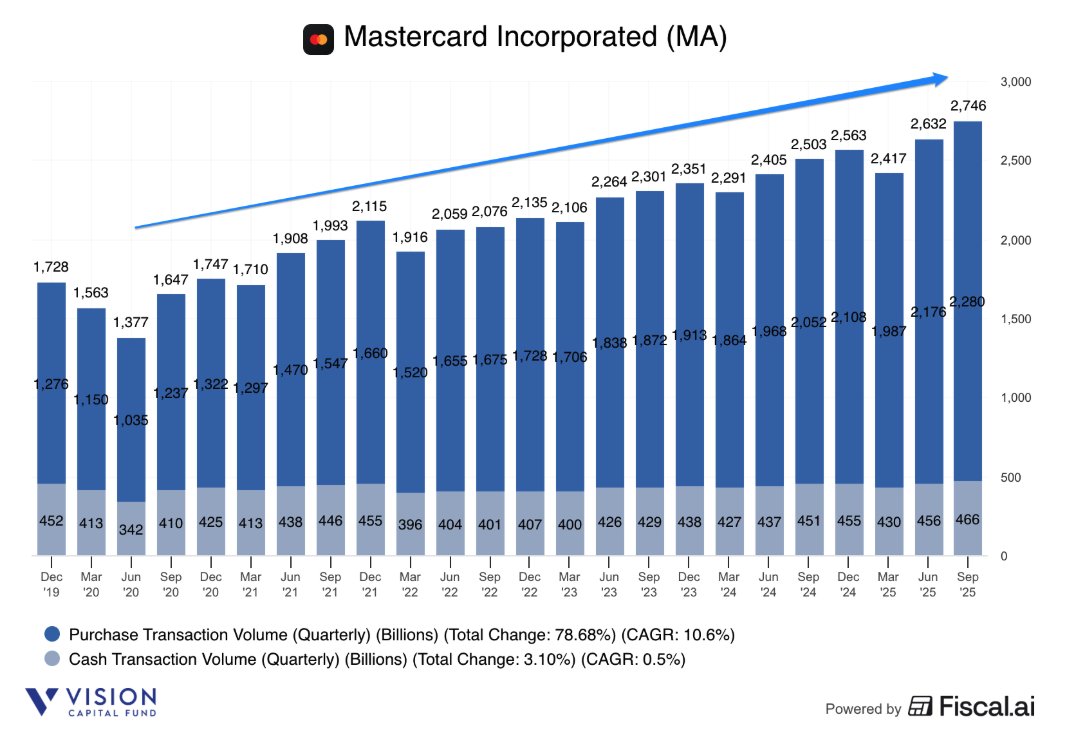
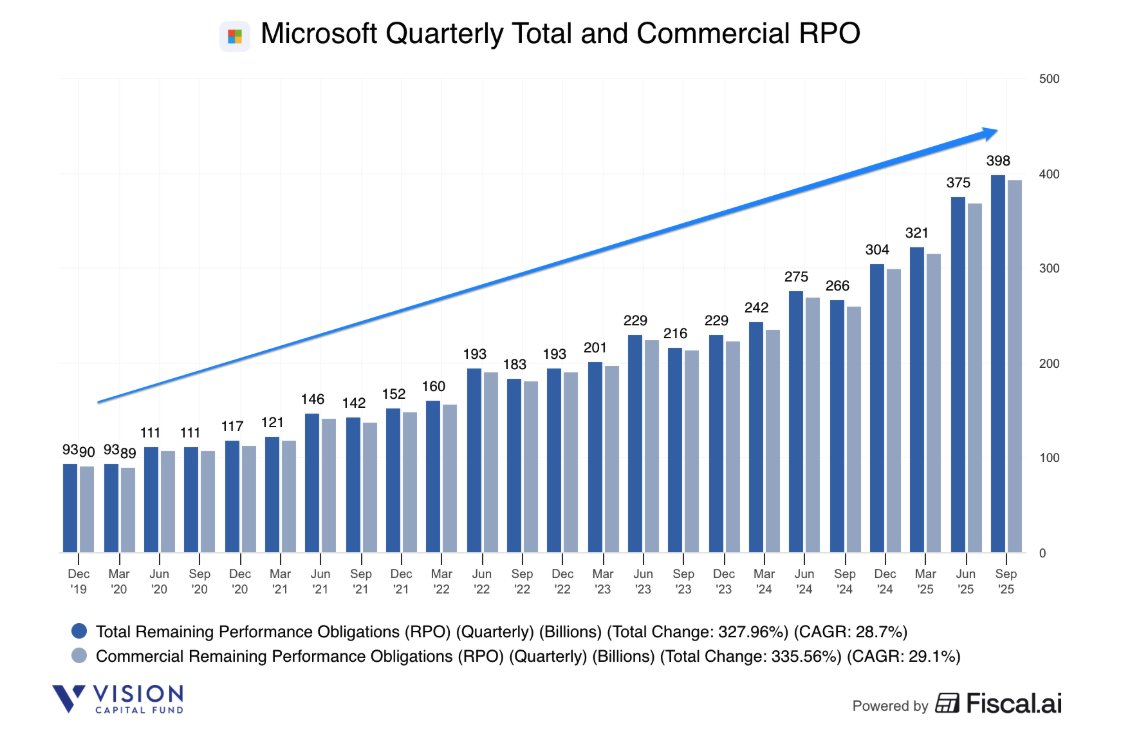


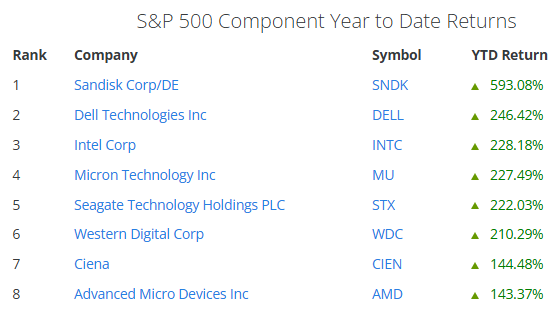

![EugeneNg's tweet photo. NVIDIA $NVDA 4Q26 Earnings
- Rev $68.1b +73% ⤴️🟢
- GP $51.1b +78% ⤴️🟢 margin 75.0% +197 bps ✅
- NG EBIT $46.1b +22% ↗️🟢 margin 67.7% -2831 bps ↘️🔴
- EBIT $44.3b +84% ⤴️🟢 margin 65.0% +392 bps ✅
- NG Net Inc $39.6b +25% ↗️🟢 margin 58.1% -2271 bps ↘️🔴
- Net Inc $43b +94% ⤴️🟢 margin 63.1% +689 bps ✅
- OCF $36.2b +52% ↗️🟢 margin 53.1% -726 bps ↘️🔴
- FCF $34.9b +58% ↗️🟢 margin 51.2% -493 bps ↘️🔴
4Q26 Revenue by Segment
- Compute & Networking $61.7b +71% ⤴️🟢
- Graphics $6.5b +97% ⤴️🟢
- Data Center $62.3b +75% ⤴️🟢
- Data Center (Compute) $51.3b +57% ↗️🟢
- Data Center (Networking) $11b +267% ⤴️🟢
- Gaming $3.7b +47% ↗️🟢
- Professional Visualization $1.3b +159% ⤴️🟢
- Auto $604m +6% ↗️🟡
- OEM & Other $161m +28% ↗️🟢
FY26 Earnings
- Rev $215.9b +65% ↗️🟢
- GP $153.5b +57% ↗️🟢 margin 71.1% -392 bps ↘️🔴
- NG EBIT $137.3b +58% ↗️🟢 margin 63.6% -292 bps ↘️🔴
- EBIT $130.4b +60% ↗️🟢 margin 60.4% -204 bps ↘️🔴
- NG Net Inc $117b +58% ↗️🟢 margin 54.2% -273 bps ↘️🔴
- Net Inc $120.1b +65% ↗️🟢 margin 55.6% -25 bps ↘️🔴
- OCF $102.7b +60% ↗️🟢 margin 47.6% -154 bps ↘️🔴
- FCF $96.6b +59% ↗️🟢 margin 44.7% -181 bps ↘️🔴
FY26 Revenue by Segment
- Compute & Networking $193.5b +67% ↗️🟢
- Graphics $22.5b +57% ↗️🟢
- Data Center $193.7b +68% ↗️🟢
- Data Center (Compute) $162.4b +59% ↗️🟢
- Data Center (Networking) $31.4b +142% ⤴️🟢
- Gaming $16b +41% ↗️🟢
- Professional Visualization $3.2b +70% ↗️🟢
- Auto $2.3b +39% ↗️🟢
- OEM & Other $619m +59% ↗️🟢
1Q27 Mgmt Guide
- Rev $78b +77% ⤴️🟢
- GPM 75%
- EBIT $51b margin 65.4%
1 | Growth was very strong across cloud providers, hyperscalers, AI model makers, enterprises and sovereigns, inference continue to grow strongly alongside training.
Total revenue of $68 billion was up 73% YoY, accelerating from Q3. Growth on a sequential basis was also a record as we added $11 billion in data center revenue across a diverse and expanding set of customers, including cloud providers, hyperscalers, AI model makers, enterprises and sovereign nations. Demand for our Blackwell architecture, extreme co-design at data center scale continues to strengthen as inference deployments grow in addition to training.
2 | Well positioned with the best frontier model builders like OpenAi, Anthropic, Meta and xAI to build full stack AI infrastructure across training, inference and AI factory scale-out.
We continue to work with OpenAI toward a partnership agreement and believe we are close. We are thrilled with our ongoing partnership with OpenAI, a once-in-a-generation company we've had the pleasure of partnering with since their first days. Blackwells and Rubin GPUs, NVIDIA CPUs and Spectrum x Ethernet for training and inference.
This quarter, we announced a partnership with Anthropic, and a $10 billion investment in their company. Anthropic will train an inference on Grace Blackwell and Vera Rubin system. Anthropic's Claude Cowork agent platform is revolutionary and has opened up floodgates for enterprise AI adoption. Between Claude Cowork and OpenClaw, Anthropic's Claude Cowork agent platform compute demand is skyrocketing and chatGPT moment of agentic AI has arrived. With partnership spanning Anthropic, Meta, OpenAI and xAI NVIDIA deployed across every cloud and with our ability to build full stack AI infrastructure from the ground up, or support them in the cloud. We're uniquely positioned to partner with frontier model builders at every stage, training, inference and AI factory scale-out.
3 | Confident in customers growing their cash flows, investments are resulting in growing compute, tokens, and revenues, are at inflection point.
I am confident in their cash flow growing. And the reason for that is very simple. We have now seen the inflection of agentic AI and the usefulness of agents across the world and enterprises everywhere. You're seeing incredible compute demand because of it. In this new world of AI, compute is revenues. Without compute, there's no way to generate tokens. Without tokens, there's no way to grow revenues. So in this new world of AI, compute equals revenues.
I am certain at this point that we are at the inflection point, we've reached the inflection point and we're generating profitable tokens that are productive for customers and profitable for the cloud service providers. And so the simple logic of it, the simple way to think about it, is computing has changed. What used to be software running on computers, modest amount of computers, call it, $300 billion or $400 billion worth of CapEx each year has now gone into AI. And AI in order to have -- in order to generate tokens, you need compute capacity. And that translates directly to growth and that translates directly to revenues.
4 | Because AI is generative in real time, it needs more compute than legacy software.
And the reason for that is because the way we used to do software was prerecorded, everything was captured prior. We pre-compiled the software. We pre-write the content. We prerecord the videos. But now everything is generative in real time. And when it's generated in real time, you could take into context of the person, the situation, the query and the intentions could all be taken into consideration to generate the outcome of this new software called, we call AI, agentic AI. And so the amount of computation necessary is far, far greater than pre-recorded. Just as a computer has a lot more computation capability than a DVD recorder, a DVD player that was prerecorded, artificial intelligence needs a lot more computing capability than the way we used to do software in the past. Now Agentic and physical AI is driving growth, data centre revenues have 13x since 2023.
The transition to accelerated computing and the infusion of AI across existing hyperscale workloads continue to fuel our growth. Agentic and physical AI applications built on increasingly smarter and multimodal models are beginning to drive our financial performance. On a full year basis, data center generated revenue of $194 billion, up 68% YoY. We have now scaled our data center business by nearly 13x since the emergence of ChatGPT in fiscal 2023.
5 | Networking was particularly even stronger, driven by strong adoption of NVLink, Spectrum-X Ethernet and InfiniBand, NVLink 72 scale-up switches ⅔ revenues
Networking, a cornerstone of our data center scale infrastructure offering, was a standout this quarter, generating $11 billion in revenue, up more than 3.5x YoY. Demand for our scale-up and scale-out technologies reached record levels, both growing double digits sequentially, driven by strong adoption of NVLink, Spectrum-X Ethernet and InfiniBand. On a YoY basis, growth was driven primarily by NVLink 72 scale-up switches as Grace Blackwell systems accounted for roughly 2/3 of data center revenue in the quarter. NVLink scale-up fabric has revolutionized computing and demonstrates the power of extreme co-design across all of the chips of the supercomputer and the full stack. In Q4, we announced that we will enable AWS with NVLink to integrate with their custom silicon. Momentum is strong with our Spectrum-X Ethernet scale up and scale across networking as customers work to unify distributed data centers into integrated gigascale AI factories. For the full year, our networking business exceeded $31 billion in revenue, up more than 10x compared to fiscal 2021, the year we acquired Mellanox.
6 | NVLink 72 was an incredible invention to improve the performance per watt significantly.
NVLink 72 has enabled us to deliver generationally 50x more performance per watt. It's just an incredible leap. And it's sensible. NVLink 72 is a great invention. It was hard to do. The creation of the switching technology, disaggregating the switches, building the system racks, all of that, we did it all in plain sight and everybody knew how hard it was for us to do. And -- but the results are incredible. So performance per watt is 50x, performance per dollar, 35x.
7 | NVIDIA is now the largest networking company in the world, and likely the largest Ethernet networking company as well.
And the invention of NVLink really turbocharged our networking business. Every rack comes with 9 nodes of switches. And each of them has 2 chips in it. And in the future, they'll have more. And so the amount of switching that we do per rack is really quite incredible. And we're also now the largest networking company in the world and if you look at Ethernet, we came into the Ethernet market about a couple of years ago into Ethernet switching. And I think that we're probably the largest Ethernet networking company in the world today and surely will be soon. And so Spectrum X Ethernet has been a home run for us. But we're open to however people want to do networking. Some people just really love the low latency and the scale-up capability of InfiniBand and we'll continue to support that, of course. And to some people love to integrate their networking across their data center based on Ethernet, and we created an Ethernet capability that extends Ethernet with artificial intelligence, a way of processing in the data center, and we're incredibly good at that. And our Spectrum-X performance really shows it. The
8 | Capex across the top 5 cloud providers and hyperscalers are now approaching $700b, top 5 customers account for 50% of revenues.
Compute directly translates to intelligence and revenue growth. Analyst expectations for 2026 CapEx across the top 5 cloud providers and hyperscalers who collectively account for a little over 50% of our data center revenue are up nearly $120 billion since the start of the year and approaching $700 billion. We continue to expect the transition of classic data center workloads to GPU accelerated computing and the use of AI to enhance today's hyperscale workloads and contribute toward roughly half of our long-term opportunity
So when you think about our top 5, as we articulated as being our CSPs, our hyperscalers and they have right now sat at about 50% of our total revenue.
9 | Expect strong sequential revenue growth through 2026, 1Q27 +77%, have inventory and supply commitments to address growing future demand.
We look ahead, we expect sequential revenue growth throughout calendar 2026, exceeding what was included in the $500 billion Blackwell and Rubin revenue opportunity we shared last year. We believe we have inventory and supply commitments in place to address future demand, including shipments extending into calendar 2027. Every data center is power-constrained. Customers make critical architectural decisions based on performance per watt given these constraints and the need to maximize AI factory revenue.
10 | NVIDIA is the inference king, producing the lowest cost per token, and generating the high revenues.
SemiAnalysis declared NVIDIA, Inference King, as recent results from InferenceX reinforced our inference leadership with GB300 NVL72, achieving up to 50x performance per watt and 35x lower cost per token compared with [ Hopper ], and continuous optimization of CUDA software helped deliver up to 5x better performance on GB200 NVL72 just within 4 months. NVIDIA produces the lowest cost per token and data centers running on NVIDIA generate the highest revenues.
11 | Strong evidence of ROI, especially in search, ad generation, content recommendations.
Strong evidence of ROI as hyperscalers upgrade massive traditional workloads to generative AI, including search, ad generation and content recommender systems is encouraging our largest customers to accelerate their capital spending.
For example, at Meta, advancements in their GEM model drove a 3.5% increase in ad clicks on Facebook and more than 1% gain in conversations on Instagram, translating into meaningful revenue growth. With the same NVIDIA infrastructure, Meta Superintelligence Labs can train and deploy their frontier agentic AI systems. Frontier agentic systems have reached an inflection point. Claude Code, Claude Cowork and OpenAI codecs have achieved useful intelligence. Adoption is skyrocketing and tokens are profitable, driving extreme urgency to scale up compute.
12 | Just shipped first Vera Rubin samples, expect to commence production in 2H26, expect every cloud model builder to deploy Vera Rubin.
We shipped our first Vera Rubin samples to customers earlier this week, and we remain on track to commence production shipments in the second half of the year. Based on its modular cable-free tray design, Rubin will deliver improved resiliency and serviceability relative to Blackwell. We expect every cloud model builder to deploy Vera Rubin.
13 | One of NVIDIA’s moat is rapid innovation and scale to be able to spend more on R&D ($20bn) more than its competitors.
Our pace of innovation, particularly at our scale is unmatched, fueled by an annual R&D budget approaching $20 billion and our ability to extreme co-design across compute and networking across chips, systems, algorithms and softwares, we intend to deliver X factor leaps and performance per watt average generation and extend our leadership position over the long term.
14 | Expect sovereign to grow at least as fast as the broader AI market, watching Chinese competitors keenly.
Over the long run, we expect our sovereign opportunity to grow at least in line with the AI infrastructure market as countries spend on AI proportional to their GDP. While small amounts of H200 products for China-based customers were approved by the U.S. government, we have yet to generate any revenue. And we do not know whether any imports will be allowed into China. Our competitors in China bolstered by recent IPOs are making progress and have the potential to disrupt the structure of the global AI industry over the long term.
15 | See robotaxi ride-hailing as a large market over the next 5-10 years as it scales from thousands to millions of vehicles, generating hundreds of billions of revenues.
Robotaxi rides are growing exponentially with commercial fleets from Waymo, Tesla, Uber, WeRide and Zoox, and many others are expected to scale from thousands of vehicles in 2025 to millions over the next decade, creating a market poised to generate hundreds of billions of dollars of revenue. This expansion will demand orders of a magnitude more compute with every major OEM and service provider developing on NVIDIA's platform.
16 | See economics of space data centers as poor today, but expect it to improve over time, technology has to be reinvented given the different physical conditions.
Well, the economics are poor today, but it's going to improve over time. As you know, the way that space works is radically different than how it works down here. There's an abundance of energy, but solar panels are large, but there's plenty of space in space. The heat dissipation, it's cold in space. However, there's no airflow. And so the only way to dissipate [ heat ] is through conduction and the radiators that you need to create are fairly large. Liquid cooling is obviously out of the question because it's kind of -- it's heavy and freezes. And so the methods that we use here on earth are a little different than the way we would do it in space.
17 | NVIDIA to extend NVIDIA's architecture and use Grok’s highly versatile low latency inference technology, will share more at GTC.
Finally, we recently entered into a nonexclusive licensing agreement with Grok for its low latency inference technology and welcome the team of brilliant engineers to NVIDIA. As we did with Mellanox, we will extend NVIDIA's architecture with Grok's innovations to enable new levels of AI infrastructure performance and value. We look forward to sharing more at GTC next month.
With respect to how we think about Grok and the low latency decoder, I've got some great ideas that I'd like to share with you at GTC. But the simple idea is that our infrastructure is incredibly versatile because of CUDA, and we're going to continue to do that….And so what we'll do with Grok is you'll come to see GTC, but what we'll do is we'll extend our architecture with Grok as an accelerator in very much the way that we extended NVIDIA's architecture with Mellanox.
18 | NVIDIA wants to be the enabler of the new AI computing era across every opportunity.
The richness of our ecosystem. Just about every start-up in the world who's working on NVIDIA's ecos -- on NVIDIA's platform. We're in every cloud. We're in every on-prem data center. We're all over the world's edge and robotic systems. Thousands of AI natives are built on top of NVIDIA. We want to take the great opportunity that we have as we're in the beginning of this new computing era, this new computing platform shift to put everybody on NVIDIA. Everything is already built on CUDA, and so we're starting from a really terrific starting point. But as we build out the entire AI ecosystem, whether it's an AI for language or physical AI or AI physics or biology or robotics for manufacturing, we want all of these ecosystems to be built on top of NVIDIA. And this is such a wonderful opportunity for us to invest into the ecosystem across the entire stack.
19 | NVIDIA can only continue to sustain its high gross margins if it can deliver higher performance that is much more than the cost and price of its systems, that’s why they are moving so fast.
The single most important lever of our gross margins is actually delivering generational leads to our customers. That is the single most important thing. If we could deliver generationally performance per watt that exceeds dramatically what Moore's Law can do. If we can deliver performance per dollar dramatically more than the cost of our systems than the price of our systems, then we can continue to sustain our gross margins. That's the simple most important concept. Every -- the reason why we're moving so fast is because, number one, the demand for tokens in the world as a result of the inflection points that we've gone through has now -- has gone completely exponential.
➡️ Final Takeaways on NVIDIA $NVDA:
NVIDIA is at the pivot of the longer term structural tailwind shift from general purpose computing powered by CPUs to accelerated computing and gen AI by CPUs with significantly stronger use cases, driven by longer-term Capex spend across any increasing wider set of customers. Strong visibility and broad-based demand reflects the start of a potential longer-term shift that NVIDIA with its strong architecture software and networking moat of CUDA, InfiniBand, Mellanox have taken decades to build, and now with Spectrum-X with Ethernet. GBlackwell Ultra GB300 to drive FY27. Rubin to ramp in 2H26. NVIDIA’s technological edge is continuously reinvesting at an ever growing scale and being ahead of the game when others are catching up to them led by Jensen Huang and his team.](https://pbs.twimg.com/media/HCDhEYSaMAURCqB.jpg)
![EugeneNg's tweet photo. NU Holdings $NU 4Q25 Earnings
- Rev $4.9b +57% ↗️🟢
- GP $1.9b +49% ↗️🟢 margin 40.4% -210 bps ↘️🔴
- EBT $1.3b +54% ↗️🟢 margin 26.9% -42 bps ↘️🔴
- Adj Net Inc $943m +55% ↗️🟢 margin 19.4% -26 bps ↘️🔴
- Net Inc $895m +62% ↗️🟢 margin 18.4% +59 bps ✅
- ROE 33% ↗️🟢 +400bps ✅
- Adj ROE 35% ↗️🟢 +300bps ✅
FY25 Earnings
- Rev $16.3b +40% ↗️🟢
- GP $6.6b +32% ↗️🟢 margin 40.6% -250 bps ↘️🔴
- EBT $4.4b +47% ↗️🟢 margin 26.8% +135 bps ✅
- Net Inc $2.9b +46% ↗️🟢 margin 17.6% +70 bps ✅
Biz Metrics (Users)
- Customers 131m +15% ↗️🟢
- Cust (Brazil) 112.7m +11% ↗️🟡
- Cust (Brazil Indiv) 106.8m +10% ↗️🟡
- Cust (Brazil SME) 5.9m +26% ↗️🟢
- Cust (Mexico) 14.1m +41% ↗️🟢
- Cust (Colombia) 4.2m +68% ↗️🟢
- Active Customers 109.3m +15% ↗️🟢
- Active Cust (CC) 57.6m +9% ↗️🟡
- Active Cust (lending) 14.4m +30% ↗️🟢
- Activity Rate 83.4% ➡️🟢
- Total Pymt Volume $41.6b +29% ↗️🟢
- Pymt Volume (Credit) $27.7b +34% ↗️🟢
- Pymt Volume (Debit) $13.9b +20% ↗️🟢
- ARPAC $15.0 +27% ↗️🟢
- ACPAC $0.80 +0% ➡️🟢
Biz Metrics (Credit)
- Credit Cards Gross Receivables $21.8b +49% ↗️🟢
- Credit Card non-IEP $14.2b +49% ↗️🟢
- Credit Card IEP $7.6b +49% ↗️🟢
- Total Loans $10.9b +78% ⤴️🟢
- Loans to individuals $10.2b +73% ⤴️🟢
- Loans to companies $0.8b +204% ⤴️🟢
- Total Gross Credit Portfolio $32.7b +57% ↗️🟢
- Credit Portfolio (Secured) $2.7b +93% ⤴️🟢 (8% total)
- Credit Portfolio (Unecured) $8.2b +74% ⤴️🟢 (25% total)
- Credit Portfolio (Credit Card) $21.8b +49% ↗️🟢 (67% total)
- Total Net Credit Portfolio $19.0b +66%
- Int Earning Portfolio (IEP) $18.5b +65% ↗️🟢
Biz Metrics (Deposits)
- Int Earning Asset (IEA) $60.6b +51% ↗️🟢
- Deposits $41.9b +45% ↗️🟢
- Deposits (Brazil) $33.2b +44% ↗️🟢
- Deposits (Mexico) $6.3b +40% ↗️🟢
- Deposits (Colombia) $2.5b +92% ⤴️🟢
- Cost of Deposits 87% of Interbank Rate ➡️🟢
Biz Metrics (Margins)
- NII $2.8b +55% ↗️🟢 margin 19.5% +100bps ✅
- Risk-Adjusted NII $1.5b +56% ↗️🟢 margin 10.5% +60bps ✅
- Efficiency Ratio (old) 25.4% ↘️🟢 -170bps ✅
- Efficiency Ratio (new) 19.9% ↘️🟢 -170bps ✅
Brazil Consumer Credit Portfolio NPLs
- 15-90 NPLs 4.1% ➡️🟢
- 90+ NPLs 6.6% ➡️🟢
- Coverage over total balance 15.2% ➡️🟢
- Coverage over 90+ NPL 210.9% ➡️🟢
1 | Solid quarter and year, 33% ROE and launched more than 100 new products and features.
2025 was a fantastic year for Nubank, and Q4 '25 truly showed the strength of our business model. During the year, effectively, most of our key indicators from customer law to scale, engagement and profitability moved in the right direction, while we continue to invest significantly on long-term growth.
Net income reached $895 million, translating into a record 33% return on equity, while maintaining strong capital buffers and scaling our credit portfolio responsibly. These results reflect the priorities we set and the discipline of execution throughout the year.
One way to see this execution is to look at what we put in customers' heads. Across our markets, we launched more than 100 new products and features.
2 | NU became the largest private FI in Brazil by customers.
In 2025, we made measurable progress across all three markets. In Brazil, we became the largest private financial institution by a number of customers, reaching $113 million with an activity rate of 86%. Scale and engagement continue to reinforce each other.
3 | While recent FGTS regulations have reduced Nu payroll originations by half, impact remains limited, comfortable with disciplined credit underwriting.
Recent changes to FGTS regulations have reduced Nu originations by more than half. Though the impact on outstanding portfolio remains limited given the longer duration nature of the secure launch. We remain very comfortable with the portfolio's growth trajectory and risk profile underpinned by very disciplined credit underwriting and the evolving nature of our credit models.
4 | Continue to actively engage government for 2026-27, had become leader in FGTS, but if regulators don’t change, focus on public payrolls instead.
And we continue to have a very good dialogue with the government to try to influence the agenda for 2026 and 2027. And we have become market leaders in FGTS. It was a very -- it is and it used to be a very good product, and we believe it will continue to play an important role in the formation of our secured lending book. Even though if regulations don't change, we'll probably play a smaller role than it could have played before. But that's bucket number one. Bucket number two, public consignado or public payroll, which I put here,
5 | Recorded a one-off non-recurring regulatory levy of $25m contribution to SOFIPO for Mexico.
Credit loss allowance increased primarily as a function of growth as we expanded credit card limits and balances, provisions rose mechanically due to front-loaded origination accounting while underlying credit quality remains stable. We also recorded a one-off item related to Mexico. As background, Prosofipo is a sector-wide deposit insurance fund to which also peoples are required to contribute to. As the largest SOFIPO in the country, new was required to make an extraordinary contribution of approximately $25 million, which is reflected in interest expenses this quarter. This is a onetime nonrecurring regulatory levy not a reflection of the credit quality or the financial health of our operations in Mexico. Risk-adjusted NIM closed at 10.5%, and would have been broadly stable quarter-over-quarter, excluding the Prosofipo contribution.
6 | Lower effective tax rate due to higher one-time remeasure of deferred tax assets offsetting higher fintech corporate income tax rates.
I think the lower effective tax rate in the fourth quarter can be explained by, I would say, largely two things. One, completely nonrecurring and on recurring. What's the nonrecurring one. So about beginning of December 2025, the federal government approved an increase in the corporate income tax applicable to fintechs, including those like Nubank that essentially kind of increased progressively the corporate income tax from about 40% to 45% starting in 2026 and then going all the way in the next 2 years. Even though that in the medium term is a headwind for our effective tax rate in the quarter in which this kind of legislation is passed. We have to remeasure our deferred tax assets. So our DTAs remeasure up. and that increase in the DTA, which was about $58 million unit is recognized in the fourth quarter of 2025, decreasing the effective tax rate in the quarter. So that's the portion that I attribute as a nonrecurring one-off event.
7 | Focus for 2026, transitioning from a LATAM to a global digital bank, with finalizing of the Mexico banking license, and the US conditional bank charter approval.
Let now turn to how we're thinking about 2026. As we enter 2026, we see this as an inflection year. The year we begin transitioning from a Latin American leader to a global digital banking platform. Our priorities are organized around three pillars. First, winning in our core markets.
Brazil and Mexico will continue to absorb the majority of our capital and management attention. In Brazil, we will deepen leadership in the mass market, expansion of wallets and ARPAC, strengthening small businesses and grow or high income presence through Ultravioleta.
In Mexico, finalizing our banking license process is critical as it unlocks the next phase of credit growth and customer debit. In Colombia, we will continue scaling credit and bringing a number of Nu products. Across all three markets, our focus remains on experience, principality and monetization. Second, strengthen foundations for international expansion. During 2026, we will lay the operational groundwork for our U.S. opportunity, building on the conditional bank charter approval. Latin America remains our primary growth engine.
8 | See US banking as one of the largest TAMs, at high level, looks saturated and competitive, but in subsegments and certain niches, see opportunities. Will have a targeted strategy, will focus on certain geographies and subsegments.
On a very high level, and we're not really ready yet to disclose specifically what the strategy there is going to be. But at a very, very high level, this is the largest market in the world. And while at a very high level, it seems like a very saturated or competitive market in certain segments. When you dig in into subsegments in certain niches that, by the way, happen to be the size of Brazil.
We actually find opportunity to solve a number of consumer problems that are similar to what we've done in the past. So we're going to have a very targeted strategy. We're going to be very disciplined on investing. There are a lot of focuses on certain potential geographies or subsegments that we are interested about. You're not going to see us kind of shooting in all directions here because it's a bit of a long journey, and we fully acknowledge that this is a very competitive and sophisticated market in certain areas. But we do think that it's -- there are opportunities for us to create a meaningful business in certain sub areas of the United States.
9 | AI is on net more opportunity than challenge for NU, well positioned to take advantage and become one of the winners.
And the answer is both. It is both a challenge and has potential for disruption as well as significant opportunity. Net-net, we think it's more opportunity than challenge for us. But we have to take it pretty seriously, and we are taking it very seriously.
AI. So net-net, I do think that there are potential resorptive vectors in some of the business models. But I think when you compare -- when you think about the fact that 95% of the world's financial services profits are still concentrated in incumbent banks that still have significantly larger cost structures. Means that we're very well positioned to take advantage of AI as a technology enabler for revenue and cost and ultimately madly be one of the winners in this technology shift.
10 | Businesses that are moving bits from point A to point B will get hit the harder and AI will help remove a lot of that friction, similar for businesses that are moving money from one point to another. Not the case for credit revenue where NU focuses on.
A couple of ways to think about it. I think there is one specific trend or one common denominator across every technology transformation. And this goes all the way to even the internet era, which is any business model that relies on simply moving bits from point A to point B, where you're effectively a broker tends to be heard the quickest because one of the things that technology does is remove a lot of that friction in those processes.
So I think to -- some of the commentary that has been around in the market about financial services is, I think businesses in financial services that are simply moving money from one point to another point, will have the higher risk of potential disruption. You need to be able to add more value than that. And I think from that angle, we think -- we have always believed that credit, specifically, credit revenue is actually the most sustainable type of revenue in financial services because of the capital intensity, the regulatory nature of it, the balance sheet aspect and the proprietariness of the data where AI plays a role and ultimately allows you to make a better decision on that.
11 | See lots of opportunity to increase ARPAC from $15 to 40 with more cross-sell of new products and services over time.
but I think we're very well positioned given the way we are set up in the strength around credit that we have. I think a couple of our opportunities really on the revenue side. And as a reminder, our package $15 a day and our incumbent competitors are something like $40, so we have a significant opportunity to increase ARPAC is around Nu cross-sell and Nu products that we can be delivering to the very significant consumer base that we have.
And I think everything around cross-sell everything about using the data that we already have to offer new products and services, it's a big opportunity and nice [indiscernible] enabler. And here, we've discussed a few times over the past year, the significant lift that we're seeing when we're using our own foundation model on credit, but also cross-sell and a number of other revenue-related opportunities. And then you have the cost side, and I think the cost side is a little bit more clear.
12 | Expect some upward pressure on efficiency ratios in the coming 4-6 quarters due to higher OPEX from employees returning to office (80-100bps), investments in AI and GPUs, and investments to expand globally.
We wanted to highlight very clearly that we may see kind of upward pressure on efficiency ratio in the coming quarters, i.e., in the short term, like the next 4 to 6 quarters.
As a result of very deliberate investments, I would bucket them in three categories. Number one is we have recently announced a return to office policy, right, in which starting on July 1, 2026, employees will start going back up to the office 2x per week. That means that we're going to have to kind of prepare the offices, increase the leased area to welcome our employees as they prepare to come back to the office.
We believe that this will bring enormous benefits to the company, including about kind of ingenuity, kind of a innovation, coordination, but it does come with an increase in OpEx in the short term, and we wanted to clarify this. I would say that the return to the office will likely bring kind of our efficiency ratio, all else constant, up by about 80 to 100 basis points.
The second bucket…is the all of the investments that we are making in AI and new technologies. So that brings new talent that we have to hire, eventually new investments in R&D and research in GPUs that will have kind of a short-term cost, which we believe will be way, way, way more offset by the medium-term gains that we're going to have, but we will not shy away to make investments in talent, R&D and GPU to maximize the impact of our efforts in AI. And I would say that kind of -- we have returned to the office, you have AI.
And the third one is the globalization. So there is a lot of investments that we are making in laying down the foundation for us to go beyond Brazil, Mexico and Colombia. And a substantial amount of those expenses are not capitalized and are incurred in 2026 first to collect revenues and margins in the following years. So that's the direction.
➡️ Final Takeaways on Nu Holdings $NU:
NU is the “GEICO” of LATAM digital banking. Strong business traction supported by 📶 customers, more/faster cross-sell, leading ↗️ revenues per customer, combined with the significant competitive cost advantage of a lower cost to acquire & serve ➡️, strong risk management, and lower cost of funding (retail) that really drives its long-term highly durable profitable growth. Continue to watch its expansion into Mexico and Colombia, and its continued building on its strengths in Brazil (secured lending with payrolls, higher credit card spend with the higher income Ultravioleta credit card. Strategic about entering the US. Not worried about higher near-term (4-6 quarters) expenses of higher efficiency ratios weighing on profitability. If markets give us better buying opportunities, we will gladly take it.](https://pbs.twimg.com/media/HCEAdQYbYAEobZk.jpg)





