Singers belting, top notch dancing, inflatables bouncing, food sizzling, the whole place buzzing with energy. What an EPIC way to close out a phenomenal year at Airedale Academy. Pure joy from start to finish. #TeamAiredale#AiredaleLive
We were busy this rotation!
9 weeks of research, designing and making! And gorgeous patterns on their planner pouches!
#textilesteacher#dtteacher#artteacher
🎨 Year 8 have designed and made their own planner pouches inspired by South African artist Esther Mahlangu! Using batik techniques, fabric pens and sewing machines, they created vibrant, practical pouches ready for the new school year. ✂️✨
#Textiles#CreativeLearning
I found this incredibly interesting. The way that grassroots are developed in Norway is maybe the way to attract children to sports from an earlier age? Maybe we would continue for longer if some barriers were not there blocking us in the first place?
Norway wins the most medals at the Winter Olympics, with a population of just 5.6 million. People say it’s because Norway is a winter wonderland, but they’re also elite at triathlon, beach volleyball, cycling, and as the world is now seeing, soccer.
A big part of their success is how they treat youth sports—and it’s the opposite of what we do in the US and Canada. Here’s what we can learn from Norway:
1. Scorekeeping:
In the US: Youth sports tend to be hyper competitive even at early ages. Leagues almost always keep score.
In Norway: Scorekeeping isn’t even allowed until age 13.
Removing winners and losers keeps the focus on the process not outcomes. It keeps kids engaged longer because it minimizes pressure (and tears) and maximizes fun, learning, and growth. The goal isn’t to win a third grade championship. It’s to love sport and keep playing.
2. Trophies:
In the US: If you give everyone a trophy, you’re creating snowflakes who will never gain a competitive edge.
In Norway: Whenever trophies are awarded, they are handed out to everyone.
If getting a trophy makes young kids feel good, we should give them trophies. Maybe they’ll come back and play again next year!!
As for the creation of snowflakes with no competitive edge—Norway’s athletes are tough as nails and all they do is win.
3. Prioritizing Fun:
In the US: Far too often, the goal is to win.
In Norway: The national philosophy is “joy of sport.”
Youth sports in the US are driven by adults, ego, and money. Youth sports in Norway are driven by fun.
Only half of kids in the US participate in sports. The number one reason they drop out: because they aren’t having fun anymore. In Norway, 93% of kids participate in youth sports. Fun is the foremost goal.
4. Playing Multiple Sports:
In the US: There’s pressure to specialize early and play your best sport year round.
In Norway: Try as many sports as you can before specializing as late as college.
Norway encourages kids to try all types of sport. This reduces injury and burnout and increases all-around athleticism. It also helps promotes match quality, or finding the sport you are best suited for as your body develops, which is impossible if you commit to a single sport too early.
5. Affordability
In the US: There is increasingly a pay-to-play model with high fees for leagues, equipment, and travel. This excludes many kids from playing.
In Norway: It’s a national priority to keep youth sports affordable and therefore accessible for all.
Kids aren’t priced out, which creates opportunities for everyone to participate (and develop into athletes), regardless of their parents’ income level.
Norway’s sporting success isn’t just speculation or a nice story. A large body of research supports their approach:
• Studies show athletes who specialize later in life have a significantly higher chance of becoming elite.
• Soccer players whose motivation is primarily internal (versus external) have more than a 3x better chance of making it to an elite level.
• The number one predictor of whether or not kids stay in sport is are they having fun.
• Parents connect winning to having fun whereas kids say having fun is about being with their friends and learning.
We could learn a lot from Norway:
In the US, 70% of kids drop out of youth sports by age 13. This not only diminishes an elite-athlete pipeline, but it also destroys an opportunity for healthy habits and all the character lessons kids can learn from sport.
In Norway, lifelong participation in sport is the norm. The goal isn’t to have the best 9U team. It’s to develop the best athletes. Those are two very different things. And Norway has the medals to prove it.
Why was His Majesty The King painting a tiny snail at London Zoo? 🐌
During a special visit to mark ZSL's 200th anniversary, ZSL Patron His Majesty The King helped give two very special partula snails a dot of “snail varnish” ahead of their release back into the wild later this year.
The tiny dots of colour help our conservationists identify individual snails and monitor their progress once they return home to French Polynesia. This year’s cohort will be marked orange, but these two received a special Royal Purple mark to commemorate the visit.
Partula snails were once driven to the brink of extinction after the introduction of another snail species devastated their populations — with some disappearing from the wild entirely.
But thanks to decades of work by ZSL conservationists and partners around the world, these species have been rescued, cared for at London Zoo, and are now returning to their island homes.
It’s one of ZSL’s longest-running conservation projects, led by some of our longest-serving experts, proving that no species is too small to save.
Year 7 textiles students have transformed crisp packets into amazing felt creations! 🧵✨ Brilliant creativity and craftsmanship from all involved—well done everyone! 👏
#Year7#Textiles#CreativeLearning#StudentSuccess
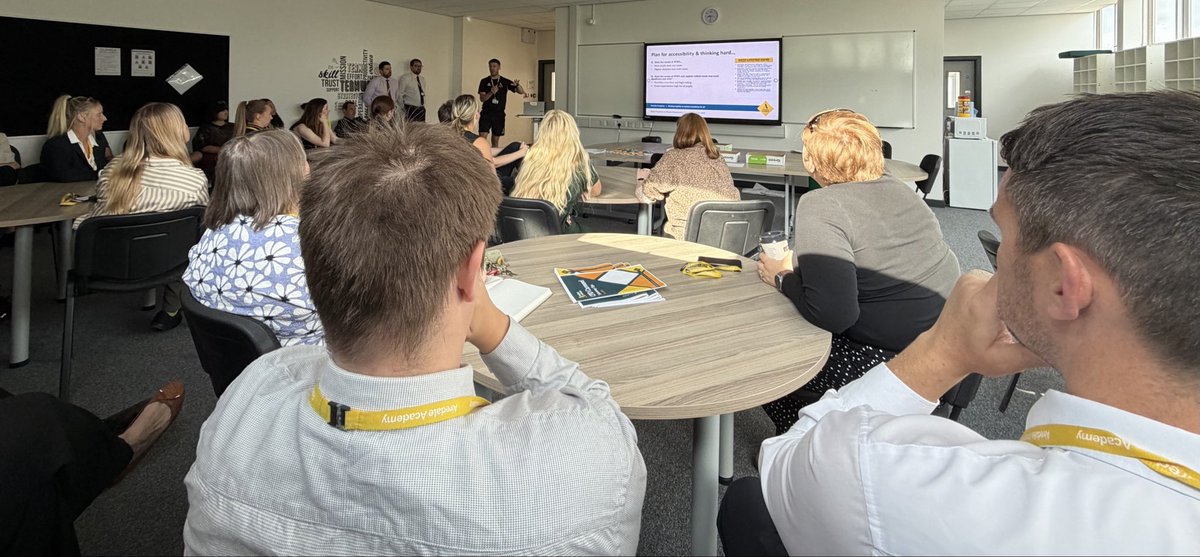
This morning’s bitesize CPD sharpened our approach to the 6 fundamentals of great teaching, especially adaptive and responsive teaching. Snappy learning, instant classroom impact.
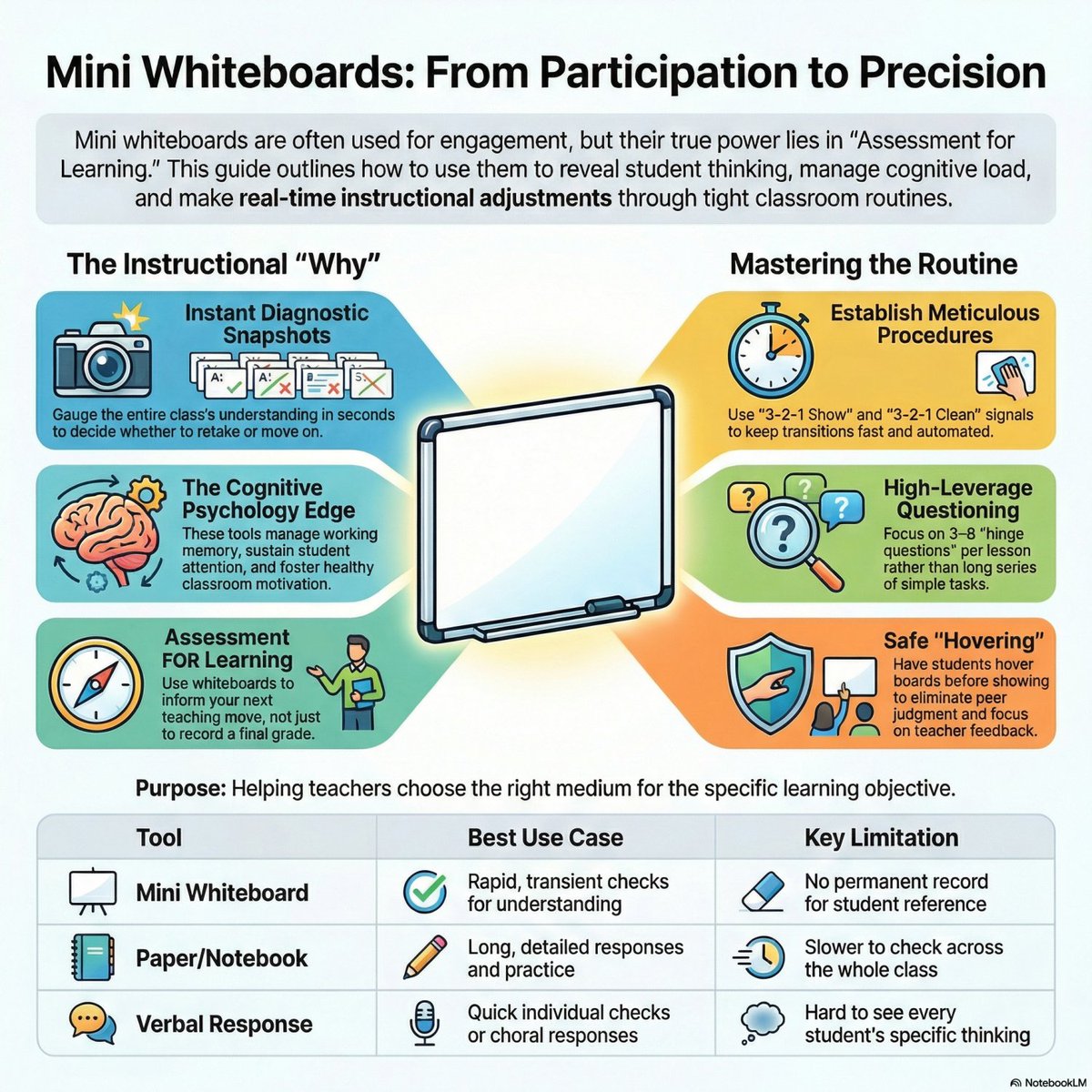
Dylan's admission that mini-whiteboards helped him realize that his students knew a lot less than he thought they did was powerful. He admits that this let him know he needed to change his teaching. While this discussion was mostly about the power of using mini-whiteboards, there was discussion about when it may not be good to use them and why.
@AmberBHaven@AndrewWatsonTTB@SoLInTheWild@bamradionetwork https://t.co/tWU40sRnXO
I received this email recently and thought it might resonate with lots of art teachers…
“I have been trying to create fun things for my class to enjoy, but they are all so diverse in styles...I don’t know what to do?”
Firstly… welcome to teaching art! 😊
If there was one magical project that every student loved equally, every art teacher in the world would already be using it and we’d all be having a much easier time.
The reality is that art students are wonderfully diverse.
Some students love careful observational drawing.
Some hate drawing but come alive with collage.
Some enjoy structure and clear instructions.
Others flourish when given freedom to experiment.
Some don’t even know what they enjoy yet until they unexpectedly discover it halfway through a project.
So how do you deal with a diverse art classroom?
Being prepared.
I genuinely think one of the best things an art teacher can do is build up a “toolkit” of different media, processes and approaches that you can draw upon throughout the year.
Collage.
Watercolour.
Printing.
Wire sculpture.
Mixed media.
Mark-making.
Creative workshops.
Photography.
Digital art.
Not every lesson will suit every student — and that’s okay.
Sometimes the student who struggles in a painting project suddenly thrives in a printing lesson. The quiet student who lacks confidence in drawing might produce an incredible mixed media piece. The student who says “I’m bad at art” may simply not have found their material yet.
I also think it helps to stop searching for the “perfect” lesson that everyone will love and instead focus on offering a range of creative experiences across a term or year.
Over time, students begin to discover themselves as artists.
And honestly? Sometimes the projects students complain about most at the beginning become the pieces they are most proud of at the end!
This is one of the reasons I have such a wide range of resources on The Arty Teacher. Different students need different entry points into creativity.
If you’re looking to broaden your own “toolkit”, here are a few places to start:
Collage:
https://t.co/WMqCnFOSNF
Watercolour:
https://t.co/oVf3f3lYTz
Mark-making:
https://t.co/KS93Co4qwP
Printing:
https://t.co/1ZYAcRDNcB
Sculpture:
https://t.co/sM154TAnjK
How do YOU deal with a diverse art class? I’d love to hear your thoughts in the comments.
#artteacher #arteducation #teachingart #artlessons #secondaryart #artcurriculum #artistteacher #teacherlife #creativeeducation #mixedmedia #watercolour #collageart #printmaking #markmaking #TheArtyTeacher
💡NEW POST 💡
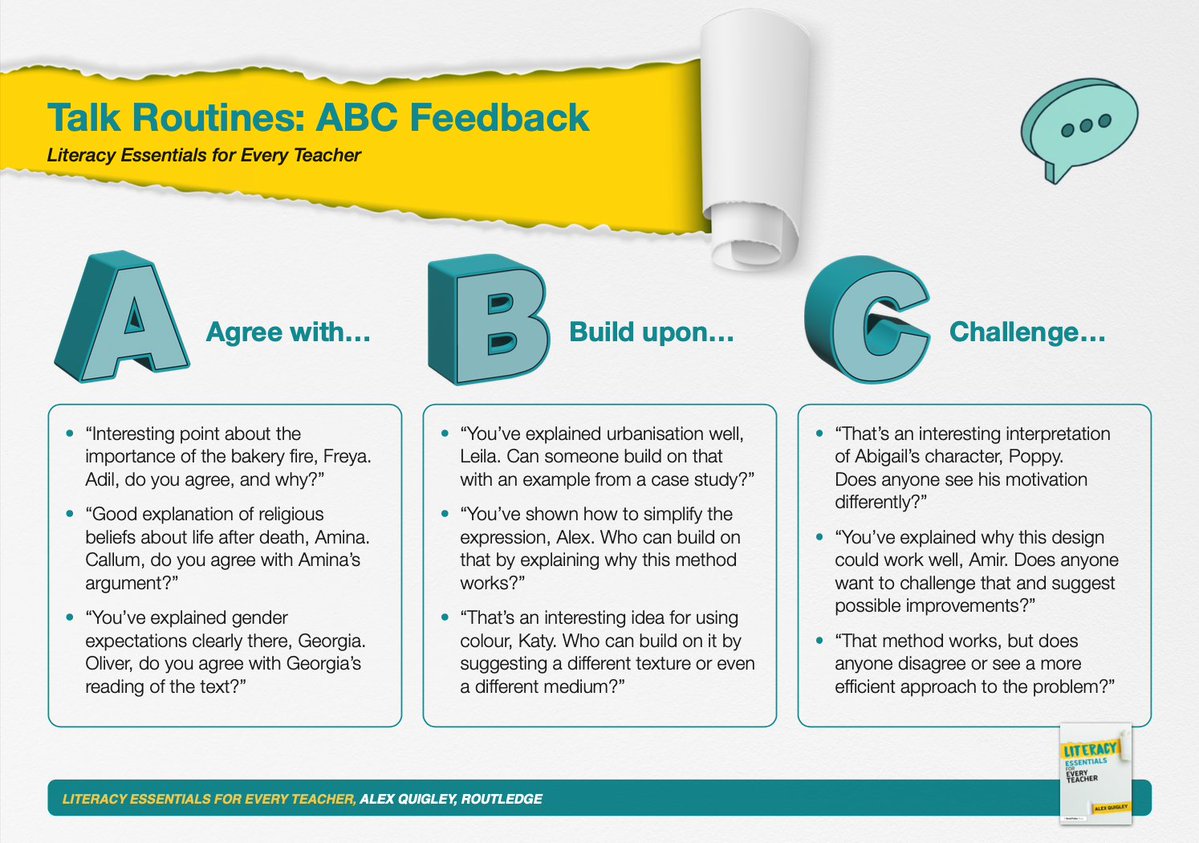
'Talk routines: ABC Feedback'
"Done well, this approach promotes more active listening, more focus and attention on task, and therefore more learning."
https://t.co/ojt0x0OVTp
Wouldn't this make a great Open Day activity?
Last week at our studio open day, visitors of all ages were invited to create a tiny collage on a simple parcel tag.
Using scraps of paper, textures, colours and patterns, each person made something completely unique. The finished tags were then hung on branches in a twig display, gradually growing into a collaborative artwork throughout the day.
It was simple, inclusive, creative and surprisingly calming. No pressure, no rules, just making, chatting and taking part.
Sometimes the smallest creative activities spark the biggest conversations. ✂️🍂🎨
#OpenStudios #CollageArt #CommunityArt #CreativeWorkshop #ArtistStudio #ArtActivity #ArtWorkshop #ContemporaryCollage #MixedMediaArt #StudioLife #CreativeCommunity #ArtForEveryone #TheArtyTeacher
Let's take a (space)walk!
On May 27, two Roscosmos cosmonauts will exit the @Space_Station to install a solar radiation experiment on the Zvezda service module. Learn how to watch live: https://t.co/4grz6HMM5X