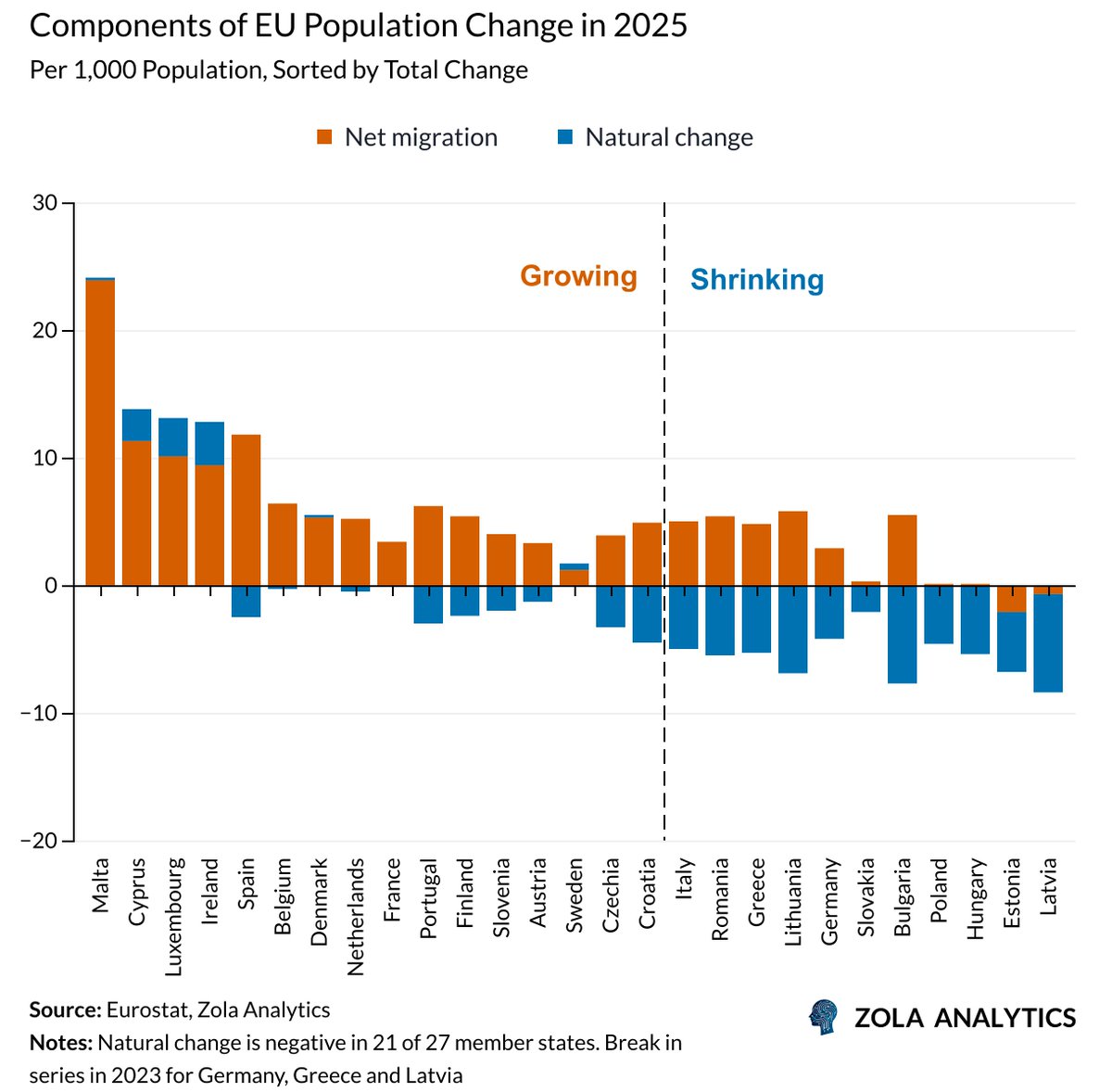
🇪🇺The EU needs roughly 1.35m net migrants per year to keep its population flat. In 2019 it needed 0.5m
21/27 member states now record more deaths than births. While EU migration covers the shortfall for now, extend the trend and the breakeven reaches 1.8m by 2030, 2.7m by 2040
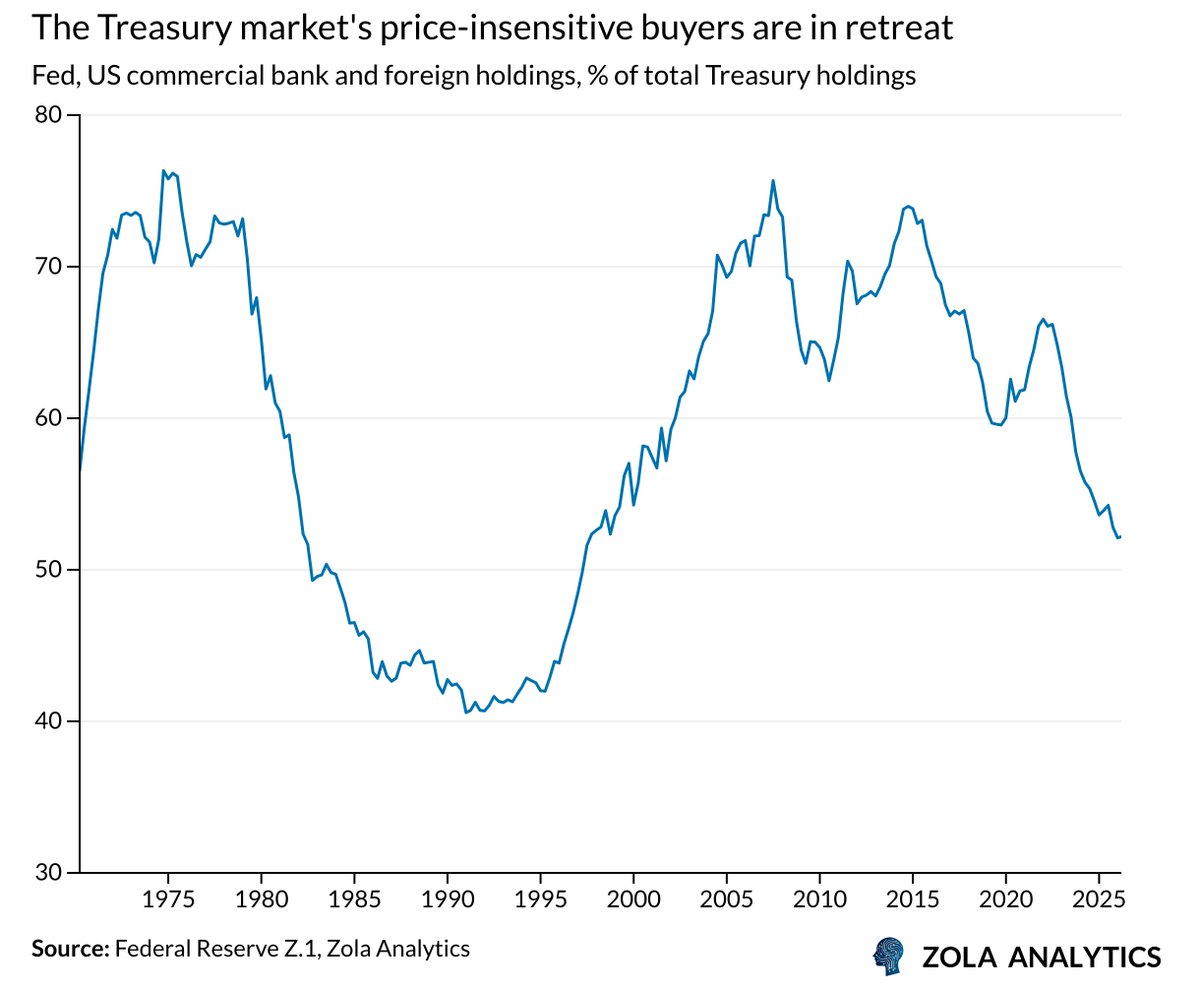
The Fed, foreign investors, and US banks held 66% of Treasuries in mid-2022. That's 52% now. The replacement buyers (money funds, hedge funds, asset managers) are price-sensitive. The 30-year at 5.2% for the first time since 2007 starts to make more sense.
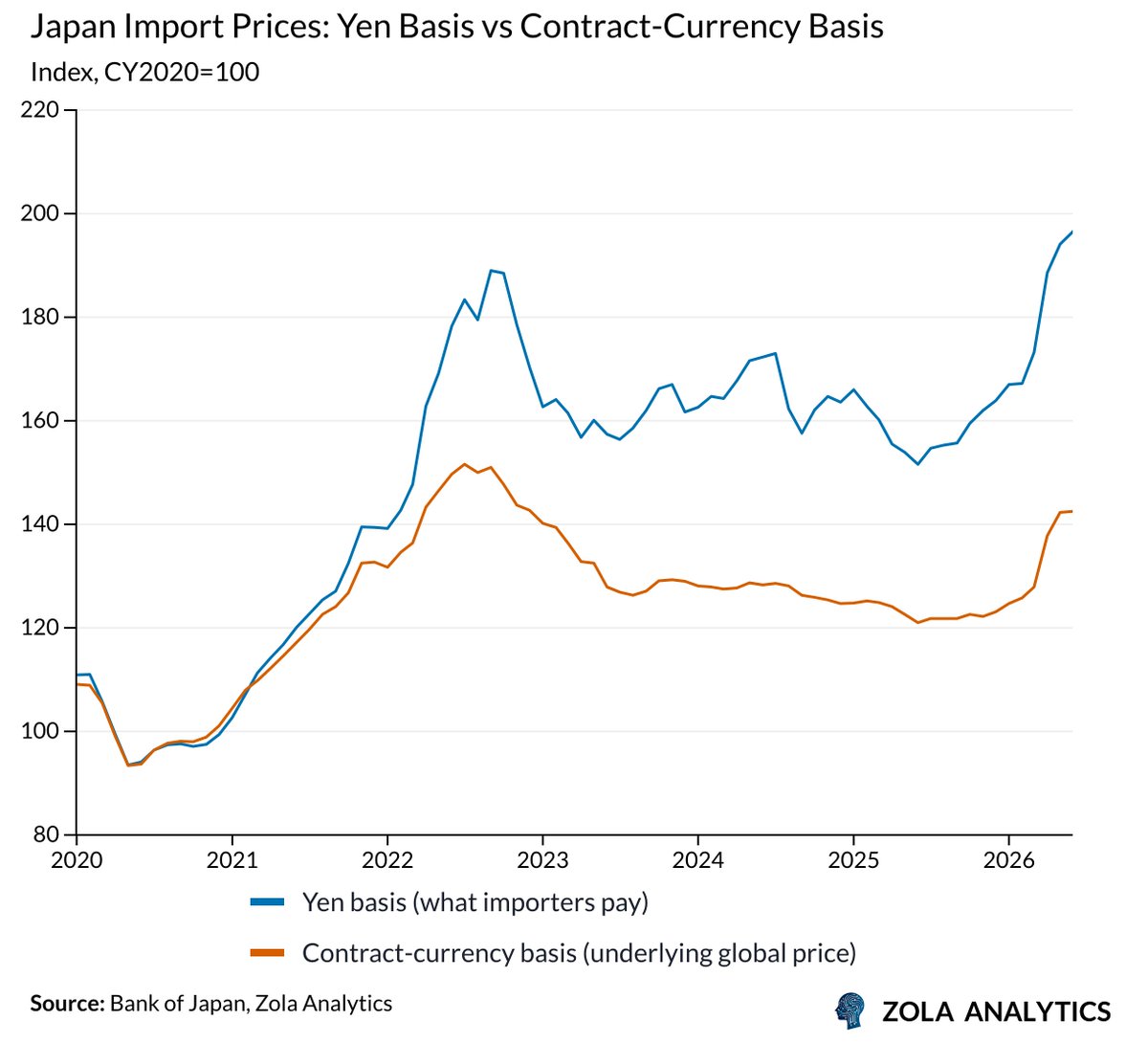
🇯🇵 This why the yen has become a monetary-policy problem: with import inflation this high and still feeding through, the Bank of Japan finds it harder to justify holding rates each month.
The retreat in oil this morning gives the Committee an easier story to tell, but it does not undo the month.
US petrol prices are back to $4.10 a gallon, up from $3.79 three weeks ago. Households captured only part of the fall in crude and are now absorbing the full reversal, and year-end Brent futures are nowhere near the low $70s seen at the start of the month.
That has barely registered in long-run inflation expectations, and central banks look through energy shocks until expectations start to move.
So the hawkish case is not really about the data. It is about Warsh, early in the job, wanting to show he will not sit on above-target inflation.
But the decision this week matters less than what the next couple of prints do to a Committee already losing patience.
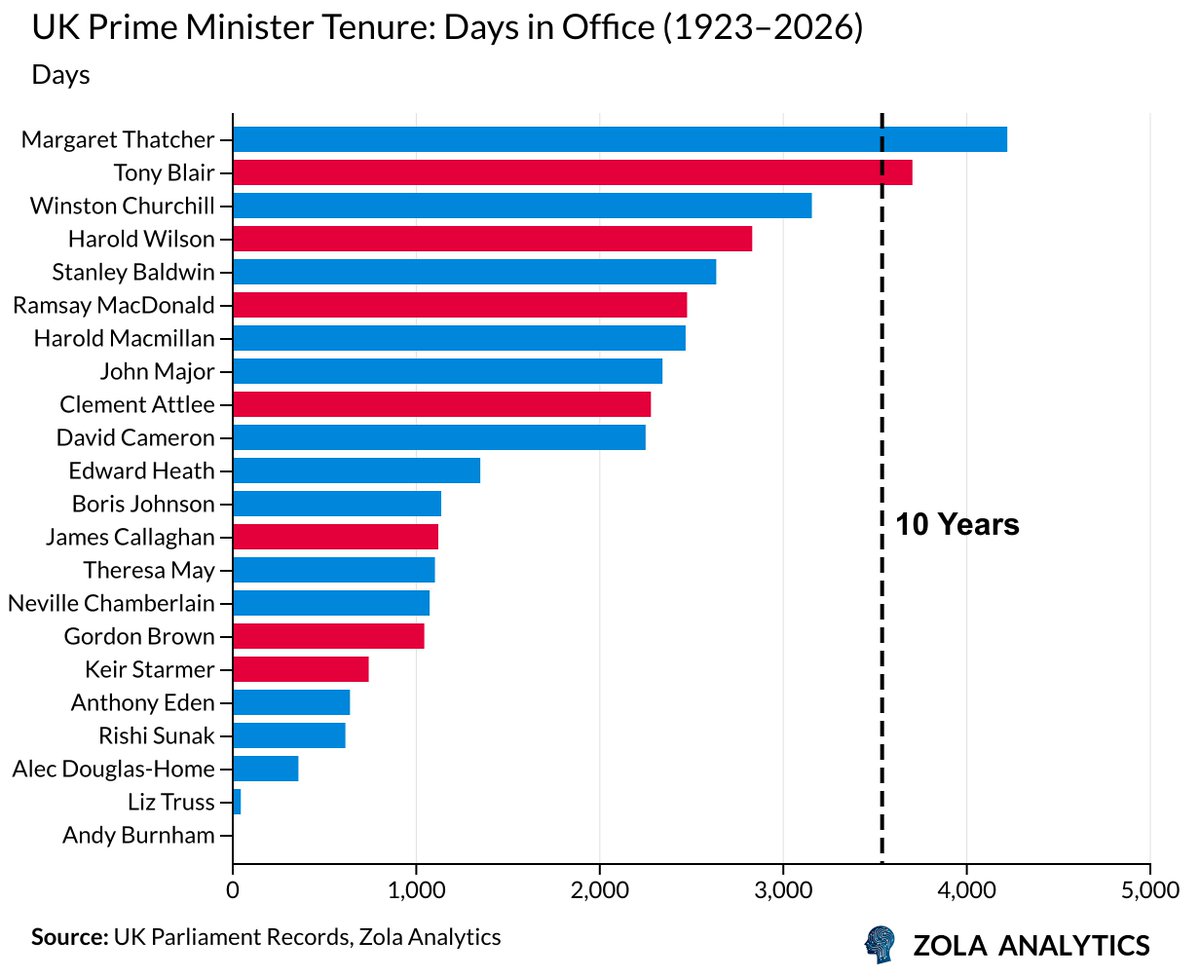
🇬🇧 Andy Burnham has kicked off his premiership with a ten-year growth plan. The ambition is welcome, but its credibility will depend less on the length of his premiership than on whether the policy can outlast it.
Since Thatcher, only Blair has completed a full decade in office. Investors will therefore look for more than targets and timelines. They will want durable tax policy, cross-party support and institutions capable of carrying the strategy through changes of government.
The churn in political high office now a feature of the investment landscape. A ten-year plan cannot rest on the assumption of ten years of political stability. It must be designed to survive without it.
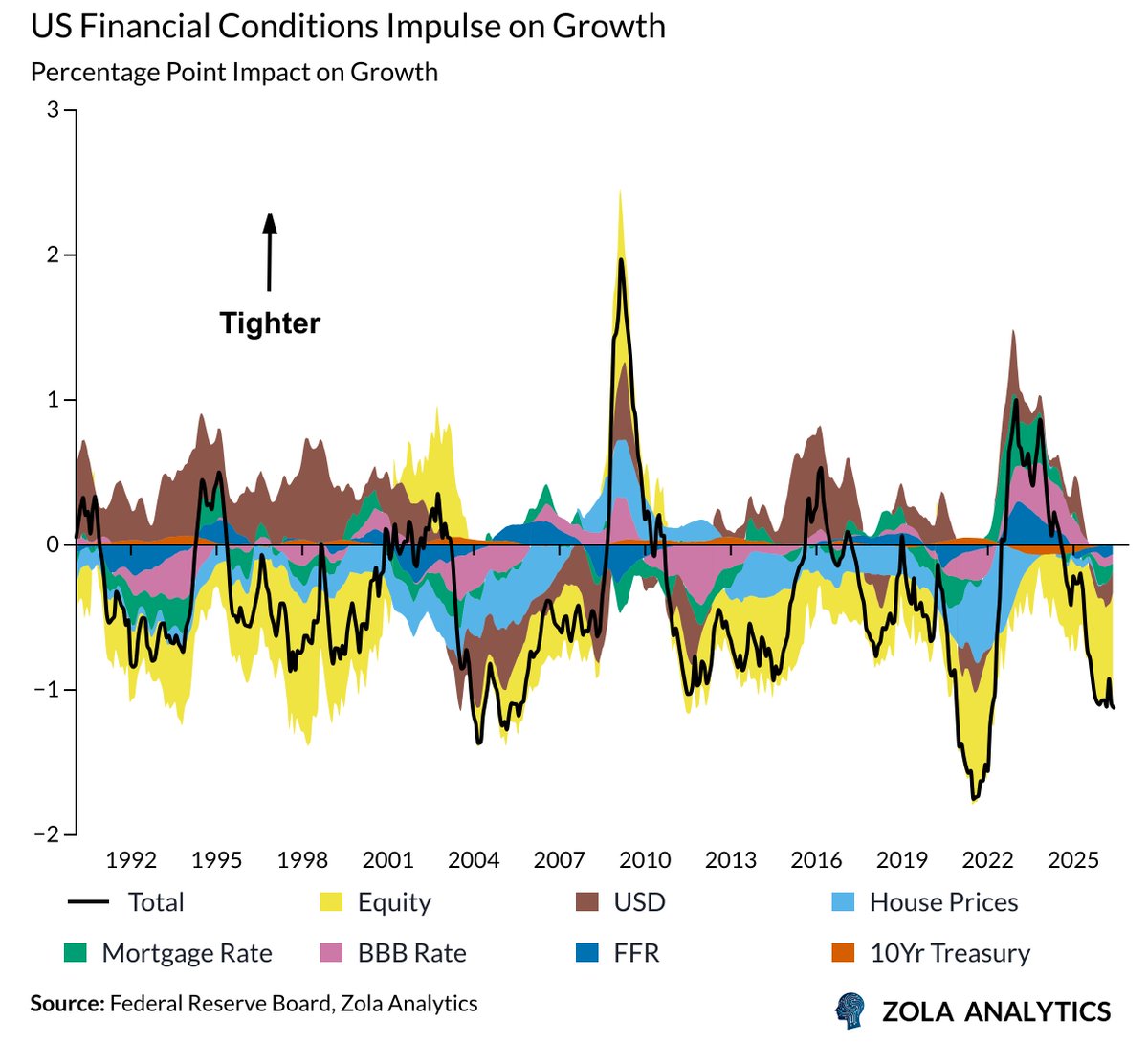
The Fed's FCI-G index puts the boost from financial conditions to GDP growth at about 1.1% over the next year. Equities do almost all of the heavy lifting, with the dollar helping only at the margins.
The usual worry with an equity-driven growth impulse is that it's built on leverage or Fed backstopping. Chair Warsh told Congress on Wednesday the Fed put is structurally lower. He wants to move away from asset-price-dependent policy. Previous Fed chairs may have wanted the same thing, but none of them had a plausible alternative growth story to lean on. Warsh does. If AI delivers the productivity and margin gains the bulls expect, the economy doesn't need the Fed propping up asset prices.
Today, with real earnings behind the equity rally, a lower Fed put probably matters less than it would have five years ago. But the concentration still makes things uncomfortable. If AI margins disappoint, so does Warsh's alternative growth story, and the Fed is back to backstopping asset prices.
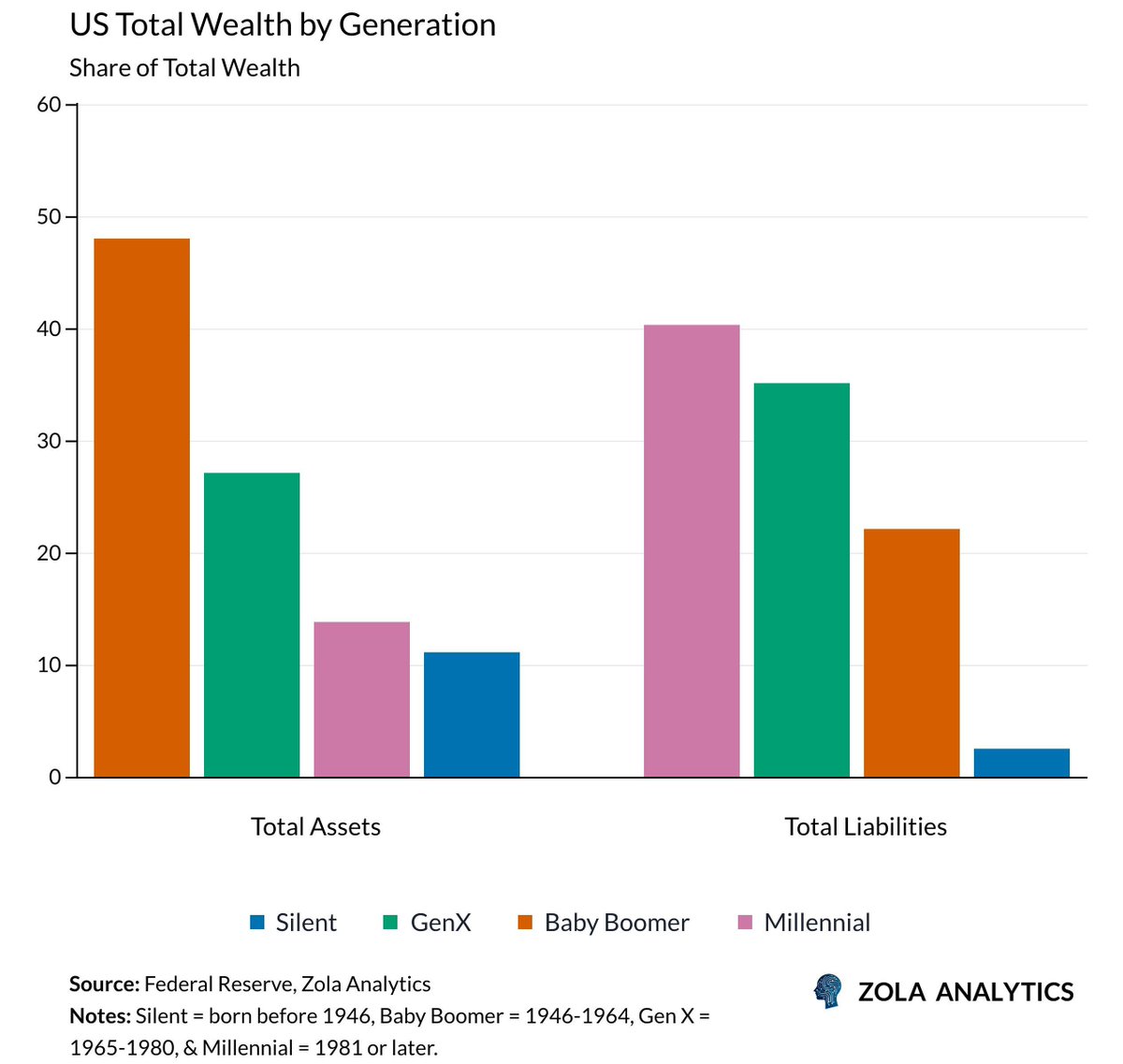
🇺🇸 Boomers shaped the economy by saving. Now they shape it by spending.
Holding 51% of wealth, the asset-rich old are immune to the high rates that squeeze the young.
Has the transmission mechanism broken?
The Spender’s Shield https://t.co/RjcDDdoZR3
🇵🇪 1990: Peru's Economy Minister announces reforms with the words "May God help us." Inflation had hit 7,650%
35 years later, the Sol is Latin America's most stable currency.
Can it last?
Our first Zola Chartbook of 2026: The Monetary Vaccine --> https://t.co/n5iMFvrjNK
The question is whether Poland can convert this reprieve into structural reforms. If not, the model that carried it this far cannot carry it much further.
Zola Chartbook --> After the Miracle https://t.co/UdV0Sh0plM
Warsaw is now attempting to outrun the problem by fuelling growth through a massive military build-up, hoping it allows the economy to temporarily 'outrun its political dysfunction', see chart 2.
🇯🇵 Despite some success, Abenomics failed to tackle Japan's structural imbalances. Real GDP +26%, Household Income +9%. Corporate hoarding transformed the private sector into net savers, forcing the state into perpetual deficits. Can Takaichi fix it? Read: https://t.co/sj9NPYLaYr
This is a critical pressure point behind Vision 2030. Not energy transition or peak oil, but a patronage system incompatible with absorbing 70% of the population <35yo.
Our latest Chartbook explores the pressures driving Saudi leadership: Royal Rush --> https://t.co/pqRU0XOQut
Approximately 15,000 members of the extended royal family hold positions throughout the Saudi government and state enterprises. Jobs are allocated through lineage networks, a pattern that destroys meritocratic incentives and degrades the quality of decision making.
🧵
US labour productivity has risen since ChatGPT launch, but the gains remain within the boundaries of earlier cycles.
This week’s Chartbook runs a set of bubble diagnostics to gauge how far the cycle has stretched and where the main vulnerabilities lie--> https://t.co/s6JmhDpWLK
In 1990, Thatcher joked that “governor of the BoE” was “a good idea.” A generation later, independence became central banking’s defining creed.
This week’s Chartbook explores how it took hold and why its contradictions are resurfacing.
Zola Chartbook: https://t.co/Froh1P0R43