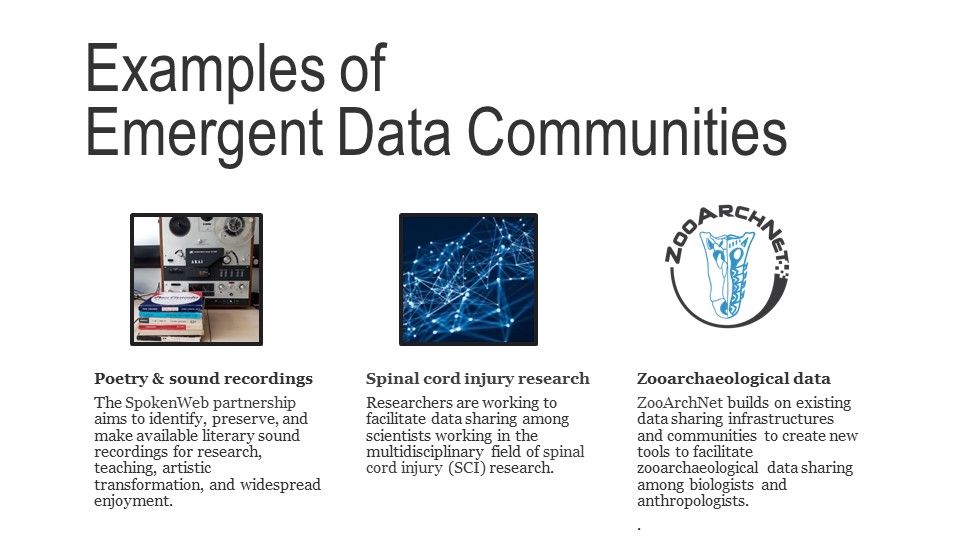
6/8 We’ve begun to profile the characteristics of emergent data communities through case studies by @Rsspringer1 w/@SpokenWebCanada ; spinal cord research and @ZooArchNet ….
https://t.co/GWUh8ZXRMq #idcc20
"What is really 'emerging' out of @ZooArchNet & other initiatives (Neotoma for example) is the realization that we absolutely must cross the disciplinary boundary in a very detailed and functional way before we can answer the questions that we’ve been working on for so long"
Read the latest emergent data communities blog post from @Rsspringer1 - she interviews Kitty Emery & Rob Guralnick of @FloridaMuseum about @ZooArchNet https://t.co/ZFH2h6CTwy
Antlers, fish scales, shells & bones found at archaeological sites help tell the millennia-long story of how humans have shaped their environment. Now, these records are joining the big data movement, thanks to a new digital platform called ZooArchNet.
https://t.co/pmNNrz8oQJ
Lead PI @davidcblackburn summarizing the first year of the #oVertTCN at the @iDigBio 2018 summit @FloridaMuseum. We’re well on our way- over 1000 specimens uploaded to @MorphoSource, with more and more each day!
FREE #ZOOARCHAEOLOGY! 🐱🐢🐴🐄🐶
Thrilled to announce our latest @AntiquityJ Archive collection, which will be FREE for two weeks. Thanks to our Associate Editor, Dr. Becky Gowland & @CambUP_Archaeo for helping us put it together
🆓 https://t.co/JCZKM9mBny #archaeology#zooarch
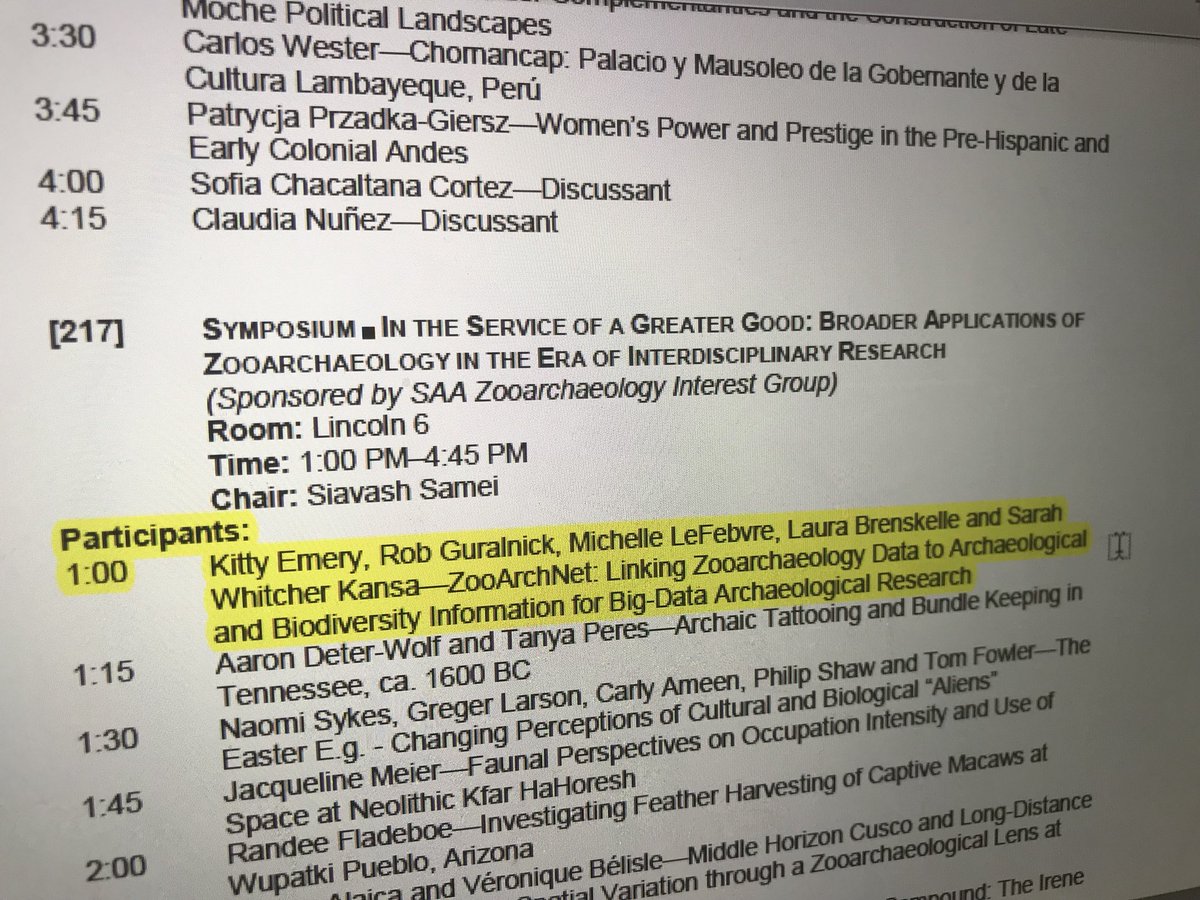
Get your highlighter ready for #SAA2018! Come see our talk in the ZIG session on Friday- we’re first up! Our #ZooArchNet team is participating in other forums during the week. We’ll keep you posted! #Zooarchaeology
#ZooArchNet has joined the Twitterverse! We are excited to share that we will be participating in the #Zooarchaeology Interest Group session at #SAA2018! Come learn more.