How to write a systematic literature review in 1 hour?
A systematic literature review takes 4-6 months.
You can reduce this time.
🎯 Here is how you can write it in 1 hour.
1️⃣ Go to https://t.co/TVVf9keUI7
2️⃣ Select Gatsbi reviewer from the drop-down menu
3️⃣ Enter the topic of your literature review
4️⃣ @Gatsbi_AI will generate an outline for review
5️⃣ If you are OK with it, click on write manuscript.
6️⃣ Gatsbi will write the literature review for you.
👉 The literature review contains the following parts
✓ Title
✓ Abstract
✓ Introduction
✓ Methodology
✓ Results
✓ Discussion
✓ Conclusion
✓ References
👉 This polished paper also contains
➝ Diagrams
➝ Tables
➝ Equations
➝ Graphs
Once the paper is ready, you can humanize the text.
After this, you can download it in the following formats.
↳ MS Word
↳ Latex
↳ Markdown
After downloading, make any changes you want.
In addition to Gatsbi Reviewer, you can also use:
→ Gatsbi Innovator: Generate ideas before writing
→ Gatsbi Writer: Write research papers
🎗️ Try @Gatsbi_AI today for free: https://t.co/TVVf9keUI7
❄️ Anything you'd like to add?
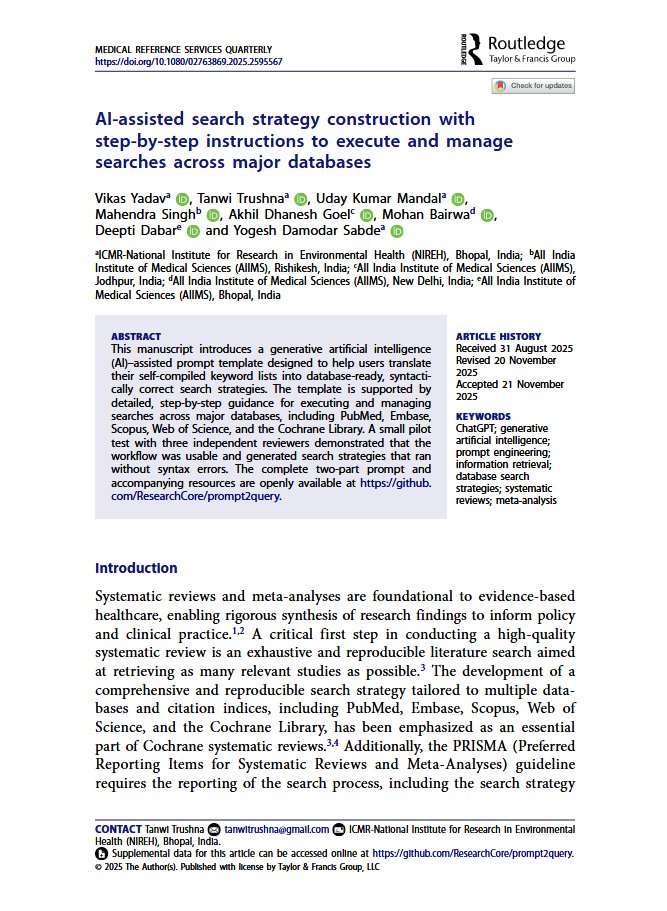
📑Los autores proporcionan una plantilla estructurada para generar estrategias de búsqueda de bases de datos (PubMed, Embase, Web of Science, Scopus y Cochrane Library)
🔗https://t.co/of94XJsLtG
🧐Versión del prompt gratuito https://t.co/ToZQ5HuCml
#medlibs#AI#RevSys
Academic publishing is perhaps the greatest scam perpetrated on intelligent people
1) Write grants (unpaid)
2) Do research
3) Write papers
4) Peer review (unpaid)
5) PAY up to $12K to publish
6) Need publications to get grants (back to step 1)
Publishers: 38% profit margins
Every researcher's nightmare: "Your sample size is too small to detect that effect."
This open-access paper in Frontiers in Medicine solves that problem BEFORE you collect data.
"How to calculate sample size in animal and human studies" by Zhang & Hartmann breaks down:
✓ What is statistical power? (and why 0.8 isn't magic) ✓ How to choose effect size
✓ What to do when you have pilot data
✓ What to do when you have NO pilot data
✓ How to account for dropouts
✓ Actual G*Power screenshots with parameters filled in
The paper includes worked examples for:
- Comparing two proportions
- Comparing two means
- Studies with unequal group sizes
- Studies expecting attrition
The hard truth: Most underpowered studies aren't because researchers are careless. They're because sample size calculation is genuinely confusing and rarely taught well.
This paper treats you like an intelligent person who just needs clear explanation and practical examples.
Read it before you write your next ethics application or grant proposal.
Your future self (and your reviewers) will thank you.
💡 Strengthening AI adoption in grassroots sport!
Join the SHARE 2.0 capacity building session on 23 Oct, building on the paper and AI masterclass.
👉 You can still register until 17 Oct: https://t.co/9EvpmkHdD5
3-tier approach that help you maintain integrity when using AI for research ⤵️
(Retweet 𝘵𝘰 𝘱𝘳𝘰𝘮𝘰𝘵𝘦 𝘦𝘵𝘩𝘪𝘤𝘢𝘭 𝘈𝘐 𝘶𝘴𝘦)
— TIER 1 (Safe):
Grammar checks, readability improvements, language translation
— TIER 2 (Careful):
Outlining from YOUR content, summarizing YOUR ideas, improving clarity of YOUR drafts
— TIER 3 (Avoid):
Writing de novo text, generating references, data interpretation
Remember: AI should help polish YOUR ideas, not create them!
The biggest lesson? Ask yourself 4 questions before using AI in research:
— Are the primary ideas, insights and analysis still mine?
— Am I maintaining my core research skills?
— Have I verified all content is accurate and bias-free?
— Have I disclosed exactly how AI was used?
If you answer "no" to any of these, rethink your approach.
1/5
A recent study of more than 14,000 WHOOP users finds that exercising as close as 4 hours to bedtime can tank your sleep quality.
For example: A maximal-intensity workout ending 2 hours before sleep delayed sleep onset by 36 minutes and reduced sleep duration by 22 minutes.
The same hard workout reduced sleep quality, increased overnight heart rate by 4 bpm, and reduced overnight HRV by 14%.
Exercising more than 4 hours before habitual bedtime was safe - with no impact on sleep - and sometimes appeared to improve sleep quality.
Sci-Hub — a "pirate" website with 85M research papers freely available.
Here's how to integrate Sci-Hub with Zotero to get paywalled papers for free. This will take you just 5 min.
Billion-dollar academic publishers would get mad at you. So, do it at your own risk🤷
🆕"This study aimed to quantify training and match-day load (in 3, 4 & 5-day microcycle) and analyzed the effect of these microcycle length on training load produced in MD+1 & MD-1 ⚽️"
👉A. Gualtieri @jordivicensb@e_rampinini@MarcoBeato1 et al, 2024 🇮🇹
📂https://t.co/qm1itvtTg4
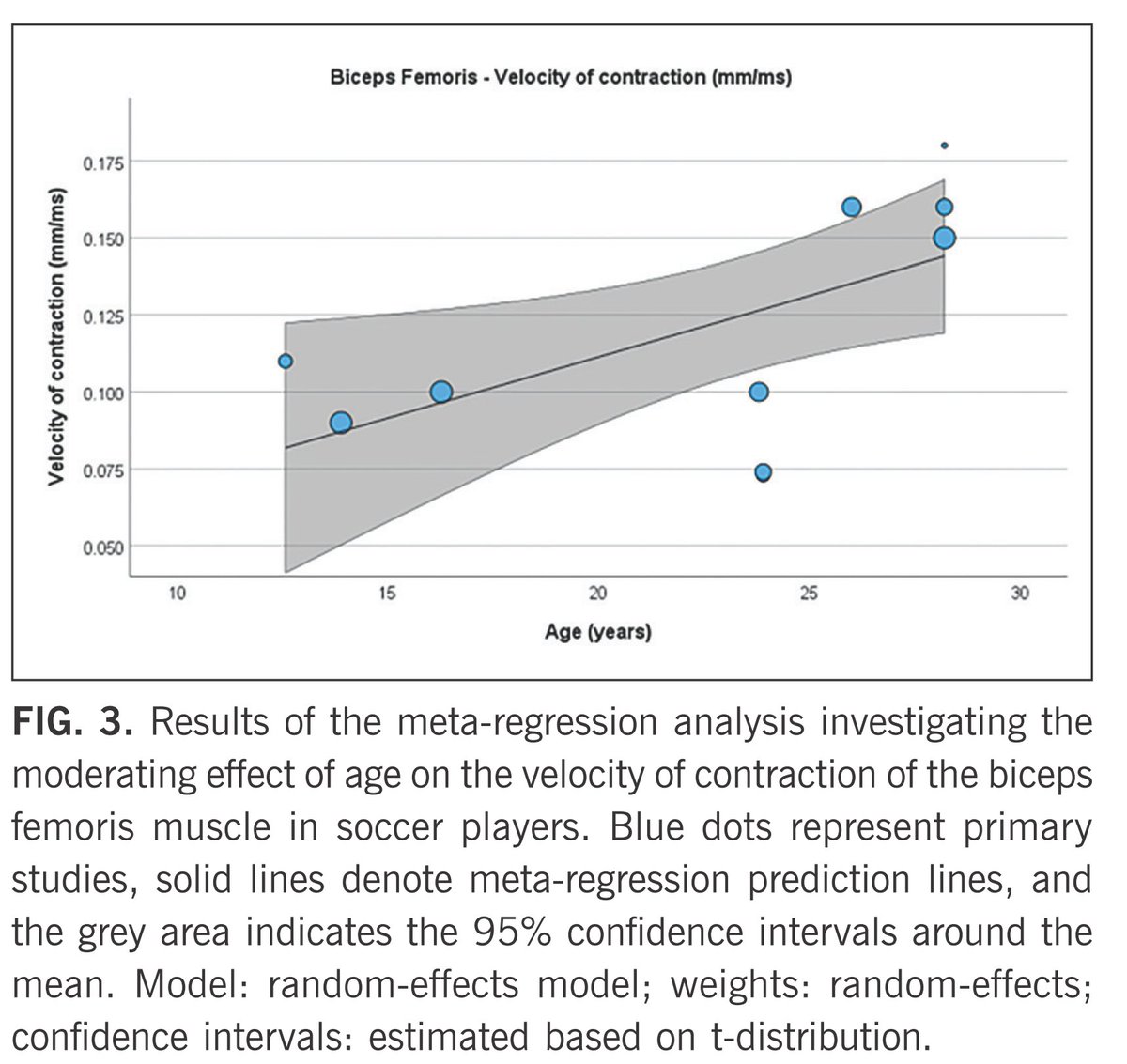
🆕Establishing reference values for tensiomyography-derived parameters in #soccer players: insights from a systematic review, meta-analysis and meta-regression ⚽️#TMG
✍️Armin H. Paravlic
🔓#OpenAccess 🔗 https://t.co/kI3y05CLwO
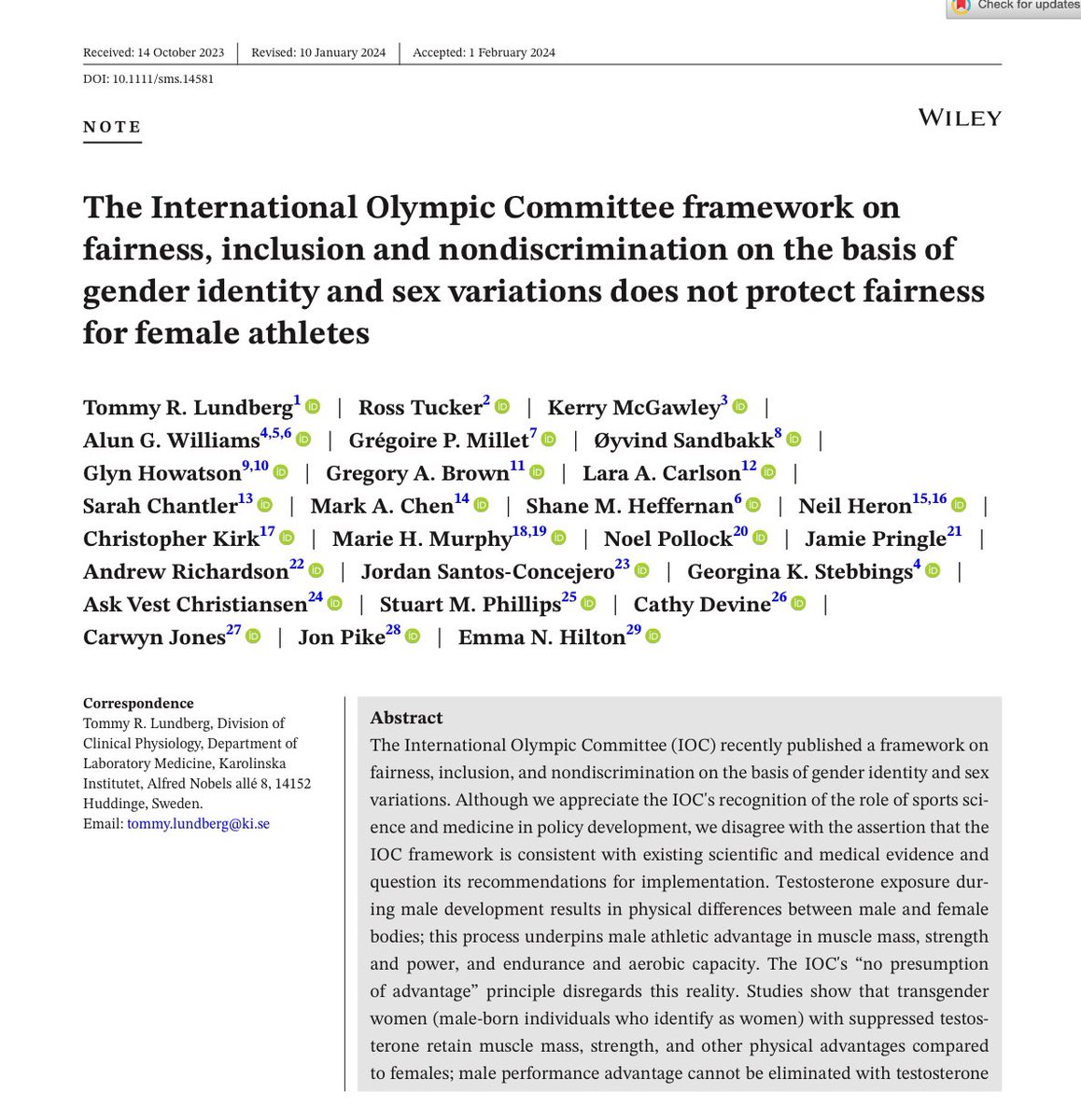
The International Olympic Committee and others involved in Olympic sport should read this paper, understand the implications and act upon it to avoid all biological males XY or XXY competing against biological females XX
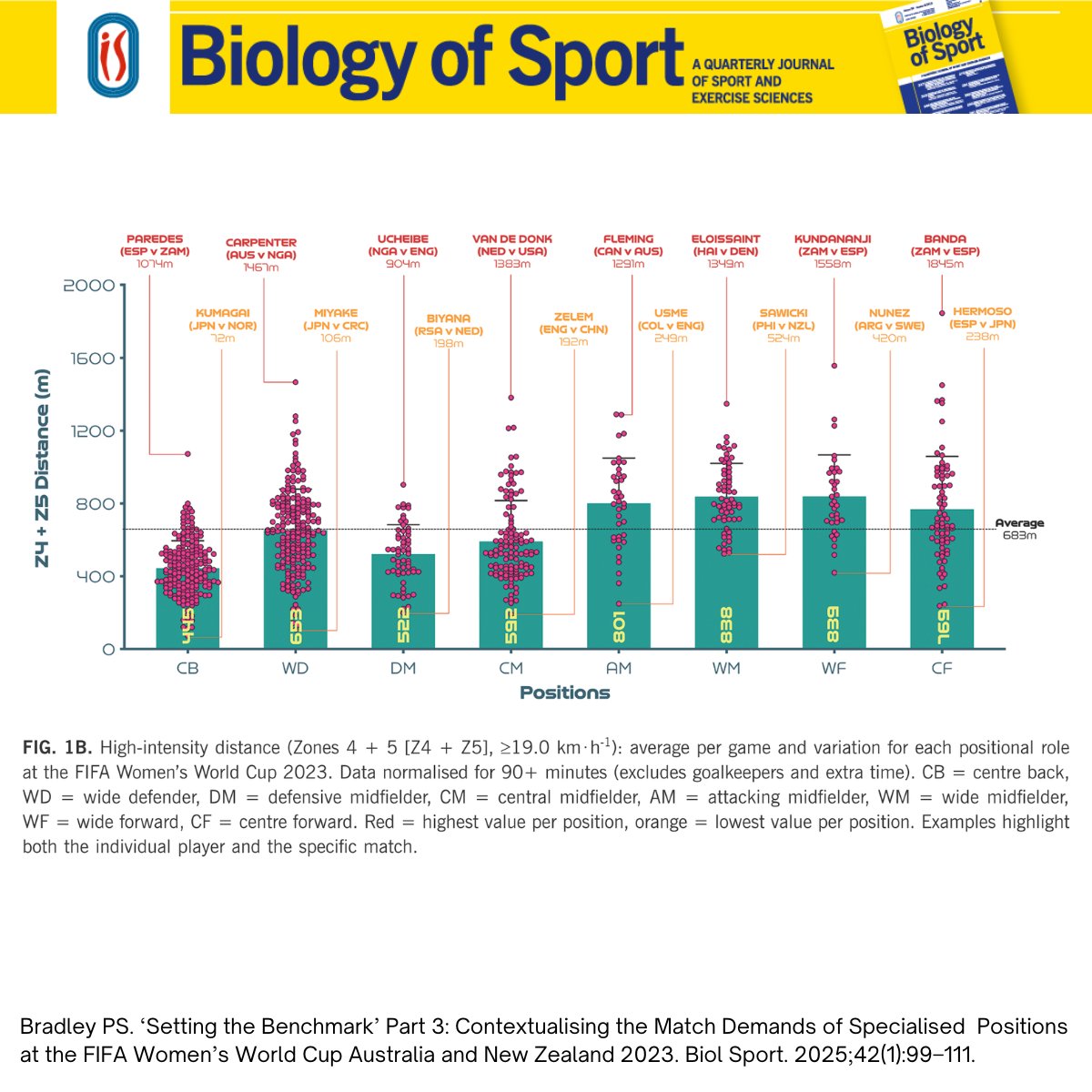
🆕 ‘Setting the Benchmark’ Part 3: Contextualising the Match Demands of Specialised Positions at the FIFA Women’s World Cup Australia and New Zealand 2023
✍️Paul S. Bradley (@FIFAcom 🇨🇭)
🔓#OpenAccess🔗 https://t.co/B0E3FxDrXh
Honored to present "Artificial Intelligence and Sport: How Innovation and Technology Change Sports" at the 66th International Fair of Technics and Technical Achievements. It's incredible to see how AI is revolutionizing the sports industry, from performance to injury prevention.
Looking forward to the Madrid v City game tonight, especially seeing Bellingham play. See a case study on his match demands at the World Cup and also the additional work by others on his skills. A nice combination!
Links Below 👇
https://t.co/p4Zh6IJmaT
https://t.co/rxZtNtJyuy
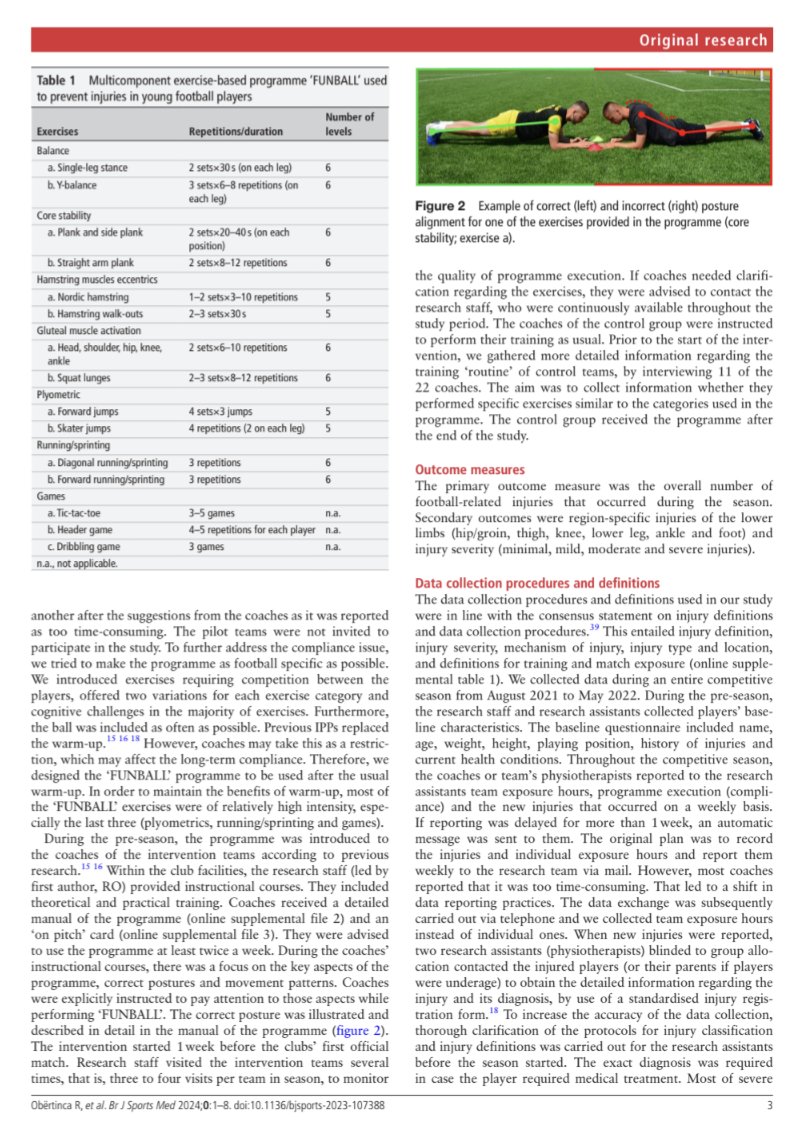
🆕⚽ Efficacy of a new injury prevention programme in male young football (soccer) players: a cluster-randomised controlled trial
https://t.co/idd7hZ6Ezm
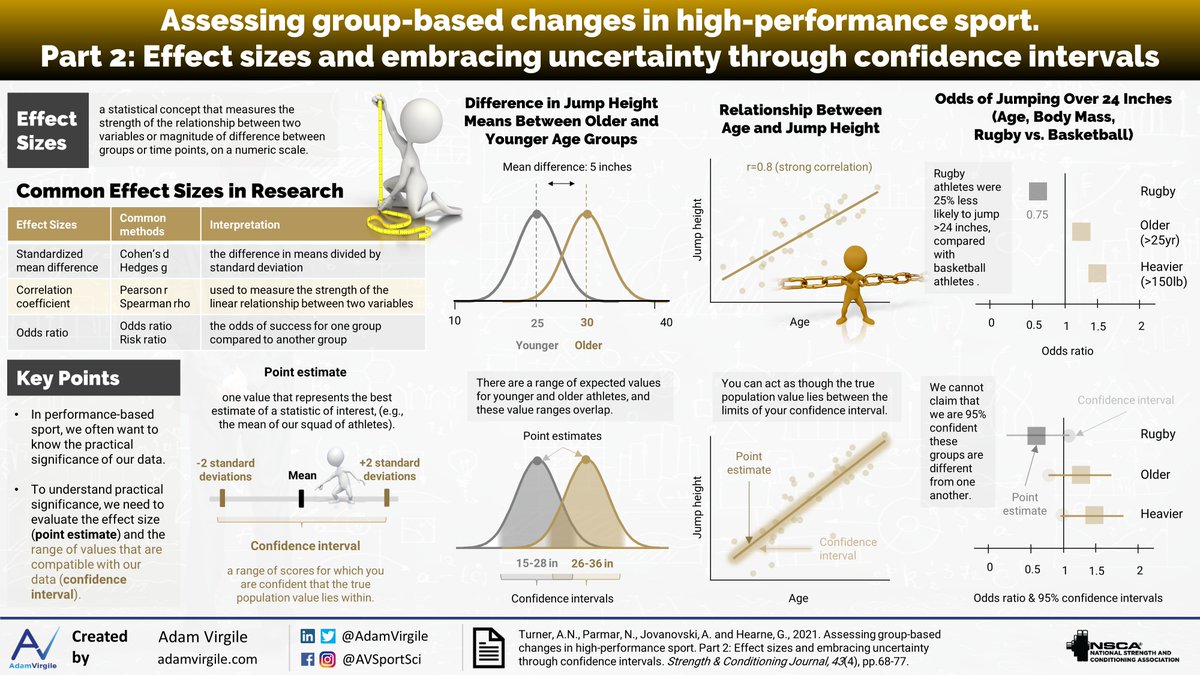
Assessing Group-Based Changes in High-Performance Sport
Part 1: Null Hypothesis Significance Testing and the Utility of p Values
>> https://t.co/ZsK6LSQogH
Part 2: Effect Sizes and Embracing Uncertainty Through Confidence Intervals
>> https://t.co/7sOQeUPvEo