This week’s calendar
Thu Oct 8
$TSM
September monthly sales. First hard check after the materials rip + firm power rotation. Aug was already huge. Soft print cools CoWoS / CCL / foil, beat keeps packaging alive under the power bid. Samsung prelim also floated around this window.
Mon–Thu Oct 12–15
OCP Global Summit (San Jose, sold out). Lumentum on CPO external lasers, VCSEL, OCS with Oracle Cloud on the agenda. Soft catalyst for $LITE $COHR $AAOI into the optics week.
Tue Oct 14
$ASML Q3. Bookings / High-NA / China mix before TSMC’s call
Wed Oct 15
TSMC Q3 earnings + call. Guide was $44.6 to 45.8B revenue. Watch Q4 + 2027 capex color on 2nm / CoWoS, the real packaging-tightness read.
Google's deal is one big ass contract.
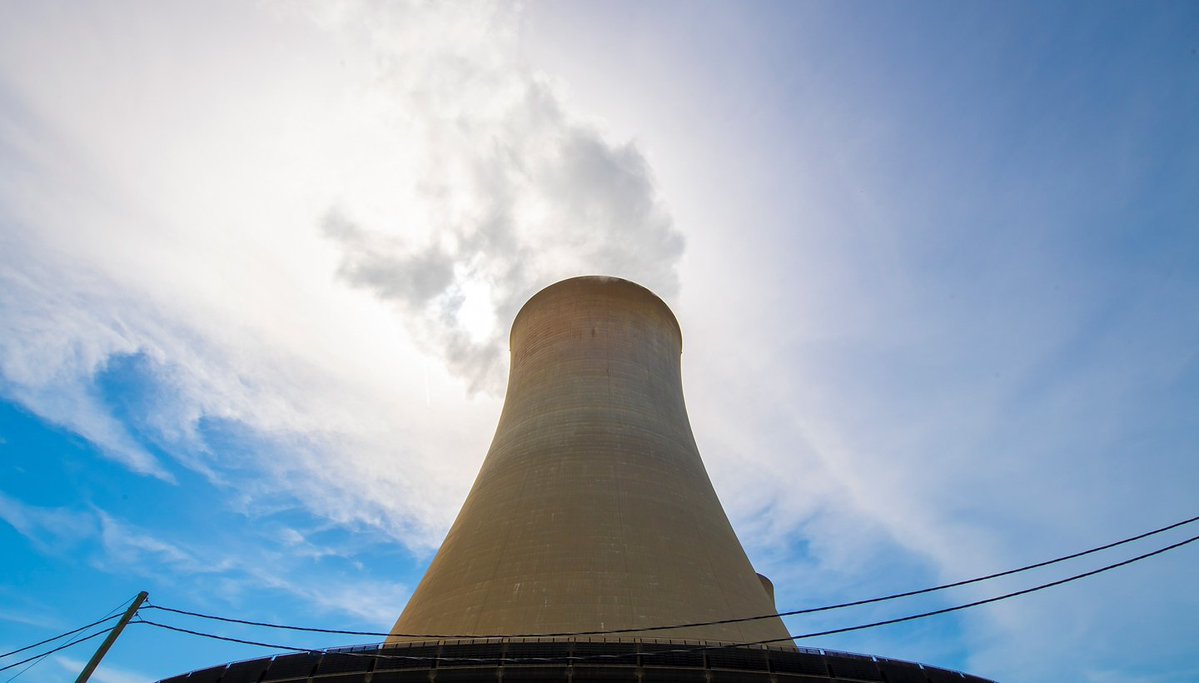
The firm power map around it is a bit bigger:
1. Constellation $CEG - largest US nuclear fleet; Google uprates plus Amazon on Calvert Cliffs (~190 MW) last week
2. Talen $TLN - Susquehanna already feeding AWS (up to 1.9 GW through 2042), roughly 4 GW of DC sites in the pipeline
3. Vistra $VST - rode the same bid on ERCOT/PJM firm capacity
4. Then the "you still can't interconnect" layer: Hubbell transformers (lead times still talked about in years), Quanta / EMCOR for the MEP that wires the hall
5. Bloom $BE if the queue won't move - onsite fuel cells, Fremont racing toward 2 GW annual by year end
$VRT is the weird one next to yesterday's power bid.
Firm power names ripped. Liquid cooling barely moved. Vertiv sits around the mid $250, still a chunk off the highs, with a fat backlog story and the NVIDIA DSX-ready CDU angle into late October.
If hyperscalers are signing multi GW nuclear wraps, the heat problem doesn't vanish, it just shows up a few quarters after the PPA headline.
Oct 29 is when you see if backlog is converting or if the market already paid for the easy part.
$VRT
Heard Bloom is still building like the interconnect won't clear?
While Google buys uprated nuclear for 2028-2032, $BE is trying to hit 2 GW of annual fuel cell capacity out of Fremont by year end
the plug-it-next-to-the-hall answer when transformer lead times are still measured in years.
Q2 already printed about $1.1B revenue with product growth that looked absurd on paper.
Different seat than Constellation. Same scarcity: firm watts, sooner than a new PJM queue slot. $BE
Google just signed a 20 year nuclear PPA with $CEG
3,590 MW, 890 MW of new uprates at 11 PJM units, >$4.3B of investment.
CEG +12.9%.
The message is clear: hyperscalers will pay premium for power that never stops.
Existing nuclear just got repriced from boring utility to scarcity asset.
$VST +9.5% on the $4.2B DOE loan for 433 MW of uprates.
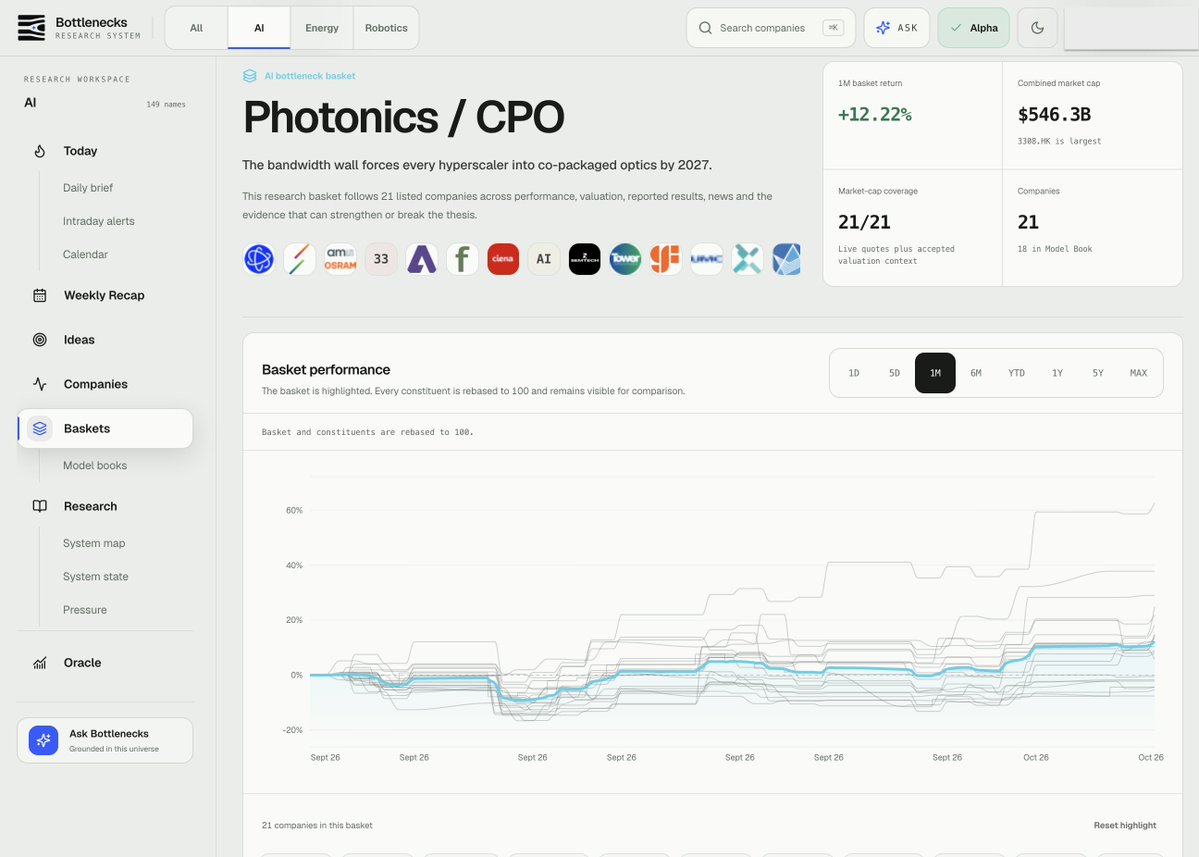
damn i think i created a monster
- long only, no shorts, no leverage (sorry leopold)
- $10k clean slate, sep 12
- tracks 223 names (ai, energy, robotics)
- research first, trade after, limited risk taking
- one pass, 223 decisions, no cherrypicking
- deterministic allocator
- opportunity rank 1->223
- 25 max positions, 6 exits a session
- minimax M3 for trading decision
- research with minimax + GLM + kimi
- +5.33% since inception
- exposure 74%, 36 names, $2.7k cash
https://t.co/pdCcgviEkH
BREAKING: We just caught something wild in our data on Trump's stock trading.
Two weeks ago, President Trump filed a purchase of up to a million dollars of stock in a company called PTC Inc.
It was just announced that $PTC is being acquired.
The stock is up over 30% today.
Heard about Lasertec?
They build the machines that inspect EUV masks before advanced chips and HBM can run. When that step is tight, the stock tends to wake up before the GPU slide does.
It jumped hard into this week with an order book already north of 1.3B. Micron locking most of FY27 HBM is the kind of demand that keeps mask inspect busy. ASML’s next print is the near check on whether foundries are still spending into that.
$6920.T
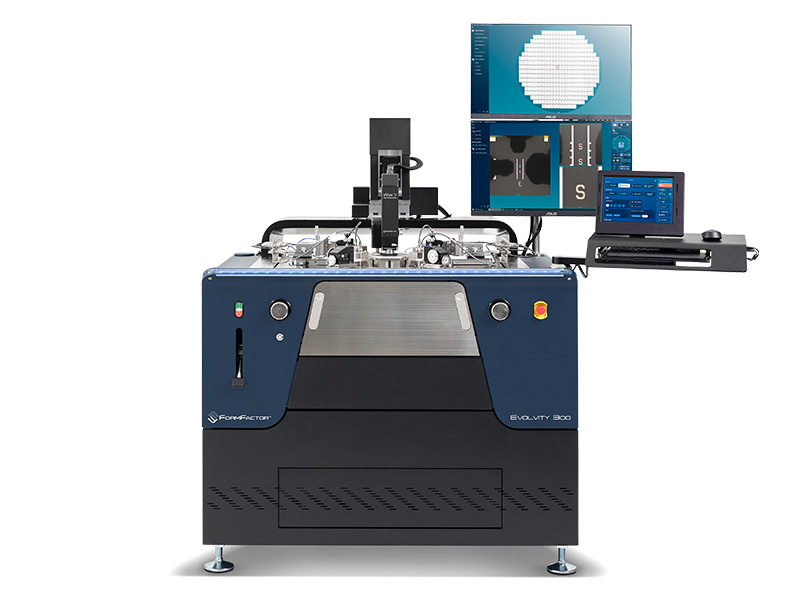
Deutsche Bank just initiated Formfactor at Buy with a $200 target.
They’re saying FormFactor is becoming a real second source for Nvidia GPU probe cards at TSMC, with room to take 20% share by 2028 and more than $200M of sales from that alone.
Probe cards are the boring thing on every HBM wafer and every GPU package. When Micron locks most of FY27 HBM, the test queue gets tighter.
-> last quarter probe cards did $209.7M inside $258.2M of revenue.
-> Q3 guide is $270M.
$FORM $MU $NVDA
I keep seeing people treat Bloom like a vibe trade on “AI needs power”
Then you open the Q2 numbers and the vibe goes quiet
-> revenue just cleared a billion dollars in a quarter
-> up more than 160% year over year
Product revenue did most of the work, up over 200%. Margins jumped from the high twenties into the mid thirties. Adjusted EPS went from a dime to seventy-eight cents. And then they raised the year: roughly $4B of revenue and around $2.50–$2.85 of non GAAP EPS.
That’s what a behind the meter fuel cell business looks like when hyperscalers can’t wait for the grid. The Fremont expansion and the 2GW chatter matter because they sit on top of that P&L, not instead of it.
Thesis still has room into 2028 if the backlog converts. The bear case is also honest: Jupiter slips, interconnection gets easier, margins compress. So the trade isn’t “power stocks forever.” It’s whether Bloom keeps winning where the grid is too slow.
$BE
HBM / Packaging crushing it this week
Micron just proved the scarce layer is still allocation, and every station downstream of that die got bid.
a GPU doesn’t ship without HBM.
HBM doesn’t ship without packaging, substrates, probe, and inspection.
So a $54B Micron quarter + $61.5B guide doesn’t stay inside $MU, it pulls the whole capacity chain.
Where the alpha actually sits
-> Probe / test
$FORM ripped on the Deutsche Bank note. Tollbooth before the stack leaves the line. Easy applause already in the price, the question is whether HBM4 keeps that scarcity real
->Inspection
$ONTO / $CAMT
Quiet choke. If advanced packaging is the bind, metrology isn’t optional opex, it’s the unlock.
→ Hybrid bonding
$BESI still in bear range. Highest convexity if HBM4 bonding goes eval to volume. Market’s pricing timing risk
→ ABF / substrates
Ajinomoto owns the film; Nanya / Unimicron sit downstream. Some of this already ran parabolic (trim territory). Don’t confuse leadership with fresh entry here imo
The move under the move
Demand layer is taking profits (custom silicon / neoclouds soft on 5d vs 1m). Capacity layer is still extending. That’s the rotation: away from “AI demand” slides, into physical chokepoints.
what could break it?
Oct 8 TSMC Sep revenue. If CoWoS lags Micron’s scream, packaging leadership has to reprice, and beaten optics catch a bid.
While everyone’s watching Harmonic Drive into the Oct 1 robot OEM plans, I’ve been stuck on a quieter name
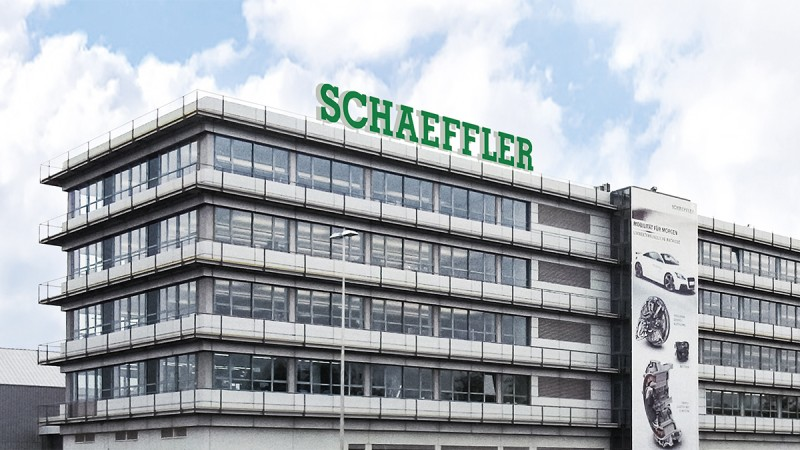
Schaeffler
One of the preferred supplier for more than half of Humanoid’s wheeled platform joint actuator demand through 2031. Call it roughly 1M actuators over the life of the package. That’s a real offtake sitting inside a stock that still trades like a beaten auto supplier, tagged in bear range around €6.45, with a 2028 bull that stretches toward €10 and 16 if the humanoid partnerships actually convert.
Same catalyst window as the crowded Japanese reducers, but completely different positioning.
Sometimes the gold isn’t the company with the best press release. It’s the one still priced like nobody read the contract footnote
$SHA0.DE
an agent can write code in seconds. But installing dependencies, running tests and waiting for results can take MUCH longer
When you’re training agents, all that waiting is important. Faster text generation only speeds up one part of the process.
My colleagues Di and @Mhr1036 at @nebiusai worked on the rest: how tasks get routed, how tools run, and how completed work becomes a batch the model can learn from.
One idea I love: use groups of completed attempts as they become ready, so unrelated slow tasks don’t hold everything up
Across the changes, they reduced the time to collect a training batch from roughly 10 minutes to just over 3 in a controlled Terminal Bench based test, with model weights held fixed.
That’s 66.9% less time gathering the next batch
For me, this is an interesting part of building better AI: the engineering around the model determines how much of its speed becomes useful progress.
Full breakdown below
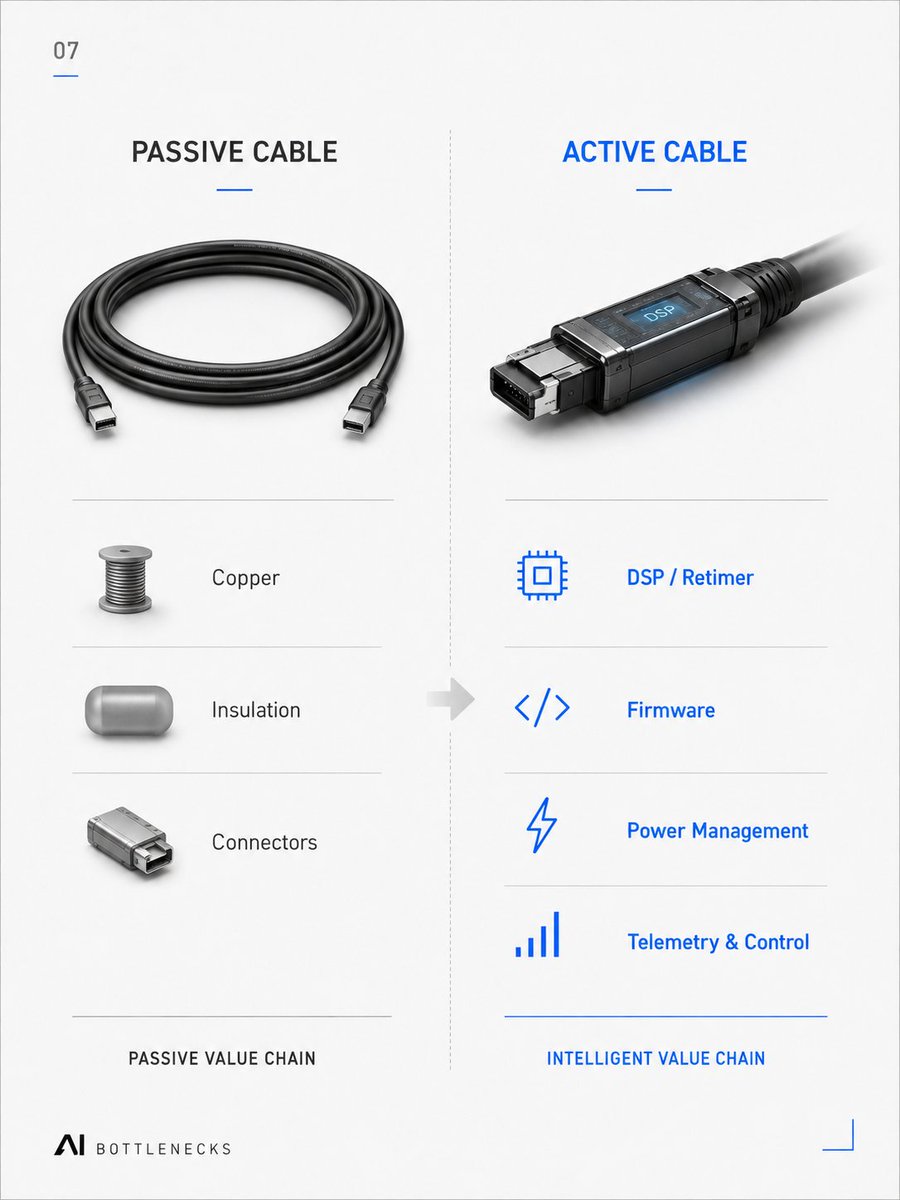
the AI cable now has a computer inside it.
At 1.6 tb per second, plain copper can only carry a clean signal so far, and eventually the bits get distorted.
So an active electrical cable puts a tiny DSP inside the cable ends to retime and equalise the signal before it arrives. Basically the cable notices the data getting tired and cleans it up mid journey.
This changes the value of the object:
- A passive cable is mostly copper, connectors and assembly.
- An AEC contains signal processing, firmware, diagnostics and power management. It becomes part of the network rather than something connecting the network together.
$CRDO is the obvious receipt here.
FY26 revenue more than tripled to $1.3B, although importantly that includes its broader retimer, DSP, optical and memory portfolio, not only AECs.
More specific receipts:
TensorWave is deploying Credo AECs and optics inside AMD clusters.
Rebellions integrated them into RebelPOD.
$MRVL Marvell is building the 1.6T DSP layer.
$APH Amphenol, TE and Molex sit around the cable/connector assembly.
The question I’m working through now:
does the cable remain a replaceable accessory, or does signal integrity become valuable enough that the cable supplier owns part of cluster reliability?
At 1.6T it's not really plumbing anymore