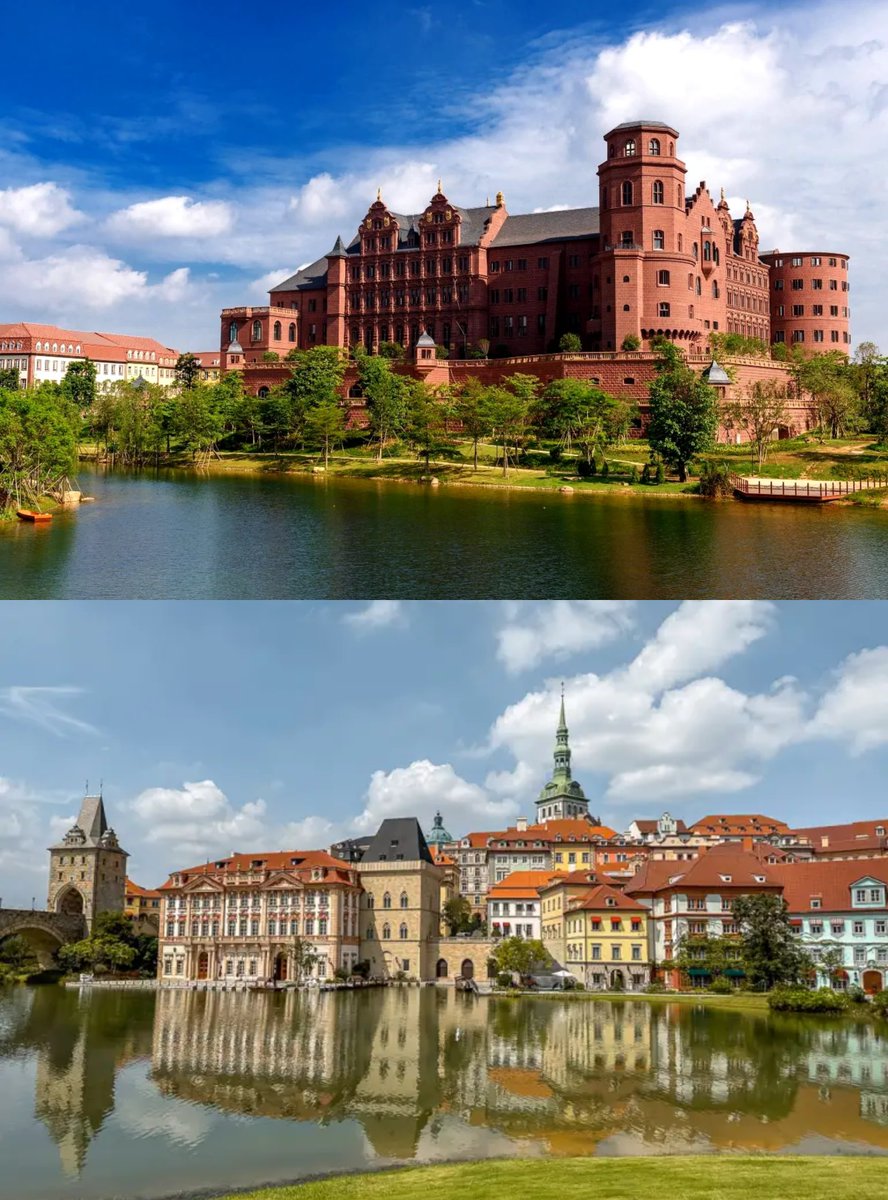
This city is not in Italy, France, or Germany.
It's in China and it's less than ten years old.
This is Huawei's R&D Headquarters, where 25,000 people work, and it might just be the most interesting office building(s) in the world...
I got about 8 seconds into explaining the Kate Middleton situation to my French husband before he told me, in the Frenchest voice imaginable, "ah yes, that's why we decided not to have those sorts of people anymore"
I wrote & analyzed a 20-person list of anyone I've seen go sustainedly super-saiyan (i.e., anyone who's become radically more capable of creating what they want to see in the world). 18/20 all did the same thing. Can you guess what it was?
Hint – it wasn't a:
• transformative workshop
• new degree
• medicine ceremony
• meditation breakthrough
• lifechanging therapist or spirit-guide
...I hate to say it, but IME, seeking these things is typically a sign that someone is actually *procrastinating* some form of self-actualization that they're already capable of.
Instead here's the thing they did: Passionately launch into an ambitious public-facing project.
Each word there is important:
a. "Passionately" – the project wasn't (only) something they thought they *should* do, it was something that they were naturally magnetized to do. It was hard for them to *not* work on the project. If passion hadn't been present, then the difficulty of the project might have bucked them off.
b. "launch into" – some of the projects involved ample forethought, but the initiation stage of each project was much more like a leap than a tip-toe...more like a "just do it" situation than a 3-year long comprehensive planning process. The momentum of the leap carried the people past their inhibitions.
c. "ambitious" – typically the project turned out to only be feasible if they grew beyond their current skill-level. They needed to learn on the fly. Degree programs or trainings could not have prepared them – the difficult parts were typically highly idiosyncratic.
d. "public-facing" – I suspect this added some accountability, such that it was harder to just give up (which is what I see ppl doing ambitious projects in private often do)
e. "project" – their thing was not just a vague intention, it was a concrete, well-defined project: a novel festival, a futurist institute, a class that teaches a new type of dance, etc
Notably, half of my list were ppl who were *drawn into* the project by other agentic peers. However, in all cases, the person ended up in a (co)founding role & also personally shaped the project's vision.
So now I'm thinking about how to design a project-based residency which supports this type of super-saiyan transformation. I think the hardest part is helping people discover the project that they end up magnetized to. How would you design this residency?
I don’t care that it’s not AGI, GPT-4 is an incredible and transformative technology.
I recreated the game of Pong in under 60 seconds.
It was my first try.
Things will never be the same. #gpt4
Vercel converted the BBC site to @nextjs.
The results:
✅ Removed 20,000+ lines of code
✅ Removed 30+ dependencies (React Router, Express, Babel...)
✅ Average HMR Time improved from 1.3s to 131ms
Pretty compelling result.
More details: https://t.co/Jde2SX1a82
It's here!! My new zine "The Pocket Guide to Debugging" is out now!! It has 47 pages of my favourite strategies for solving your sneakiest bugs. 🔎🐛
Get it here for $12: https://t.co/bSDi3L1GYc