<rant> A periodic reminder that Sprints, Backlogs, Daily Scrums, Scrum Boards, Scrum Masters, Product Owners, Points, Velocity, PIs, etc., have NOTHING AT ALL to do with "Agile." Agility comes from working small, delivering frequently for feedback from actual customers, and adapting based on that feedback. It has to do with teams working in whatever way they see fit to get stuff into the customer's hands as quickly as possible and acting on the feedback without bureaucratic obstacles. Any way that you can accomplish that is fine. All that garbage I listed in the first sentence just gets in your way.</rant>
Next week, @kevinthyssen and I are doing our APEX Security Basics session in a webinar. This was awarded best APEX KScope25 session. No sign-up required; links in reply.
#orclAPEX
Fresh video! Want to run MERGE in parallel for your massive partitioned tables? There is a little bit of nuance required to make sure you get the performance you want.
https://t.co/H8zZlKOZPV
🛠️ Squeaky floors driving you crazy? Here’s how to silence those pesky creaks and get back to peaceful steps. #HomeImprovement#DIY
https://t.co/Kc9KygFgY8
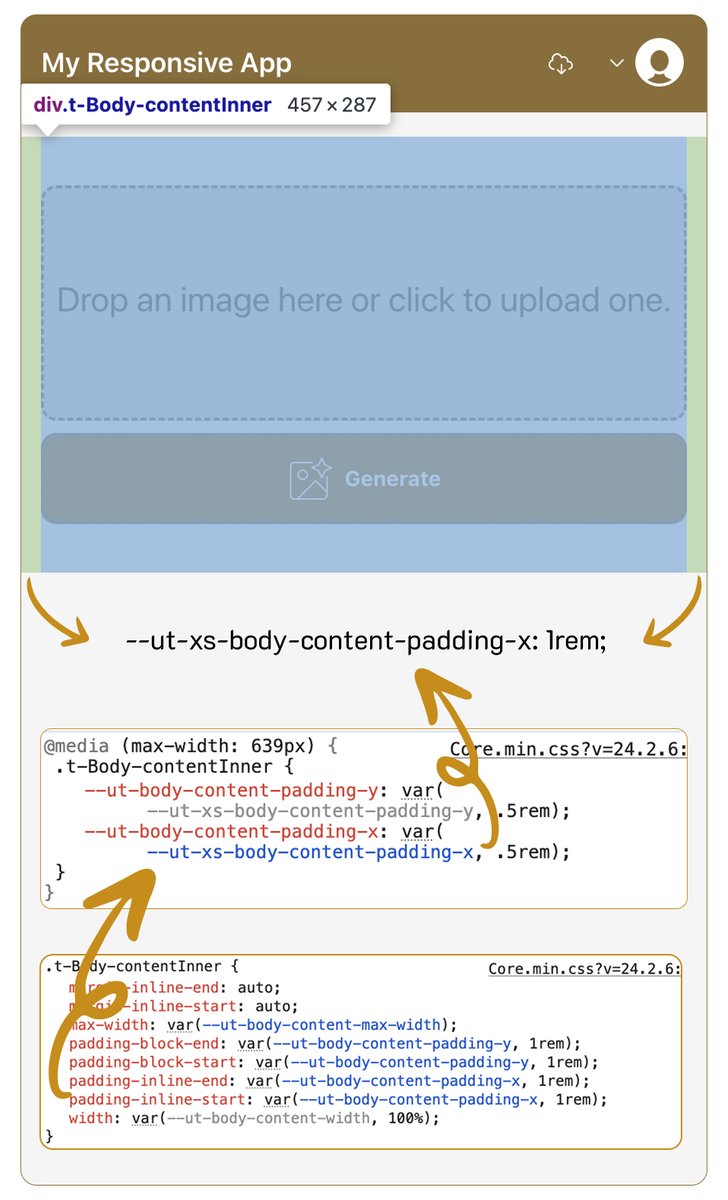
Another note to myself - you only need 2-3 lines of CSS to adjust the width and padding of your Oracle APEX app content area. Lots of CSS variables yet to explore and lots of hidden gems yet to find.
So, to adjust the padding on mobile/desktop and the maximum width of the content area, all you need is to set these 3 CSS variables:
:root {
--ut-body-content-padding-x: 8rem;
--ut-xs-body-content-padding-x: 1rem;
--ut-body-content-max-width: 1000px;
}
🔸 --ut-body-content-padding-x and --ut-xs-body-content-padding-x are not set in the Universal Theme, but are ready for use in case you set them with a value. If they are not set, UT uses a default value, like in this case: padding-inline-end: var(--ut-body-content-padding-x, 1rem);
Here, the padding will be 1rem if you don't set a value for --ut-body-content-padding-x.
🔸 It is easy to see that in the Browser Dev tools - all the CSS variable that don't have a value set, are in grey colour. The ones that have a value are in blue and are clickable. Once you click on the value, you see the original place where it is set in your CSS files.
#orclAPEX
🚀 New Blog for #orclapex
Learn how to extract every part of an Oracle APEX URL in JavaScript. Supports classic & friendly URLs, parameters, and more.
Check it out: https://t.co/TKL8O8y7St
A note to myself, because it's not so easy to find this (even using AI):
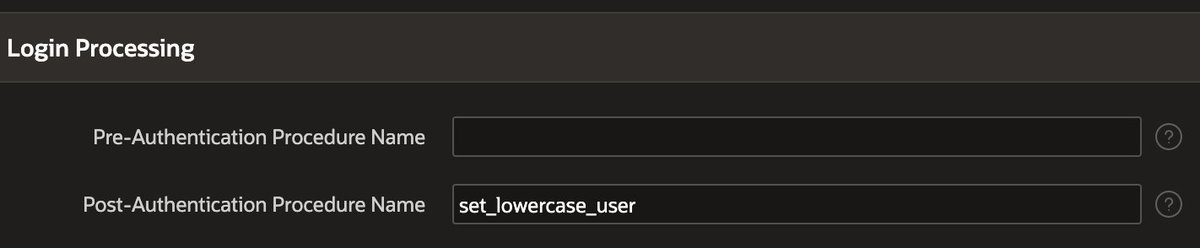
✨An easy way to set the APP_USER to be lowercase (or whatever you like), and not UPPERCASED as it is by default:
1. Create Post-Authentication Procedure in your Authentication Scheme
2. Use it
3. Verify your APP_USER is in the desired case
#orclAPEX
Fed up with other developers overwriting your changes when working in a shared #database?
Prevent this with Oracle Loki
This #oracleapex app enables you to lock objects, so only one person can change them at a time
@r_grzegorczyk demos https://t.co/uVGJePPrVQ
Materialized views (MVs) store the results of a query
The challenge is keeping them up-to-date
@Killianlynchh shows how real-time (ON QUERY COMPUTATION) MVs in Oracle Database can give current results by applying changes to out-of-date MVs
https://t.co/l4dsyjmK3d
Oracle Edition-Based Redefinition allows many copies of PL/SQL objects in the database
@jasminfluri covers two use cases for this
Zero-downtime deployments
Multiple applications using the same database
And covers what you need to know to use it https://t.co/XWxhc4lP91
Real-Time #SQL Monitoring in Oracle Database lets you see the progress of plans as the query runs
View the report for a statement with
SELECT dbms_sql_monitor.report_sql_monitor ( sql_id => :sql_id )
For full details see this guide by @uschwinn https://t.co/iyoPTBofC4
Be sure to sign up. This one is huge > Introducing SQL Developer Copilot Integration in @code and @MCP_Community Support for Oracle Database.
https://t.co/aGKVuks4hX
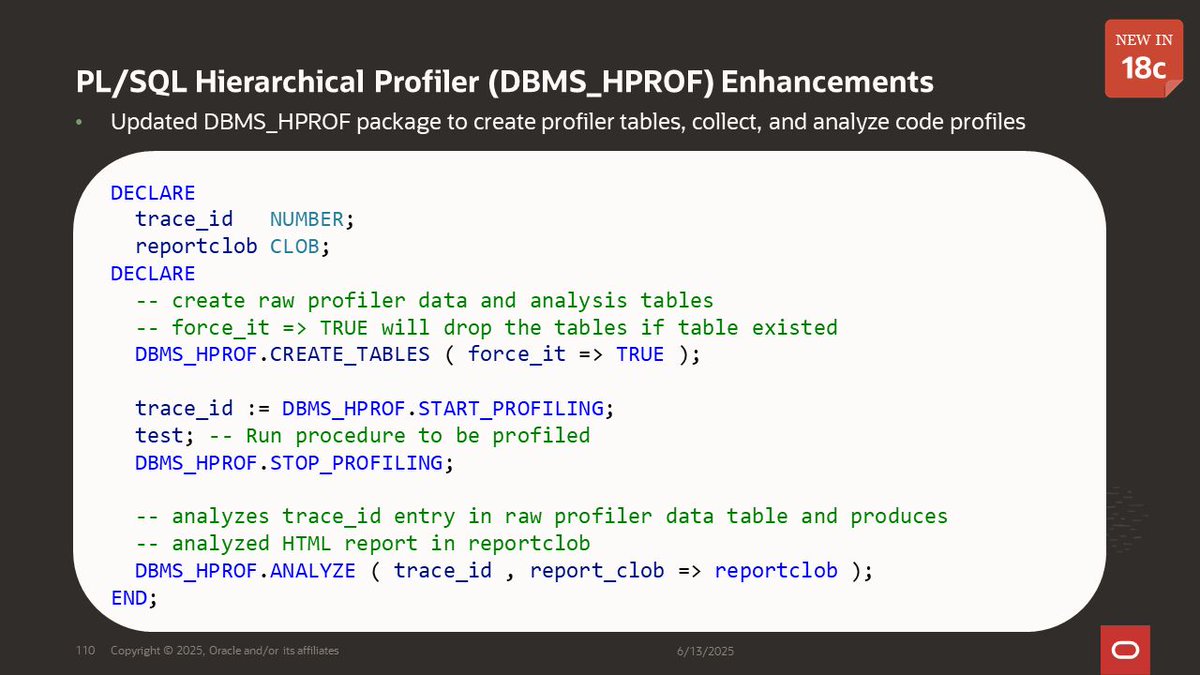
Find the bottlenecks in PL/SQL code with the hierarchical profiler
DECLARE
DBMS_HPROF.CREATE_TABLES ();
id := DBMS_HPROF.START_PROFILING;
<code>
DBMS_HPROF.STOP_PROFILING;
DBMS_HPROF.ANALYZE ( id, report_clob => html );
END;
Enhanced in 18c to store trace data in tables
Have you ever wondered how to create a dynamic number of Oracle APEX charts based on a SQL query?
If so, check out my latest blog where I show how to build flexible visualisations using Cards region + Oracle JET.
https://t.co/cz26WA7v3e
#orclAPEX
🚀 NEW VIDEO ALERT! 🚀
JavaScript for #orclapex developers - Accessing Page Items is now LIVE!
Whether you're just starting or looking to level up your JS skills, @phartenfeller breaks down how to access page items using JS in clear, simple steps.
https://t.co/ap28L9Hg8x
Because everyone needs more side projects. Thanks? to @DougAGault for asking. Here's a start of a @code extention for Quick SQL.
https://t.co/WIeRAEapjb