Although the data in this post is not entirely accurate (for example, Meta went through massive layoffs in the past two years, so its overall headcount actually
declined), some of the arguments it raises are genuinely valuable.
Since the rise of AI, the dominant narrative on social media has been that programmers are facing unemployment, and indeed many companies have carried out layoffs.
However, Jevons Paradox points out that when technological progress improves the efficiency of resource utilization, demand for that resource tends to increase rather than decrease.
The post's framing of "a shrinking denominator and an exploding numerator" is particularly sharp.
In the past: many traditional industries — such as food service and small-scale manufacturing — had real needs for digitalization but could not afford to hire ten
engineers, so they simply chose not to use software at all.
Today: AI makes it possible for one or two people to build and maintain an entire system. With the barrier to entry lowered, millions of potential projects that
previously sat below the break-even point have now become viable. The explosion of this long-tail market will absorb all the productivity that has been unleashed.
AI will not make programmers disappear, but it will render some programmers unnecessary. The companies that are still actively hiring in the AI era are looking for a new generation of engineers — ones who know how to leverage AI to multiply their own output.
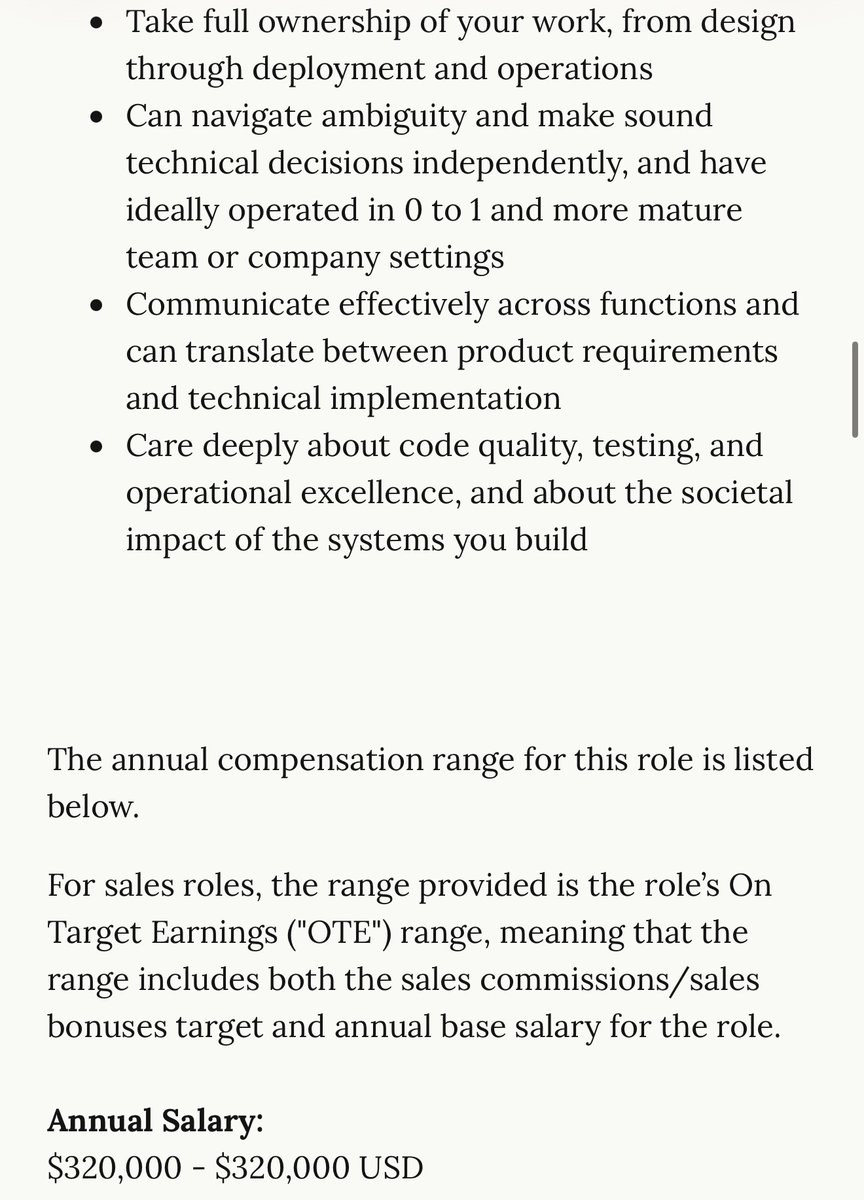
Anthropic has 454 open roles. The company is hiring software engineers at $320K-$405K. Their CEO, Dario, said three months ago that coding is "going away first, then all of software engineering."
The paradox resolves instantly.
Dario's engineers told him they don't write code anymore. They let Claude write it. They edit. They review. They architect. They didn't lose their jobs. They got faster. Anthropic grew from a small research lab to 1,500 employees in four years, adding engineers the entire time.
This has played out five times in computing history. Compilers replaced assembly. Frameworks replaced boilerplate. Cloud replaced server management. Every prediction was the same: most programmers won't be needed. Every result was the same: the number of engineers grew.
The global software engineer pool went from roughly 5 million in 2010 to 28.7 million today. BLS projects 17% growth in US software developer roles through 2033, adding 304,000 positions. The pool is projected to hit 45 million by 2030.
When building software gets cheaper, more problems become worth solving with software. A startup that needed 10 engineers now needs 3. But 50 companies that couldn't afford to build at all now can. The denominator shrinks. The numerator explodes.
Meta's engineering headcount is up 19% from January 2022. Google's is up 16%. Apple, 13%. These companies adopted AI coding tools years ago. They're using Copilot and Claude Code daily. They're hiring more engineers than before those tools existed.
Every generation of "coding is dead" content creates two cohorts: engineers who freeze up, and engineers who build 10x more with the new tools. The second group has won every single time.
Today, I took out my laptop that had been lying idle for a long time and reinstalled the system. After installing Claude Code, I directly granted it the --dangerously-skip-permissions permission, and even handed over the sudo password.
Now, after giving it a task, I can completely leave it alone—that feeling is just so satisfying. Instead, I feel that the Claude Code I use for work is actually the "crippled version."
Can you really build a full-scale, production-ready project entirely with AI?
Today, we’re kicking off a crazy experiment — letting non-developers use AI to rewrite a project I’ve been maintaining for two years.
Most AI projects shared on social media are one-off “toy” projects, with no ongoing updates.
So… can AI actually handle a real, long-term project?
We’ll document everything — and see if it’s a miracle or a disaster.
What do you think? And follow along — the results might change how you think about AI forever.
It's 2026, and Claude still insists on using docker-compose instead of docker compose — completely ignoring the fact that the old one doesn't even run on newer versions anymore. 🤦
@jezell Agreed. One notable downside, though: since the entire project is generated by AI in one go, the codebase can be overwhelming to read and understand.
With an incremental approach, each change is small and contained, making it far easier to follow.
When using AI for software development, there are generally two prevailing approaches:
Rapid Prototype-Driven: Let the AI quickly scaffold the core functionality first, then incrementally layer on additional features, followed by continuous iteration and refactoring.
Documentation-First Driven: Before writing a single line of code, systematically design a comprehensive project document — covering functional requirements, system architecture, and technology stack choices — then hand it off to the AI to implement accordingly.
Which approach do you think is superior?
The web version of Google Gemini offers a very poor user experience.
After sending a prompt, the page often gets stuck on the “waiting for response” screen as if nothing is happening.
In reality, the response has already been generated—it just doesn’t display properly. You have to manually refresh the page to see the result.
I have never been optimistic about OpenNext, mainly because it faces numerous limitations when handling the build output of Next.js. While using AI to clone a Next.js project that can be deployed across all platforms may sound intriguing, I don’t believe we need a problematic clone of Next.js. Instead, I would rather focus my energy on existing, more vibrant frameworks, such as TanStack.
Claims about using AI to quickly clone a pixel-perfect product often imply that the resulting product is likely to contain many bugs, and its future maintainability and iteration will pose significant challenges.
We rebuilt Next.js in a week. No, really.
The team ported the framework to run natively on Workers to prove what’s possible with edge-first architecture. Dive into the technical hurdles we solved to eliminate Node.js dependencies.
https://t.co/GqYBiZ5Qum
@burcs@Cloudflare@CloudflareDev Thank you for your reply, I understand now. It turns out this is not a date picker, but rather a way to directly edit the time. Once the text is selected and highlighted, you can directly enter numbers.
You can't customize the time range when viewing Cloudflare Worker logs.
There appears to be a time picker, but it's unresponsive when clicked.
@Cloudflare@CloudflareDev
This is indeed an impressive product.
However, financial data is highly sensitive and private. How do you ensure the security and confidentiality of users’ information?
For instance, do you utilize any AI models? If so, what measures are in place to guarantee that private data is neither used for model training nor exposed to any leaks?
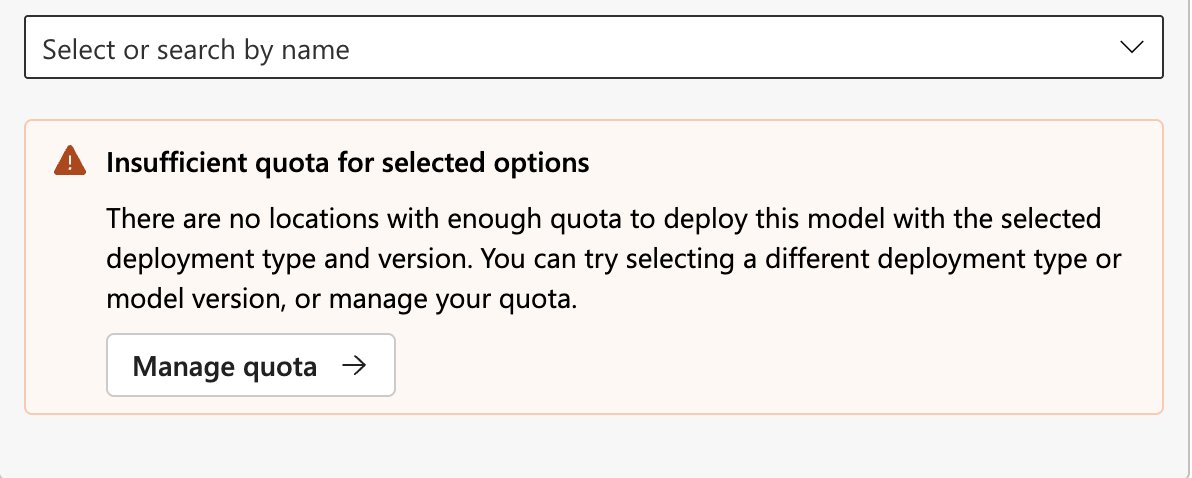
I intended to use the AI models available on Azure’s Microsoft Foundry, but discovered that my account has been assigned a usage quota of zero.
This means I cannot access or run any services at all. For a commercial product, I find it puzzling why they would impose such strict limitations on users who are eager to try and adopt the service.
This approach is hard to understand and seems counterproductive for product adoption and long-term user engagement. @Azure
In promoting AI-powered spreadsheet tools, the biggest barrier isn’t capability—it’s data privacy.
Even if an AI provider promises a special “secure” service that ensures no leakage, many companies—especially publicly listed ones—remain cautious.
The reason is simple: the impact of leaked source code could be somewhat mitigated through fixes, but leakage of confidential financial data for a listed company could be catastrophic.
It’s a compliance nightmare with potentially irreversible economic and legal consequences.
That’s why enterprise adoption of AI in sensitive data workflows comes with far stricter approval and testing than many in tech might expect.
@daniel_mac8 I am very optimistic about AI Excel; I had already developed a similar product before the release of Claude in Excel.
https://t.co/3iSjAK2Y9g
Yesterday, Anthropic unveiled Claude in Excel, and it instantly cast a shadow over the future of my newly built product.
Just last weekend, I spent two days of my holiday developing an AI-powered Excel tool. It can not only handle complex spreadsheet operations and merge data across multiple sheets, but also generate images and PowerPoint presentations based on the content.
I chose Anthropic’s most advanced model to power it, and the test results exceeded my expectations, filling me with confidence.
But with the release of Claude in Excel, I suddenly realized: when internet giants step into a domain, independent products often stand little chance.
In today’s era of rapid AI development, small teams can indeed prototype ideas faster and seemingly have more opportunities.
Yet the reality remains unchanged—before and after AI, one thing is constant: the moment the giants enter, your product may be replaced overnight.
This hits on the key issue with this product.
From my experience promoting a similar product I built a week ago, data privacy and security was the biggest hurdle.
For instance, the sensitivity of financial data dictates that any AI integration would almost certainly require the model to be deployed internally by the client.
https://t.co/ZPazyJKVZX