前端日常躺枪倒是不奇怪,应该早就习惯了。
但我特别好奇的是,在 AI 高速发展的今天,到底是前端还是后端,更容易被完全替代呢?
用 AI 开发了不少项目,现在项目的 AI 含金量几乎达到了 100%。但是对于前端项目,最后一个 验证 环节却始终无法通过 AI 自主走通。
例如,我们采用测试驱动开发,前端的测试就要复杂麻烦的多。
后端代码,大部分接口可能单元测试就够了,顶多来个集成测试。
但是前端项目,你得端到端测试、截图测试吧。这些测试成本高收益低,而且依旧无法完全捕获 UI 细节或者交互效果。
尽管这个帖子的数据并不准确(例如 Meta 前两年是经过大规模裁员的,整体人数应该是下降),但部分观点是有价值的。AI 发展以来社媒的主要论调都是程序员要失业,甚至有不少公司都裁员。
但杰文斯悖论(Jevons Paradox)指出:当技术的进步提高了某种资源的利用效率时,该资源的需求量反而会增加,而不是减少。
帖子中“分母缩小,分子爆炸”的观点非常精准。
过去: 很多传统行业(如餐饮、小型制造业)虽然有数字化需求,但雇不起 10 个工程师,所以他们选择“不用软件”。
现在: AI 让 1-2 个人就能撑起一套系统。门槛降低后,原本处于“盈亏平衡点”之下的数百万个潜在项目变得可行了。这种长尾市场的爆发,会消化掉所有被释放出的生产力。
AI 不会让程序员消失,但会让一部分程序员变得不再需要。那些在 AI 时代还在积极招聘的公司,他们雇佣的是“能用 AI 提升效率”的新一代工程师。
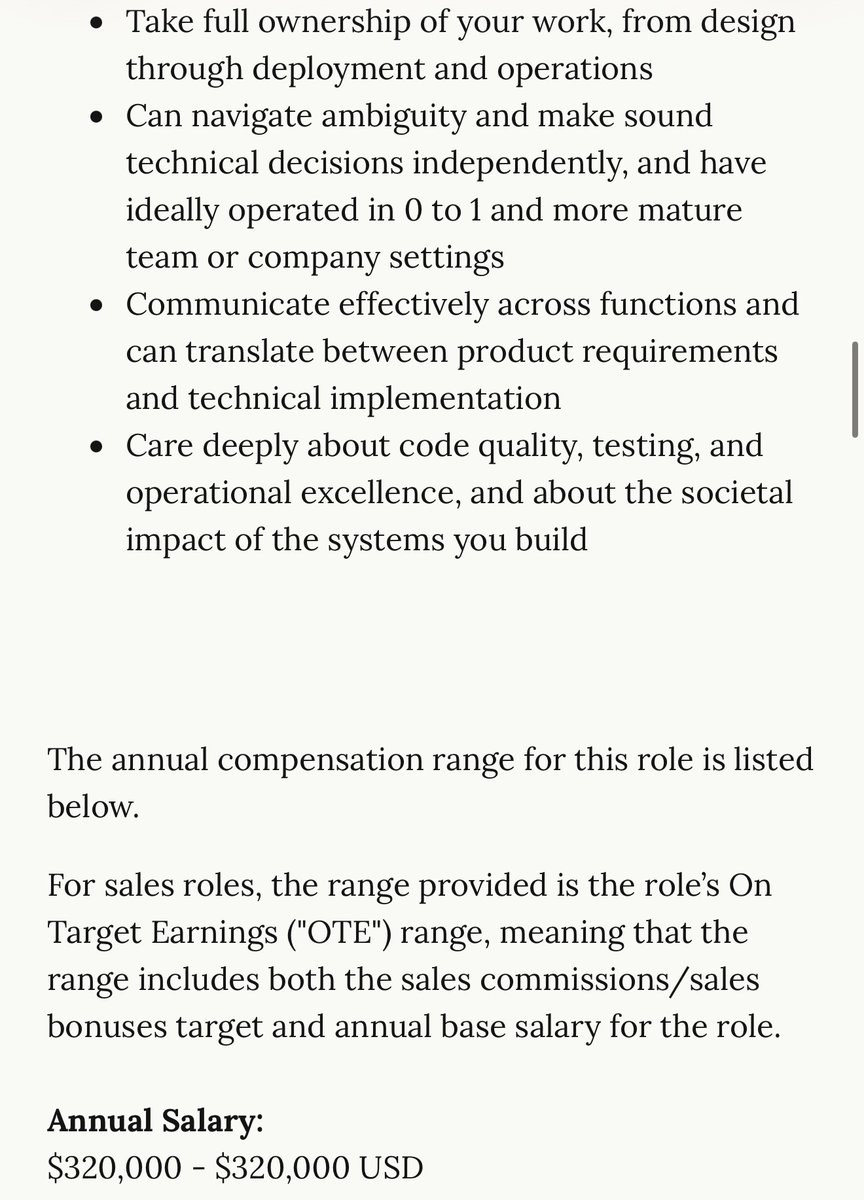
Anthropic has 454 open roles. The company is hiring software engineers at $320K-$405K. Their CEO, Dario, said three months ago that coding is "going away first, then all of software engineering."
The paradox resolves instantly.
Dario's engineers told him they don't write code anymore. They let Claude write it. They edit. They review. They architect. They didn't lose their jobs. They got faster. Anthropic grew from a small research lab to 1,500 employees in four years, adding engineers the entire time.
This has played out five times in computing history. Compilers replaced assembly. Frameworks replaced boilerplate. Cloud replaced server management. Every prediction was the same: most programmers won't be needed. Every result was the same: the number of engineers grew.
The global software engineer pool went from roughly 5 million in 2010 to 28.7 million today. BLS projects 17% growth in US software developer roles through 2033, adding 304,000 positions. The pool is projected to hit 45 million by 2030.
When building software gets cheaper, more problems become worth solving with software. A startup that needed 10 engineers now needs 3. But 50 companies that couldn't afford to build at all now can. The denominator shrinks. The numerator explodes.
Meta's engineering headcount is up 19% from January 2022. Google's is up 16%. Apple, 13%. These companies adopted AI coding tools years ago. They're using Copilot and Claude Code daily. They're hiring more engineers than before those tools existed.
Every generation of "coding is dead" content creates two cohorts: engineers who freeze up, and engineers who build 10x more with the new tools. The second group has won every single time.