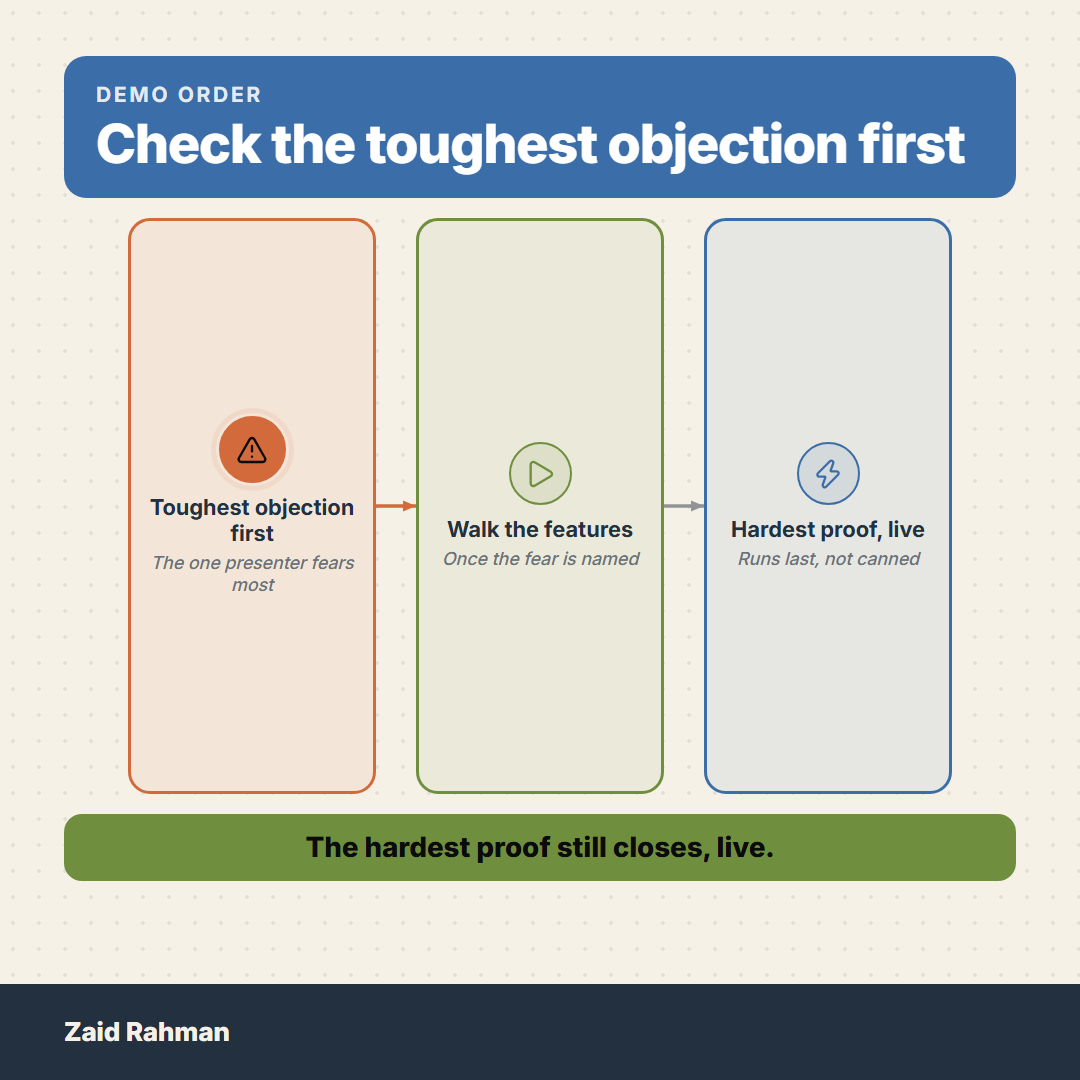
Most demos save the hardest objection for last. A well-built one opens with it. Watch which objection gets tackled first, before any feature is shown. That's the one the presenter fears will lose the room. The harder proof runs last, built live.
Ask your AI tool one question: where did that answer come from? If it can't point to the line in your own files, that's a guess dressed up as advice. Give it one rule: answer only from your files, and say so when it can't.
Think your AI reads your own files by default? It doesn't, unless you say so. Give it one line: 'Answer only from these files. If it's not in there, say so.' Then it stops guessing and tells you what it doesn't know.
"Want me to send the details?" That's the whole close, one call, no second pitch.
Some run 3 tiers instead: free mini assessment, paid assessment, monthly retainer.
If a seller can't name the next step in one line, you're picking a maze, not a service.
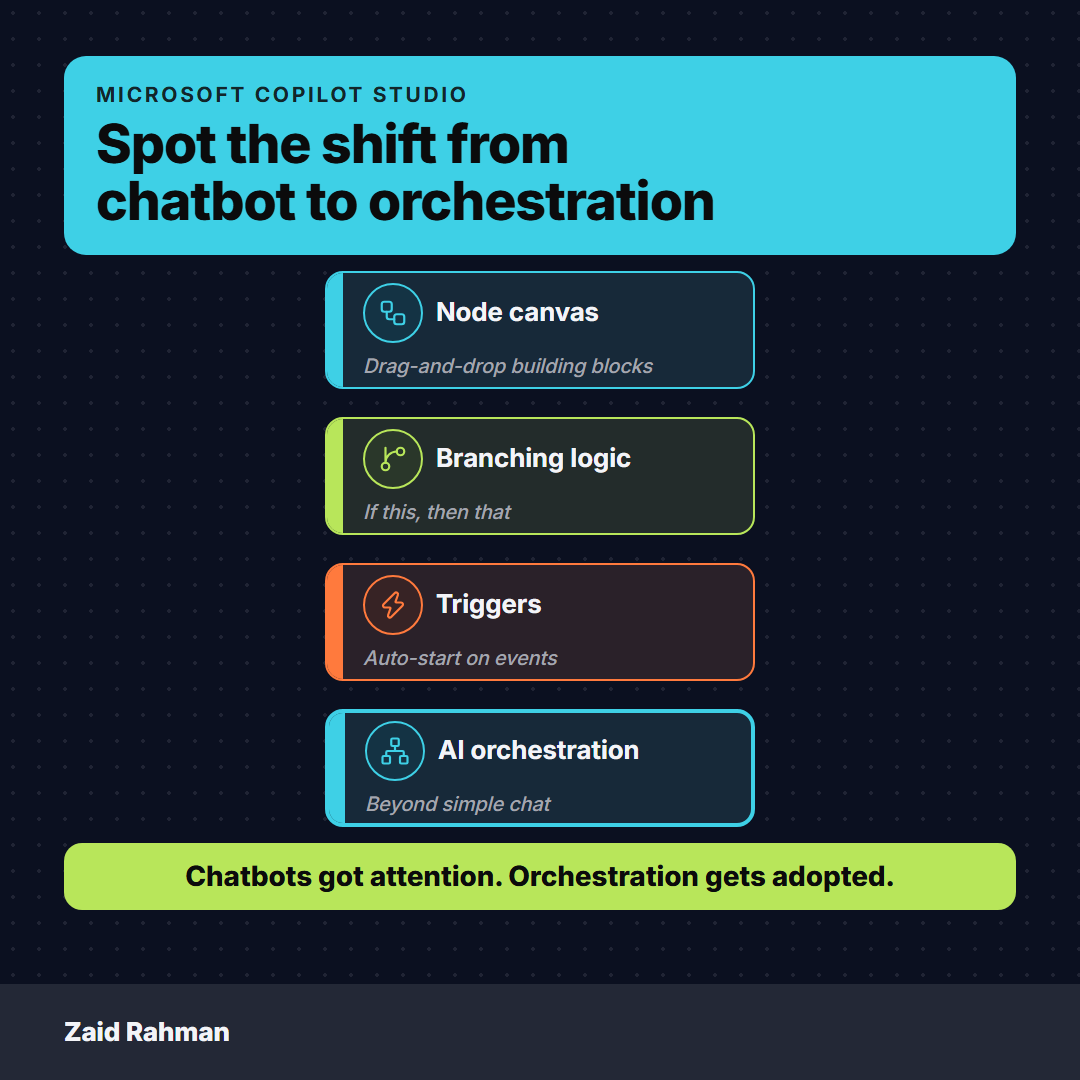
Look closely at Microsoft's new Copilot Studio Workflows. Node-based canvas, branching logic, triggers. It looks like n8n because it basically is n8n.
We're past the "AI chatbot" phase. The real shift is AI orchestration, and every major player is building toward it.
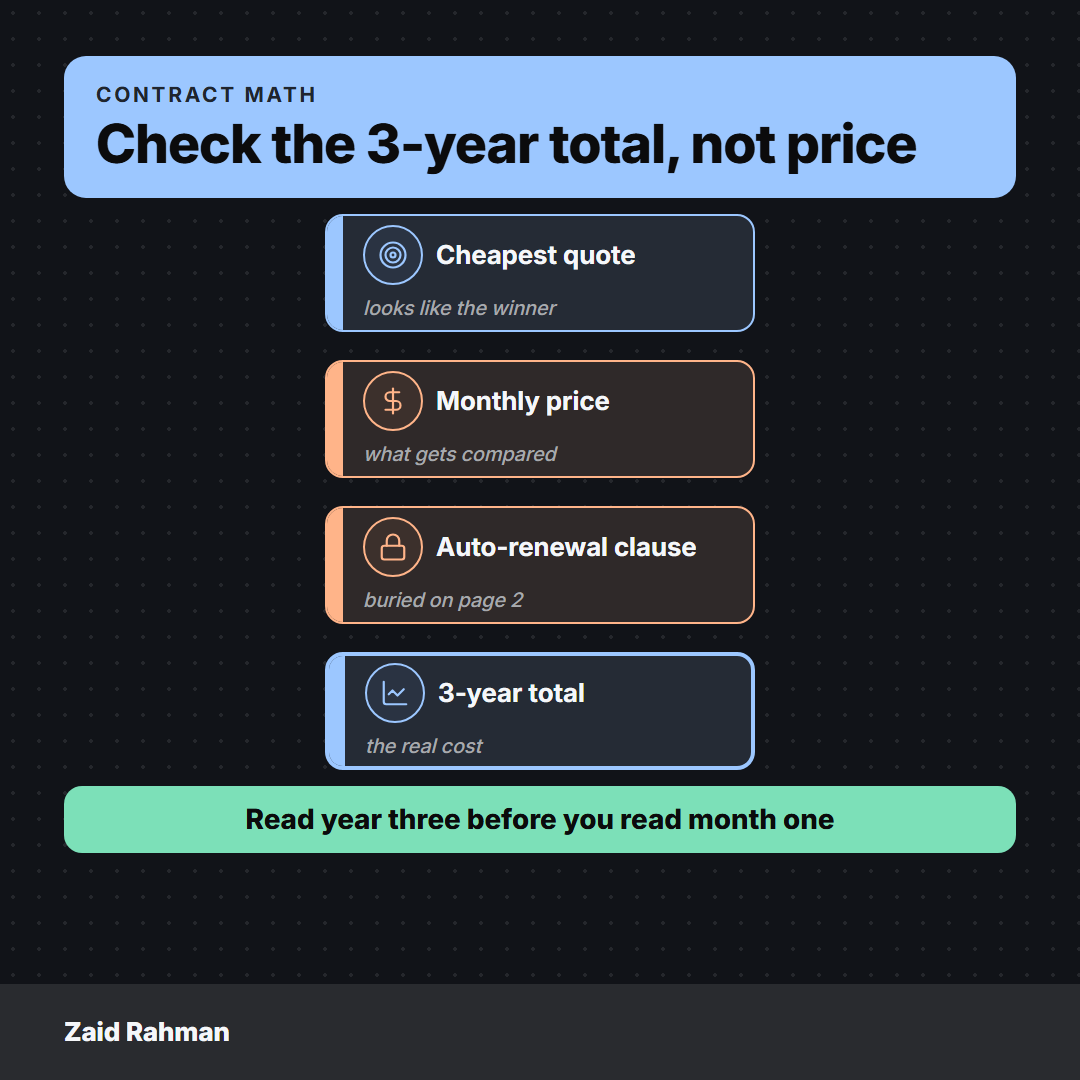
The cheapest quote was the most expensive by year three. A 36-month auto-renewal clause was buried on page 2. Check the 3-year total and the auto-renewal terms before you sign, not the monthly price.
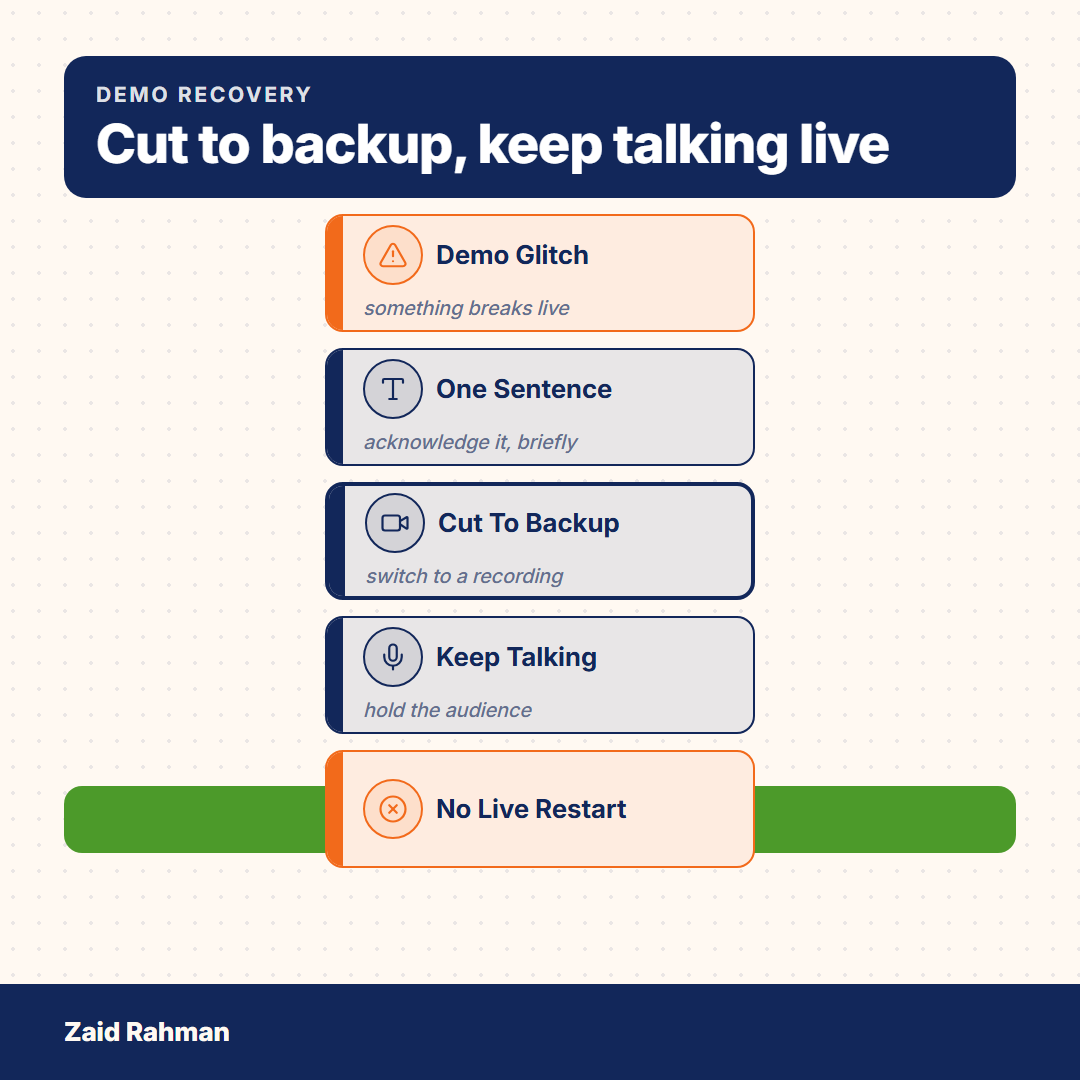
A demo that never glitches hasn't shown you anything real. Ask what happens when it breaks, not what it can do. The rule I give for recovery: one sentence, cut to a backup recording, keep talking, never restart live. Watch how the presenter handles that.
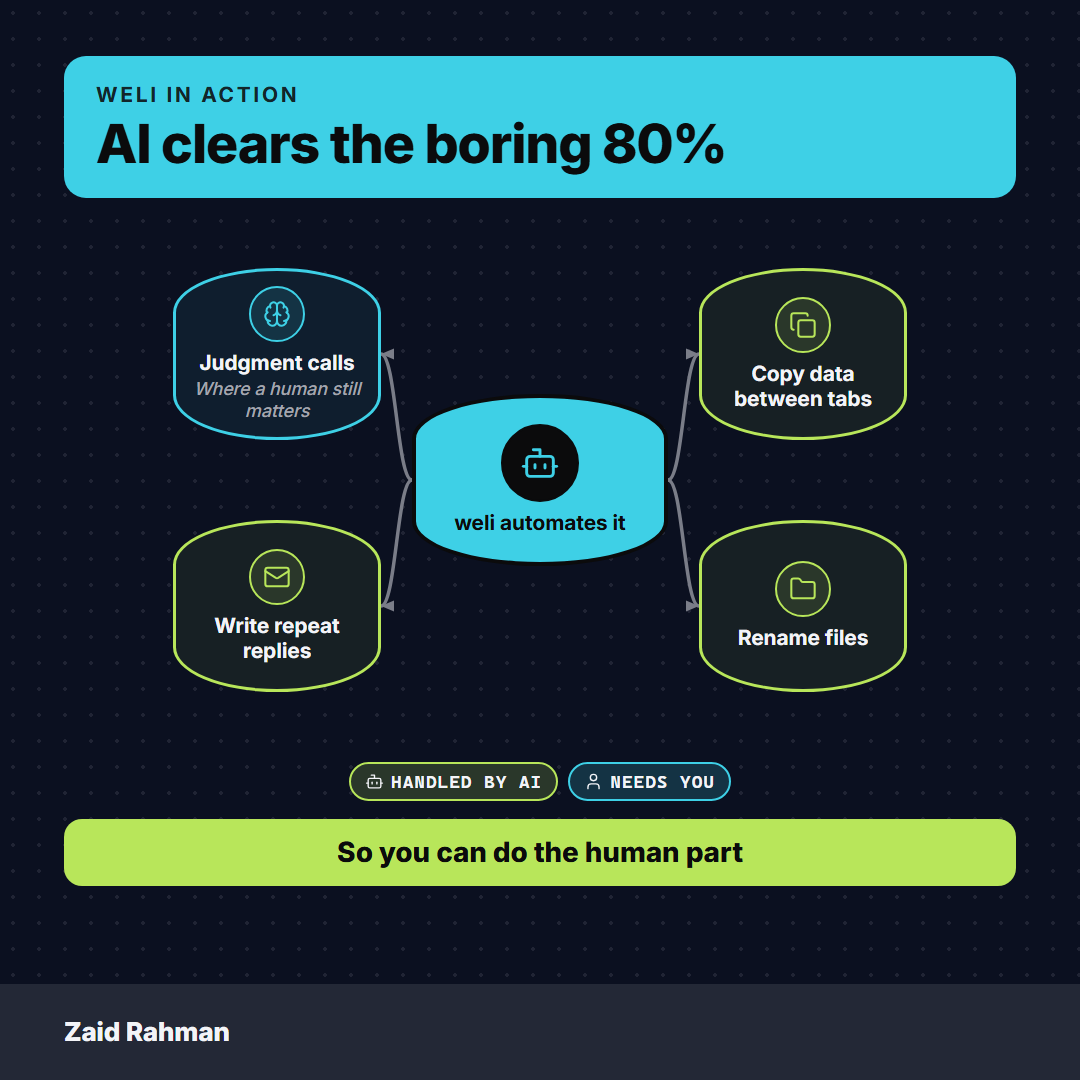
Most of my week used to be copy-pasting data between tabs, renaming files, and writing the same reply five different ways. AI handles all of that now. I'm building weli around exactly this: automating the boring 80% so you can spend time on the part that needs a human.
One pain point. One tool. 15 minutes.
That's the whole free call.
No slide deck, no pitch. You leave with one fix you can try today, not a list to think about.
Worst case you learn something. Best case you save real hours.
DM me if this sounds like something you do by hand.
If a demo needs a week of hidden setup, it isn't proof of anything. One live session runs on the free plan, nothing pre-built. It opens with one question: what ate hours out of your week last week? Then it triages that exact task, live, in the room.
A discovery call that hands you a price on day one is guessing. The honest version says: no answers today, on purpose. It waits two to four weeks for your real counts, how many transactions or invoices you actually process, before it prices anything.
Went to an AI session, a live walkthrough where they try running a tool on your own setup, and nothing got installed? You shouldn't owe anything. The guarantee: no live install, no charge, plus a free follow-up once whatever blocked it, usually a login or permission, clears.
Who revokes your AI agent's access when the person who set it up leaves?
Ask that at your next demo. If nobody in the room has an answer, you don't have a security model. You have a hope that nothing goes wrong.
DM me if this sounds like something you do by hand.
Most demos show you a slide, then follow up with an email. This one leaves four tools running on your own accounts before you leave the room, so the hour ends with real work already moving instead of a promise to call you back.
Everyone thinks a free AI call ends in a pitch. The good ones end in questions.
You leave having explained your workflow out loud, once, to someone who has to listen instead of sell. No tool name, no fix, until after.
Comment AI and I'll message you how it's set up.
AI sorts your business transactions right about two times out of three. Independent testing on messy data found 67% accuracy, so roughly one in three lands in the wrong category. Check them before month end, not after, and you catch the mistake instead of filing it.
Ask an owner which process they'd delete with a magic wand and the answer is almost always email.
Specifically the part where a client message becomes a task somewhere else, by hand, every time. That's the one worth fixing first.
Deleting one process instead of chasing a strategy works. What I don't know yet: whether "watch closely, fix the loudest thing" still works once the loud things run out.
If you've deleted a process from your own business, tell me what it was.
Demonstration, not a client story yet: a firm where every client email gets read, sorted, and retyped into the right system by hand. I set up a rule that does the sorting and the typing on its own.
The part that took longest wasn't building the rule. It was watching first.
An AI strategy document has never once cleared an inbox.
The bottleneck is usually three things you do by hand daily, like email triage, follow-up, and retyping the same form into three systems, and none of those need a strategy. They need someone to spend an afternoon on them.