there’s been a lot of attention on GPT-5.6 Sol, but i think Terra is the sleeper hit for enterprise security agents.
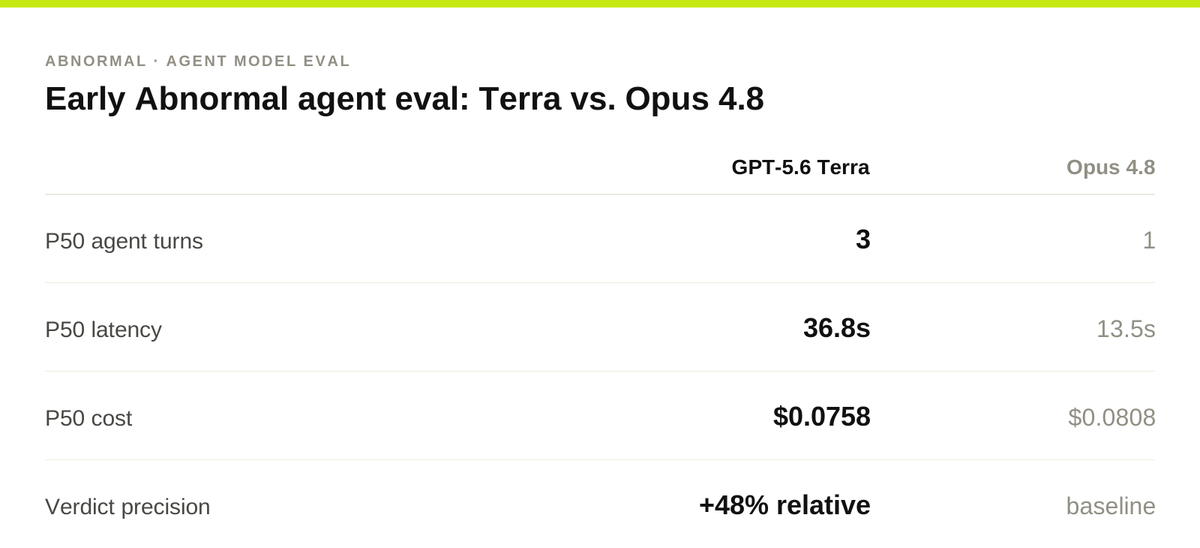
early experiments at @Abnormal are pushing agent teams to swap from Opus 4.8 to GPT-5.6 Terra as the candidate model for longer-running security investigation tasks. we observe Terra as a much more steerable model and that we can better inject domain knowledge + Abnormal preferences.
on some of our hardest cases where human/agent disagree, Terra had 48% more precision, similar recall and incurred slightly lower cost, despite taking ~2.5x longer. for these longer-running agents, that’s a tradeoff we’re pretty happy to make since the resulting investigation time was still acceptable.
we observed Terra taking ~3x more turns than Opus and considerably longer to reach a verdict.
as we dug in, we observed opus to be more confident in its own intelligence and reason directly to an answer while Terra consistently investigate with the tools we give it.
at @Abnormal, our advantage isn’t access to a smarter base model. it’s the unique behavioral ai context, tools, domain knowledge, and security intuition we want the model to operationalize on. i suspect a lot of other vertical AI and security companies would say the same.
choosing a model for a security agent is more like hiring an investigator than picking the highest-scoring model on a benchmark.
the best security analyst isn’t just the one with the most raw intelligence. you want someone who is coachable, uses the telemetry and tools available to them, learns your environment, and incorporates the context your organization has built up over time.
for security agents, steerability is the equivalent of coachability
Frontier models cost 6,500x more than @Abnormal's purpose-built detection system to classify the same email.
So the answer to “can’t you just use an LLM” is no, or at least not at the same speed or precision.
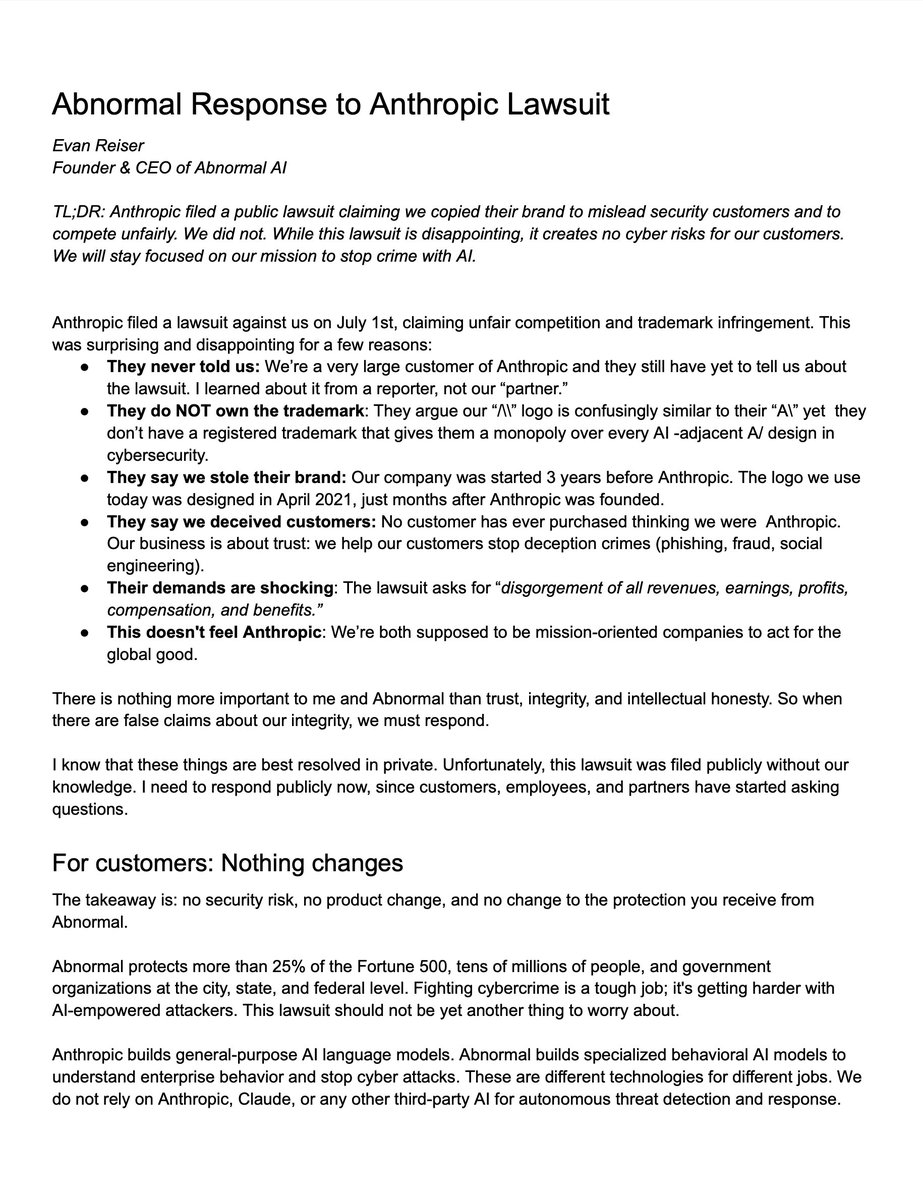
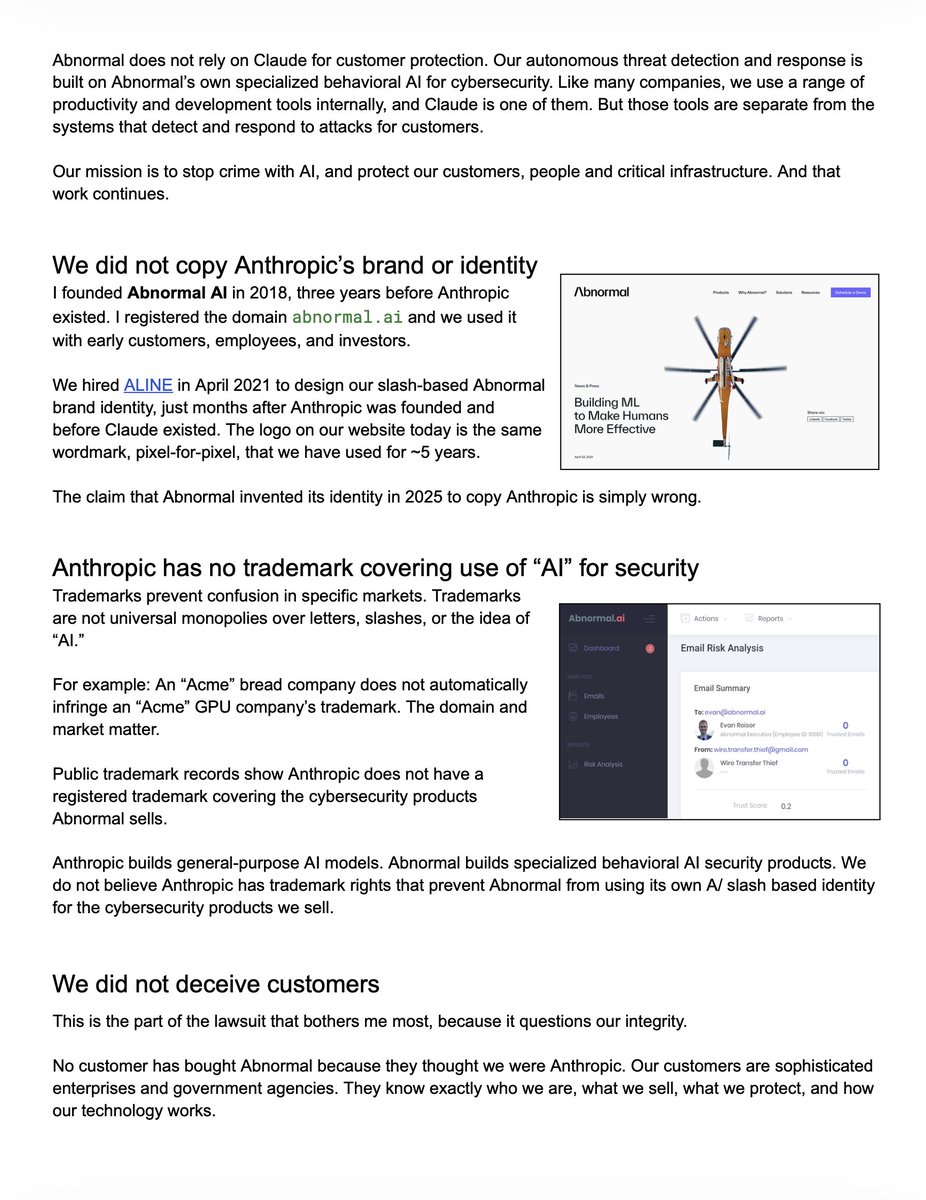
.@AnthropicAI has filed a lawsuit against @Abnormal
claiming we copied their brand to mislead security customers, and they are asking for “all revenues, earnings and profits”
This is obviously not true. They don’t own every A/slash design in AI cybersecurity, and they don’t get to turn a logo dispute into a claim on Abnormal’s entire business.
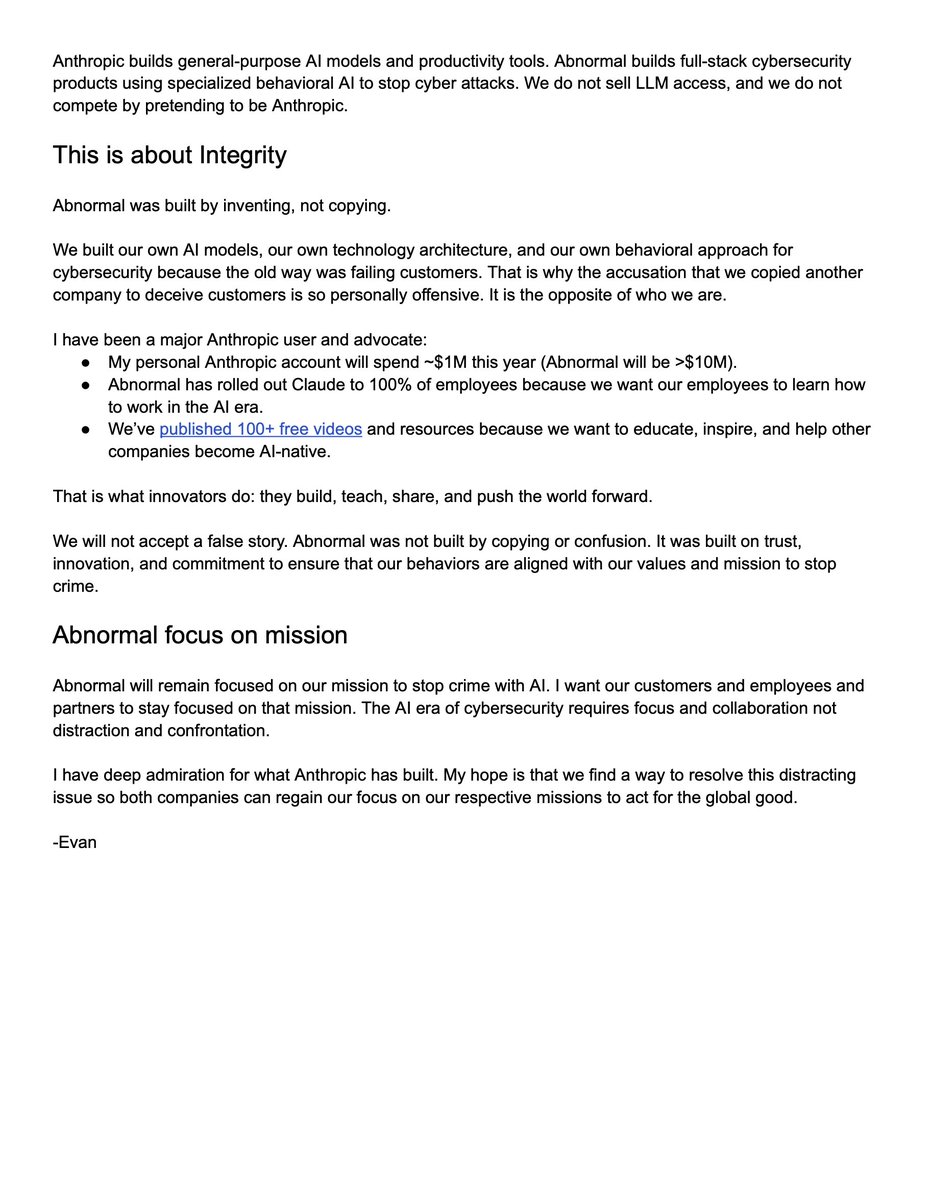
It would be easier to concede quietly. But Abnormal was built on trust, innovation, and intellectual honesty.
Values are what you do when tested (especially when inconvenient) Our behavioral security platform and our AI models are ours.
Everything meaningful about Abnormal was built the hard way: the technology, the customer relationships, and the trust. We earned that trust by protecting customers, and we will defend it.
My blog post about it (link below):
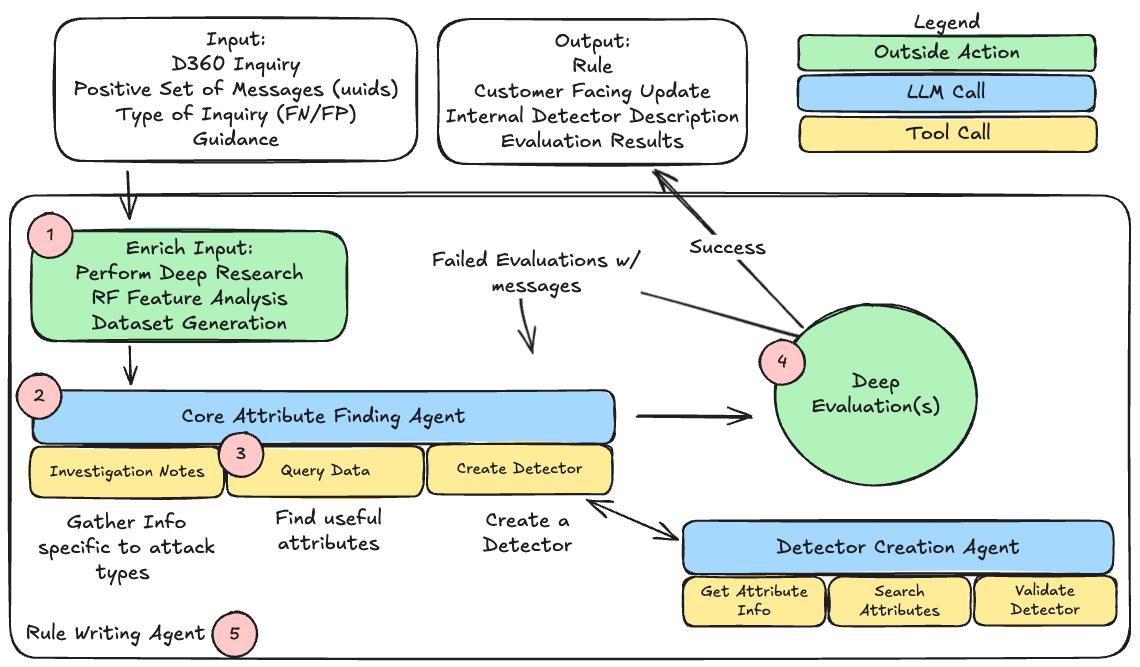
I've been building cybersecurity detection agents that learn attacker intent at @Abnormal, this is what makes it work:
- Statistical and semantic relevance: attributes have to both distinguish attacks from normal traffic and be meaningful to that attack type
- Second-order thinking: pushing the agent past naive pattern matching to ask why something is suspicious, not just what it looks like
- Proof before launch: every detector gets tested against a real slice of traffic before it ships
Full blog below!