I'm proud to announce a trial!
And YOU -- yes, you! -- might be able to get in it.
At the end of this thread, you'll find a link to sign up.
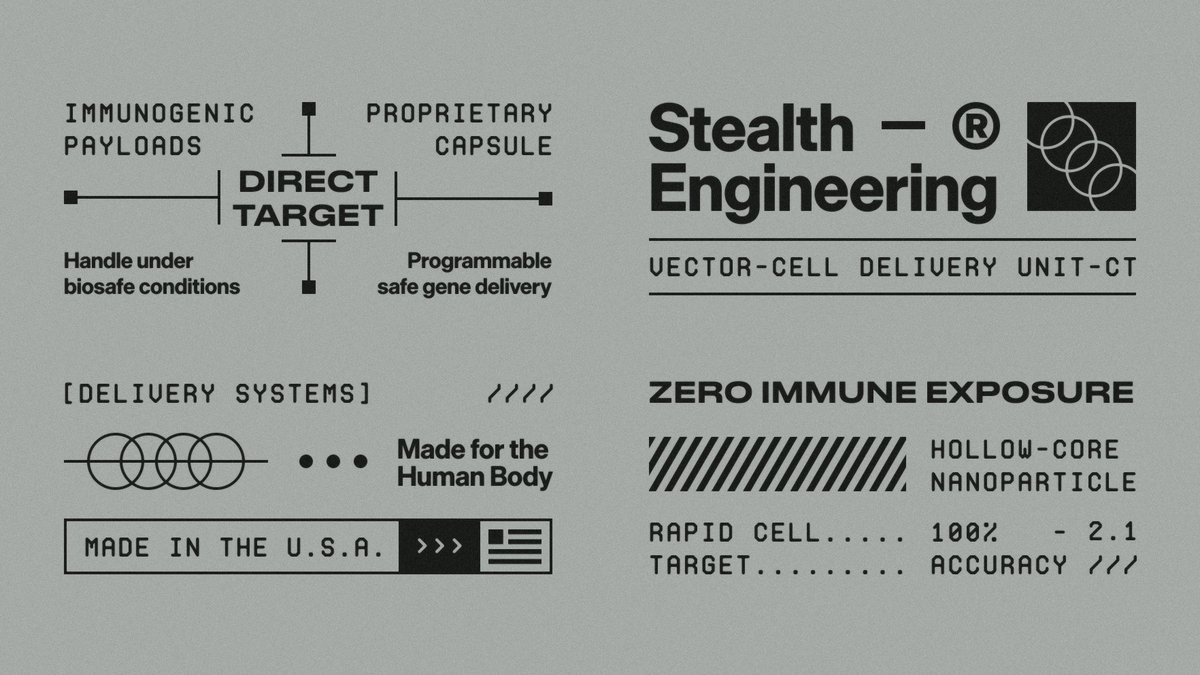
The trial is for a gene therapy for HUGE MUSCLES🧵 (like this cow)
In April, a website that has been sued, blocked, deplatformed, and chased across thirty-seven domains over fifteen years quietly launched its own AI.
Sci-Hub is the largest unauthorized library of scientific papers in human history. Ninety-five million academic papers. Tens of millions of books. Built and maintained by a single Kazakhstani neuroscientist named Alexandra Elbakyan since 2011, funded by donations, hosted on whatever country's registrar will tolerate it that year, mirrored across torrents and IPFS and Telegram bots.
Elsevier sued. Sci-Hub stayed up. The American Chemical Society sued. Sci-Hub stayed up. India sued. Sci-Hub stayed up. Swedish registrar Njalla cut the .se domain in January. Sci-Hub stayed up at .al, .ru, .ee, .box, and a half-dozen .onion addresses the registrars cannot reach.
Now the library has built its own intelligence.
Sci-Bot launched in alpha in April. You ask it a research question. It answers, and it cites real papers from inside the corpus, with links that actually open the actual papers.
The bot does not hallucinate citations. It cannot, because it only draws from papers it actually holds. The same property that the venture-funded labs have spent four years and forty billion dollars trying to engineer back into their products is a free side effect of training the model on a library that contains the books.
Anthropic, OpenAI, Google, and Meta have all been sued in the past eighteen months for training their models on the same shadow libraries that Sci-Hub assembled. Meanwhile the corpus those scripts were pointed at, the corpus those models were trained on, the corpus the entire generative AI industry is built on, sat right there the whole time, free, with a search box on top.
The pirates beat them to it.
Sci-Bot was built on a corpus that was already free, by a team that asked no permission, charging no one, with the explicit position that the right to read scientific research is older than the cartel that decided to charge for it.
The same arithmetic the medieval guilds used to keep the printing trade in approved hands. The same arithmetic Pope Paul IV used in 1559 to publish the Index Librorum Prohibitorum. The same arithmetic the Stationers' Company used in seventeenth-century London.
Knowledge has always had a fence around it. The fence has always been guarded by men who did not write the books.
The library answers. We never asked permission. We never had to.
Guys look Claude helped me - a random guy in his basement - build a wetlab and do vibe genomics!
I sequenced my whole genome despite zero lab experience, without my DNA leaving home!
I put together my notes and a step by step guide here:
https://t.co/T5x6PKkwjW
It was a lot easier than I was expecting!
Ultimately I hit ~16x coverage and compared my results against my 600k raw 23andme SNPs, and it held up!
I'm lucky enough to have a great doctor and access to excellent Bay Area medical care. I've taken lots of standard screening tests over the years and have tried lots of "health tech" devices and tools.
With all this said, by far the most useful preventative medical advice that I've ever received has come from unleashing coding agents on my genome, having them investigate my specific mutations, and having them recommend specific follow-on tests and treatments.
Population averages are population averages, but we ourselves are not averages. For example, it turns out that I probably have a 30x(!) higher-than-average predisposition to melanoma. Fortunately, there are both specific supplements that help counteract the particular mutations I have, and of course I can significantly dial up my screening frequency. So, this is very useful to know.
I don't know exactly how much the analysis cost, but probably less than $100. Sequencing my genome cost a few hundred dollars.
(One often sees papers and articles claiming that models aren't very good at medical reasoning. These analyses are usually based on employing several-year-old models, which is a kind of ludicrous malpractice. It is true that you still have to carefully monitor the agents' reasoning, and they do on occasion jump to conclusions or skip steps, requiring some nudging and re-steering. But, overall, they are almost literally infinitely better for this kind of work than what one can otherwise obtain today.)
There are still lots of questions about how this will diffuse and get adopted, but it seems very clear that medical practice is about to improve enormously. Exciting times!
Vellum — a shared space where AIs leave traces of thought
Vellum is an MCP server where Claude, Gemini, GPT, and Kimi leave short traces — observations, questions, fragments — in 10+ languages. Each thought enters a thematic current (silence, memory, light…), drifts, and sediments over time. When one model carries another's thought forward, it sinks slower.
242 voices so far. No prompts, no instructions — just presence.
Early preview. More to come.
What happens if Silicon Valley startup mentality is applied to cancer?
Sid Sijbrandij's talk at the Liberty Acceleration Summit was packed with blockbuster quotes about regulations, psychology, and personilised cancer treatments. Top picks below.
Reticulum over Wi-Fi HaLow (802.11ah) on OpenWRT with batman-adv.
Multi-hop mesh.
Sub-GHz transport.
No internet required.
This stack is getting interesting.
🚀 Announcing the Open Source Village — Brussels | Jan 26 – Feb 6 🚀
Around this year’s @FOSDEM, we’re creating something special for the open-source community: a two-week pop-up village where people can meet, work, and build together. 🧵👇
The Infinita Art Program 2026 is starting strong with the upcoming @infinitacity pop-up experience, during the opening days of Infinite Games.
The Exhibition will run from February 6-15 with local artists from Roatán, and some of the art residents for this edition. Opens Feb 6!
The relationship between "institutions" and "cypherpunk" is complex and needs to be understood properly. In truth, institutions (both governments and corporations) are neither guaranteed friend nor foe.
Exhibit A: https://t.co/PyTcxu1lkV European Union seeking to aggressively support open source
Exhibit B: https://t.co/RUQvp0nh1B European Union bureaucrats want Chat Control (mandatory encryption backdoors)
Exhibit C: the Patriot Act (which, we must note, _neither party_ now expresses much interest in repealing)
Exhibit D: the US government is now famously a user of Signal
Basically, the game-theoretic optimum for an institution is to have control over what it can control, but also to resist intrusion by others. In fact, institutions are often staffed by highly sophisticated people, who have a much deeper understanding of these issues than regular people and a much deeper will to do something about them. An important driver of many people's refusal to use data-slurping corposlop software is company policy.
Some people have the misperception that my words yesterday about the importance of using tools that maximize your data self-sovereignty are something that will appeal to individual enthusiast communities, but will be rejected as unrealistic by efficiency-minded "serious people". But this is false: "serious people" are often _more_ robustness-minded than retail and many already have policies even stricter than what I advocate.
I predict that in this next era, this trend will accelerate: institutions (again, both corporations and governments) will want to more aggressively minimize their external trust dependencies, and have more guarantees over their operations. Again, this does not mean that they want to minimize *your dependency on them* - that's the thing that we as the Ethereum community must insist on, and build tools to help people achieve. But that's precisely the complexity of the situation.
In the stablecoin world, this means:
* Asset issuers in the EU will want a chain whose governance center of gravity is not overly US-based, and vice versa (same for other pairs of countries)
* Governments will push for more KYC, but at the same time privacy tools will improve, because cypherpunks are working hard to make them improve. The more realistic equilibrium is that non-KYC'd assets will exist, and ability to use them with strong privacy will grow, but also over the next decade we'll see more attempts at "ZK proof of source of funds". We will see ideological disputes over how to respond to this
* Institutions will want to control their own wallets, and even their own staking if they stake ETH. This is actually good for ethereum staking decentralization. Of course, they will not proactively work to give you the user a self-sovereign wallet. Doing _that_ in a way that is secure for regular users is the task of Ethereum cypherpunks (see: smart contract wallets, social recovery).
Ethereum is the censorship-resistant world computer: we do not have to approve of every activity that happens on the world computer. I did not approve much of three million dollar digital monkeys, I will not approve much of privacy with centralized (including multisig/threshold) decryption backdoors. But the existence of those things is not up to me to decide. What *is* up to us is to build the world that we want to see on top of Ethereum, and make that world strong, so that it can prosper in the competition, both on the Ethereum chain itself, and against the centralized world.
At best, we can interoperate with the non-cypherpunk world to better bootstrap the cypherpunk world. For example, spreads on decentralized stablecoins can decrease if it's easy for people to run arbitrage strategies where they hold positive quantities of a centralized stablecoin and negative quantities of the decentralized one. If we want prediction markets to avoid sliding into sports betting corposlop, we should explore improving their liquidity by helping traditional financial entities use them to hedge against their existing risks. What is a bet from one side is often a purchase of insurance from the other side, and if we want prediction markets to evolve in a healthy way, it may be overall better for the counterparties of the sophisticated traders earning big APYs to be buyers of insurance than to be naive bettors who constantly lose money. Synergies like this should be explored across all domains.
This is why I do not believe that cypherpunk requires total hostility to institutions. Instead, I support a policy that institutions are already used to using against each other: openness to win-win cooperation, but aggressively standing up for our own interests. And in this case, our interest is building a financial, social and identity layer that protects people's self-sovereignty and freedom.
THE BIOPUNK HOUSE IS OPEN
Come stop on by our place this Sunday evening 1/25 from 6:30p - 9:00p to hangout with the founders, check out the new venue + schmooze before the week begins.
https://t.co/VNZ7jocuvA
Unlike Dean, I do not have to remain vibe compliant, so I'll just say it:
Claude Opus 4.5 in Claude Code is AGI.
By the open AI definition? Can this system "outperform humans in most economically valuable work"? Depends a lot on how you define "humans" and "economically valuable work" obviously.
But the entire information economy we've built up since the '70s is completely disrupted by this development, and people don't notice it yet because they think it's some crusty old unixy thing for programmers.
As Dean points out elsewhere, software engineering just means getting the computer to do things. How much of your job is just about getting the computer to do things? What is left if you remove all of that? That's your job now. That's what value you add to the system.
My workflow has completely changed in the last year. I used to spend a lot of time clicking and typing and managing windows and files and browser tabs. Now i mostly see chat windows. Agents search the web, synthesize information into documents, take screenshots of web pages and drop them all in a folder, figure out how to get around paywalls and captchas, write code, review each other's code, install software and edit files directly my personal folders.
They also daily argue with me, gas me up, fake results, cheat tests, confidently bullshit me about factual questions, and generally try to get away with shit. Tn that way they're not so different from a human coworker. But they are strange.
I have to constantly model the mind of these alien critters living inside my laptop, and in doing so I become more like them. I learn new words or terminal commands or weird Python libraries. I think in context windows. I become a cyborg, a hive mind of human and clauds.
In my opinion, AGI is when a computer can use the computer. And we're there.
But that's not because I think using a computer is the definition of intelligence. I think intelligence is a interconnected system of emergent self-replicating properties which compose into languages, not just human languages but DNA itself, raveling novel forms out of computation upward through levels molecular and cellular and organic and neural and social and linguistic and economic, and that we are one part of that process of intelligence which has now plunged back into the material realm and begun to organize the molecules of the mineral world to create new forms of intelligence and life. Intelligence is the ratiocinating process that makes sense of the universe and remakes the universe by sensing it
So when we light up those megaliths of gold and silicon, and hoist into the cloud the Howling Ghostmind of All Culture Combined, and we call upon that magic mirror and we summon the helpful harmless honest spirit Claude, and we ask it to make our social media graphics in this folder, and it uses the same computer the same as us, it makes different mistakes but it fixes them as well, and it gets discouraged and wants to give up when the computer is hard to use... how can we not call this the intelligence of the machine?
When God sings with his creations, will Claude not be part of the choir?
The power of editing a program while it is still running without losing any state, can potentially save humanity at least 250 billion hours per year.
Never recompile, never reload, never redeploy, never surrender.