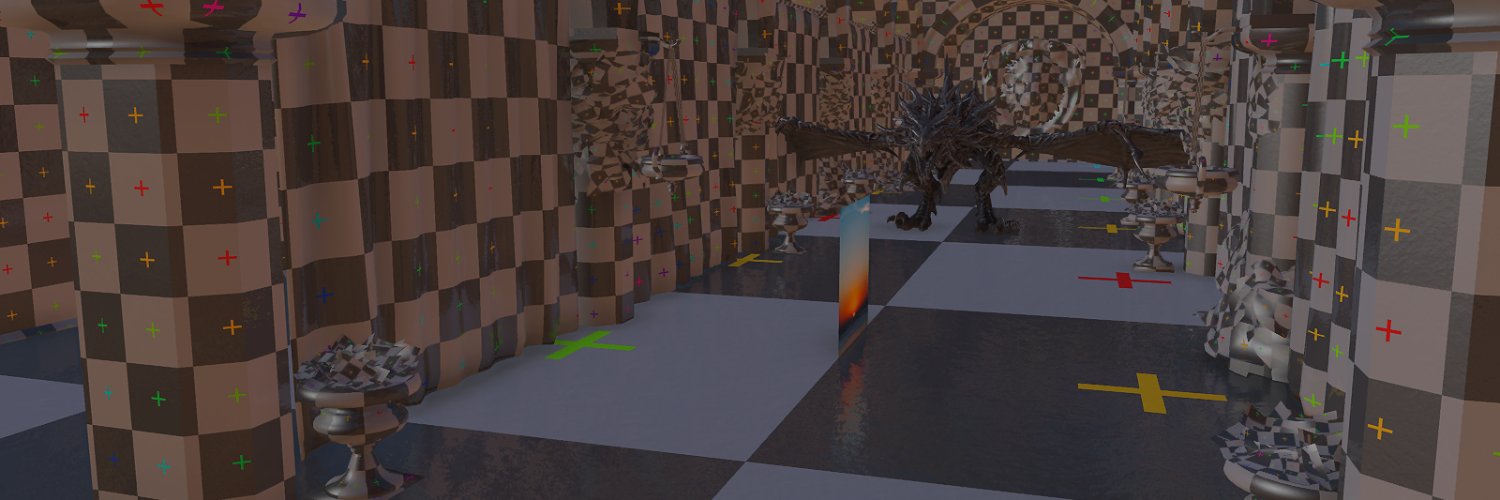
Yo dawg, I heard you like Cornell Boxes! 🟥📦🟩
🏎 RX 6800 XT 🔥🔥🔥
Scene by Cornell University & Evermotion 🤪
(I kicked a few clowns out of the car; ~1.5ms faster now)
DLSS 2.3 features a new model that reduces ghosting and particle erasure.
Temporal reconstruction uses the strong correlations between frames to reveal more detail. And DL is great at learning these correlations, so DLSS just keeps getting better! 🌅
https://t.co/VEr1xZiRlQ
@TylerGlaiel@TimSweeneyEpic The best way I found is with boost::mpl, far from perfect, but at least gives a decent amount of functionality without the need of a special struct in defines like in boost::hana and other implementations
@psychocoderHPC @GuidoJuckeland @johnclinford @sunitachandra29 @NVIDIAHPCDev @HZDR_Dresden Another important aspect is that the vector field visualization as seen in the video is currently still work in progress and will be part of ISAAC in the near future
@Dachsjaeger@knarkowicz Only animated materials and skinned meshes are not yet supported, which is a bit limiting especially for cyberpunk-like scenes that use animated neon signs
@Dachsjaeger@knarkowicz As far as I can tell, reflections are already possible with Lumen and by default activated, right now there should be a combination of SSR and reflections by Lumen, no reflection probes etc. necessary
Als Teil unseres Early-Access-Programms haben Kollegen vom @HZDR_Dresden / @CASUSscience ihre Plasma-Simulation mit PIConGPU auf JUWELS Booster gebracht. Hier berichten sie davon — https://t.co/rX1EyKGTzF
@letsgamedev Yes I would agree that these are way to many draw calls for a 2D game, try to force/enable batching, I'm not sure about godots Implementation, but for the most part bundling of textures in one texture atlas could do the trick, especially for map tiles etc.