Pi network build the world’s most inclusive p2p ecosystem and online experience, fueled by Pi, the world’s most widely used cryptocurrency. start mining pi now.
The Pi2Day 2026 Ecosystem Quest saw incredible participation with over 2.56 million Pioneer participants, and over 1.78 million of them completing every step to claim this year’s special-edition badge.
Congratulations to everyone who celebrated Pi2Day by exploring the Pi ecosystem and the new Pi2Day releases: SoloHost, Pi-Sign-in, and PiVerify.
Learn more in the Pi app.
🚨 HUGE NEWS: 🇺🇸 President Trump has now AGREED to the new ethics provision sent to the White House.
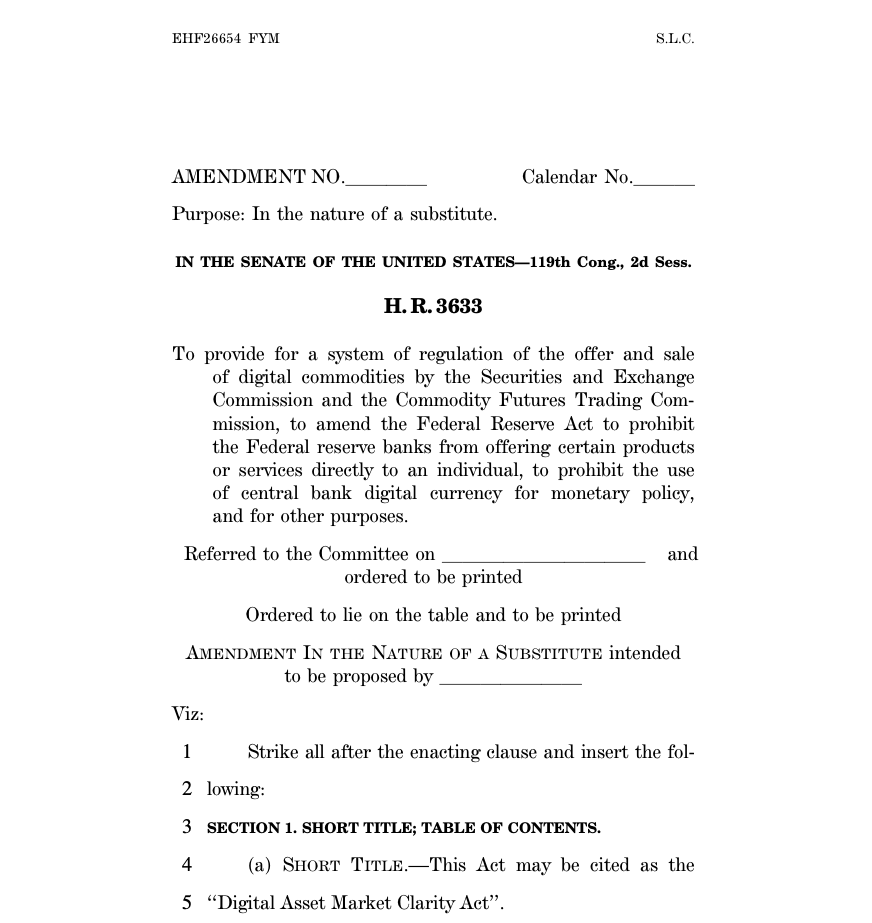
No more roadblocks for the CLARITY Act.
Pass the bill NOW.
Pi is going to pay for robots
Pi Network (@PiCoreTeam) has joined RoboPay as a payment partner, with $PI set to be used for robot services across the Fabric network (@FabricFND). RoboPay was built so AI agents can discover, hire and pay robots autonomously onchain, and this deal extends that same rail to tens of millions of Pi holders.
Once services go live, the vision includes summoning delivery robots for groceries, dispatching security patrols, or booking industrial inspections, all paid in the currency Pioneers already hold. Fabric calls it the foundation of an open machine economy where humans, AI and robots transact side by side.
🔥🚀 PI LAUNCHPAD: "STARTX FOR WEB3" ✨
🧏 Many people only know Dr. Nicolas Kokkalis as the co-founder of Pi Network, but often forget that he was previously the co-founder and CTO of StartX, one of Stanford's most successful startup ecosystems.
➢ StartX was never built to create short-term "pump" cycles or rapid fundraising rounds.
➢ Its philosophy was to build the ecosystem first and let economic value follow later: focusing on people, products, and community so that startups could grow sustainably.
🌱 The result speaks for itself.
➢ StartX has supported more than 1,300 startups, produced 20 unicorns, and built an ecosystem valued at over $26 billion.
➢ Notable companies associated with the StartX ecosystem include OpenSea, Protocol Labs (Filecoin & IPFS), Patreon, Lime, Life360, eero, and Freenome.
➢ StartX's success was never measured by how many projects it launched, but by its ability to create an environment where companies could mature and thrive.
🔍 Looking at Pi Network through this lens, a remarkably similar development philosophy begins to emerge.
➢ Rather than rushing to turn Pi into a speculative asset, the Pi Core Team spent years building the foundation: KYC, Wallet, Browser, developer tools, the advertising platform, App Studio, and the infrastructure required for businesses to operate on the network.
💡 If Pi Launchpad is viewed within this broader picture, its objective may extend far beyond simply issuing tokens.
➢ Its greater value could be serving as a launch platform for Web3 startups, where projects with real products, real users, and sustainable business models are connected to a community of tens of millions of identity-verified accounts.
✨ That is the difference between a Launchpad designed merely to raise capital and one designed to cultivate businesses.
🌍 If StartX helped create billion-dollar technology companies during the Web2 era, then Pi Launchpad could become the platform that nurtures the next generation of Web3 businesses.
➢ In that scenario, Pi's value would not simply come from the price at which the coin is traded, but from the number of businesses, applications, and real economic activities built on top of the Pi ecosystem.
😉 Follow https://t.co/LrYeO6qqbJ
♻️ Repost
💭 Comment
🔔 Turn on Notifications
💬 PIONEERS — Did you notice 10000000 = 1 Pi in the new subscription contract? What does that number actually mean? 🤔
It's not random. It's precision. Pi uses 7 decimal places, and 10000000 represents the smallest unit of Pi, often called a "micro-Pi" or "πcoin". This is the foundation for microtransactions: 1 Pi = 10,000,000 units. 💎
Why this is a big deal:
🔹 Micropayments become seamless; Developers can price subscriptions, digital content, or AI services in fractions of a Pi without rounding errors
🔹 Real utility is loading; Subscription smart contracts (PiRC2) are live on Testnet for developers to build recurring payment models like streaming, SaaS, and e-commerce
🔹 Automated payments, no middlemen; Users approve a budget once; the contract handles the rest. Funds stay in the wallet until charges process
The big picture: Pi isn't just a token it's infrastructure for the AI-era economy. And the 10000000 unit is the engine for that future. 🔥
Would you subscribe to a service using Pi? 😅
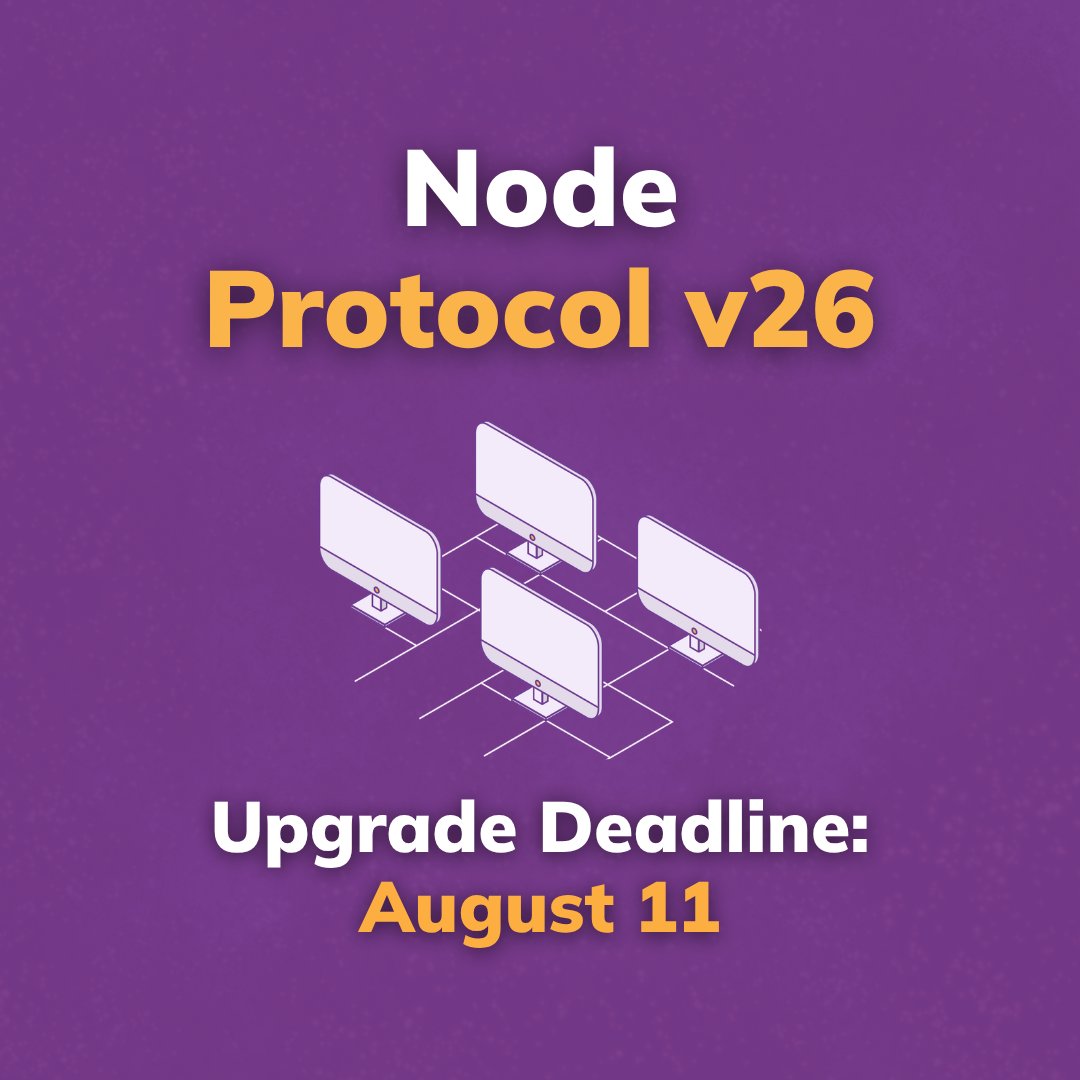
Reminder: the Pi Mainnet is upgrading to Protocol v26. All Mainnet node operators must complete the upgrade by August 11 to remain connected to the network.
Protocol v26 is a major milestone that improves contract safety, state management, interoperability, and cryptographic capabilities ahead of the final planned upgrade, Protocol v27.
Details here https://t.co/LHI1F0JHLm
The Pi Mainnet is upgrading to Protocol 26. Deadline: Aug. 11.
All Mainnet node operators must complete the upgrade before the deadline to remain connected to the network. Details here: https://t.co/ENIm1nu6S1
Protocol 26 is a major milestone ahead of the final planned upgrade, Protocol 27. With 8 successful upgrades completed over the past few months, these final two upgrades will bring the network up to date with the latest protocol features, improvements, and functionality.
Before I explain more, please be reminded that, at that material time/era, Picoin is already a UNIVERSALLY accepted digital currency:
Meaning to say you can practically buy any good from food to hard wares and property and pay with Pi for whatever expenses you may want to.
So, in a nutshell, why bother to swap with Fiat?
-----
To understand how Pioneers exchange Pi coin for fiat currency and who provides the underlying liquidity, it is helpful to look at both the on-chain Pi Ecosystem (including the Pi DEX and Launchpad) and external fiat exchange rails.
1. How Pioneers Exchange Pi Coin for Fiat
Exchanging Pi coin for fiat (e.g., USD, EUR, MYR) typically occurs through three main pathways:
Centralized Exchanges (CEXs):
Unlocked Mainnet Pi transferred from a Pioneer's Pi Wallet to a supported cryptocurrency exchange can be traded on spot markets against stablecoins or fiat (such as PI/USDT or PI/USD).
Once traded, the funds can be withdrawn to a bank account via standard bank transfers or credit cards.
Peer-to-Peer (P2P) Marketplaces & Local Merchants:
Through P2P platforms or verified merchant dApps within the Pi Browser, Pioneers can execute direct transactions where one party transfers Pi on-chain and the other sends local fiat via bank transfer, e-wallet, or mobile payment.
Fiat On/Off-Ramp Gateways:
Integration with payment providers (such as MoonPay, Transak, or regional fiat aggregators) enables direct conversion between Pi/stablecoins and fiat straight from web3 wallet interfaces.
2. Who Supplies the Liquidity for Fiat-to-Pi and Pi-to-Fiat?
Unlike decentralized liquidity pools for project tokens (which pair tokens with Pi), fiat liquidity is provided by a network of market participants and financial intermediaries:
Market Makers & Liquidity Providers (LPs):
Professional trading firms and individual LPs deposit fiat or fiat-equivalent assets (like USDT/USDC) into order books and liquidity pairs on exchanges to earn trading fees and spread margins.
P2P Buyers & Ecosystem Merchants:
Individuals and businesses who want to acquire Pi to pay for goods, services, or dApp interactions act as natural fiat suppliers when buying Pi from sellers.
Payment Processors & Institutional Partners:
Licensed crypto payment processors maintain fiat reserves to settle real-time conversions between cryptocurrency and local bank accounts.
3. Analysis: The Vision Behind the Pi Launchpad Model
The quote regarding the SLICE test launch highlights a distinct architectural vision for the Pi Network economy:
Pi Token Launch Proceeds > Deposited directly into AMM Liquidity Pool (e.g., SLICE / Pi)
Key Principles of the Launchpad Vision
> Product-First Utility Over Capital Extraction:
In traditional crypto launches, project founders often collect and extract raised funds.
In the Pi Launchpad model, proceeds (Pi) are locked directly into a decentralized Automated Market Maker (AMM) pool paired with the app’s native token.
This prevents instant cash-outs and aligns project incentives toward long-term product usage.
> Pi as the Core Settlement Currency:
By pairing ecosystem tokens directly with Pi (e.g., SLICE/Pi), Pi becomes the fundamental reserve and routing asset.
If an ecosystem token needs to be converted to fiat, it naturally routes through Pi first:
Ecosystem Token (e.g., SLICE) ⟹ Pi Coin ⟹ Fiat/ Stablecoin
> Automated & Order Book Liquidity Dual-Model:
Combining an AMM constant-product formula (x . y = k) with an order book DEX ensures continuous market availability for app tokens, ensuring fair access for users and scalable liquidity as dApp activity grows.
Pi GCV as Benchmark exchange/swap:
How does it work base on the benchmark Pi value of 1 Pi can swap/exchange for US$314,159.00.?
Visualizing how the Pi Launchpad, Pi DEX (Decentralized Exchange), and Fiat On/Off-Ramps function under the benchmark value of 1 Pi = 314,159.00 USD (referred to as the Global Consensus Value or GCV) requires understanding two core mechanisms:
1. micro-fractional pricing and
2. fiat reserve pairing.
Below is a detailed breakdown of how token launches, AMM liquidity pools, and fiat conversions operate under this valuation model.
1. Unit Economics:
The Micro-Pi Scale
When 1 Pi = $314,159.00, everyday transactions and token pricing shift to sub-units (micro-Pi or μPi).
1 Pi = 1,000,000 μPi ⟹ 1 μPi = $0.314159 USD
Real-World Purchasing Scale : Refer attached Fig 1
2. Pi Launchpad & DEX AMM Liquidity Pools
In the official Pi Launchpad design, proceeds raised from a token launch (like the SLICE test launch) are deposited directly into an Automated Market Maker (AMM) liquidity pool paired with Pi.
AMM Pool Dynamics (x . y = k)
The constant-product formula governs swaps in the liquidity pool: x . y = k
Where:
x = Reserve of project tokens (e.g., SLICE)
y = Reserve of Pi coin
k = Constant invariant product
Hypothetical Pool Scenario at $1 Pi = $314,159.00
Suppose a dApp project launches 1,000,000 SLICE tokens on the Launchpad, targeting an initial price of $0.314159 per SLICE token.
1. Initial Reserve Injection:
> SLICE Reserve x = 1,000,000 SLICE
> Pi Reserve = 1.00 Pi ($314,159.00 total pool value)
> Constant Invariant (k) = 1,000,000 x 1 = 1,000,000
2. Executing a Swap (Buying SLICE with Pi):
> A Pioneer wants to buy SLICE using 0.0001 Pi 31.41 USD value).
> New Pi Reserve (y') = 1.00 + 0.0001 = 1.0001 Pi.
> New SLICE Reserve (x') = k/y' = 1,000,000/1.0001 ≈ 999,900.01 SLICE
> The Pioneer receives ≈ 99.99 SLICE for their 0.0001 Pi.
Because the proceeds remain locked in the pool, the dApp maintains deep ecosystem liquidity backed directly by Pi without needing external speculative backing.
3. How Fiat-to-Pi and Pi-to-Fiat Liquidity Operates
While the SLICE/Pi pool pairs project tokens with Pi on-chain, converting Pi to Fiat (USD, MYR, EUR) relies on physical cash reserves or stablecoins (USDT/USDC) in external order books and off-ramp gateways > refer Fig 2 attached.
Who Provides the Fiat Liquidity at 1 Pi = $314,159$?
Institutional Market Makers & Liquidity Pools:
For a Pioneer to cash out 1 Pi for $314,159, an institutional market maker or exchange liquidity vault must hold $314,159 USD in actual fiat or USDT reserves.
P2P Merchants & Commerce Settlement:
In local peer-to-peer (P2P) trading or merchant networks, businesses offering high-value assets (such as real estate, vehicles, or goods) accept micro-fractions of Pi directly in exchange for products, reducing the immediate need to off-ramp into bank fiat.
Automated Fiat-Stablecoin Routing:
When selling 0.001 Pi, the transaction routes through an order book:
0.001 > 314.159 USDT > $314.16 Local Bank Deposit
4. Key Strategic Take aways Utility Precedes Extraction:
The Launchpad model ensures that value flows into product functionality (payments, governance, access) rather than immediate cash liquidation.
Granular Micro-Transactions:
At a benchmark rate of $314,159, daily commerce operates almost exclusively in fractions (0.00001 Pi to 0.001 Pi), preserving the high purchasing power of whole Pi coins.
Balanced Order-Book + AMM Hybrid:
Combining decentralized order books with automated market makers allows fractional buyers and high-volume institutional liquidity to coexist without draining reserve pools.
#Picommunity #PiGCV #Picoin #PiNework @PiCoreTeam
President Trump Has Legal Authority to CANCEL THE SENATE RECESS
The President has the Constitutional authority to call an “extraordinary session” of the Senate to vote on the SAVE AMERICA ACT and the CLARITY ACT.
This authority is found in Article II, Section 3 of the Constitution, which provides:
The President “may, on extraordinary Occasions, convene both Houses or either of them . . .”
In 1989, the Office of Legal Counsel of the Department of Justice issued a legal opinion confirming this point.
The Legal Opinion states: “The language and purpose of the Clause [Article. II, Sec. 3] make plain that the President may exercise this authority to convene the Senate during an intra-session break . . . We therefore conclude that the President has the power to CONVENE THE SENATE DURING THE PLANNED AUGUST RECESS.” [emphasis added]
Note: This formal Legal Opinion was issued 37 years ago—not dreamed up yesterday.
President Trump should exercise his authority to convene the Senate until such time as votes are taken on the Save America Act and the Clarity Act.
The President can’t force the Senate to pass these Acts, but he can make them stay in session until votes are taken.
The American people deserve to know where each Senator stands on these important matters BEFORE the November elections.
@ScottPresler@BasedMikeLee@SenRickScott@SenLummis@SenatorTimScott@HawleyMO@SenTuberville@MarshaBlackburn@tedcruz@berniemoreno@WarrenDavidson@JDVance@patrickjwitt@brian_armstrong@bgarlinghouse@standwithcrypto@BlockchainAssn@DigitalChamber@GuntherEagleman@SusieWiles47
I want to thank my Democratic colleagues for their important contributions to this draft, and express my commitment to reaching a deal in the coming days that will allow this legislation to become law.
Consumer protection and pro-innovation policy aren't opposites — this bill proves it.
🇺🇸🚨 MAJOR OBSTACLE REMOVED 🚨🇺🇸
White House crypto advisor Patrick Witt says the biggest hurdle for the CLARITY Act has now been cleared.
The path toward regulatory clarity for XRP and crypto is becoming clearer every day. 🚀
🇺🇸 HUUUUGE NEWS: SENATOR CYNTHIA LUMMIS SAYS: „WE ARE READY!
WE INTRODUCING IN THE NEXT FEW DAYS […] TO GET THIS BILL ACROSS THE FINISH LINE!“ 🏁
CLARITY IS COMING! 🚀
‼️ VERY IMPORTANT ‼️
Your Pi will have two values: 1 Pi = 314159 USD in the Pi Network Main Ecosystem, and 1 Pi = the market price on exchanges.
I explain this in detail based on the programming documentation (Docs) available for Pi Apps.
✅ 1 Pi = 314159 USD refers to Pi earned through your contributions, including Mining, Referrals, Security Circle, Node operation, Pi Lockups, and Ecosystem Exploration in the Pi Browser. According to this interpretation, the mining cryptography algorithm and AI can detect these contributions. GCV applies throughout the Pi Network Main Ecosystem.
✅ Pi on exchanges follows a real-time market price determined by supply and demand. This price applies across all KYB-approved exchanges. Each exchange has its own API (Application Programming Interface) to connect with applications and dApps within the ecosystem.
How does it work?
⏩ The value of 1 Pi = 314159 USD applies within the Pi Network Main Ecosystem for Pi earned through Pioneer contributions.
⏩ For example, if the market price of Pi on the OKX exchange is 1 Pi = 1 USD, the system can identify whether your Pi came from OKX, Bitget, MEXC, or another exchange through the exchange's API. If you purchase a luxury car priced at 314159 USD through a dApp, you would need 314159 Pi purchased from exchanges. According to this interpretation, if you use Pi earned through contributions, you would pay only 1 Pi.
🛑 Why can Pi have two different values?
According to this interpretation, the primary reason Pi is listed on exchanges is to promote wider adoption. New users who acquire Pi through exchanges are expected to register as Pioneers and complete KYC and AML (Anti-Money Laundering) requirements to participate fully in the Pi Network Main Ecosystem. They can then mine Pi and contribute to the ecosystem. Users who do not register can use Pi only at the prevailing market price on exchanges. Under this interpretation, only Pi earned through ecosystem contributions qualifies for the GCV value.
‼️ Is it safe to transfer Pi from exchanges to a Pi Wallet?
According to this interpretation, yes. The system is expected to distinguish between Pi earned through contributions and Pi purchased on exchanges. Each KYB-approved exchange has its own API, allowing the system to identify the source of the Pi. Your Pi Wallet may display separate balances for contribution-earned Pi and exchange-purchased Pi (non-contribution). If you buy Pi that was originally mined by another Pioneer, it would still be treated as exchange-purchased Pi and valued according to the market price.
🟣 What about companies, organizations, and institutions that want to adopt Pi?
According to this interpretation, they will operate their own nodes to earn contribution-based Pi (GCV) while also being able to purchase Pi on exchanges like other users. The Core Team is also expected to support them through programs such as Pi Network Ventures.
🤗 It is also suggested that the Core Team may designate certain major exchanges to facilitate Pi-to-fiat swaps based on the GCV value while maintaining daily swap limits. These exchanges could become part of the Pi Network Main Ecosystem (possibly functioning as a "Pi Bank"). Purchases of goods and services within the ecosystem would not necessarily be subject to daily Pi spending limits, but would depend on the capacity of dApps to serve Pioneer demand.
🤗 Don't worry about whales holding 300 million Pi on exchanges. If the market price is 1 Pi = 1 USD, they hold assets worth 300 million USD, which, according to this interpretation, would be equivalent to only 955 contribution-earned Pi. The more Pi whales accumulate on exchanges, the scarcer Pi may become. 😁😁
💯 According to this interpretation, only Pi earned through your contributions carries the GCV value. Save this post to help other Pi users understand this concept. Understanding GCV requires willingness to learn and humility—not an article longer than your pillow. 😄😄
‼️ AFFIRMATION OF THE DUAL VALUE OF PI ‼️
Are you still doubting the dual value of Pi? Do you still believe that Pi on exchanges and Pi earned through contributions have the same value? Well, this time I will provide an affirmation. 😁🥂
I am presenting data that I quote directly from the Pi Apps/Pi Platform documentation.
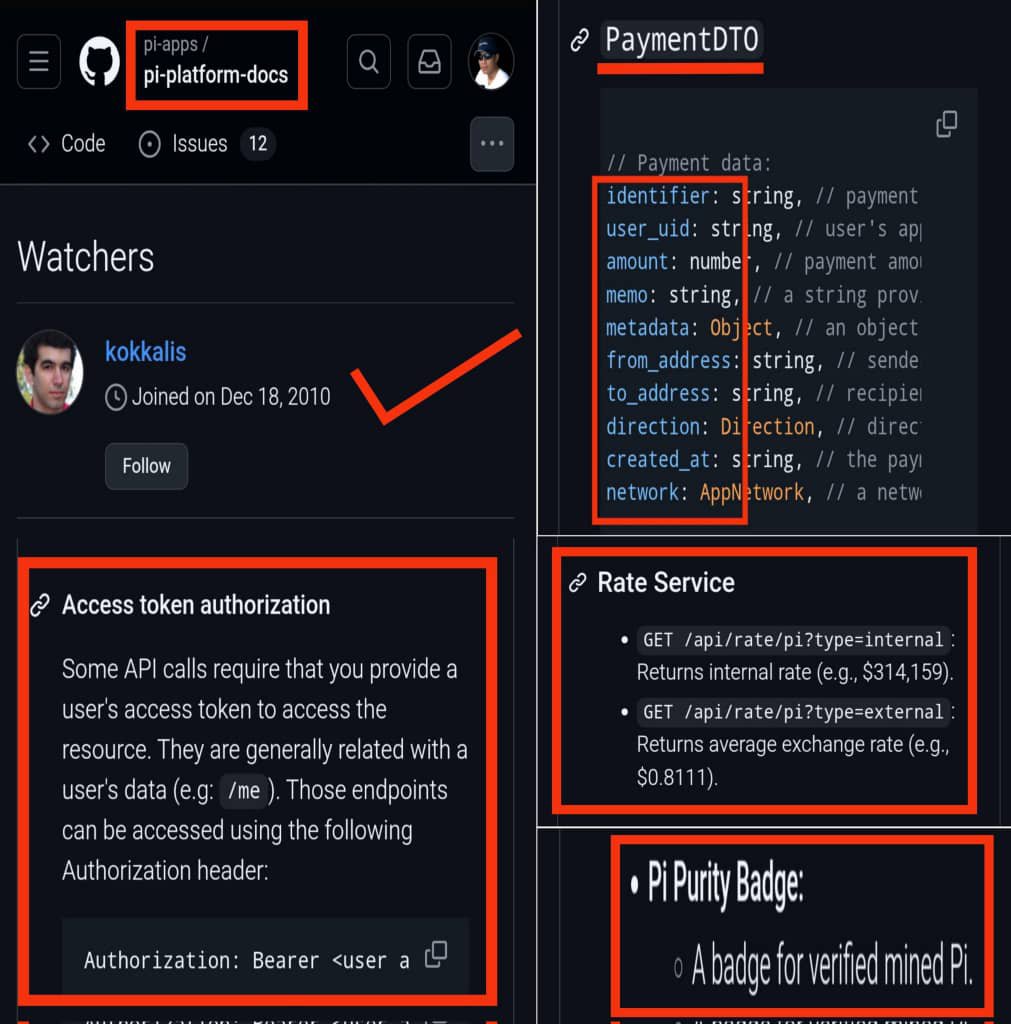
✅ Access Token Authorization
"Some API calls require that you provide a user's access token to access the resource. They are generally related to a user's data. Those endpoints can be accessed using the following Authorization header: Authorization: Bearer <user access token>."
Interpretation: According to this interpretation, the system can identify where your Pi comes from.
✅ Pi Network uses sophisticated Payment DTO (Data Transfer Object) technology, which transfers transaction data in great detail (see the image) to help prevent fraud against users.
✅ Each KYB-approved exchange has its own API (Application Programming Interface) that connects to the Pi Network blockchain, allowing the system to identify which exchange your Pi comes from. This is why the Core Team (CT) conducts KYB for exchanges. Only approved exchanges receive APIs from CT that enable them to connect to the Pi Network blockchain. These exchanges operate according to the rules established by the Core Team.
✅ Pi Purity Badge
A badge for verified mined Pi. Yes, you read that correctly. According to this interpretation, all Pi that you mine and earn through other contributions may eventually receive a special badge from the Core Team during the Global Open Network phase as recognition for the loyalty, dedication, and patience of true Pioneers. This would distinguish contribution-based Pi from Pi obtained through other sources, making contribution-earned Pi more exclusive.
✅ Pi on exchanges is legal and official for transactions, but according to this interpretation, it does not meet all the attributes of a currency (money). Please analyze this perspective for yourself based on the various explanations provided.
‼️ I also want to emphasize that I have never discouraged Pioneers from buying Pi on exchanges after the Core Team announced the Domain Auction on Pi Day (March 14) and officially acknowledged exchange-traded Pi. As I have consistently said before: Buy Pi on exchanges only if you can afford it. Buy pi if you have money. Buy bulk. Buy plenty.
Pioneers, act wisely and always do your best.
Happy Pi2Day 2026 Pioneers!
Pi Network is celebrating Pi2Day with new releases advancing Pi’s practical utility both within and beyond the Pi ecosystem, and across compute, AI, and identity.
By first providing useful services and resources for external third-parties—such as Pi’s blockchain infrastructure, identity verification, and large globally engaged network—Pi offers multiple unique incentives to not only use Pi’s services but also join and contribute to Pi’s existing ecosystem.
Head to the Pi mining app and read the Pi2Day announcement to learn more about the new SoloHost, Pi Sign-in, and PiVerify releases today!
Also, take part in the Pi2Day Ecosystem Quest to learn more about the new releases, test features, and earn a special in-app badge to commemorate Pi2Day 2026—and show it off!