@nntaleb Your classic "The most intolerant wins" article points out that intolerance ratchets into societies through corporations optimizing for most homogenous, lowest cost product lines. Your guidelines on the rise of tolerance would be nice. We are a homeostasic system, right?
@lessin Interesting ideas...
To get to the cutting edge of "meaning cultivation" @DrJohnVervaeke "Awakening from the Meaning Crysis" (https://t.co/YI7BANuEsG) and @davidgraeber "The Dawn of Everything " are a good start.
You said it - it's hard to come up with novel perspectives now.
@paulg I find that classical ethical frameworks often cause ethics paralysis for some of the brightest STEM minds out there.
If you ever have time I would like to hear your thoughts on "The Moral Blueprint Is Not Necessary for STEM Wisdom" (https://t.co/jhQ3ns7etl).
Thank you.
@catalinmpit You probably can't. Instead, I recommend you ask for a #steamdeck. You can switch into Linux desktop and can easily setup robot teleops or get access to the file system and access all the telemetry you can think of.
Steam is the future anyway.
@elonmusk@SemiAnalysis_ @BrentM_SpaceX @elonmusk Why not put data centers at L5 for smooth solar power? 2.5x the energy on Earth's surface (no night cycle, no atmospheric loss) and constant power, so minimal batteries. And nobody to bother. How much would that cost?
@paraschopra If you have 10 minutes, you will enjoy Jorge Luis Borges' "Funes the Memorious"
https://t.co/CKWFHhS6Do
I also highly recommend other works by Borges.
@emollick Hallucinating is at the core of humans answering questions. But we control it by:
1) Answering "I don't know."
2) Answering with more questions asking for clarifications.
3) Not answering.
4) ?
How do we "know" to do the above?
OpenAi has shown that 1) can help. Keep pushing.
@__paleologo@4gravitons I believe there is huge demand - but only for top talent. From personal experience providing references, hedge funds recruiters circle like sharks the top ML conferences. They are the most interested in the best physics or engineering graduating students. But only the best.
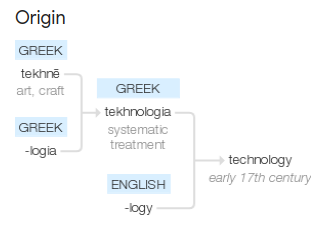
@shivon "Technology" at its root means "art".
"Engineering" originated from "ingenious".
So engineers are those who "create art in ingenious ways".
At times the art created is so ingenious that it becomes magical.
@RuiCarrilho5@TivadarDanka Lem also wrote Summa Technologiae - which is his magnus opus. He didn't want it translated to English. It was translated in 2013. Also Out of Control by Kelly if you are interested in systems thinking.
@TonyTheLion2500 A beautiful and witty description of how spin was discovered as related by Samuel Goudsmit (one of the 2 authors who coined the term 'spin') is here: https://t.co/V4Zfxb5ZyP
He didn't even know it was the wrong term. See paragraph: "And that was it: the spin;" for some fun.
This is one of the most thought-provoking critiques I've heard on the current thinking around climate change and CO2.
This is Olivier Hamant, Research Director at France's National Research Institute for Agriculture, Food and Environment (INRAE).
Hamant explains that it's actually a counterproductive trap to laser focus on CO2 reduction, and even on climate, as we create "solutions" that actually "worsen the penury of resources, worsen global pollution and worsen the collapse of biodiversity."
It's a bit like the story we often hear about the danger of AI, where an AI tasked with "eliminating cancer" decides the most efficient solution is to eliminate all humans. We've given our economic and political systems the narrow goal of "reducing atmospheric CO2," and these systems actually end up destroying the living world that actually regulates our climate.
Hamant's alternative is elegantly simple: start with life, with biodiversity, which he says is "the most systemic lever" with positive impacts on climate, pollution and resource shortage.
I've often been struck with the collapse of biodiversity and the lack of public attention on the topic. For instance a recent survey in the UK found that, in just the last 3 years alone, the insect population in the UK had collapsed by an astounding 63% (https://t.co/lQ7c7bh7BK).
Yet if you look at it, the UK is actually doing an extremely good job in terms of CO2 emissions, they've more than halved them since the 1970s (https://t.co/bpt1YUq3nD). So what gives? What's the point of reducing CO2 emissions if they're simultaneously literally destroying the very foundation of life in the country - the insects, plants, and ecosystems that sustain everything? It sounds like madness.
Hamant is right that at the end of the day life is the litmus test, it all starts and ends with it. Maybe we need to start asking ourselves if we're not treating a symptom and killing the patient.
@IterIntellectus Also the doubling rate of knowledge base every 15-17 years was confirmed in a Nature article in 2021. Hamming was right on the money.
https://t.co/DapnMdjoRk
@paulg We have increasing technical debt associated with synchronizing cognitive manifolds. "The future is here. It's just not evenly distributed." This chunkiness might cause social structural rearrangements to allow both past and future to coexist. A phase change children experience?
@paulg Have you come across "Summa Technologiae" by Stanislaw Lem? Technology allows us to change the cognitive manifold we operate on. It might be that "intelligence" is no longer perceived as relevant. Similar to how transmuting lead into gold became irrelevant in the nuclear age.