Bank of America wouldn’t put Warren Buffett through to its CEO.
Their stock had been cut in half. He was calling with $5 billion.
Brian Moynihan tells the story plainly. Buffett called and asked to speak to him, but the bank doesn’t transfer everyone who calls to the CEO. Berkshire’s CFO eventually found a banker who could open the right door.
When Buffett reached Moynihan, he said he wanted to invest. Moynihan told him the bank didn’t need the capital.
Buffett said that was exactly why he was calling.
Their first conversation happened on a Monday at eleven. The agreement was signed by eight or nine on Tuesday morning. The money arrived Thursday.
This was August 2011. The US had just lost its AAA credit rating. Bank of America was facing mortgage litigation, questions about its capital and a stock price that had roughly halved that year.
Buffett negotiated preferred shares paying 6%, plus warrants to buy 700 million shares at $7.14. Those terms gave Berkshire income and protection while preserving substantial upside if the bank recovered.
But Moynihan makes another point worth hearing: an ordinary investor who bought the common stock that day could also have benefited enormously from the same recovery.
They didn’t need Buffett’s phone number or his access to the CEO. They needed to believe the bank would survive while the headlines gave them reasons to doubt it.
Buffett had advantages most investors couldn’t obtain. He also committed $5 billion before the recovery made that decision look obvious.
The article below explores how investors make decisions before they know how the story ends.
@xbtlevi id be more comfortable with this if the companies asking for regulation werent also helping decide what their competitors should be allowed to release
A Stanford professor turned $100,000 into $7 million by rebalancing two ordinary stocks every day. He never had to predict a single price.
Skip Netflix tonight. Bookmark this and watch it instead.
@verumxbt The bigger issue is your paycheck is already tied to the same company. At 60%, your job and your portfolio can get hit at the exact same time.
Bank of America wouldn’t put Warren Buffett through to its CEO.
Their stock had been cut in half. He was calling with $5 billion.
Brian Moynihan tells the story plainly. Buffett called and asked to speak to him, but the bank doesn’t transfer everyone who calls to the CEO. Berkshire’s CFO eventually found a banker who could open the right door.
When Buffett reached Moynihan, he said he wanted to invest. Moynihan told him the bank didn’t need the capital.
Buffett said that was exactly why he was calling.
Their first conversation happened on a Monday at eleven. The agreement was signed by eight or nine on Tuesday morning. The money arrived Thursday.
This was August 2011. The US had just lost its AAA credit rating. Bank of America was facing mortgage litigation, questions about its capital and a stock price that had roughly halved that year.
Buffett negotiated preferred shares paying 6%, plus warrants to buy 700 million shares at $7.14. Those terms gave Berkshire income and protection while preserving substantial upside if the bank recovered.
But Moynihan makes another point worth hearing: an ordinary investor who bought the common stock that day could also have benefited enormously from the same recovery.
They didn’t need Buffett’s phone number or his access to the CEO. They needed to believe the bank would survive while the headlines gave them reasons to doubt it.
Buffett had advantages most investors couldn’t obtain. He also committed $5 billion before the recovery made that decision look obvious.
The article below explores how investors make decisions before they know how the story ends.
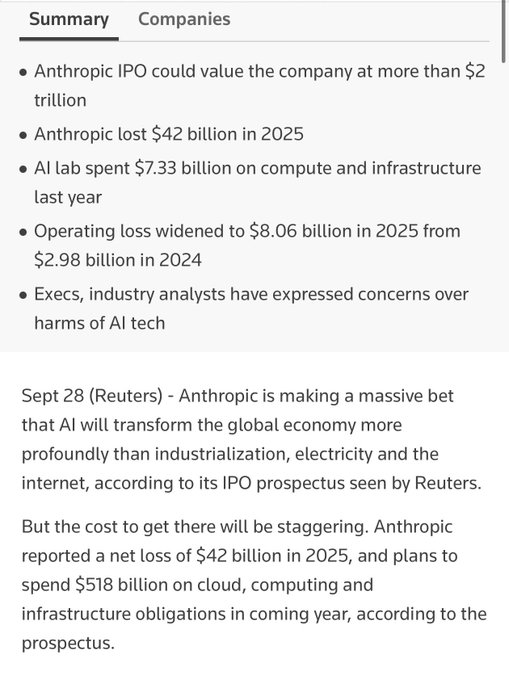
Reuters just upload this article
Anthropic lost $42 billion last year.
Now it wants Wall Street to value the company at more than $2 trillion.
And somehow, those aren't even the craziest numbers in its IPO prospectus