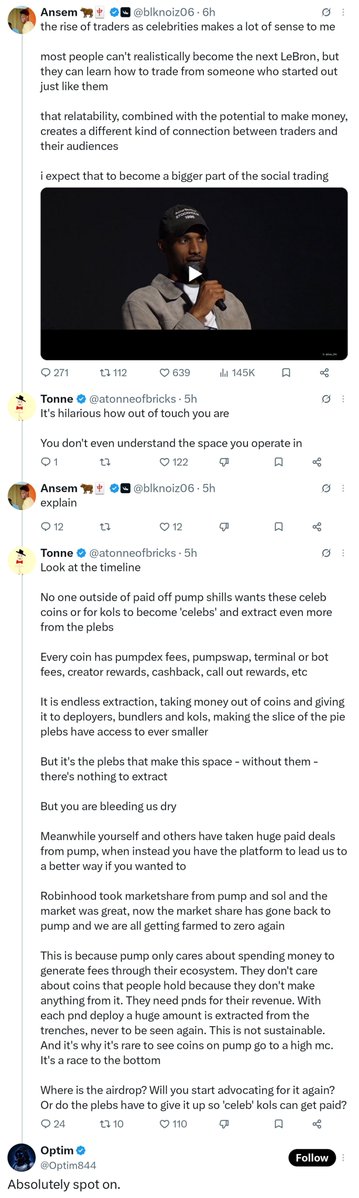
CT loves dunking on Pumpfun but rarely offers a real alternative. The problem with pumpfun are structural that incentivize “bad actors.”
Here’s the point-by-point breakdown of what Pumpfun breaks and how @Sentysislabs fixes it:
1. Instant bot bundling & sniping at launch
Pumpfun: Tokens go live instantly. Bots and insiders use Jito bundles to buy from multiple wallets in the same block, locking supply before retail can even react.
Sentysis: The token does not exist until the narrative hits the Conviction Threshold. There is no launch-time atomic multi-wallet buy possible. Coordination can only happen after the token is already trading.
2. Tokens launch with zero real conviction
Pumpfun: Anyone can mint a coin in seconds. No skin in the game required. Result: ~99.99% of tokens stop trading after day one and graduation rates are tiny.
Sentysis: A narrative only becomes a token if it gets $10 Conviction Volume from 10 unique wallets within a strict 48-hour window. Real capital has to back the belief first.
3. Retail is structurally late and gets dumped on
Pumpfun: Early bots and insiders control supply from block zero. Retail buys the hype, insiders sell the reality.
Sentysis: People who stake USDC on the narrative before it graduates get airdropped tokens (30% of supply on Conviction Proven launches). Early believers get the structural advantage instead of bots.
4. No reason to hold / pure casino meta
Pumpfun: Most coins have nothing underneath them. People treat them as short-term gambling chips.
Sentysis: Tokens only exist because a group of people put real money behind the narrative. The market can see the difference via labels — Conviction Proven (community-backed within 48h) vs Curator Launch.
5. High risk with no safety net
Pumpfun: Most people lose. Even the co-founder has admitted the odds are terrible for retail.
Sentysis: If a narrative fails to hit the threshold in 48 hours, contributors get their USDC back (minus a small platform fee). You either get the airdrop or your money back.
6. Easy to fake signal and game with noise
Pumpfun: Volume and calls can be manufactured. Influencer shills with hidden bags are common.
Sentysis: The Conviction Index is built from real on-chain capital commitments. It’s much harder to fake genuine belief.
7. Only memes with zero real-world value
Pumpfun: Pure meme casino. No broader utility or lasting data.
Sentysis: Supports real categories like sports, politics, economy, entertainment, and more. Every stake creates measurable, capital-backed conviction data that reflects what people actually believe. Activity translates into real-world intelligence, not just noise full of retards.
8. Fake airdrop hope + insider dump risk
Pumpfun: Teased airdrops then dump on holders.
Sentysis: Airdrop mechanics are built directly into the platform. Stake on a narrative → if it graduates, you get the token airdrop pro-rata. No points, no tasks, no empty promises. no ridiculous task.
$SENT itself is fair launched by community via Bankr. No VC allocation, no founder dump, no cabal dump. Verify it yourself on Bubblemaps.
The core difference:
Pumpfun lets the token exist first and spam the network giving no room for conviction.
Sentysis incentivize conviction first before the token is born.
That’s the structural fix most people criticizing Pumpfun never actually propose.
So maybe it is time for all of you to support a good project that incentives conviction instead of hoping pumpfun to change.
TLDR: Frontier Tech is the new Crypto
- a16z Crypto is renaming to a16z Frontier.
- Fund expands beyond crypto to broader frontier startups.
- These companies build new tech and create long-term markets.
- Crypto investing and regulation advocacy will continue.
- Blockchains now power Wall Street and fintech products too
- New demand centres on native AI uses that create new activities.
- New devices, full-stack startups, and AI agents are key to pump money for exit liquidity.
- Machine networks and programmable money rails will matter.
- Founders are invited to reach out with next ideas for exit liquidity.
This is exactly why I built Sentysis.
Every mechanism described here like deployer extraction, bundler fees, KOL cashbacks, endless fee layers all exists because there is no conviction gate.
Anyone can deploy anything and farm the plebs on the way out.
Sentysis flips this. A narrative token cannot exist without real USDC conviction from the community first. No token before conviction.
The curator is staked to their thesis. The community decides what graduates.
The extraction stops when the gate exists.
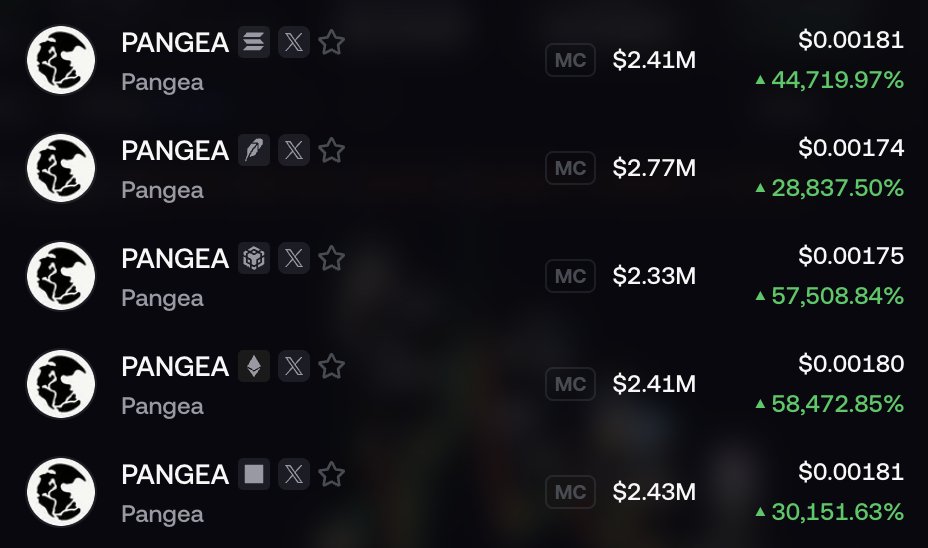
@LaunchOnPangea just launched tokens on 5 chains simultaneously for $8. Here's how they built it.
The problem they're solving:
Launching a token on multiple chains has always been painful. You deploy on one chain, then manually bridge liquidity to others. Prices diverge. Wrapped tokens appear. LPs pull liquidity. The experience is fragmented and exploitable.
Pangea attempts to remove all of that in a single transaction.
The token contract
Every Pangea token is built on the Layerzero OFT (Omnichain Fungible Token) standard. Not a wrapped token. Not a synthetic. The same token, natively on every chain.
Each chain gets its own contract address but every single one ends in `6ea`. A fingerprint you can verify on-chain yourself.
No mint function. No minter. Supply is fixed at launch and cannot change. The factory sets the cross-chain routing between all chains, then passes ownership to a `LaunchOwner` contract where `sealed_()` returns true permanently. Nobody can ever add new chains, change the routing, or expand supply after launch.
The liquidity
1 billion tokens per chain. 5 billion total. All seeded into live trading pools simultaneously:
- Uniswap v4 concentrated liquidity on Ethereum, Base, BSC and Robinhood Chain
- Meteora DAMM v2 on Solana
All five chains open at the same USD price. LP tokens are burned at deployment, no contract function exists to withdraw liquidity after the fact.
Price alignment across chains relies on open arbitrage only. Therefore No oracle and no on-chain sync mechanism needed.
The bridge
Tokens burn on the source chain and mint fresh on the destination chains. No wrapped tokens, no IOUs. Speed is 4–16 seconds typically, ~30 seconds on Ethereum.
2 out of 5 independent verifiers must attest before any cross-chain message settles — Pangea, LayerZero Labs, Nethermind, Horizen, and Canary. No single party can approve a transfer alone.
For faster transfers, a relayer network fronts tokens immediately and gets reimbursed when LayerZero settles in the background. Relayers get automatically benched after 3 failed fills within 60 minutes.
The routing configuration between all 5 chains is locked at launch. Not even Pangea can change which chains a token connects to after deployment.
Security considerations
Pangea’s model prioritizes immutability after launch. Key claims that hold up under review of their documentation and on-chain patterns:
- Ownership and peers are sealed (`sealed_()` = true). The factory acts as delegate only during deployment and has no further ability to call the LayerZero endpoint or modify configuration.
- Verifiers, libraries, and executors are pinned explicitly rather than relying on LayerZero defaults. 2-of-5 (or 2-of-3 on Robinhood Chain routes) multi-DVN attestation is used. This is stronger than the single-DVN configurations that have been implicated in past LayerZero-related incidents (e.g., the KelpDAO rsETH event, where a sole verifier was targeted via RPC infrastructure).
- Supply is fixed with no mint function. Liquidity has no withdraw path.
- Everything above is readable on-chain (peers, sealed status, getSendLibrary, getConfig, etc.).
Residual risks that remain:
- Price parity depends entirely on profitable arbitrage. Temporary divergences are possible if arb is unprofitable (gas, size, inventory, or volatility).
- Fast-lane relayers carry reorg and inventory risk; failed fills are benched but the standard path remains available.
- Verifier liveness: the system prefers continued operation as long as any 2 attest, but prolonged downtime of multiple DVNs can stall bridging.
- Launch path is centralized (website-only with a platform-signed price snapshot; no public API for creation). Pangea also operates one of the verifiers and a delivery service.
- Solana-specific friction (message-size caps, one-time route setup/rent, rounding to 6 decimals).
- Community notes on the solana:JAFqCQSpy5YinrsmixWSMaD7jTn4MytJRkyWvYPnY6ea token itself have flagged concentrated holder distributions and lack of team dox.
Overall the immutability and multi-verifier design are the strongest parts of the model. The main open questions are long-term verifier reliability, and whether pure arbitrage is sufficient for tight price alignment under real trading conditions.
Why we are studying this?
Multichain token liquidity is a real problem worth solving. The approach here — LayerZero OFT combined with permanently locked single-sided liquidity and immutable routing is technically interesting, especially the sealed multi-DVN configuration.
We are studying the demand for this at Sentysis as we plan our multichain roadmap. Whether this model fits narrative tokens specifically is something we are still working through.
Most launchpads spam the market and network with meaningless tokens. We have successfully built the filter.
Not every narrative makes it. Those that don’t reach conviction, voters get their money back.
A lot more in the pipeline. Stay close. This is just the beginning
One month on mainnet. Here is where we stand:
- 104 users onboarded
- 52 narratives published
- 9 tokens graduated
- 18 curators earning
- $54.60 in curator rewards paid out on-chain
- $20.79 returned to voters whose narratives did not reach conviction
This is just the beginning. A lot of product is coming down the pipeline and we are not done building. The best version of Sentysis is coming...