Hyperliquid = HyperCore + HyperEVM.
One piece of user feedback since HyperEVM’s alpha launch was to more intuitively communicate how the HyperEVM fits into the larger context of Hyperliquid. To this effect, the native pieces of the Hyperliquid execution state have been organized under one umbrella term: HyperCore.
HyperCore consists of performant native components: order book perp and spot DEX, staking, oracles, multi-sig, etc. HyperEVM is a general purpose world-computer, allowing builders to deploy code that interacts with both HyperEVM and HyperCore. Together, they form one global, composable state on Hyperliquid, secured by the state-of-the-art HyperBFT consensus algorithm. Importantly, any interaction across the Core/EVM boundary is part of execution itself. There is one unified state, with no need for bridging, proofs, or trusted signers.
HyperEVM offers builders a familiar interface to plug into the most powerful permissionless financial system in crypto. Let's walk through some concrete examples.
A project XYZ deploys an ERC20 contract on the HyperEVM using standard EVM tooling. They deploy a corresponding spot asset XYZ permissionlessly in the HyperCore ticker auction. Once the XYZ HyperCore token and HyperEVM contract are linked, users can seamlessly transfer their XYZ balance to HyperCore for order book trading. Two key improvements compared to CEX listings:
1) The entire process is permissionless. No behind-the-scenes negotiations for preferential treatment. Hyperliquid is a neutral platform for finance.
2) There is no bridging risk between HyperCore and HyperEVM. On the other hand, CEXs need to manage deposits and withdrawals through wallets that could be hacked. HyperCore and HyperEVM are one unified state.
Trading and building on the same chain is a 10x product improvement over CEXs.
Let's go further. A lending protocol sets up a pool contract that accepts XYZ as collateral and lends out another token ABC to the borrower. To determine the liquidation threshold, the lending smart contract can read XYZ/ABC prices directly from the HyperCore order books using a "read precompile." For a Solidity developer, this is as simple as calling a built-in function.
Suppose the borrower's position requires liquidation. The lending smart contract can send orders directly swapping XYZ and ABC on the HyperCore order books using a "write precompile." Again, this is a simple built-in function in Solidity. In a few lines of code, the lending protocol has implemented protocolized liquidations similar to how perps function on HyperCore. A theme of the HyperEVM is to abstract away the deep liquidity on HyperCore as a building block for arbitrary user applications.
As these interactions become available on mainnet HyperEVM, I look forward to seeing the innovative ways that builders leverage these primitives to reinvent finance. These examples only scratch the surface of what is possible.
Hyperliquid.
humanity has evolved via an incredible desire to forever push forward. Yet, this brings some downsides for us in modern times.
We hate being wrong. We really really hate it. The sunk cost fallacy is one of the most pertinent staples of our conscience, we are to keep innovating and advancing and never thinking "fuck.. should I be doing this".
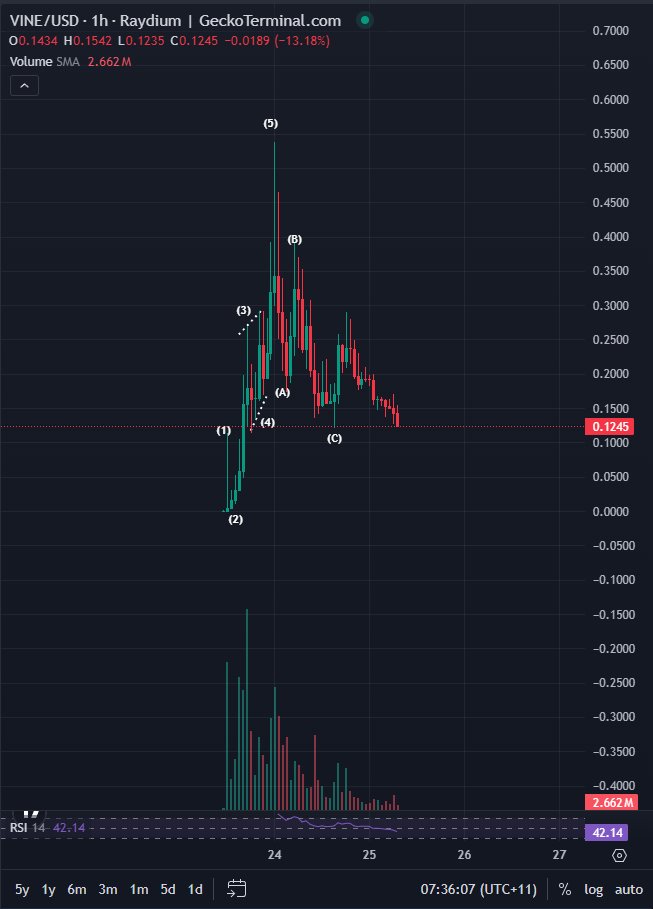
this is exactly why most traders blow up
if you want to be a succesful trader you need to rip this shit out of your heart and soul.
I can GUARANTEE you the number one reason most traders blow up is because they REFUSE to close a trade at a LOSS. How could they, a gigagenius who was gifted in school, ever be... wrong? The trade HAS to go green before they close. They cannot admit they were wrong. If they just hold it till it goes green they can close WITHOUT losing any money. Well, NEWSFLASH. You already lost that money. it's GONE. There is no difference between unrealised and realised loss except clicking a button. The mental pull of "not closing for a loss" will put you in a mental spiral so dire you will end up losing far more money than you even initially had in the trade trying to placate your ego.
You're going to make losing trades. Knowing when to cut them is KEY. Losers average Losers. Repeat this in the mirror 50 times a day. Tattoo it on your arm. Have this quote become part of you. Trading isn't about winning, it's about making sure you don't die when you LOSE.
let's take "ATH Portfolio" as another example. people will go insane and become immensely depressed because they constantly think about their portfolio ATH. this is STUPID. Your portfolio ATH truly does not matter. Why should it? It's a random number from a random point in time. Does knowing your portfolio ATH impact any of your current trades? will charts trade differently because of it? No. It's something that only exists in you, a artifact of our genetic programming that is unfortunately the reason for most people to become tilt traders and get liquidated/lose everything.
Erase everything in markets that doesn't matter. All that matters is how much $ you have and how you have positioned that $. Trading is 95% psychology, and the more you can gain control of your own and not let BULLSHIT distract you, the better a trader you will become.
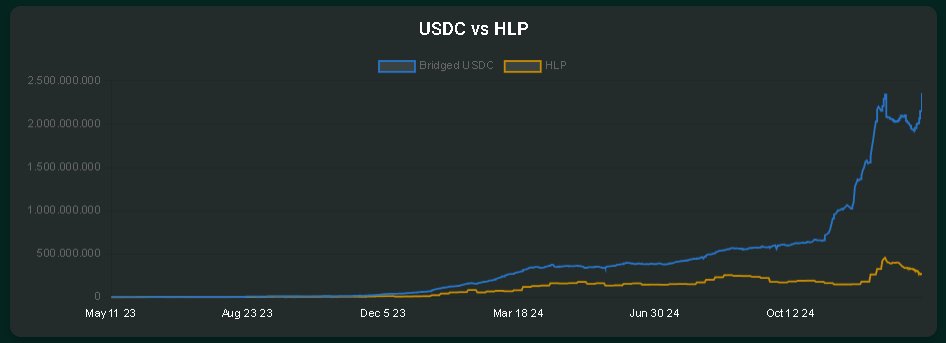
> Bridged USDC has returned to ATH
> Record fees
> Record volume
> Assistance found accelerating in purchases
> EVM soon
> Binance + Bybit flipening
> $HYPE colateral/swap soon
And you're still looking for arguments or talking about annualized fees theory?
Hyperliquid.
Yesterday was a glimpse of HL growth potential
The annualized figure calculated yesterday will not be the same next week (it will be higher)
Life is good, Hyperliquid.
u unironically need people making P/E charts for coins like HYPE because it actually has fundamental data to draw financial conclusions from
the ability to speculate on an asset is always derived from the what if
what if the ATH revenue for the exchange became normalized?
this type of data presentation also appeals to a strict subset of buyers, buyers that are interested in having a thesis to present to their superiors, LP's, or cohorts
there is a segment of this market that not only wants to make money but cares very deeply about looking smart while doing so
this type of narrative can create a different type of flywheel from a purely memetic one, but it can have the same type of effect
be willing to dream a bit bigger
hyperliquid