“The bottleneck in this category has moved.”
@HiltnerJim, co-founder and head of BD at @SuperstateInc, says liquidity is no longer the main challenge for onchain stocks.
The next milestone is proving they can help companies raise liquidity.
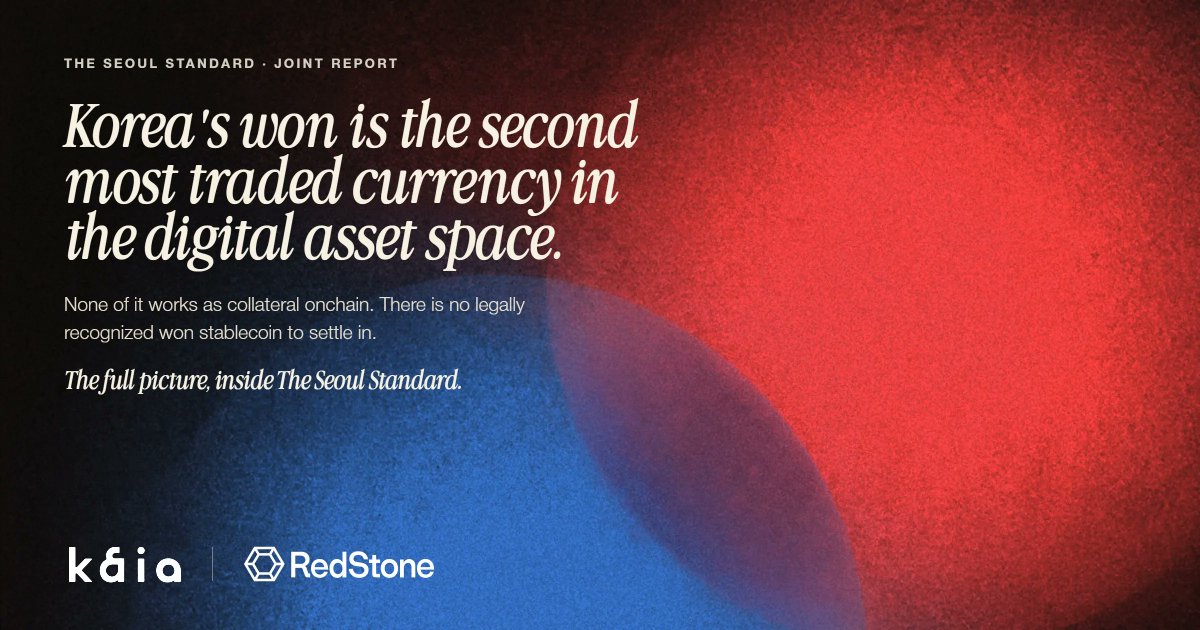
The Korean won is the second most traded currency in the digital asset space, behind only the dollar and its stablecoins. $KRW pairs are roughly 30% of global spot volume.
None of that liquidity can work as collateral onchain, because there is no legally recognized won stablecoin to settle in.
The liquidity is there, but regulation still hasn't caught up.
The tokenized securities framework passed in January 2026 and takes effect in February 2027. The Digital Asset Basic Act, the law that would license a won stablecoin, is still in committee, held up on issuer eligibility.
The cost? Roughly KRW 14.92 trillion, about $10.4 billion, in net stablecoin outflows over eighteen consecutive months.
Regulatory clarity turns a won stablecoin from a payment instrument into collateral. Collateral feeds lending markets and tokenized asset settlement. That circuit mobilizes the stock of retail and corporate won deposits sitting inert today. The money that already left is a separate story.
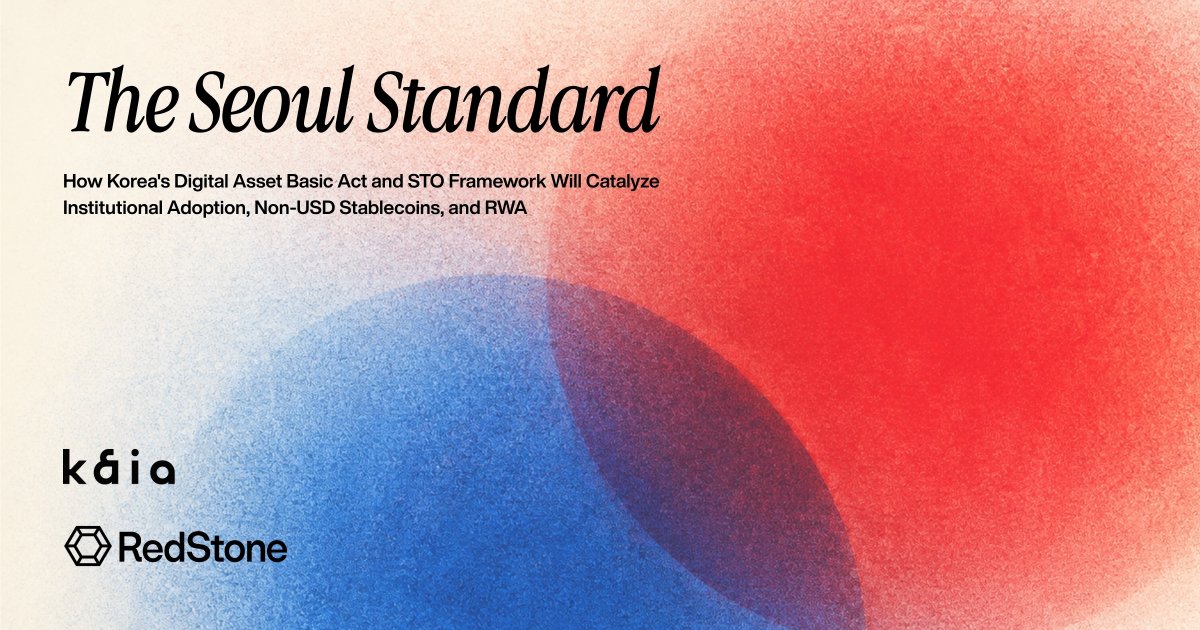
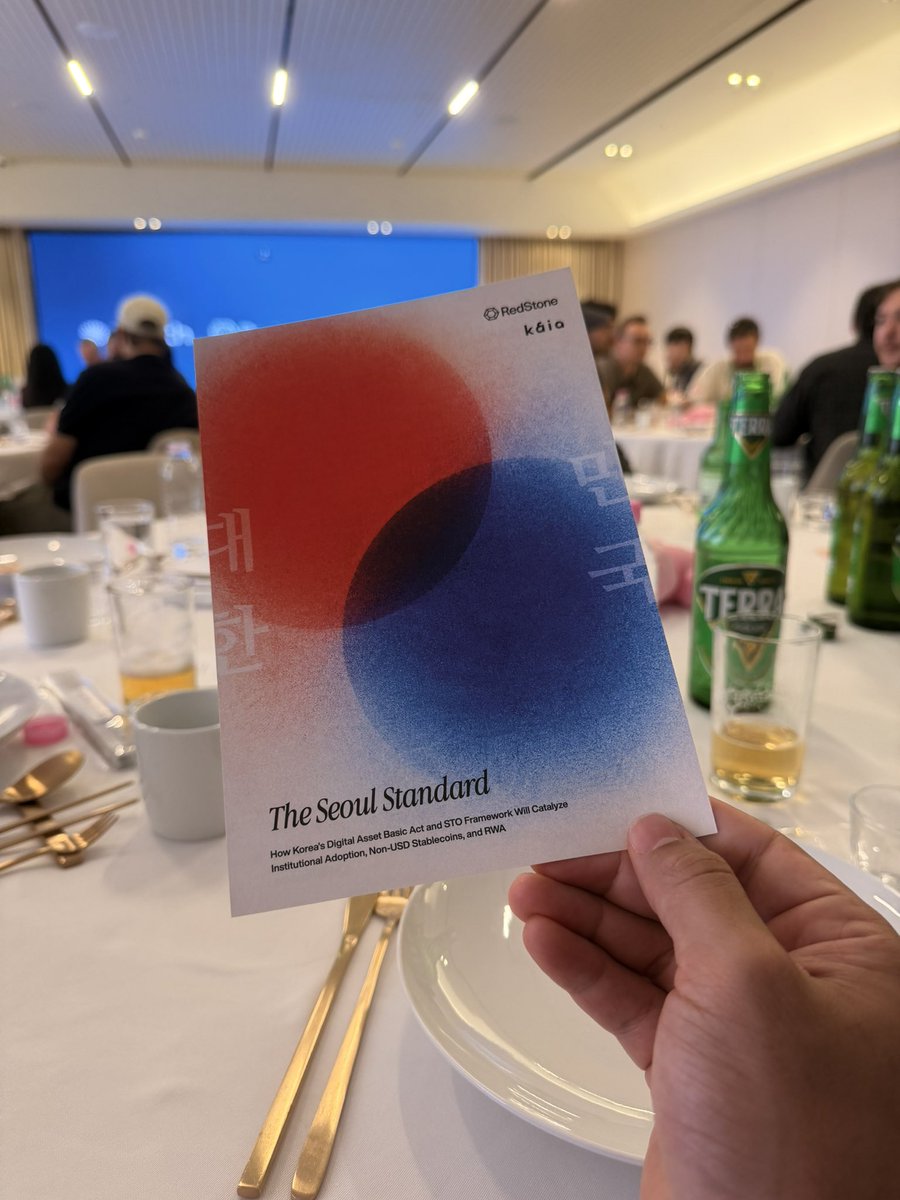
That mechanism is the spine of the joint RedStone x @KaiaChain report, out today: The Seoul Standard.
It covers Korea's opening against Hong Kong, Japan and Singapore, what the new laws require of institutions, and three scenarios with dated triggers plus a sourced risk register.
Full report below
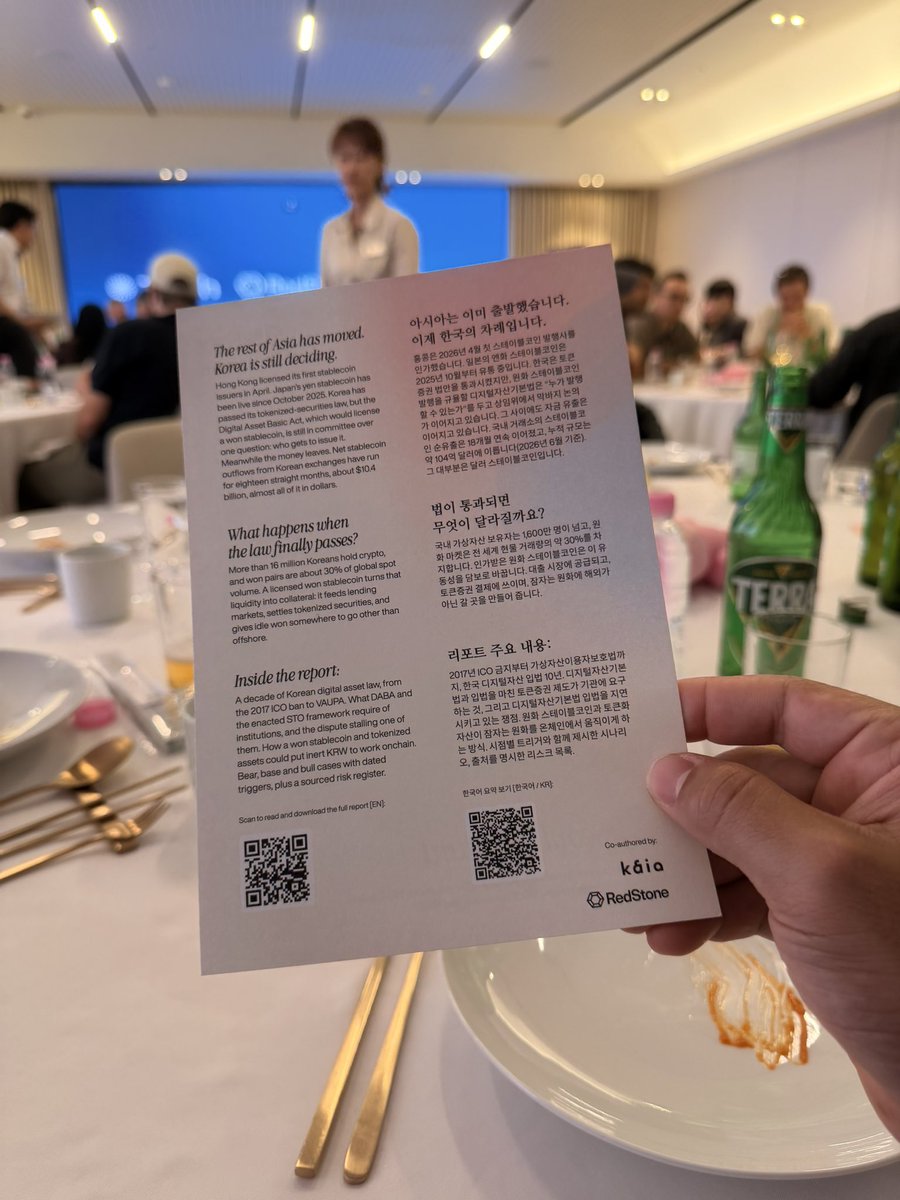
The rest of Asia has moved. Korea is still deciding.
Hong Kong licensed its first stablecoin issuers in April. Japan's yen stablecoin has been live since October 2025. Singapore is writing its framework into law. Korea passed its tokenized-securities law in January and reopened its exchanges to corporations, but the Digital Asset Basic Act, the statute that would license a won stablecoin, remains in committee over a single question: who gets to issue it.
While that question sits unanswered, net stablecoin outflows from Korean exchanges have run for eighteen consecutive months, about $10.4 billion in total, almost all of it in dollars. The demand for onchain assets is there. It is being served offshore.
Today we are publishing The Seoul Standard, a joint research report with @redstone_defi written for the allocators, funds and institutions weighing Korea. It covers:
- A decade of Korean digital asset legislation, from the 2017 ICO ban to VAUPA, and why each crisis produced the next statute
- What DABA and the enacted STO framework require of institutions, and the bank-versus-fintech dispute stalling one of them
- How a won stablecoin, tokenized deposits and tokenized securities could put inert KRW balances to work onchain
- Bear, base and bull scenarios with dated triggers, plus a sourced risk register
Read and download the full report (KR/EN): https://t.co/sP7lEzjHbF
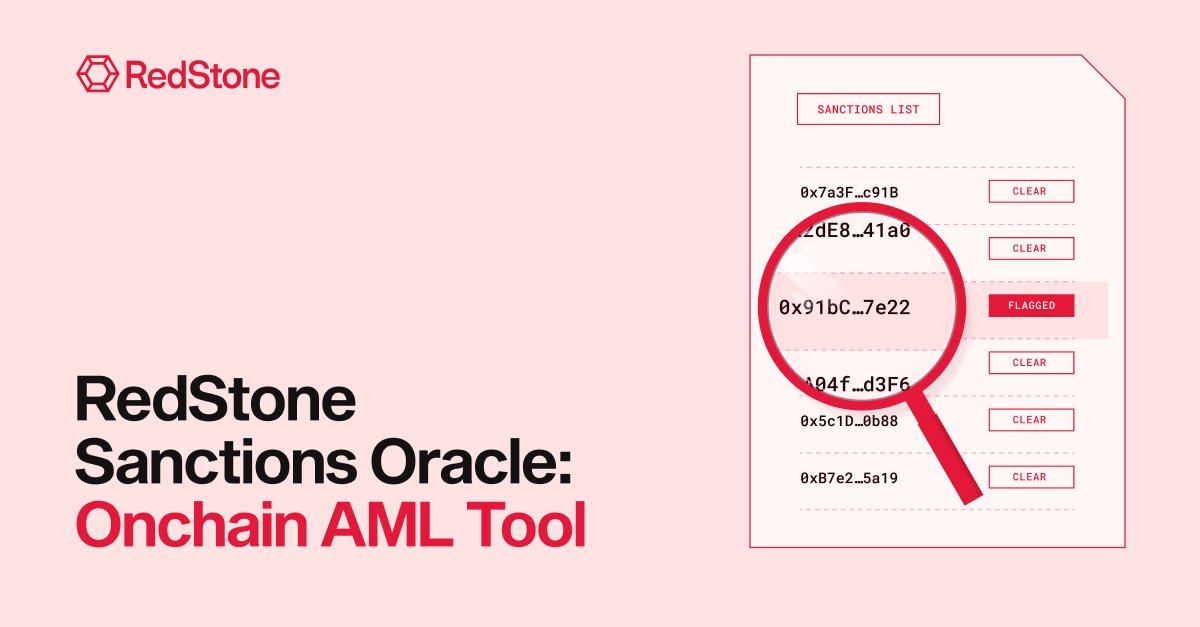
Regulators and institutions want digital assets with built-in sanctions screening.
We’ve launched RedStone Sanctions Oracle, which checks wallets against 463 sources covering OFAC, UN, EU, and other lists, with weekly timestamped updates.
Integrate with a single line of code.
Pre-IPO perps might be the hardest thing an oracle has to price right now.
There's no exchange print, books get thin, and a single corporate action can break a naive feed.
Marcin walks through how the Anthropic and OpenAI markets on Entropy are built so the oracle can tell a split from a crash.
Worth reading if you trade these or run a venue that wants to list them!
.@redstone_defi x @KaiaChain just published The Seoul Standard, a research report on Korea's institutional opening.
I really enjoyed writing this one. @web3stu did an amazing work and whoever the designer is, he/she needs a raise too!
The Korean won is the second most traded currency in the digital asset space, behind only the dollar and its stablecoins. $KRW pairs are roughly 30% of global spot volume.
None of that liquidity can work as collateral onchain, because there is no legally recognized won stablecoin to settle in.
The liquidity is there, but regulation still hasn't caught up.
The tokenized securities framework passed in January 2026 and takes effect in February 2027. The Digital Asset Basic Act, the law that would license a won stablecoin, is still in committee, held up on issuer eligibility.
The cost? Roughly KRW 14.92 trillion, about $10.4 billion, in net stablecoin outflows over eighteen consecutive months.
Regulatory clarity turns a won stablecoin from a payment instrument into collateral. Collateral feeds lending markets and tokenized asset settlement. That circuit mobilizes the stock of retail and corporate won deposits sitting inert today. The money that already left is a separate story.
That mechanism is the spine of the joint RedStone x @KaiaChain report, out today: The Seoul Standard.
It covers Korea's opening against Hong Kong, Japan and Singapore, what the new laws require of institutions, and three scenarios with dated triggers plus a sourced risk register.
Full report below
If it was easy, it wouldn't be worth doing! thanks @web3stu , @redstone_defi , @KaiaChain
(Now, I don't know how but someone will have to bring one of those to Portugal so I can frame it!)
This one is a special one for me. Being given the opportunity to co-author a report with @antoniojmadeira and the @redstone_defi team is a huge honour, but moreso the thought and effort that went into crafting this report is what I'm proud of.
With the ever-growing volume of crypto research, it's hard to separate the wheat from the chaff, and I firmly believe that the strongest case for producing compelling media is eschewing what everyone else is doing in favour of something more abstract and tactile.
From the brand-agnostic risograph aesthetic that pays homage to our Korea-focused content using Taegeuk red and blue, to the subtle Hanji texture when you feel the flyer in hand, I intentionally crafted this report to feel as good in hand as it does digitally, and I hope that everyone who reads it feels that.
Meanwhile, Korea's DABA legislation remains stalled and speculation abounds over who gets to issue the won stablecoin. This report aims to answer some of those questions, providing key data points and context for institutions and allocators monitoring KRW stablecoin developments, while also forecasting potential scenarios when, rather than if, DABA is passed and the won stablecoin is introduced.
The Seoul Standard. Enjoy.