Bugün size çok beğendiğimiz bir prop firmasını tanıtmak istiyoruz: @VantaTrading
Reklam değil. Ekip olarak birçok prop firmasını denedik ve Vanta’yı Bittensor’dan bağımsız olarak, gerçekten beğendiğimiz için kullanıyoruz.
Bize göre kullandığımız en iyi prop firmalarından biri. Nedenine birlikte bakalım.
Değerlendirme tek aşamalı. Yüzde 10 kâr hedefine ulaştığınızda geçiyorsunuz.
Süre sınırı yok, minimum işlem günü yok, tutarlılık kuralı yok.
Kâr payı varsayılan olarak yüzde 100. Ödemeler her hafta yapılıyor.
Asıl sevdiğimiz detay ise ödeme sistemi.
Örneğin 10.000 dolarlık bir hesabı hafta içinde 11.000 dolara çıkardınız. Hafta sonunda alınan snapshot ile 1.000 dolar kârınız size ödeniyor. Ama bakiyeniz düşmüyor, 11.000 dolar olarak kalıyor.
Yani kazandığınız sermayeyi kullanmaya devam edebiliyorsunuz.
Peki sonraki hafta ne oluyor?
Ödeme 11.000 dolar seviyesi üzerinden yapıldığı için yeni ödül alabilmek için bu seviyenin üzerine çıkmanız gerekiyor.
Diyelim ki hesap patlamadı ama hafta 10.900 dolarla kapandı. Bu hafta ödül almıyorsunuz, çünkü önceki ödeme seviyesinin altındasınız.
Hesap tekrar 11.000’in üzerine çıktığında ise, örneğin 11.500’e, bu seviyenin üstünde kazandığınız 500 dolar size ödeniyor.
Yani her kârı bir kez alıyorsunuz, ama ödeme sermayenizden düşmediği için kazandığınız tampon da sizde kalıyor.
Üstelik maksimum kayıp limiti 11.000 üzerinden değil, başlangıç bakiyesi olan 10.000 üzerinden hesaplanıyor. İnebileceğiniz en alt nokta 9.500 dolar.
Kâr ettikçe hesabınızda büyüyen bir tampon oluşuyor. Tek dikkat etmeniz gereken, gün başı bakiyesine göre hesaplanan yüzde 5’lik günlük kayıp limiti.
Sadece kripto da değil. Forex, ABD hisseleri, endeksler ve emtialar dahil 500’den fazla enstrümanda işlem yapabiliyorsunuz.
Peki diğer prop firmaları kârın bir kısmını alırken Vanta nasıl yüzde 100 verebiliyor?
Başarılı trader’ları gerçek sermayeyle kopyalamak aslında prop sektöründe yeni bir şey değil. Ama çoğu firmada asıl gelirin satılan challenge paketlerinden geldiği hissi oluşuyor. Yani firma, trader kaybettikçe kazanıyor gibi.
Vanta’da denge farklı kurulmuş. Gelir sadece paket satışına dayanmıyor, trader kazandıkça Vanta da kazanıyor. Bu da sizi korkarak değil, rahatça işlem yapmaya teşvik eden bir sistem ortaya çıkarıyor.
Açıkçası trader’ın breach olmaması için uğraşan bir prop firması gibi hissettiriyor.
Bunun arkasında Bittensor’un güçlü subnetlerinden Vanta Network - SN8 var. Vanta Trading’de açtığınız her işlem SN8 üzerinde puanlanıp kaydediliyor. Yani burada trader aynı zamanda bir anlamda subnetin madencisi.
Ödemeler de buna uygun şekilde esnek. Ödülleriniz USD olarak hesaplanıyor ve isterseniz SN8 alpha token, isterseniz USDC ya da banka havalesi ile alabiliyorsunuz. Kendi Bittensor cüzdanınızı bağladığınızda alpha doğrudan cüzdanınıza geliyor.
Her ödeme herkese açık bir kayıtta yayınlanıyor. Sitedeki verilere göre bugüne kadar 604 bin dolar ödeme yapılmış ve bunun 503 bin doları son 30 günde.
Bizim deneyimimizde de bugüne kadar ödeme konusunda hiçbir sorun yaşamadık.
Ekip kendi token’ına da değer veriyor. Vanta Network’ün verilerine göre bugüne kadar 63.638 alpha yakıldı.
Kısacası Vanta, prop sektörünün en büyük iki sorunu olan şeffaflık ve trader’la çıkar çatışması konusunda farklı bir yol izliyor.
Biz memnunuz. Siz de kullandıysanız deneyimlerinizi yorumlarda bekliyoruz.
Something most people are overlooking about StonkFun:
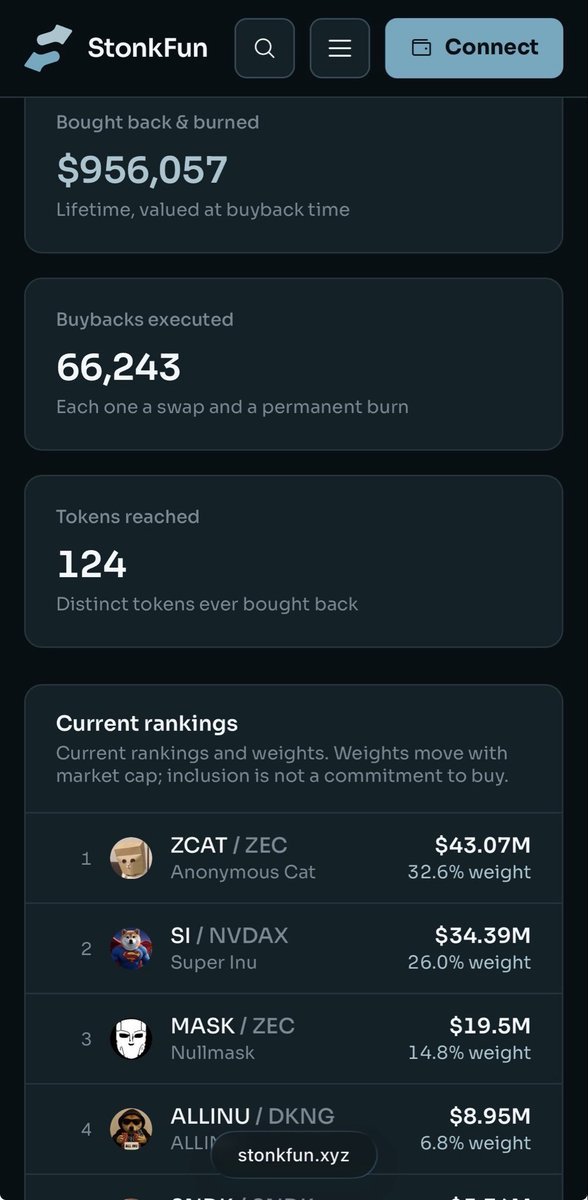
@LaunchOnSF isn't only buying back and burning $STONK.
It's also regularly buying back and burning tokens from the 10 biggest projects in the Stonk ecosystem.
Now picture real companies launching their tokens on StonkFun.
As long as they hold a top 10 spot, StonkFun acts as an ongoing source of buy pressure for their token.
Maybe StonkFun was never supposed to be just another memecoin launchpad.
The real opportunity might be turning into the launchpad for actual businesses with actual products and actual revenue.
And that's good news for $STONK too.
The more durable businesses the ecosystem brings in, the more durable the activity and revenue running through StonkFun becomes.
More durable revenue → more durable $STONK buybacks and burns.
@chronollm (SN38), “zamanın farkında olan ilk LLM” iddiasıyla Bittensor’da yayına girdiğini duyurdu.
Çözmeye çalıştığı problem ise şu:
Bugünkü yapay zekâ modelleri geçmişi analiz ederken geleceği zaten biliyor. 2015’teki piyasayı tahmin etmesini istediğiniz bir model, 2020 çöküşünü çoktan görmüş durumda.
Bu, sınava cevap anahtarıyla girmek gibi. Backtest harika görünüyor, strateji canlıya geçince çöküyor. Buna lookahead bias deniyor.
ChronoLLM’de madenciler her yıl için ayrı bir model eğitiyor. 2018 modeli yalnızca 2018’e kadarki verilerle eğitiliyor ve 2019 hakkında hiçbir şey bilmemesi gerekiyor. Validatörler de modellerin geleceği “bilip bilmediğini” test ediyor.
Projenin arkasında, VanEck ve Multicoin gibi yatırımcılardan fon alan CrunchDAO var. Hedef müşteri ise hedge fonlar ve quant ekipleri.
Kısacası ChronoLLM, yapay zekâya tahmin yapmayı değil, hile yapmadan tahmin yapmayı öğretmeye çalışıyor.
Bu hafta Bittensor ekosisteminin en önemli etkinliklerinden biri gerçekleşiyor.
28-29 Eylül tarihlerinde Montreal’de düzenlenecek Exploit Summit, Bittensor ekosisteminin önemli isimlerini bir araya getirecek.
Peki Exploit Summit nedir ve neden önemli?
Hızlıca göz atalım.
Exploit Summit klasik bir kripto konferansından biraz farklı.
Etkinliğin odağında Bittensor üzerinde geliştirilen ürünler, subnetler, yapay zekâ altyapısı, incentive mekanizmaları ve ağın geleceği bulunuyor.
İki gün boyunca subnet ekipleri ürünlerini gösterecek, canlı demolar yapılacak ve Bittensor’un bugün karşı karşıya olduğu önemli konular tartışılacak.
Katılımcılar arasında Bittensor kurucu ortağı Jacob Steeves (const), Macrocosmos, Chutes, Targon, Score, Yuma, TaoStats ve ekosistemin birçok önemli ismi bulunuyor.
Macrocosmos, Project Orion ile “Liquid Training” adını verdiği yeni yapay zekâ eğitim altyapısını canlı olarak tanıtacak.
Targon ise confidential compute hizmetinden daha kapsamlı bir “full-stack cloud” altyapısına geçişini anlatacak.
Bir diğer dikkat çekici başlık ise “Research vs Revenue”.
Burada Bittensor için giderek daha önemli hale gelen bir soru tartışılacak:
Subnetlerin önceliği araştırma mı olmalı, yoksa gelir üreten gerçek ürünler geliştirmek mi?
Chutes, Targon, Lium ve Score gibi subnetlerde gerçek müşteriler ve gerçek gelir görmeye başladık.
Enterprise tarafında da benzer bir konu tartışılacak:
Büyük şirketler neden Bittensor üzerinde çalışan ürünleri kullansın?
Çünkü subnetlerin yalnızca $TAO emisyonu kazanması yeterli değil.
Ürettikleri hizmete ağ dışından gerçek talep oluşturmaları gerekiyor.
Project Orion, Targon ve diğer subnetlerden yeni ürün duyuruları gelebilir.
Jacob Steeves’den Bittensor’un geleceğine dair önemli açıklamalar duyabiliriz.
Bakalım Montreal’deki etkinlikte neler öğreneceğiz. #ExploitSummit #Bittensor
Keep seeing bittensor:native $400-500 long term price targets
Those who are in $TAO for 20-30% have no idea what Bittensor is
This is one of the most ambitious things in crypto
It either goes to trillion or zero. Don’t hold it if you’re just chasing %20
This StonkFun X PumpFun situation reminds me of Binance getting dirty to stop Hyperliquid’s growth
Can’t guarantee if solana:6GmAFSYs4gk3FDao5FzzySQpPZaWsa4rUJHacpMpUNgx will continue perform as well as $HYPE but the villain of the story is very clear
Ok, I just put together a proper effort post here, so hopefully you read it, but the TL;DR is that TAO hits all the notes you mentioned above. You want a coin that's essential to an AI business, where that business generates real-world value and that value drives back to the coin itself. That's Bittensor.
I am going to assume you don't know much about Bittensor beyond the "AI Bitcoin" moniker and start with a brief origin story, since I think it's important and helps illuminate where "AI Bitcoin" came from. The interesting thing about Bitcoin for the Bittensor story is that it figured out how to use a token to bootstrap a decentralized compute network, owned by nobody and accessible to everyone, that to this day is the largest computing network on Earth. Bittensor's founders are AI researchers. They knew how important compute was going to be for building AI, and they set out to build the same thing for intelligence: a decentralized intelligence network, owned by nobody and accessible to everyone. Just as Bitcoin could coordinate a disparate group of people to fight centralized control of money, perhaps a new primitive, Bittensor, could be designed to fight the coming centralized control of intelligence.
So they abstracted the Bitcoin incentive system (i.e., spend energy securing the network by solving SHA-256 hashes, get paid in BTC) so it could be applied to a whole new set of problems, all aimed at one goal: mining for intelligence. Mining SHA-256 today on Bitcoin is incredibly difficult, but as a system it's simple and objective. Mining for intelligence is orders of magnitude more complex. It's subjective, so it has to be scored on a gradient (study: Yuma Consensus), and there are multiple components that all need to be mined (compute, data, algorithms, etc.). That's where subnets come in. Each one tackles a piece of the problem.
(1) Outside revenue + value to the tokens:
It took years and a lot of iteration, but Bittensor is now doing exactly what it set out to do. It's mining intelligence.
Compute/inference: ~5 subnets are coordinating GPUs around the world to serve raw compute and inference into the open market. Customers range from retail to enterprise, with the crypto abstracted away entirely. Estimates vary, but I put this group at ~$40-50MM aggregate ARR and scaling fast (for context, think ~200% QoQ and ~50% MoM growth).
Training: two subnets are doing SOTA decentralized pre-training right now (SN3 and SN9). SN9 just wrapped up a 100B-parameter run with the highest MFU reported for a distributed pipeline-parallel run. SN3's current run is a 110B-parameter model, the largest decentralized pre-train ever attempted. These teams are past proof of concept and working on scale. And SN120 Affine is post-training Chinese OSS models at SOTA levels.
Applied AI: a whole set of subnets incentivize miners to build verticalized models that power real products. Score for computer vision. RedTeam and Bitsec for cybersecurity. Minos for genomics. Yanez for identity and fraud. Trishool for alignment. Vidaio for video compression. I'm missing plenty more. These are real products being used in the wild by enterprises. I'd put this category at $10-20MM ARR, also scaling quickly.
For context, 12 months ago I'd have said ARR across the entire network was under $5MM. The TAMs here are massive, and the blue-chip subnets are exiting the pre-revenue stage and entering the scaling-revenue stage right now.
Critically, these teams are taking that revenue and buying/burning their tokens. Not because they're altruistic. Because the network makes it the only rational move. Two reasons for this:
(1) A subnet pays its miners in its own token, a fixed number of tokens per block. So the only way to grow the supply side (more GPUs, better models, more output) is for the token to go up. If you're a compute subnet and want more capacity, you take your revenue, cover miner COGS plus some margin, and buy your token. Buy pressure on your token becomes a derivative of your compute bill. The token is the production budget.
(2) And the chain runs the same game one level up. Subnets compete against one another in a fight for daily $TAO emissions, and the scoreboard is the price of each subnet's alpha token (a clever way to let the broader market instruct the protocol on how to allocate its resources). The winners get a bigger share, and for mature subnets that TAO goes straight into buying their own token off the pool. Fall too far in the ranks and you not only lose out on emissions, you risk being deregistered.
So you might astutely point out that revenues < emissions today. That is true, but the trend is our friend. Bittensor is essentially running the Uber playbook, which I would argue a cryptocurrency is tailor-made to do. Use the token, rather than VC funding, to bootstrap supply before the demand exists. Once supply is there, demand scales and the flywheel kicks in: demand up → revenue up → buy+burns → alpha price up → miner rewards up → more/better supply → repeat. The early alpha buyers were the pre-revenue seed/Series A investors. Now we're entering the revenue/scaling era.
Although revenue isn't yet covering emissions, as discussed above, it is growing. Meanwhile, the supply side is in its first halving cycle. TAO had its first halving last December, alpha halvings are coming in 2027/28, and the subsidy shrinks on schedule as revenue takes over. I am not speculating here either - a couple of subnets already bring in more from customers than they pay out to miners.
Important to mention: to buy and burn its alpha token, a team has to buy TAO first and stake it into the pool that pairs TAO against its token. Every alpha burned leaves TAO behind in the pool. ~2M TAO already sits in those pools, and every subnet token can only trade against TAO. So subnet revenue = TAO buy pressure, mechanically. Speculative investing in subnets = TAO buy pressure. Subnet/miner/validator registrations = TAO buy pressure. Taken to its logical end... TAO is literally an index of all 128 subnets, or in other words, an index of 128 AI startups building on crypto rails.
(2) It's cypherpunk:
TAO also represents the right ethos for crypto x AI. It leverages a novel crypto primitive to bootstrap networks that coalesce edge compute and edge talent from around the world, coordinate them to produce the real inputs to intelligence (compute, data, algos, etc.), and serve them to anyone, anywhere. A network that serves open, permissionless, decentralized, uncensored intelligence. A true alternative to centralized labs and governments. And because it harnesses the world's edge compute and talent, it can scale in ways the fiat companies just can't.
(3) You're still early:
The top 3 compute subnets are ~$100MM market caps. The next two are $30-60MM. Promising subnets in other categories are sitting at $10-20MM. There are 128 subnets today and there'll be 256+ down the road. Maybe many more in the future. Bad teams get deregistered and new ones take their place. As the ecosystem grows, so do miner and owner rewards, which pulls in more teams and better talent. There will be fantastic teams launching subnets a year from now that you can buy at $5-10MM or less.
CT isn't woke to this. 99% have not bridged over to the native Bittensor chain to participate in this ecosystem. Cross-chain bridges are only just going live. In my mind, this screams opportunity.
And that's before you get to TAO itself, the L1/index/launchpad under all of it, sitting at ~$3B. That's comically low. Its 1:1 comp is ETH at ~$327B. 100x with size is viable here.
Will follow up with some longer-form sources to check out.
@ProprXYZ will reach $4M in total revenue in 1-2 days.@louisregis already knew that, that's why he planned to celebrate the $2M payout with a 20% discount for ONE WEEK.
One of the best prop firm I have used
@kriptogelisim Daha yeni Binance, Circle icin $100M yatırım yaptığını duyurdu. Circle bizzat Hyperliquid USDC leri kendi sağlıyor. CZ artık engelleyemeyeceğinin farkında ve Hyperliquid e ucundan ortak olmanın peşine düştü. Bu Hype listelemesi de bence bununla alakalı. Yorumlar da cidden üzücü
Everyone's saying Binance just admitted defeat by listing $HYPE spot.
But with the $100M Circle investment, Binance was already indirectly betting on Hyperliquid. So the timing isn't surprising at all.
Coinbase, Kraken, Circle, Binance. They've all already started building relationships with Hyperliquid. The House of All Finance is pulling everyone in.
So yes, Binance lost this round. But joining it is the smartest move they could make, and it'll probably be better for Binance from here on.
Hyperliquid
Bittensor’un bulut depolama subneti Hippius (SN75), Android uygulamasını yayınladı. “Uçtan uca şifreli” iddiasının arkasında ne var?
Geliştiricinin açıklamasına göre dosyalar telefondan çıkmadan şifreleniyor. Şifre çözme anahtarlarının kontrolü kullanıcıda kalıyor.
Depolama tarafında Arion, Reed–Solomon yöntemiyle 10 veri ve 20 yedeklilik parçası oluşturuyor. Herhangi 10 sağlam parça dosyayı yeniden oluşturmak için yeterli. QR kodların belirli ölçüde hasar görse bile okunabilmesinde de aynı hata düzeltme yöntemi kullanılıyor.
Parçalar CRUSH algoritmasıyla depolama düğümlerine dağıtılıyor. Madencilerin veriyi saklayıp saklamadığı depolama kanıtı denetimleriyle kontrol ediliyor. Eğer madenci veriyi saklamıyorsa itibar puanı dü��üyor, daha sonra da sistemden iş alması zorlaşıyor
Yeterli sağlam parça bulunduğunda sistem eksik parçaları otomatik olarak yeniden oluşturup başka düğümlere yerleştirebiliyor.
Kısacası Hippius cihaz üzerinde şifreleme ve dağıtık depolamayı birleştiren, incelemeye değer bir alternatif.
Token ekonomisinde de hizmet gelirlerini hAlpha kilitleme ve staking ödülleriyle ilişkilendiren bir model bulunuyor.
You only ever see the tip of an iceberg. Fitting name for a prop firm where the interesting stuff is below the surface. @Icebergdotcash is very new, it's built on @HyperliquidX , and a couple of the models they're running caught my attention. I think we're going to see a lot more onchain-focused prop firms from here on.
One of the best things about Iceberg is that there's no challenge. You get funded directly. As someone who has blown quite a few accounts shortly after passing a challenge, that's a very attractive setup for me lol, so I think it's worth trying. No KYC is another plus.
On the other hand, the packages are a bit pricey, but since there's no evaluation phase I think that's reasonable. Right now there are only 9 people inside, and there's a points system on top 👀
I also noticed it's already backed by some well-known degens in the Hyperliquid community, which is usually a decent signal this early. Definitely worth a try.
https://t.co/4jCciGySMP
NEAR AI Cloud's confidential inference is now live on @say_gm_'s confidential tier.
SayGm reaches dozens of models through one API key, and runs its own routing inside an Intel TDX enclave rather than on ordinary servers.