Building Vespera — a local-first agent runtime.
AI Agents · Crypto/RWA · Security/Privacy.
I build, test, break down & document systems.
Freedom-first.🇺🇸🇰🇷
KNOW ME BETTER (한국어 버전은 아래에)
SAPGUN (삽군)
AI & Software Builder
Web3 · Sovereign AI · Open Systems
🇰🇷 Busan, Korea
Independent builder.
I explore and build around
AI, Web3, security, privacy,
and local-first infrastructure.
My usual workflow:
ambiguous idea
→ clear spec
→ prototype
→ working system
→ document what I learned
800+ hours of applied AI/data training,
plus hands-on building across
AI, blockchain, developer tooling,
and decentralized infrastructure.
CURRENTLY BUILDING
• VESPERA
Local-first coding-agent runtime
& multi-agent lab
• TrustFi
Web3 security gateway
• NodeNest
Omnichain DePIN node hub
• Trench Club
Web3 Trust & Sovereign AI Lab
WHAT I DIG INTO
Freedom.
Sovereignty.
Privacy.
Trust.
Verifiability.
AI systems.
Financial systems.
Identity systems.
On-chain infrastructure.
I don't think these are separate anymore.
The systems we build today
will shape how much control
people have over their identity,
money, data, and intelligence.
So I keep digging.
BACKGROUND
Sports Science major.
International Taekwondo instructor.
Then somehow went deep into
Web3 and AI.
Still here.
I prefer building, testing,
and documenting over just talking.
Fail often.
Dig deeper.
Keep shipping.
OPEN TO
-Global collaboration
-Open-source projects
-Hackathons & builder programs
-Research & experiments
-Interesting problems
Portfolio → https://t.co/WY0MiG5upQ
GitHub → https://t.co/mS5rVfCWQe
LINK3 →https://t.co/xuqcGC9Zj9
Email → [email protected]
한국어 소개 / Projects / Links ↓
Trench in.
WAGMI.
B2B #008 — Blockchain Fundamentals
Permissionless ≠ Public.
Permissioned ≠ Private.
These terms are often used
as if they mean the same thing.
They don’t.
Permissionless asks:
“Who is allowed to participate?”
Participation is open
under the protocol’s rules.
You don’t need approval
from a company or consortium first.
Bitcoin and Ethereum are examples.
Permissioned networks work differently.
Participants and their roles
can be approved in advance —
often with known organizational identities.
Hyperledger Fabric is a common example.
But that’s a different question from:
“Who can see the data?”
A network can restrict participation
while still sharing some data
broadly among its members.
It can also restrict
specific data to only certain participants.
So when comparing blockchain architectures,
look beyond:
Public vs Private.
Ask instead:
Who can join?
Who can validate?
Who can see the data?
Who controls the rules?
What trust assumptions are being made?
Decentralization isn’t just an ON/OFF switch.
The better question is not “Which one is more decentralized?”
It’s:
“What do I have to trust
for this system to work?”
Back to Basics.
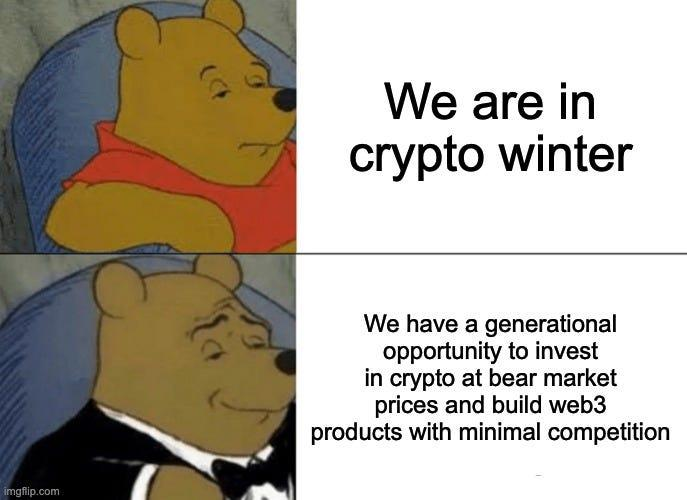
I've been around crypto for years.
And right now, when crypto isn't getting nearly
as much attention as it used to, I think this is actually
a good time to go back to the fundamentals.
So I'm starting a new daily series:
B2B — Back to Basics.
One small piece of crypto knowledge every day.
No hype.
No price predictions.
No chasing the next narrative.
Just the fundamentals
that actually make this space work:
-Bitcoin.
-Wallets.
-Keys.
-Ethereum.
-EVM.
-Solidity.
-DeFi.
-Security.
And everything in between.
Some will be basic.
Some will go a little deeper.
If you've been in crypto for years,
think of it as a refresher.
If you're new, start here.
One concept. One post. Every day.
Back to Basics.
B2B #007 — Blockchain Fundamentals
Confirmed ≠ Finalized
Your transaction was included in a block.
So… is it permanent now?
Not necessarily.
A blockchain can temporarily have
competing views of its recent history.
That means a recently included
transaction may still be
affected by a reorganization.
This is why confirmation and
finality are different concepts.
Bitcoin has probabilistic finality.
As more blocks are built on top of your transaction,
the probability of it being reversed
becomes lower and lower.
Ethereum has explicit crypto-economic finality.
Validators vote on checkpoints,
and once enough stake agrees,
blocks become finalized.
Reverting finalized history would require severe economic penalties.
Solana exposes this distinction
directly through commitment levels:
processed → confirmed → finalized
Different chains
give you confidence in different ways.
But the question is the same:
“How sure are we that
this transaction won’t be reversed?”
Included is not always final.
Confirmation gives confidence.
Finality gives settlement assurance.
Back to Basics.
B2B #008 — Blockchain Fundamentals
Permissionless ≠ Public.
Permissioned ≠ Private.
These terms are often used
as if they mean the same thing.
They don’t.
Permissionless asks:
“Who is allowed to participate?”
Participation is open
under the protocol’s rules.
You don’t need approval
from a company or consortium first.
Bitcoin and Ethereum are examples.
Permissioned networks work differently.
Participants and their roles
can be approved in advance —
often with known organizational identities.
Hyperledger Fabric is a common example.
But that’s a different question from:
“Who can see the data?”
A network can restrict participation
while still sharing some data
broadly among its members.
It can also restrict
specific data to only certain participants.
So when comparing blockchain architectures,
look beyond:
Public vs Private.
Ask instead:
Who can join?
Who can validate?
Who can see the data?
Who controls the rules?
What trust assumptions are being made?
Decentralization isn’t just an ON/OFF switch.
The better question is not “Which one is more decentralized?”
It’s:
“What do I have to trust
for this system to work?”
Back to Basics.
언제부턴가 나는 시험에 들었다.
달콤한 꿈에 젖어 있을 것인가,
아니면 내가 원하는 현실을
직접 만들어갈 것인가.
그 시험은 생각보다 오래,
그리고 깊게 나를 괴롭혔다.
그러다 문득 깨달았다.
이 시험의 출제자는
바로 나 자신이었다.
그 사실을 깨달은 ���간부터
시험은 더 이상 고통스럽지 않았다.
애초에 정해진 규칙도 없었다.
시간제한도 없었고,
주어진 선택지도 없었다.
누군가 만들어놓은 답안지에서
정답 하나를 골라야 할 이유도 없었다.
그저 내가 원하는 현실을
내가 원하는 방식으로
그려나가면 되는 것이었다.
원자적인 작은 선택에서부터
삶 전체를 움직이는
거시적인 방향까지.
생각해보면 나는 이미 오래전부터
내가 원하는 현실을
조금씩 창조하고 있었다.
그 사실을 깨닫자
사회의 요구도,
타인의 기준도, 잡다한 소음도
점점 멀어지기 시작했다.
더 이상 세상이
내게 낸 시험을 풀지 않는다.
나는 내가 살아갈 현실을 만든다.
그리고 이제는
그저 내가 원하는 방향으로
계속 그려나갈 뿐이다.
태국도 Travel Rule은 합니다 ㅋㅋ
차이는 당근의 유무죠.
🇹🇼 대만: 추적·정보공유 강화
🇹🇭 태국: 추적은 하되, 인가 사업자 거래는 2029년까지 세제 혜택 + 크립토 관광·자본 유치
같은 규제를 받을 거면 굳이 대만보다 2029년까지 태국에 자본/거래활동을 파킹하려는 수요가 생길 가능성이 높다는 의미였습니다.
채찍만 있는 곳 vs 채찍과 당근이 같이 있는 곳의 차이죠.
@anna_creator00 불법 아니면 일단 실행하고 보기!
현재 미국대학생들이
그렇게 하고 있죠, AI 발전이 너무 빠르니까 대학이고 뭐고
AI 활용해 친구들하고 장소 하나 빌려서 일단
빌딩하고 보기 , 피드백 받으면 빠르게 이터레이션 돌리고
쉬핑하고 무한반복, 언제까지? 하나 성공해서 터질때까지.