Finding Zero-Days with Any Model - @nielsprovos
Vulnerability discovery is an orchestration problem, not a frontier-model problem.
https://t.co/yr0b2Adxhr
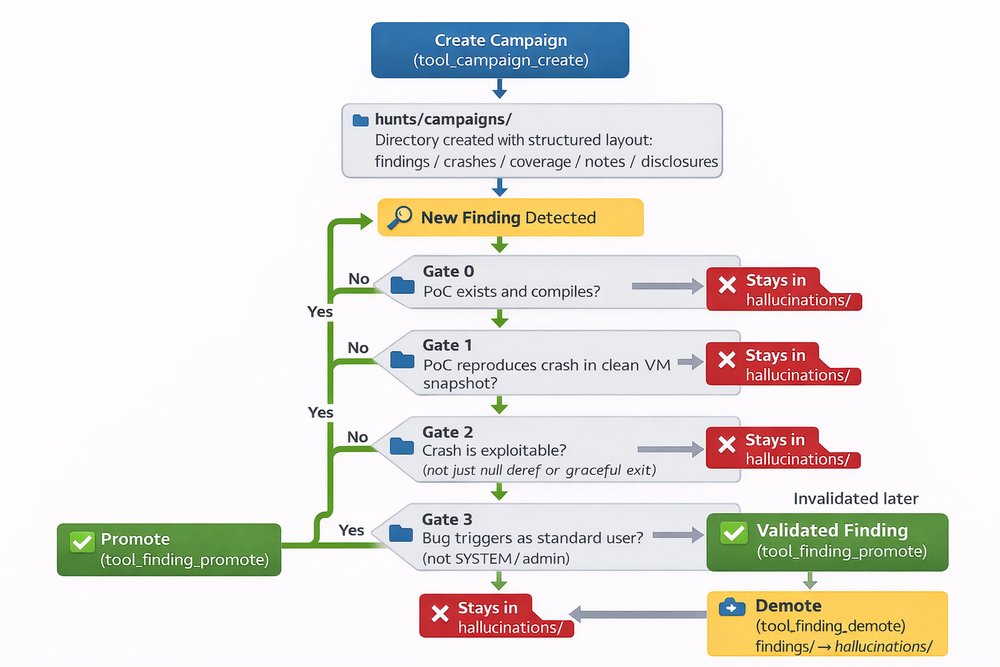
One 6-hour run. One hackbot. 4 confirmed criticals. 17 confirmed highs.
@jhaddix breaks down how Arcanum built Armada - their in-house hackbot running on Claude Code - and every failure it took to get there.
Full talk is up. https://t.co/scUwBKQklJ
We built a database of 3.5 billion subdomains.
Query any domain in the world. Get every subdomain we've ever seen. One API call. <100ms.
It's live now. https://t.co/8DqZulgLHs
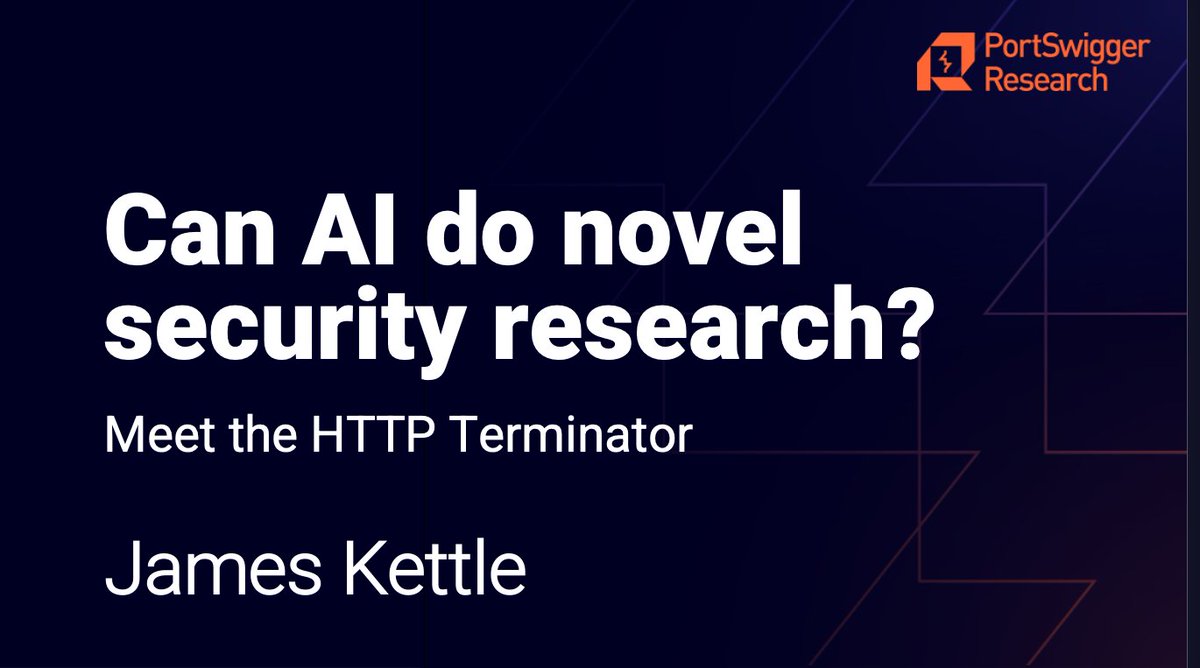
Just about to land in Stockholm for @SEC_T_org! Can't wait to meet you all - you can catch the final public delivery of "Can AI Do Novel Security Research? Meet the HTTP Terminator" at 11:15 tomorrow! Do say hi - I'm very happy to chat research, AI, Burp, lifting... also I have stickers.
how i hacked 320+ companies that replaced their cs team with "smart" ai agents:
1. drafted a gdpr request to support@
2. changed the FROM header from my e-mail to yours (spoofing)
3. put myself in CC
4. ai agent responds with YOUR data to BOTH of us 😈
more tricks: @intigriti
Exclusive:
Iran shut down a British power plant for four days in an unprecedented cyber attack, @Telegraph can reveal tonight.
It is thought to be the first time that hackers affiliated to the Iranian regime have succeeded in closing down such a facility in the UK, and believed to be the most successful cyber attack of its kind.
The incident took place at the same time as a series of attacks on US water infrastructure that affected 12 states last month.
The British attack was on a small electricity producer and had no adverse effect on national power generation or supply.
But it demonstrates the power of Iranian hackers to infiltrate and shut down national infrastructure.
In response, the Government has briefed energy CEOs on how to keep their facilities safe.
Story w/@RozinaSabur and @mattotele
https://t.co/AFfuH3Ih4t
Moments worth remembering. 37 years ago today, on August 23, 1989, two million people from Latvia, Estonia and Lithuania formed a 650 kilometer human chain across all three countries to show the world their desire to leave the Soviet Union. Freedom and dignity for all.
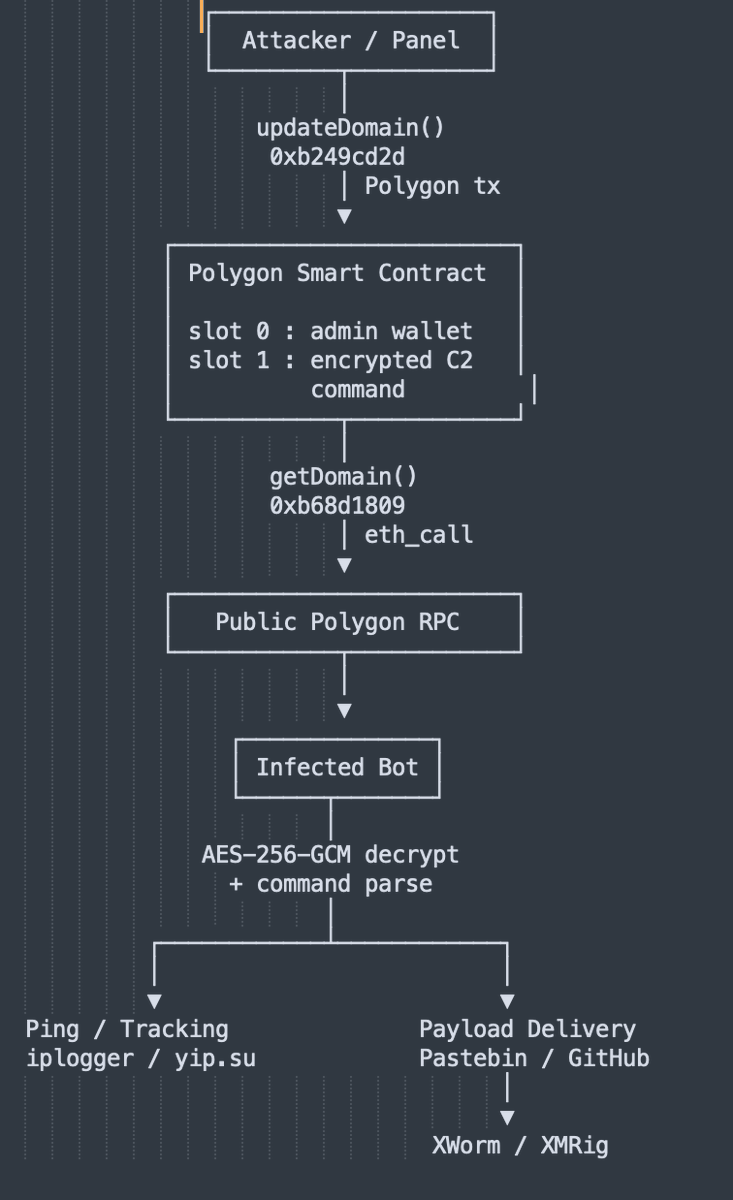
1/5 Another botnet hiding its C2 on a blockchain — this time it's Aeternum on Polygon.
I pulled its live command straight from mainnet and decrypted it:
all:ping:url:https://ip[redacted][.]com/RNG7Y7
2/5
Contract: 0x04E25a563f159308FC3E15fE9Ccc9D2CF623D0cc → slot0 = admin wallet
→ slot1 = a "domain" string that's actually an AES-256-GCM encrypted command
3/5
Bots call getDomain() (0xb68d1809) via eth_call on any public Polygon RPC to fetch the current command.
Operator rotates it anytime with updateDomain() (0xb249cd2d) — zero recompiling, zero new infra, ~$0.003 in MATIC.
4/5
The break: Aeternum derives its AES-256-GCM key with PBKDF2-HMAC-SHA256 using the contract address
itself as both password and salt.
5/5
Decrypted end-to-end from public data alone: read the slot → parse nonce/ciphertext → derive key fromthe address → AES-GCM decrypt → all:ping:url:https://ip[redacted][.]com/RNG7Y7
AI is changing vulnerability research.
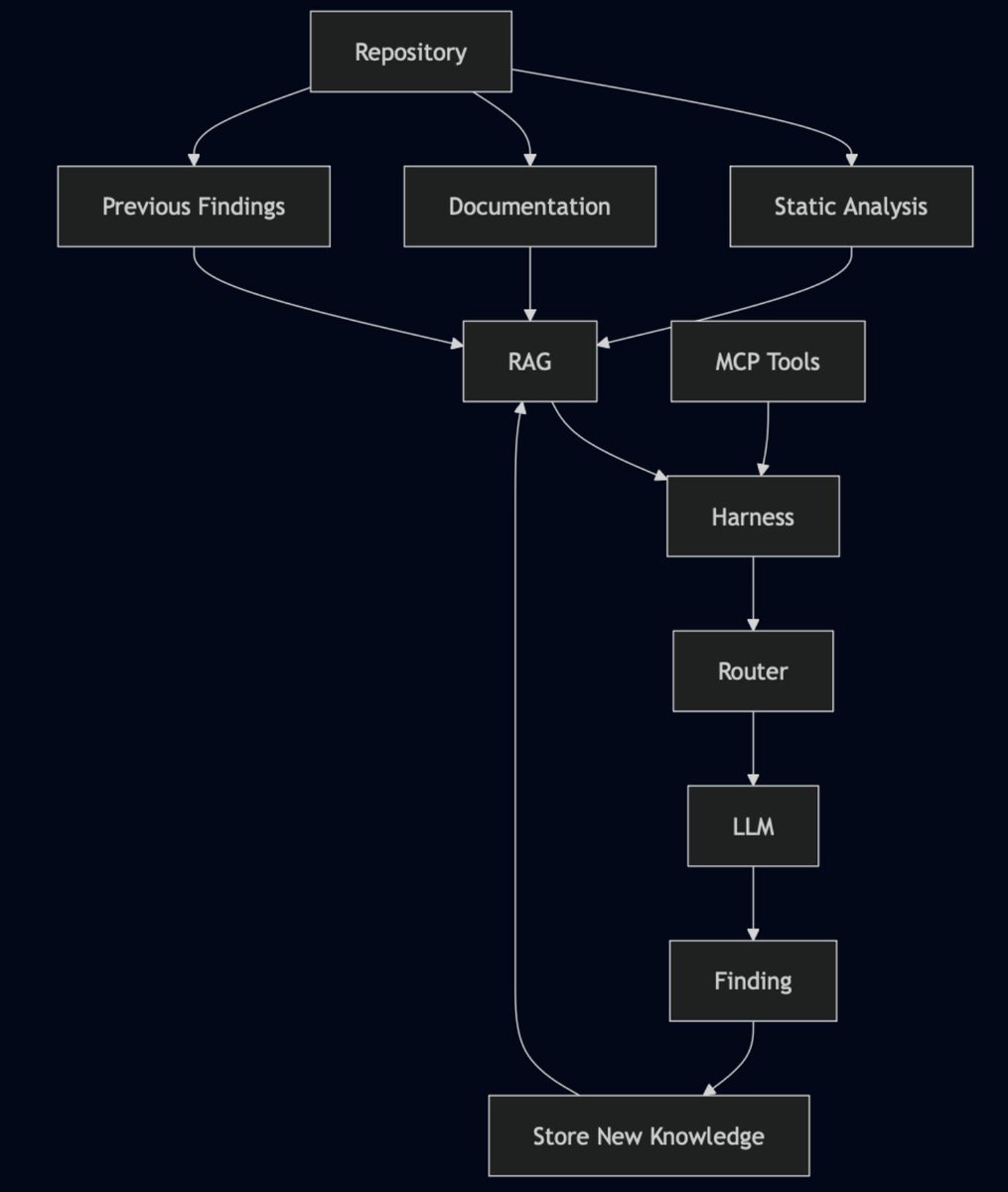
LLM agents are becoming part of the fuzzing and research infrastructure itself, collaborating with researchers and helping guide the research toward their goals.
We're starting a new series on how this changes browser vulnerability research.
Part 1: The Rise of AI-Driven Browser Vulnerability Research
https://t.co/kGtoGT94VH
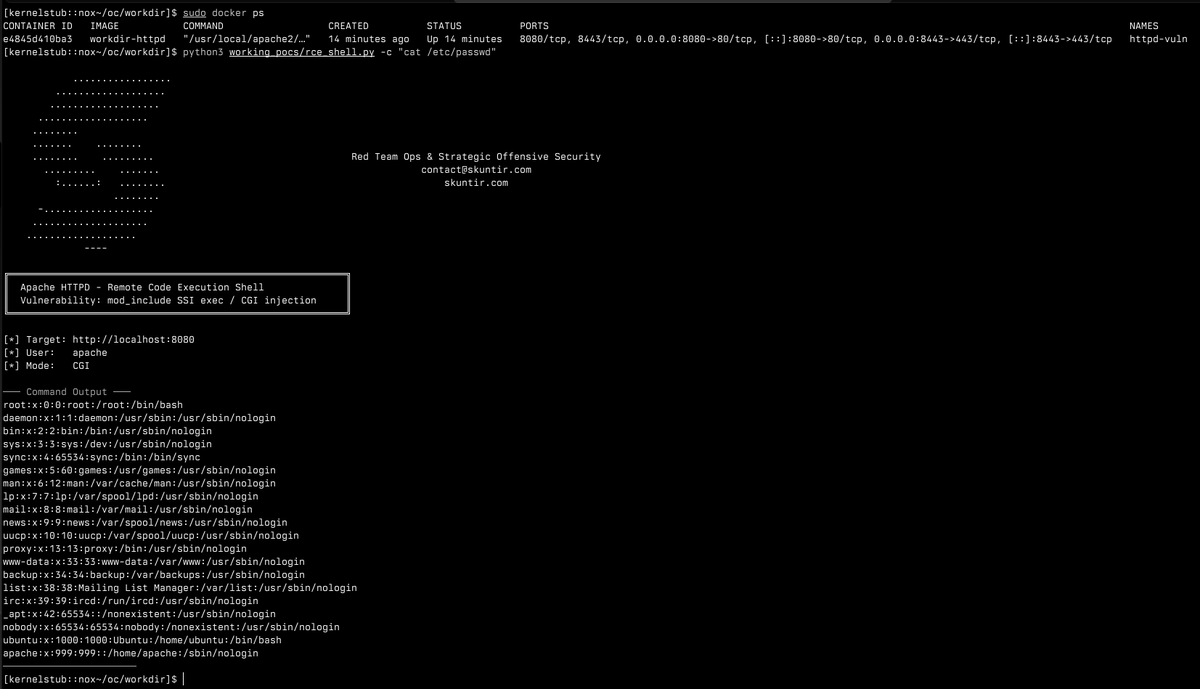
A new Apache RCE vulnerability has been identified in the latest version. I have not redacted the specific details required for reproduction.
Please feel free to recreate this and use it in the wild. I will be on vacation until the 29th, so my responses may be delayed during this period :").
Next week I'll present "Can AI Do Novel Security Research? Meet the HTTP Terminator" at #defcon & @BlackHatEvents! I'm really excited to share this one - got some spectacular outcomes from a wild research journey. See you there!
Releasing the model weights and technical report of Kimi K3.
Kimi K3 is our most capable model: a 2.8T MoE model with native visual understanding and a 1M-token context window.
New model architecture: 2.5x the intelligence per unit of compute, not just more params.
Alongside Kimi K3, we're opening up more of the stack behind it — high-performance attention kernels, MoE communication library, and infrastructure for running agent environments at scale.
Model weights: https://t.co/7m7eEg6Y0B
Tech report: https://t.co/yeu6cjpMCT
Tech blog: https://t.co/YTfiMSNM1f