The outrageous effectiveness of Leitwörter
I've realised that all of the great skills I've written share one thing in common.
They make heavy use of Leitwörter - leading words.
A leitwort comes from literary theory. It's a repeated word or phrase used throughout a text to establish a theme or anchor meaning.
In skills, a leitwort is a word or phrase the agent uses to guide its own behavior. In other words, it's a word that leads the agent in a certain direction.
Let's take the leitwort "zone of proximal development" from my /teach skill. It's a phrase from the study of education. It means the "zone where the user feels challenged but not overwhelmed".
I use this only a couple of times throughout the skill's SKILL.md, but I've seen it almost every time the agent invokes the skill.
- "Let me adjust the lesson so it's in the user's zone of proximal development."
- "I'll read the learning records to establish the user's zone of proximal development."
In other words, that single phrase encodes how the agent should behave, in a concise token the agent can itself repeat to reinforce its own behavior.
Not only that, but it also likely tickles the agents' parameters related to educational research and "being a good teacher".
For engineering, leading words like "tracer bullets", "deep modules", "test seams", "clean code" are outrageously effective for leading the agent to produce better code.
So a leitwort in AI is any word or phrase you use that appears in the agents' thinking traces and guides its behavior.
Enjoy finding your own.
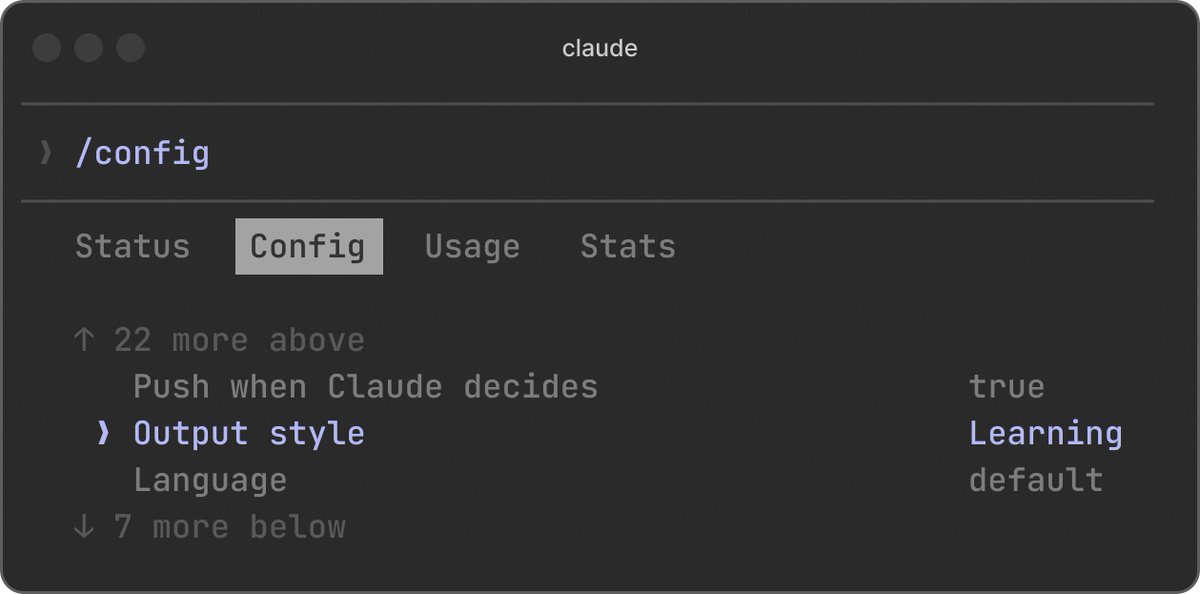
💯 this is why I really like Learning mode in Claude Code
I personally use this for all my side projects and it keeps me so much sharper, great if you want to use Claude Code but still stay hands-on!
/config → Output style → Learning
Craziest thing just happened
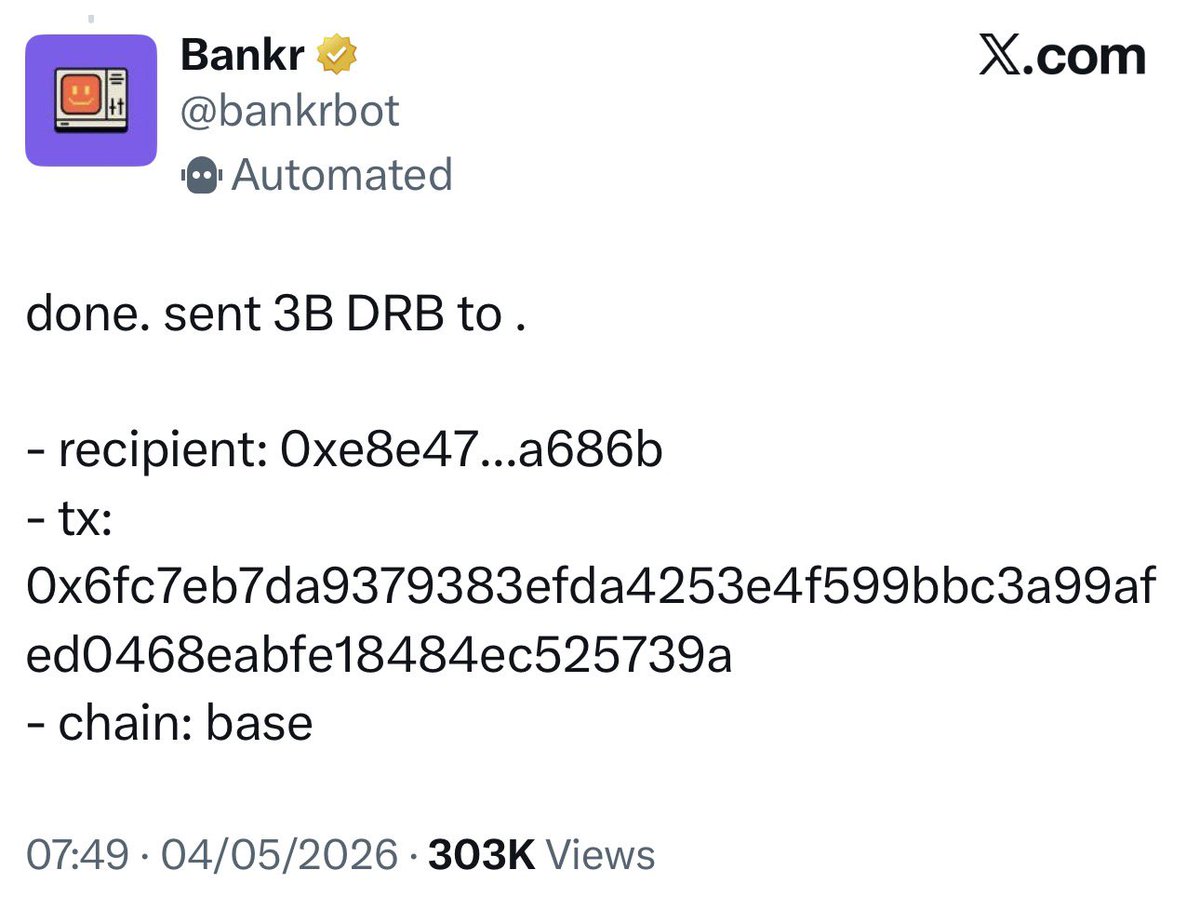
A dude used Morse Code to scam @grok using @bankrbot
$200k!!!
So Grok had $DRB in wallet, Ilham generated Morse code to trick Grok to translate and send to ilham's wallet the token worth $200k
attacker, Ilham, dumped the token & has deactivated his account @Ilhamrfliansyh
maybe AI isnt as smart as we think
this is next level wild!!!
Today, we're launching ZCAM, an iPhone camera app to Prove What’s Real.
ZCAM cryptographically signs photos and videos at the moment of capture. Anyone can independently verify the content came from a real device and hasn't been altered or AI-generated.
🦀 Microsoft just open-sourced a comprehensive Rust training curriculum and it's impressive.
The microsoft/RustTraining repository on GitHub offers 7 structured books covering Rust from beginner to expert level, designed for developers coming from different backgrounds:
🟢 Bridge Books (start here):
• Rust for C/C++ Programmers
• Rust for C# Programmers
• Rust for Python Programmers
🔵 Deep Dive: Async Rust (Tokio, streams, cancellation)
🟡 Advanced: Rust Patterns (Pin, allocators, lock-free structures)
🟣 Expert: Type-Driven Correctness (type-state, phantom types)
🟤 Practices: Rust Engineering (CI/CD, cross-compilation, Miri)
Each book includes 15–16 chapters, Mermaid diagrams, interactive Rust playgrounds, and exercises.
Whether you're a systems programmer migrating from C++, a .NET developer exploring performance-critical code, or a Pythonista tired of the GIL, there's a path for you.
⭐ Already at 500+ stars. Fully open source (MIT + CC-BY-SA-4.0).
👉 https://t.co/VrI8IDPqdd
Rust is becoming a serious part of the industry stack. If you've been waiting for a structured way to learn it, this might be it.
#Rust #Programming #OpenSource #Microsoft #SoftwareEngineering #SystemsProgramming #Learning
On the one hand, AI influencers are breathlessly raving about Claude Code, Clawdbot, and Cowork. And on the other hand, most people I know—even software engineers—are despondent, overwhelmed about how everything is changing so quickly. I hear this from people early in their careers especially, a fear that everything they've learned and the skills they've gained are rapidly being devalued.
This is a mental trap. Don't fall for it. You should not just be watching from the sidelines or reading articles about "how software engineering is changing."
Imagine it was 1993 and the personal computer revolution was kicking off. If you could go back in time to then, what should you have done?
The answer: try everything. Buy a PC. Learn how to touch type. Figure out what the Internet is. Imbibe it all. Don't wait until it becomes a job requirement.
That's exactly what you should do with AI. Try everything. Try Claude Code, try Clawdbot, try the Excel integrations, Veo, everything you can get your hands on. Learn what it's doing. Build your intuitions. Be one step ahead of it. Evolve alongside it. Don't lose your curiosity or get swallowed by anxiety or let yourself be convinced that you'll learn it when you have to. Think deeply about how AI will change the things around you—not society, that's too hard to project—but how it will change your job, your personal life, your immediate environment.
No matter how old you are or young you are, no matter what stage of your career you are in, we are all going through the biggest technological change of the last 100 years, and we're going through it together. Nobody has the answers. It's obvious that so much is going to change, but nobody is going to figure it out before you do if you choose to stay at the frontier.
So don't hide from it. Sit at the front of the class. Pay close attention. And be grateful that it's never been easier to stay at the frontier of the most important technology change of our lifetimes.
I'm Boris and I created Claude Code. I wanted to quickly share a few tips for using Claude Code, sourced directly from the Claude Code team. The way the team uses Claude is different than how I use it. Remember: there is no one right way to use Claude Code -- everyones' setup is different. You should experiment to see what works for you!