Voices of the Shift: We're excited to welcome Cesare Valitutto as a speaker at ctrl/shift 2026.
Cesare is a Senior Solutions Architect at Chainlink Labs, where he helps financial institutions adopt Web3 technologies within the Banking and Capital Markets team.
Excited about the continued rollout of top institutional data on-chain via Chainlink; @sixgroup, the exchange of Switzerland has adopted @chainlink as the data standard it is using to get critical market data on-chain: https://t.co/GpQP6dnYnJ.
Chainlink is the global leader powering DeFi and TradFi RWAs, with this data helping increase institutional demand for both. This is now starting to be driven by TradFi users wanting their existing data sources on-chain as they move more capital into institutional grade RWAs, which require market data to function in similar ways to how DeFi couldn't operate without a reliable data layer like Chainlink. Below are just some more examples of top institutional grade data providers choosing to put their data on-chain via Chainlink as the leading data standard powering over 70% of DeFi globally, with it now becoming the data standard that their institutional users will be asking for in order to consider an RWA as reliable enough to put institutional capital into.
Also, being able to easily access key market data from CRE workflows should accelerate your speed of building a tokenized fund, tokenized equity, on-chain vault and many other on-chain financial products. If Chainlink is the place you can receive all your needed market data, reference data and identity data on-chain, that is just the first initial level of Chainlink integration for your RWAs. If you are then choosing to build your entire on-chain financial product via CRE because it can help you reliably create key conditional statements around the use of that data, with privacy and off-chain level compute scalability, that is a whole new level of Chainlink integration. The type of data listed below opens the door for DeFi, Prediction Markets, RWAs and many new categories of on-chain smart contracts to adopt Chainlink, but then once the full capabilities of reliable on-chain data are combined with CCIP cross-chain and CRE chain abstraction, that becomes a whole different level of orchestration, reliability and privacy.
S&P: https://t.co/6udBRjSzTU
FTSE Russell: https://t.co/gCpz6Eu99v
Tradeweb: https://t.co/d18kWaCifK
Deutsche Börse Group: https://t.co/KANxCI6uIF
Intercontinental Exchange: https://t.co/QWS7ETO9Kd
Coinbase: https://t.co/FS2MLqy4VB
Among many others....
We’re excited to announce that Chainlink and @Mastercard have partnered to enable billions of cardholders to purchase crypto directly onchain.
https://t.co/bN5IVe1ieL
Chainlink verifies and synchronizes key transaction details to enable Mastercard holders to access crypto directly onchain.
This marks a major step forward in the mainstream adoption of Web3. Chainlink and Mastercard power the new @swapperfinance platform, with @ZeroHashX providing the onchain service and access to liquidity needed to convert fiat into crypto with seamless smart contract execution, alongside @Shift4, and @xswap_link, with liquidity sourced from @Uniswap.
Combining Mastercard’s global payments technology and Chainlink’s industry-standard infrastructure creates a secure user experience for billions 🧵
We’re excited to announce three standout speakers joining us at @NapulETH 2025! Each bringing deep insight into the evolving landscape of crypto infrastructure, protocol design, and institutional integration.
🧠 Mike Massari (@mkmassari), engineering lead at RedStone and former contributor at @chainlink and https://t.co/9UX8kyFVvF, will speak on “Tackling the 200 Million Dollar Problem: OEV Design That Works and Scales.”
His talk focuses on designing solutions to help DeFi protocols reclaim lost value during liquidations, with an emphasis on implementation, scale, and impact.
🧠 Walt Schagen, founder of Nex Labs, will present “Unlocking Crypto’s Potential: From Disruptive Technology to Invisible Infrastructure.”
Drawing on systems thinking, economic design, and analogies from internet history and nature, Walt explores how crypto can shift from a visible disruption to a quietly embedded part of global systems. @NEX_Protocol
🧠 Cesare Valitutto (@0xczar0), Solutions Architect at @chainlink Labs with previous roles at @Consensys and IBM, will deliver “TradFi Meets DeFi and They Hate Each Other.”
Based on nearly a decade of experience bridging blockchain and traditional finance, Cesare reflects on the lessons learned from early enterprise failures and the renewed momentum behind institutional adoption today.
These talks represent just a glimpse of the conversations shaping NapulETH 2025—where ideas, tech, and people come together to build what’s next.
Stay connected & grab your ticket:
Website: https://t.co/BeIpfMBg6I
Telegram: https://t.co/wrCB7oVjNl
Tickets: https://t.co/MnU8YGpqKg
We are excited to announce that Chainlink has partnered with BX Digital and @bx_swiss, both part of @boersestuttgart—one of the largest exchange groups in Europe.
Chainlink’s data solution for Swiss-based tokenized equities is live on testnet. Once in production on mainnet, BX Digital will use the Chainlink standard to publish and distribute securities closing price data onchain.
https://t.co/qAIR8BRzdg
We are excited to introduce @transporter_io, the next evolution in cross-chain bridging, powered by #Chainlink CCIP.
Transporter is your gateway to the multi-chain universe.
Cross chains with confidence: https://t.co/OJ9XWcAy4F
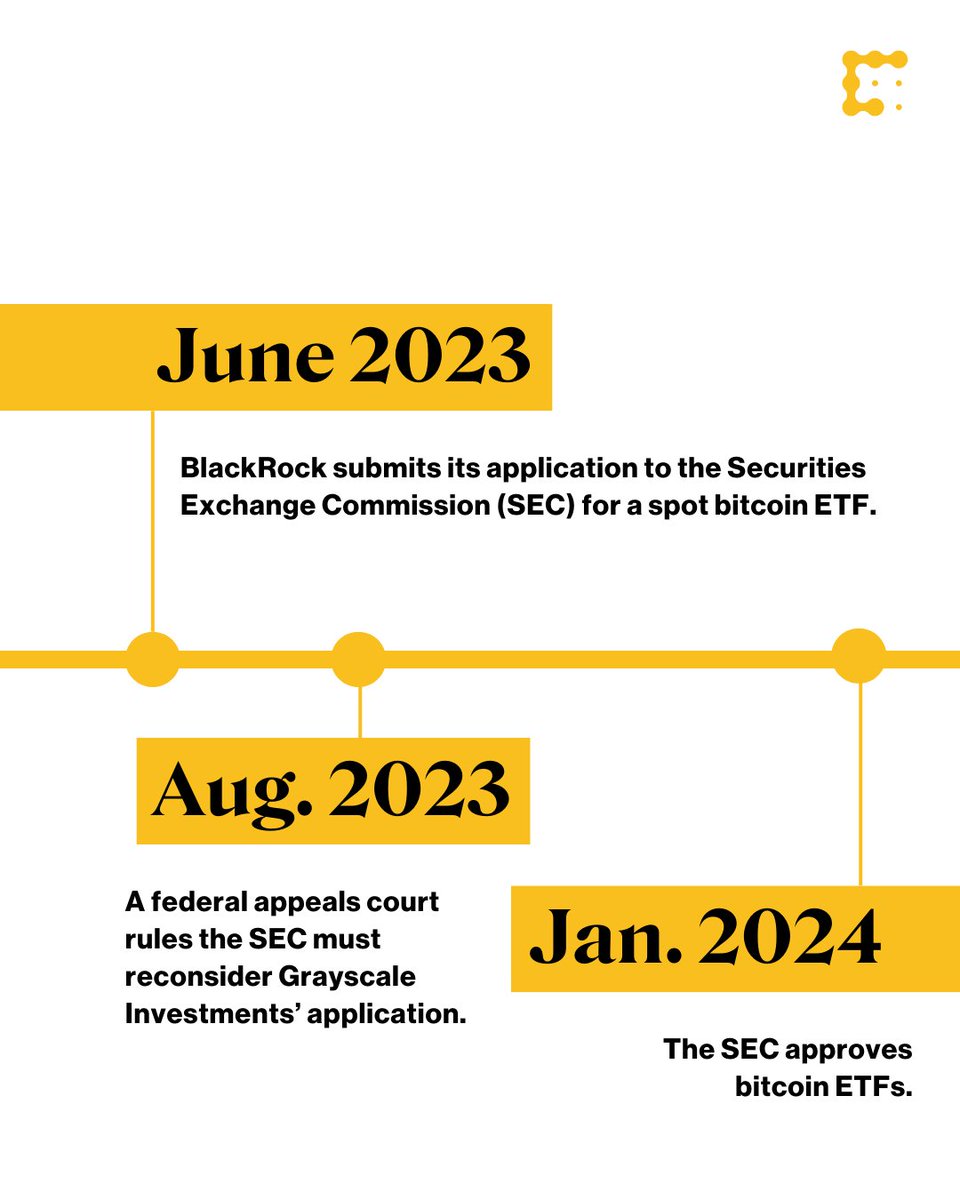
It finally happened.
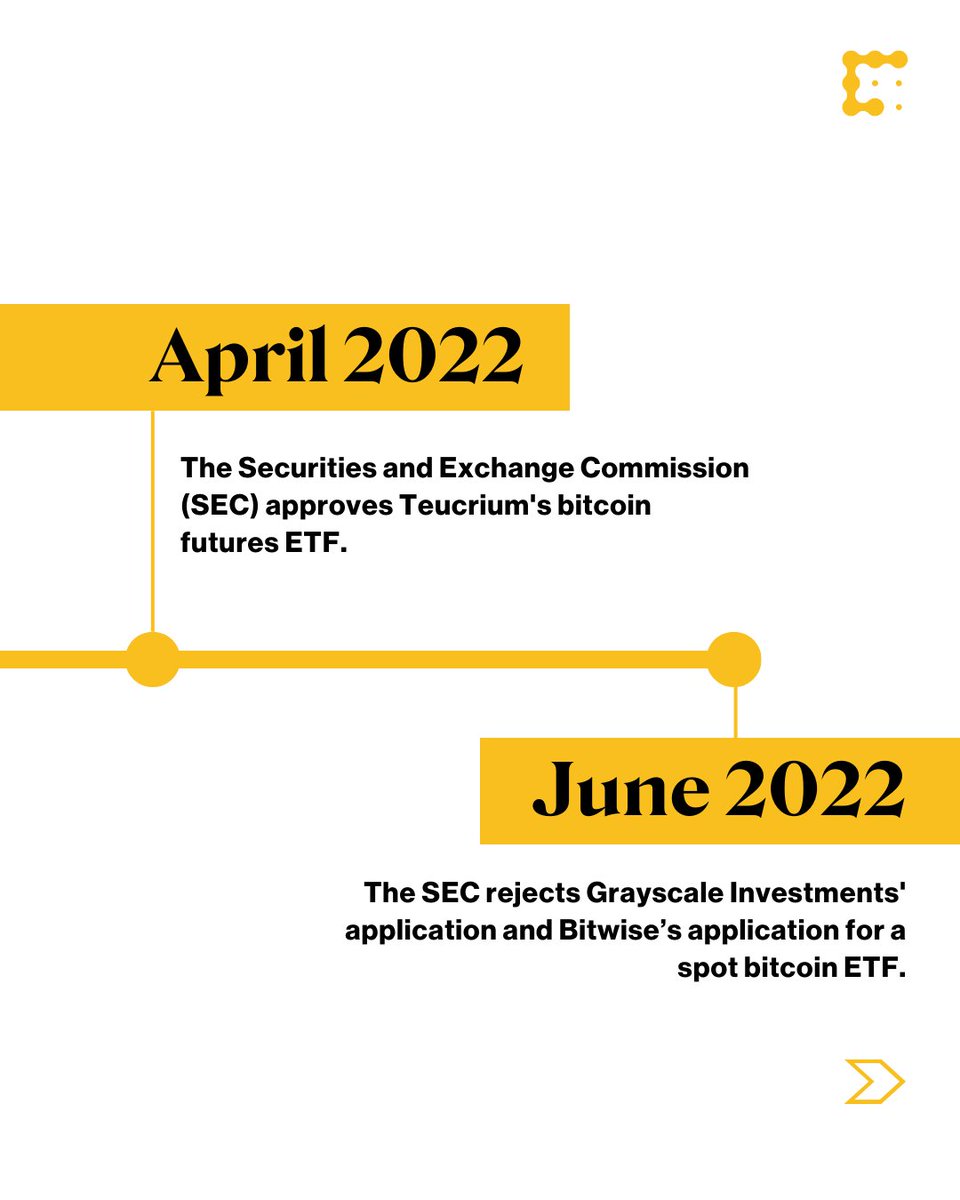
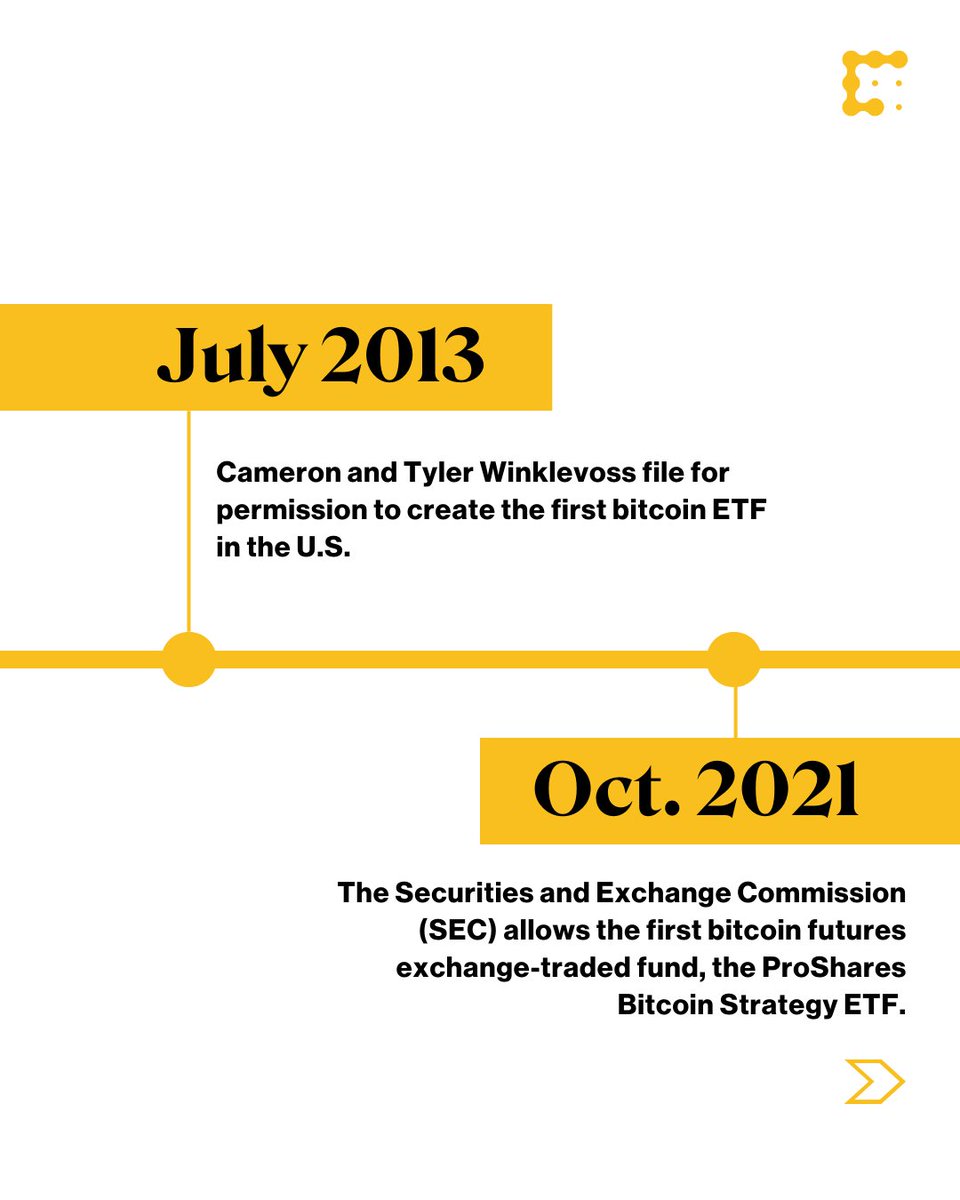
The asset management industry has tried launching a spot #bitcoinETF for over a decade.
Hopes are high they will lure more investors into crypto. 🔗 https://t.co/3qBQZ8sBMd
Here's a look at how we got here 👇
Just minted Day 4 on @basepaint_xyz! Dozens of pixel artists (184) made this together on the blockchain. Minting is open only for 24h https://t.co/Rk6AeaYpkL
Collaborative art meets web3. Everyone can contribute. Simply mint a brush and get creative!
WTF are recursive inscriptions?
Here is everything you need to know:
Earlier this year the Ordinals Protocol introduced the ability for anyone to inscribe files fully on-chain onto Bitcoin. These inscriptions are self-contained and unaware of the other files that had been inscribed. With the introduction of recursive inscription that is about to change.
Inscriptions can now use a special "/-/content/:inscription_id" syntax to request the content of other inscriptions. This simple change unlocks many powerful use cases. For example, rather than inscribing 10,000 JPEG files for a PFP collection individually which would be quite expensive, you could inscribe the 200 traits from the collection and then make 10,000 more inscriptions that each use a small amount of code to request traits and programmatically render the image. The result is the same. The art is just stored on-chain in a much more efficient way which could have saved over a million dollars in transaction fees in the case of @BitcoinApes_.
But, let's think bigger. What if we inscribe packages of code that everyone will be able to call? Well, that is exactly what @OnChainMonkey has done. They inscribed the p5.js and Three.js npm packages fully on-chain and then used recursion to make calls to those packages from the inscriptions in their upcoming Dimensions drop which allowed them to create beautiful 3D art in under 1 KB. And the best part is that anyone can do this. Now that these packages are inscribed to Bitcoin they are a public good for everyone to use to make cool generative art inexpensively.
We can think even bigger though. What if lots of people upload lots of packages of code? So now there is a huge repository of packages for developers to build on top of. This would unlock powerful use cases that could never be done in under 4 MB. The most complex pieces of software are just a bunch of code compiled together after all. Now it becomes possible to put a complex 3D video game fully on-chain on Bitcoin. The sky is the limit. Bitcoin is essentially getting an internal internet where every file can request data from the other files on Bitcoin. It's unclear yet exactly how people will use this but it is undoubtedly an important moment in the history of Bitcoin. Explorers such as the official ordinals explorer (https://t.co/WIyJjkNQPc) and @ord_io (https://t.co/IWj5u7UluH) will soon support recursive inscriptions effectively turning them into a Bitcoin web browser. Have fun surfing Bitcoin!
A huge shoutout to @rodarmor, @raphjaph, @veryordinally, @huuep, and everyone else who helped bring this idea to life. 👏
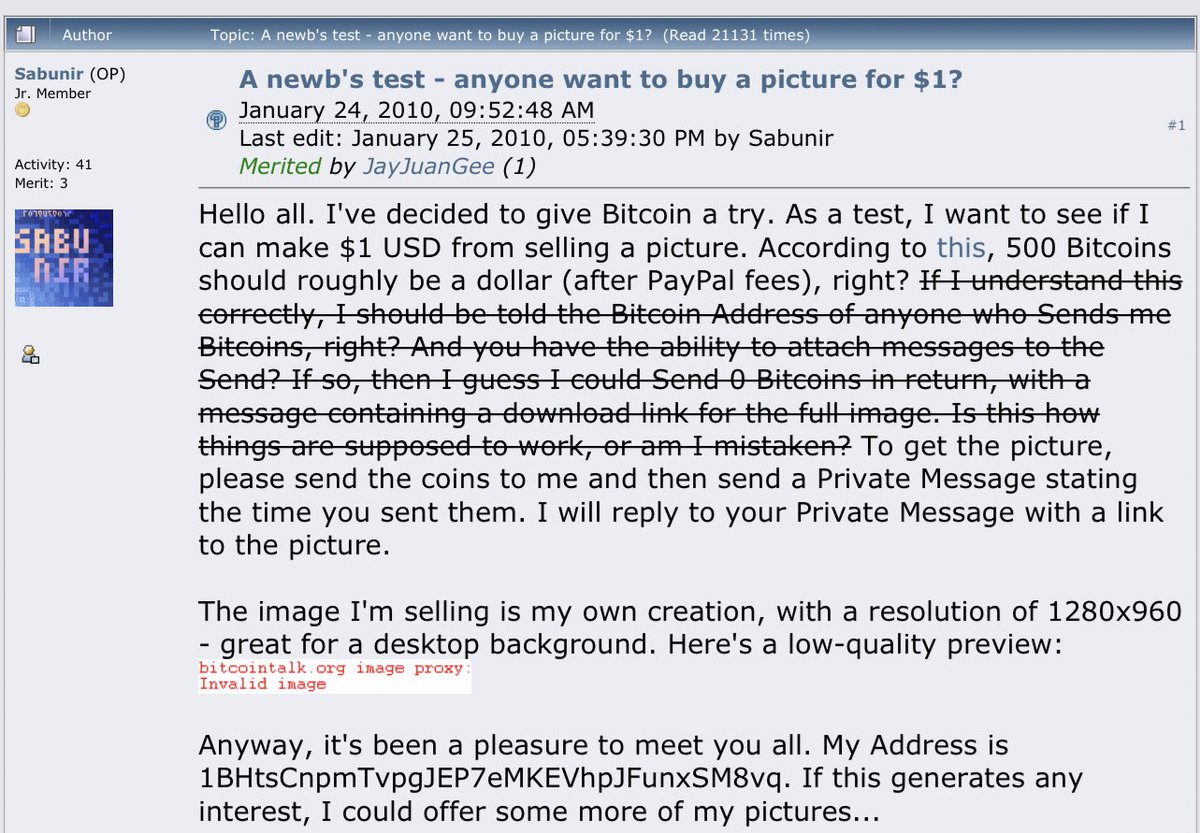
This Twitter Space was FIRE
We discovered that:
🔥 the first purchase EVER with bitcoin was buying a JPEG for 500 BTC in Feb 2010
🔥 it pre-dates the the famous 10,000 BTC pizza
🔥 satoshi himself helped facilitate the JPEG sale
🔥 laser-eye cult in absolute SHAMBLES
1/ 🚀 Excited to release the launch of https://t.co/foUiUj3B0K, a GPT-powered ChatBot for up-to-date @Ethereum information! We've taken SolidityGPT to next level by integrating resources like go-ethereum & https://t.co/QfQRgp7k2c, keeping you informed at https://t.co/oZSL1GYQ0c.