Just released evmstate, a TypeScript library to trace & visualize state changes on EVM chains, with human-readable labels (variable names, mapping keys, decoded values, etc).
@neural_avb Forced to mention https://t.co/ZVggFiuTw3
If you’re interested in this @FUCORY has been polishing his workflow framework for almost 6 months now, and sharing this kind of tips for even longer
Has been a while since I wrote about agentic engineering, so this time around some learnings of maintaining Pi as a junior maintainer to @badlogicgames :) https://t.co/TbD9Jvqk3t
The bun rewrite is some of the most impressive harness engineering I've seen. @jarredsumner basically first invented his own minimal version of Smithers and then thoughtfully created what is a high quality zig to rust compiler utilizing llms
Since it's one of the best examples of building a long running workflow I have seen I am busy porting it to using Smithers directly as a demo
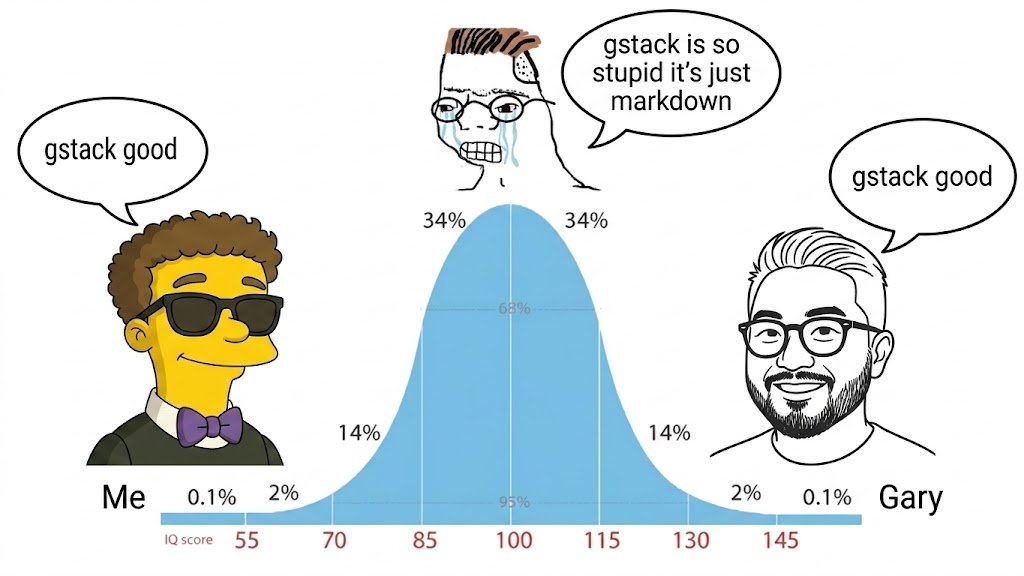
gstack is one of the most interesting AI repos
Hear me out, it points to a new kind of app: a Markdown app.
- The language is markdowny agentic harness
- The language is markdown
- The app is the workflow. And it works!
It works so well it's fair to ask "why smithers?". Clearly all workflows can just be human language skills. So what is the point of smithers? Is it not overengineering.
To answer this question I migrated gstack to smithers. The results:
- 31 gstack skills went from generated Markdown procedures to typed Smithers workflows.
- The old workflow surface was ~42k lines of generated `SKILL.md`.
- The new workflow surface is ~5.4k lines of typed `.tsx`.
- Gstack skills can be composed as react components
- Smithers resumability, inspectability, replayability, forking features, and UI all plug right in
But most importantly, I didn't migrate the workflow. An agent did.
The point of Smithers is agents love structure. And if you give your agent smithers it's ability to orchestrate itself for reusable long living workflows explodes. And since the programming model of smithers is so similar to React, agents are already great at intuitively know how to build complex workflows with smithers from their pretraining on React.
So smithers isn't an alternative to Markdown app programming. It's a more powerful way of doing it. It allows your agent to communicate both in human language and real control flow in a structured way agents love
Check out smithers docs: https://t.co/tBUI0CBU2s
And check out gsmithers: https://t.co/D4YfuyApNo
@samuellhuber I'm super strict about this and always find that it did it again. This and writing SQL migration paths. And syncing prd/specs as we discuss as if it was a changelog of our decisions.
My most valuable insights in term of development with AI (and dev in general) come from @FUCORY (or from working with him).
There is a good chance you wanna use smithers, and if you do you’re blessed, cause you’ll be able to shape it with your feedback, or customize it yourself.
Smithers is the new IDE. Imagine if you could
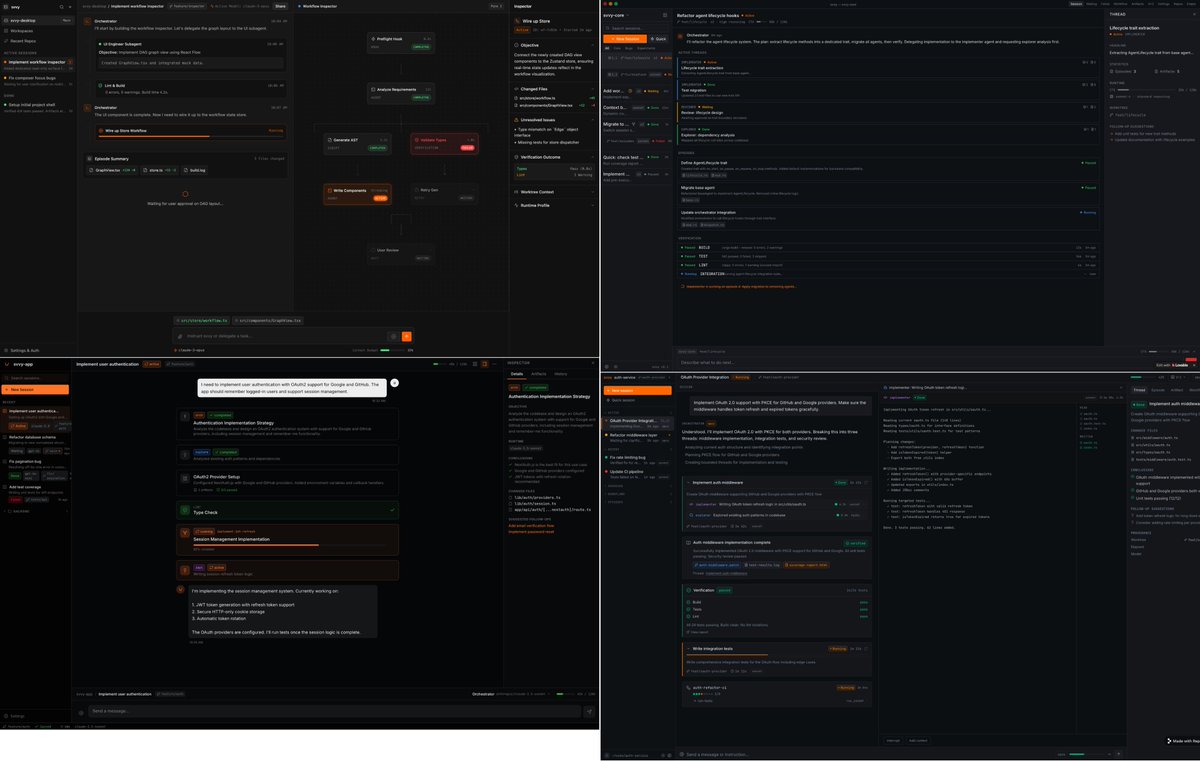
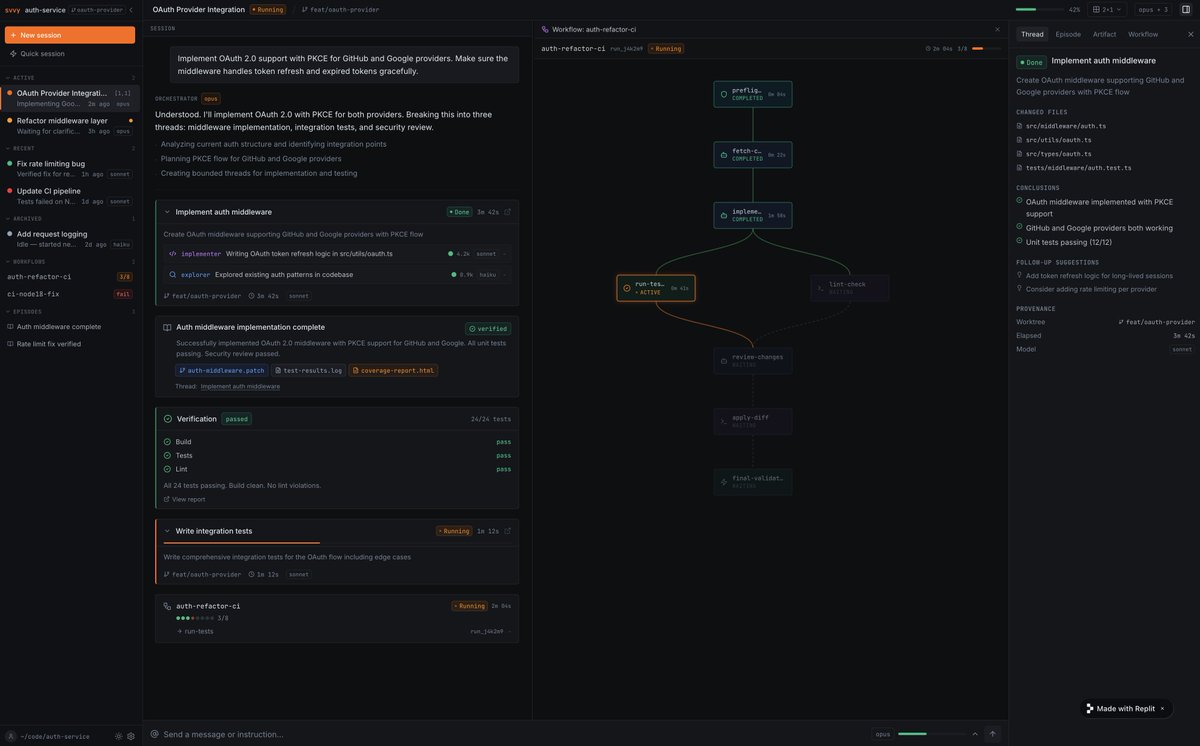
Use Smithers via a GUI (picture 1)
- Scrub through your entire Smithers history
- See the scheduled tasks and results at any time
- Fork or chat with an llm or view logs
But what if this GUI was actually a terminal (picture 2)
- Powered by lib ghosty
- Built in native code (no electron or tauri)
- Powered by tmux under the hood
- Supports all agents and subscriptions first class
But with IDE like cmd+p functionality (picture 3)
- Rich diffs
- Command+P search pallete to open tabs or run smithers workflows in background quickly
- Notifications for when workflows need you
Supports an in app browser (picture 4)
Also (not pictured)
- First class VCS support for JJHub and Github
- An operator agent who can control anything within the gui (have an agent talk to your agent)
- Powerful visualizations
- Vim mode (open all files in neovim by default)
- Useful keyboard shortcuts
- Visual/audio notifications when something needs attention
- An exciting roadmap
I feel like the one I like best is Replit; I can't decide for sure vs Figma. They are all decent tho.
I lied about the one-shot prompt I told Replit agent something like "you forgot this implement it as specified before".
I sent a prompt detailing a product to Figma, Lovable, v0 and Replit to see which one I like best. All on free plan. So might as well share my thoughts.
All of these screenshots are after a one-shot prompt.
Replit (Economy, idk model either)
Perfect and well-thought-out layout; clean and readable. More bloated than Linear, but in a sensible way. Interestingly, it was the most “modern,” in the sense that it showed agentic stuff more intuitively than existing tools. Less thorough than Lovable in implementing everything I asked for, but after a second short prompt it fixed it. Most faithful in following Linear’s design. Very personal style, but I liked the color choices better; they were lighter than the rest, and the overall palette was very smooth on the eyes. Same for the fonts.
@apoorveth@walletchan_ Yes you have to provide a source code or ast. But you can provide a standard ERC20 contract; you’re forced to assume token is a standard contract but that’s the same assumption with `balanceOf`
Best uses of smithers so far
- Burns — Workspace-first local control plane for authoring, running, and supervising Smithers workflows (web/desktop/CLI)
https://t.co/fkIiqA3Yx1
- Ralphinho — Multi-agent dev workflows that turn RFCs into landed code and automate code review
https://t.co/eZcZP5433T
- Cairo Coder — AI-powered Cairo smart contract generator using a RAG pipeline with Smithers orchestration
https://t.co/Hx4qGnsMf7
- Agentix — Opinionated RFC-to-production workflow orchestrator with DDD/BDD/TDD and merge queues
https://t.co/11rLUliNTS
- Era — Generic reusable multi-phase dev workflow engine (research → plan → implement → test → review)
https://t.co/YCCwiHQZsM
- Local Isolated Ralph — Kubernetes-native runner for Smithers workflows as isolated K8s Jobs/CronJobs
https://t.co/4Hc4hk0HKv