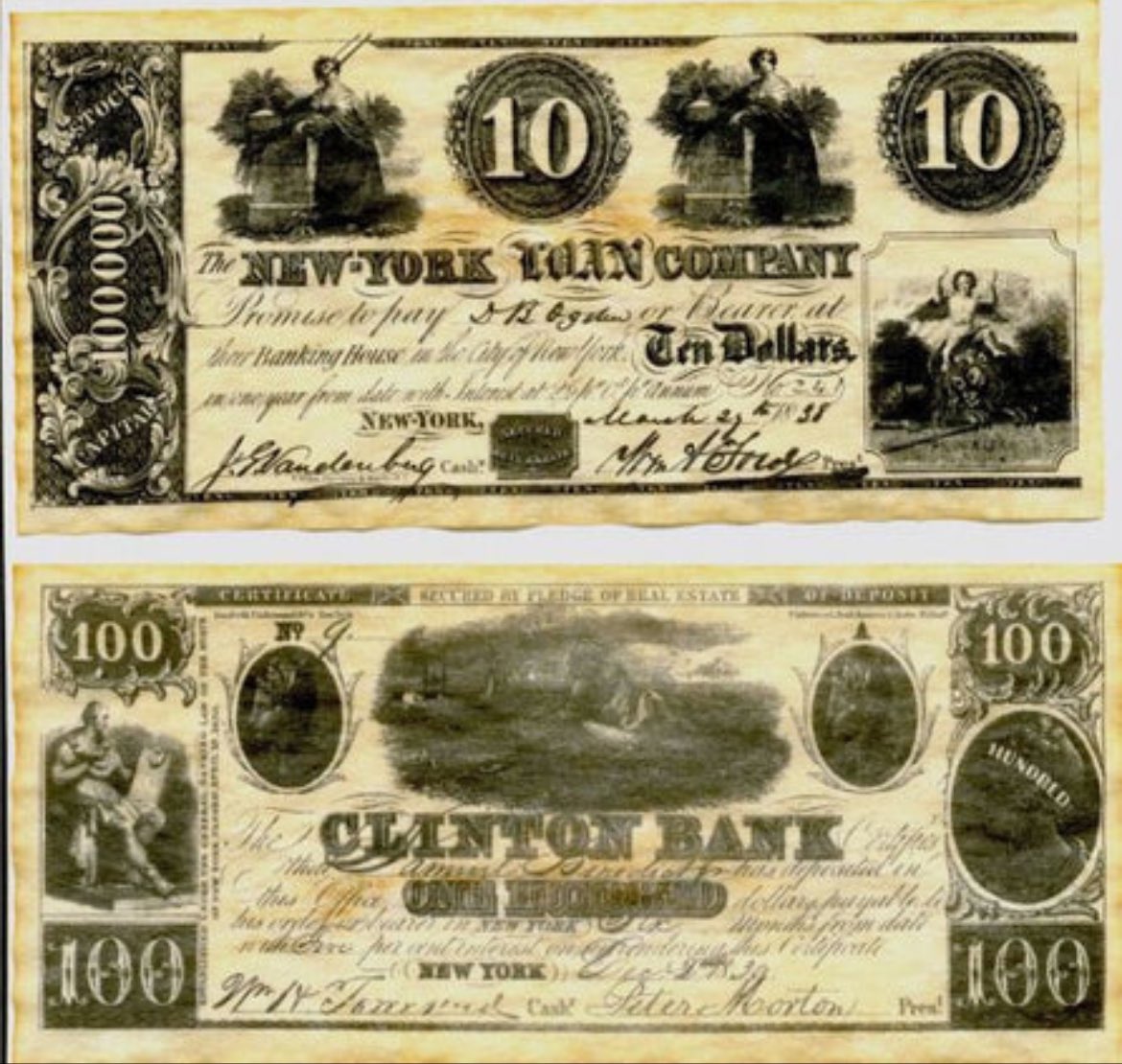
In the 19th century a $5 dollar note from a Tennessee bank used to worth only $4 dollars in New York. A peg that we take for granted nowadays is such an exciting piece of financial engineering.
I doubt it. Banks settle via M0 (balances on the central bank's balance sheet). Whether you lock the value on the central bank's ledger or on Circle's, in theory it is still locked liquidity for settlement. One can even argue that liquidity is now more fragmented.
.. But I might be missing something?
A single solution focused on the core of money can unlock an entirely new universe of possibilities. Welcome to the next quantum leap in finance.
This is mass[Finance].
@wayanhq Settlement has never really been an issue in the network. MC uses a CCP-like model, acting as the central intermediary that everyone settles with. They probably have accounts around the world, allowing local to settle through the local RTGS systems. This is mostly marketing.
@LordDurden The industry is short on macro liquidity and is currently going through an expected bear trend. On top of that, there are a couple of major AI IPOs coming up. People and institutions are still building, though.
The smallest LLM is now just 200 lines of code. @karpathy released it a few weeks ago, proving that the core of these models requires a very small code surface area.
Even the most complex systems become extremely simple once you understand the core principles. Finance is no different—systems like Fedwire and CLS, which move quadrillions per year in volume, can be replicated in under 500 lines of code. Condensed complex knowledge is highly asymmetrical.
Solve et coagula.
@jbrukh@kelxyz_@Pluralis I can see an angle for federated learning, particularly where privacy or secrecy of the training data is needed. I'll check Pluralis and their positioning.
Well, it's normal. Very few people outside the EU want to store value in euro-denominated bank accounts (unlike the strong demand for USD). Furthermore, all liquidity is USD-centered, so the utility of holding digital EUR is very low at the moment. This will remain the case until stablecoin-powered neobanks grow more in the EU.
@jonah_b@Nomaticcap Banking is a bit of a red ocean. Many existing players already compete on that arena. Starting neo-bank from scratch can be tough, but the future "neo-banks" will most likely be launched by companies/people with existing distribution (similar to how credit unions are started).