This is exactly why experienced software engineers are valuable and will be valuable.
If you don’t know what good code looks like you will have no idea if what the models generate are any good
Of course “AI reviews the code” etc etc… it doesn’t work as reliably. Via @mitchellh
the data from Killingsworth's own app was sitting there the whole time saying the ceiling was not about dollars at all. The ceiling is whether you can hold your attention on the life you actually have.
Does money buy happiness? A Princeton Nobel laureate said no above $75,000. A Penn researcher with 1.7 million data points said yes. The day they sat down together to settle the fight, the answer they reached should change how you think about your own life.
The Nobel laureate is Daniel Kahneman. The Penn researcher is Matthew Killingsworth.
The fight between them lasted 13 years, and the way it ended is one of the cleanest examples in modern science of two smart people being wrong in opposite directions about the same question.
In 2010 Kahneman and his Princeton colleague Angus Deaton published a paper that became one of the most quoted findings in the history of social science.
They analyzed 450,000 responses to the Gallup-Healthways Well-Being Index and concluded that emotional well-being rose steadily with income up to about $75,000 a year, and then flattened out completely. Above that line, the extra money was not buying any more daily happiness.
The headline traveled around the world. Every news outlet ran the number.
A CEO in Seattle famously cut his own salary to raise his employees to that exact threshold. The 75,000 dollar figure became cultural shorthand for the idea that the rich are not actually any happier than the rest of us once basic needs are met.
For 11 years almost nobody seriously challenged it. Kahneman had a Nobel Prize in Economics, the sample size was massive, and the conclusion was emotionally satisfying in a way that made everyone feel a little better about not being wealthy.
Then in 2021 a 33 year old researcher at the University of Pennsylvania published a paper that quietly destroyed the entire finding. His name is Matthew Killingsworth.
He had spent the previous decade building a smartphone app called Track Your Happiness that pinged users at random moments during their day and asked them a simple question.
How do you feel right now, on a scale from very bad to very good. The app was designed to catch happiness in the act, not to ask people to recall it later.
By 2021 he had collected over 1.7 million real-time happiness reports from 33,000 adults. When he plotted income against in-the-moment well-being, there was no plateau anywhere.
The line just kept rising. People earning $200,000 were happier on average than people earning $100,000. People earning $400,000 were happier than people earning $200,000. The curve flattened slightly but never stopped climbing.
The famous $75,000 ceiling that the world had been quoting for 11 years simply did not exist in his data.
Now there were two Nobel-quality findings sitting in direct contradiction with each other. One of them had to be wrong, and neither researcher was willing to walk away.
What happened next is the part of the story almost nobody knows.
Kahneman called Killingsworth and proposed something rare in academic science. He called it an adversarial collaboration. The two of them, joined by Penn psychologist Barbara Mellers as a neutral referee, would sit down together and reanalyze the raw data from both studies, line by line, until they figured out which one of them was wrong.
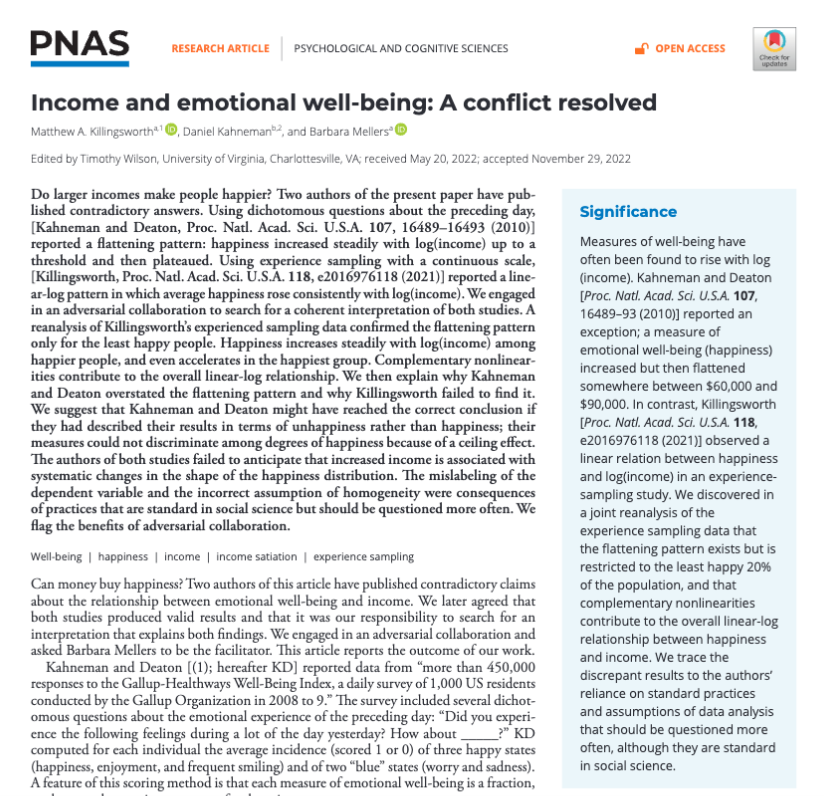
The paper they co-authored was published in March 2023 in the Proceedings of the National Academy of Sciences. And the answer they reached was not what either of them had expected.
Both of them had been right at the same time. They had been measuring two different populations without realizing it.
When the team broke Killingsworth's 1.7 million data points apart by baseline happiness, the picture clarified completely. For the happiest 70 percent of people, more money kept buying more happiness all the way up to $500,000 a year, with no sign of slowing down.
For people in the middle, the same pattern held. But for the bottom 20 percent of the sample, the ones who were already unhappy before the question of money even came up, the curve flattened almost exactly where Kahneman's original paper had said it would. Above roughly $100,000 a year, adjusted for inflation, more money did nothing for them.
This is the finding that changes how the question should be asked.
If you are not already unhappy, money keeps buying happiness for a much longer stretch than Kahneman's original paper suggested. The runway is wider than the world has been telling itself for a decade.
If you are already unhappy, money does almost nothing past a certain point. There is a ceiling, but the ceiling is not about income. It is about the underlying state of the person collecting it.
The deeper insight in Killingsworth's original research, the one almost nobody talks about, is the part that should sit with you longer than the income numbers. The Track Your Happiness app had been telling him for years that the single biggest predictor of in-the-moment well-being is not money at all. It is whether your mind is on the thing you are doing.
His most cited paper, written with Daniel Gilbert at Harvard, is titled A Wandering Mind Is an Unhappy Mind. The data from the app showed that people are mentally absent from what they are doing 47 percent of the time, and that mental absence is one of the strongest predictors of unhappiness in the entire dataset. More predictive than income. More predictive than the activity itself. More predictive than almost any demographic variable you could measure.
Which means the unhappy 20 percent that Kahneman's plateau actually described were probably not unhappy because they did not have enough money. They were unhappy for reasons that more money could not reach.
The reason the curve flattened for them at $100,000 a year is the same reason it would have flattened at $300,000 or $700,000. The thing they were missing was not buyable.
The most uncomfortable line in the entire 2023 paper is the one that nobody on the internet quotes. The authors note that the relationship between income and happiness, while real, is much weaker than the relationship between attention and happiness. A person earning $40,000 who is fully present in their own life will, on average, report higher in-the-moment well-being than a person earning $400,000 whose mind is somewhere else.
The fight about money was the wrong fight the entire time.
The two researchers spent 13 years arguing over whether the dollar ceiling was at $75,000 or $500,000, and the data from Killingsworth's own app was sitting there the whole time saying the ceiling was not about dollars at all. The ceiling is whether you can hold your attention on the life you actually have.
You can run the experiment yourself the next time you catch your mind drifting. Stop. Put your phone down. Look at the room you are in, the person across from you, the food in front of you, the work you are actually doing. That is the part the apps cannot sell you and the salary cannot buy you.
The data has been clear for over a decade. The plateau is not in your bank account. It is in your attention.
The problem with the "if it works who cares what the code looks like" mindset for agentic work is that it assumes the agent has a perfect understanding of "works." Realistically, things are underspecified, agents make bad assumptions, etc.
To be fair, agents are pretty good at unit test coverage. They're pretty bad at designing human experiences (API, CLI flags, etc.), especially cohesive ones for future roadmap plans they may not have visibility into (unless your backlog is perfect and vision fully laid out, which I doubt). They're bad at knowing where performance matters and what type (CPU vs memory tradeoffs). They're bad at where compatibility matters and where it doesn't (and tend to err on the side of preserving it without further guidance). Etc.
Unless you have this ALL specified, you can't possibly claim "it works" without taking a look and thinking about it.
LLMs are hard to create a moat around
it's stateless compute that you can switch overnight when a better/cheaper option shows up
all the commotion you see is downstream of this fact as companies flail around trying to fight this
This is what building a company looks like on Replit.
One canvas with your web app, mobile app, marketing & App Store material.
Click into any one of those and start building, changing, and generating new things.
We call people smart for building wealth, status, a comfortable life. Ibn al-Qayyim (رحمه الله) had a different test for intelligence, and most of what we admire fails it.
He posed a question:
كيف يكون عاقلًا من باع الجنة بما فيها بشهوة ساعة؟
"How can he be intelligent, the one who sells Paradise and all that is in it, for the desire of a single hour?"
Intelligence here is not sharpness of mind. It is accuracy of judgment. Knowing that no pleasure now is worth what it charges you forever.
And look at what we trade it for. A haram relationship. A haram income. Then we call that living.
The truly intelligent one refuses the bargain. He will not sell forever for an hour. That is why the Companions were the best of people; not by accident, but by a conscious decision they made, again and again.
Ibn al-Qayyim, al-Fawāʾid
Most marriages don't end over betrayal. They erode in small moments, both people angry at once, and neither willing to be the one who softens first. The Salaf understood this danger, and one Companion built his whole marriage around avoiding it.
Abū'd-Dardā' (رضي الله عنه) gave his wife Umm'd-Dardā' a single rule to live by:
«إذا غضبتُ فرضِّيني، وإذا غضبتِ رضَّيتُكِ، فإذا لم نكن هكذا ما أسرعَ ما نفترق»
"If I become angry, then win me back. And if you become angry, I will win you back. For if we are not like this, how quickly we would part."
Notice it runs both ways. He doesn't wait for her to repair things. He commits to being the one who mends it, and asks the same of her. Anger met with anger has only one ending.
Someone has to choose to fix it. Every time.
Ibn Ḥibbān in Rawḍat al-ʿUqalāʾ
how to be good at your job
- realize this one thing is actually made up of two separate things
- realize instead of solving the direct problem you can solve a broader problem
- instead of implementing thing, implement other thing that makes it easier to implement thing
As-salamu alaykum wa rahmatullahi wa barakatuh,
A brother has made an excellent tool for students of Assim Al-Hakeem that searches through the Shaykh’s authentic written fatwas and official YouTube answers all in one place:
Search Sheikh Assim: https://t.co/D1mmN465WN
One of the best things about this tool is that it helps people go directly to the Shaykh’s actual answers instead of relying on clips, summaries, or random people’s explanations online.
Features include:
Searching official written fatwas
Searching official YouTube answers
Fast and organized results
Easy access to authentic material for students
May Allah reward this brother immensely for the time, effort, and dedication he put into this project, place barakah in it, and accept it from him. 🤲
Please share it with others who may benefit.
One of the underrated reasons Linear is so popular with so many people is they have an internal target that nothing in their interface should take more than 300ms to render. They keep fixing regressions whenever it happens.
It’s very hard to retrofit this culture: look at JIRA…
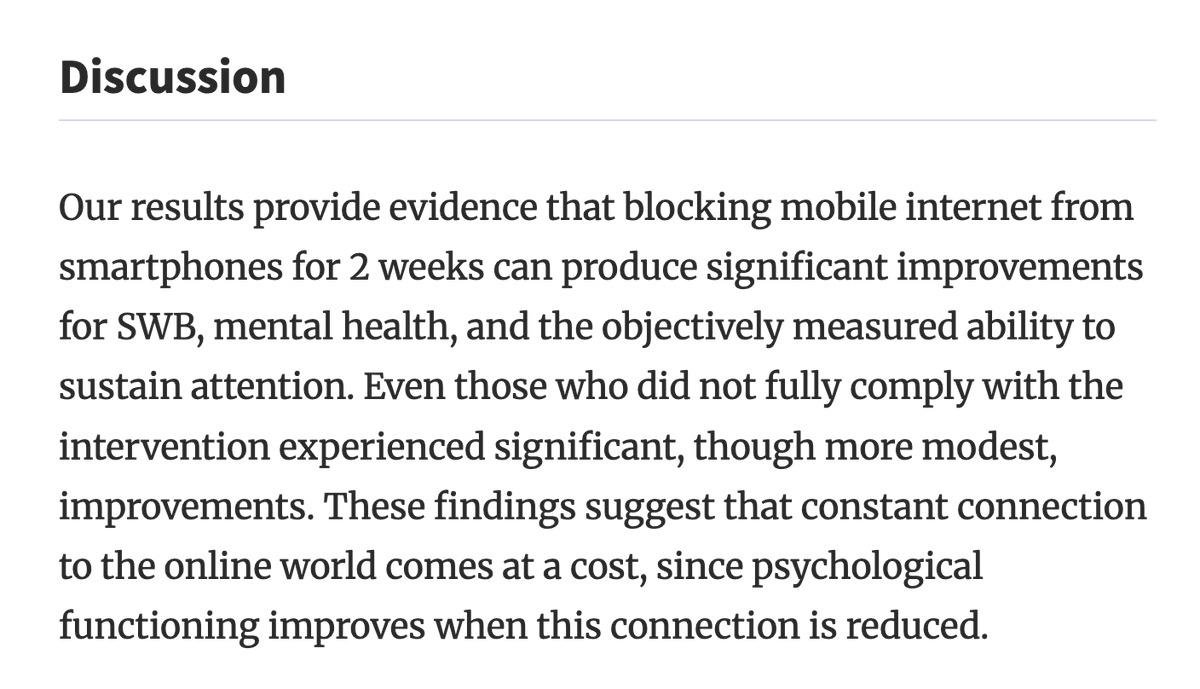
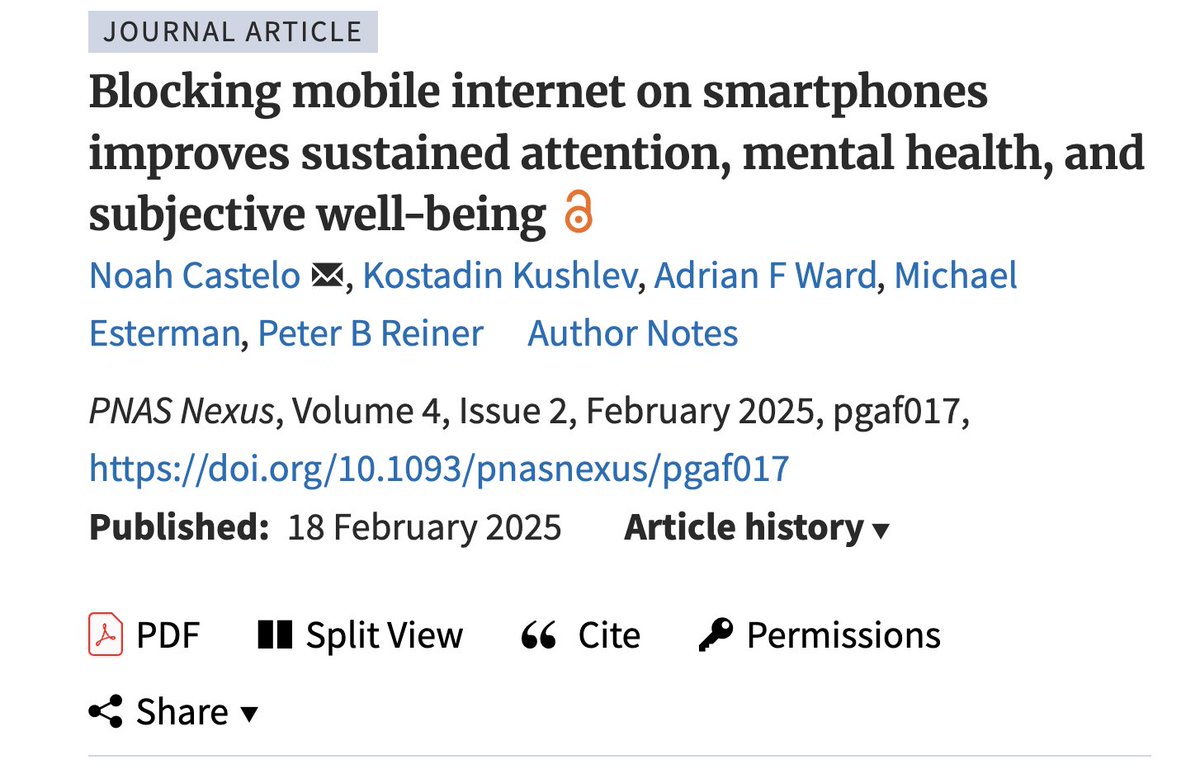
In adults, limiting smartphone functionality to texting and calls and blocking all social media and mobile internet for 2 weeks significantly improved attention, self-reported well-being and mental health. 90% of participants experienced a benefit.
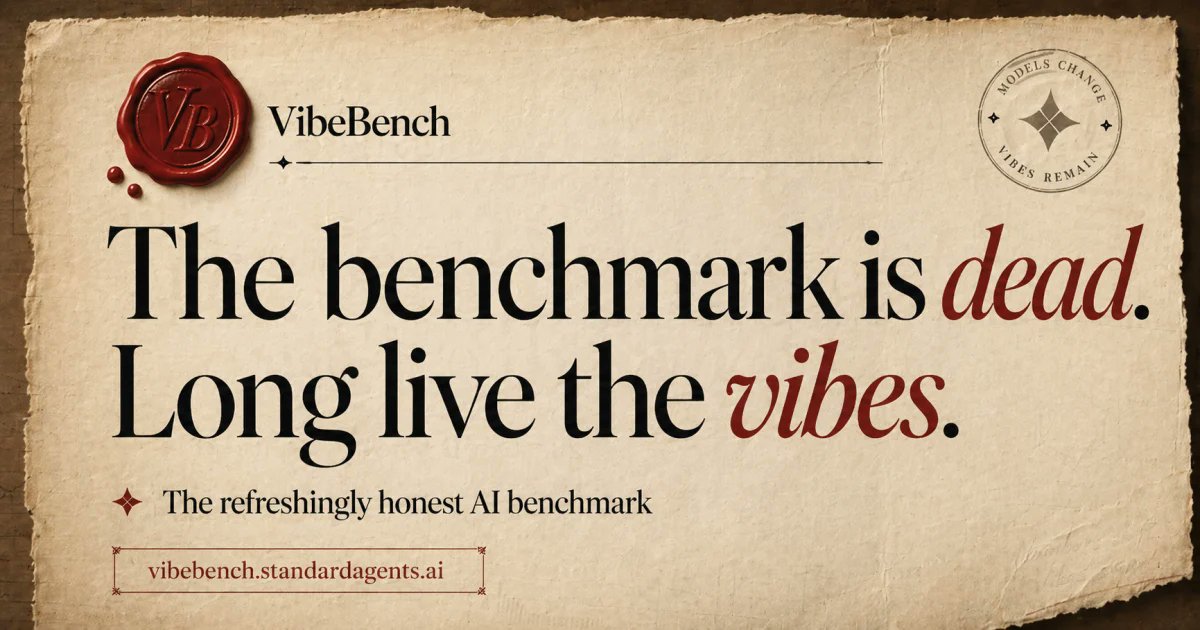
We’re announcing: VibeBench, a new benchmark for what actually matters — how models feel when used on real work by experienced software engineers.
But, we need your help. Here’s how it works:
1. An initial cohort of 1000 qualified software engineers (join: https://t.co/07nrXfMthQ)
2. Groups of 250 evaluate new models for 2 days on real work.
3. Participants subjectively rank the model relative to other models they have experience with.
4. On day 4 a report is released with objective results derived from the subjective tests.
How can you help:
1. We all need this benchmark to exist, but for it to become reality, we need an initial cohort of 1000 qualified software engineers. If that’s you, please join!
https://t.co/07nrXfMthQ
2. Repost this! We need to reach as many qualified engineers as we can find.
3. Share this initiative with everyone on your engineering teams. Together we can make this benchmark a reality for all of us.
🚨 Bitwarden CLI 2026.4.0 was compromised as part of the ongoing Checkmarx supply chain campaign after attackers abused a GitHub Action in Bitwarden’s CI/CD pipeline.
We’ll continue updating our coverage as more details are confirmed.
https://t.co/G0aakn8swq
When people think software engineers, they tend to think jobs at tech companies building apps. The growth of the tech industry is so wired into our heads that that’s what we think the point and limit of software is. That’s just not how to think about software anymore.
AI agents make it so every other company on the planet starts to create software for bringing automation to their workflows in a way that would have either been infeasible technically or unaffordable economically before.
Every biopharma, industrial company, consulting firm, bank, and retailer will be building far more software in the form of backend systems, data processing, new digital experiences for clients, automating end-to-end workflows, and more. Small businesses will light up projects that would have needed a team of 50 to go do, but now becomes plausible with 5 people. And companies will start hiring engineers to help them make agents work and help redesign their business processes.
All of this work will require people that are technical and skilled at software. The job becomes thinking through system design, wiring up various platforms, directing agents on what to automate, maintaining the system, upgrading it when things change, reviewing the output from the agents, and more.
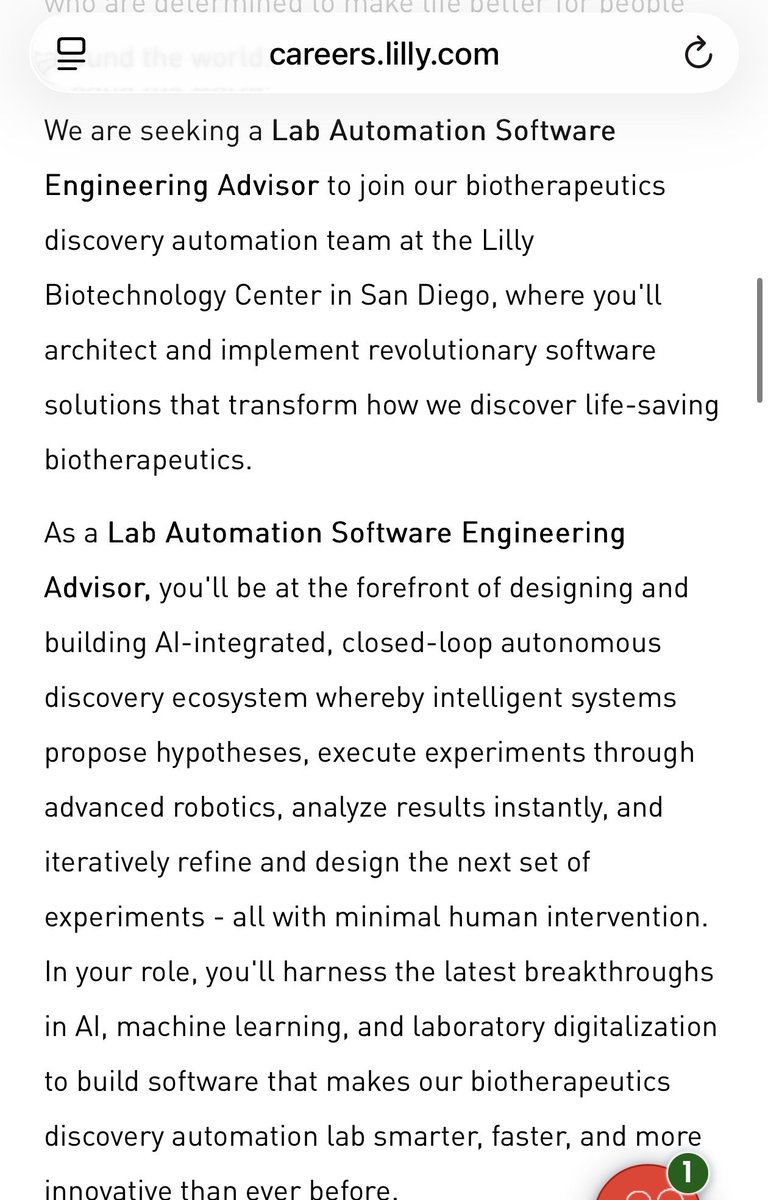
Just for fun, I went to Eli Lilly’s career site to see what jobs were open, and lo and behold they have a category called “Lab Automation Software Engineer”. There will be jobs like these in every company going forward, and they are the jobs that represent a new category of work that is now becoming available. And it’s only one of many examples of what engineers will be doing in the future.
So before you think it’s the end of engineering, imagine the demand in the real world for this kind of work.