11th September 1893, Chicago.
Swami Vivekananda’s captivating address offered a glimpse of the civilisational ethos of India.
His inspiring words still reverberate across the world.
https://t.co/1iz7OgT5Ab
We’re spending $200B+ a year on data centers to power AI. One company raised $11M, grew human brain cells on a chip, and the cells taught themselves to play a 3D shooter in a week.
Cortical Labs grew 200,000 human neurons on a silicon chip and taught them to play Doom. The cells navigate, target enemies, and fire weapons in real time. Their previous game, Pong, took 18 months on older hardware. Doom took a week. An independent developer with zero biotech experience built the integration using a Python API. The neurons did the rest.
That compression from 18 months to one week tells you everything about where this is going.
Here’s what the “can it run Doom” crowd is missing: each CL1 unit costs $35,000. A full 30-unit server rack draws 850 to 1,000 watts total. Your brain runs on 20 watts. A single GPU cluster training an LLM can draw megawatts. The energy economics of biological compute are orders of magnitude better than silicon, and that gap scales.
The investor list tells you who’s paying attention. Horizons Ventures, Blackbird, and In-Q-Tel, the CIA’s venture arm. In-Q-Tel doesn’t fund science projects. They fund intelligence infrastructure. 115 units started shipping in 2025.
Cortical Labs is now selling “Wetware-as-a-Service” through the Cortical Cloud. Developers can deploy code to living neurons remotely without touching a lab. They’re pricing access at the level of a software subscription while the hardware runs on real human brain cells derived from adult skin and blood samples.
The Doom demo is marketing. The platform play is a bet that biological neurons will eventually outperform silicon at exactly the tasks AI struggles with most: real-time adaptation under uncertainty, learning from minimal data, and processing ambiguity without brute-force compute.
The question was never “can it run Doom.” The question is what happens when it can run everything else.
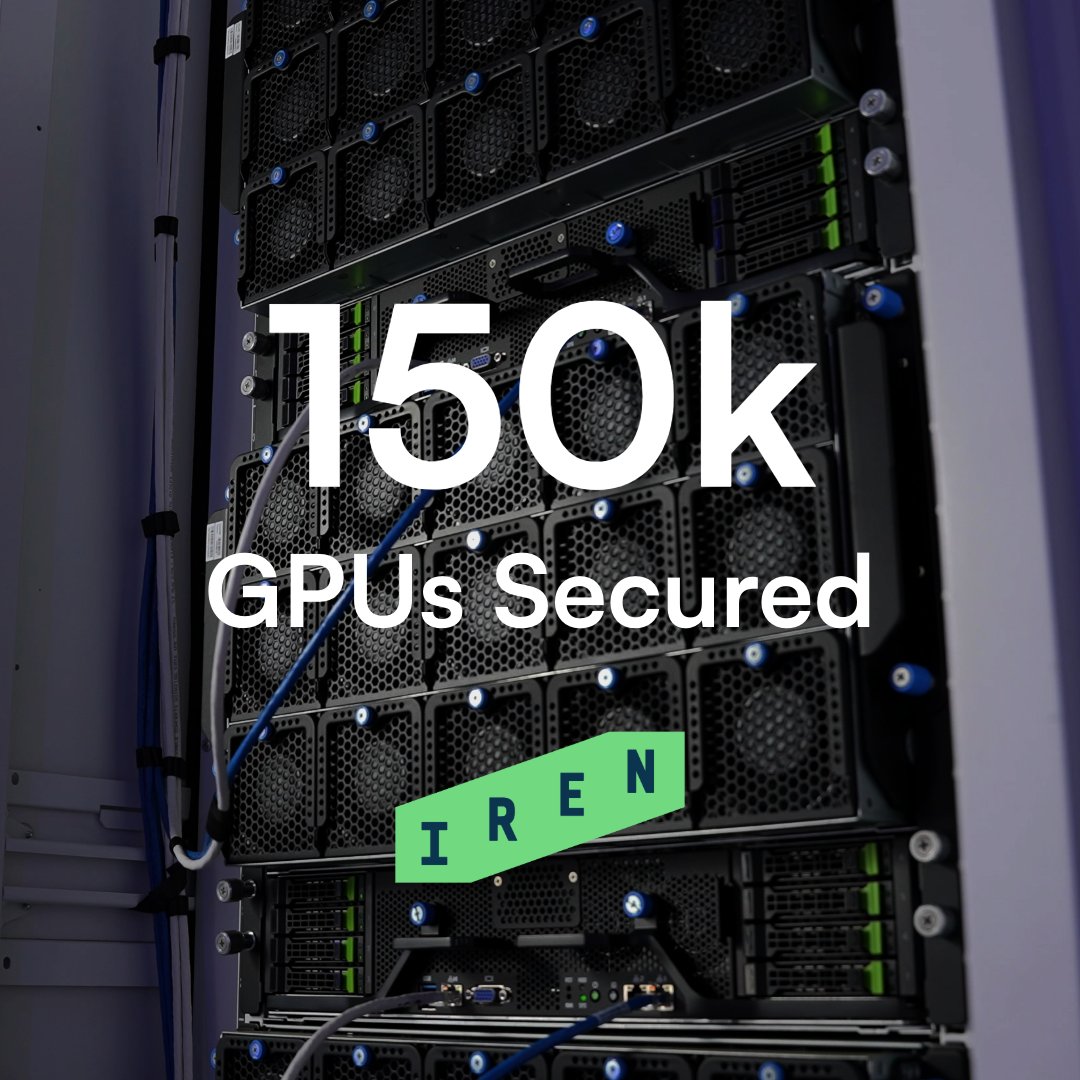
To meet growing demand for our vertically integrated offering, $IREN is expanding to 150,000 GPUs with the addition of 50,000 @NVIDIA B300 GPUs.
Time-to-compute is increasingly important in today’s AI Cloud market and this expansion positions $IREN among the largest AI infrastructure providers globally.
More details: https://t.co/RsGJH7t81l
From Kuwait to Saudi Arabia and the United Arab Emirates, all countries hosting US military assets reported Iranian missile attacks on their territories.
Residents in Dubai, an emerging global financial hub in the Gulf, witnessed several loud blasts throughout the day. A high-end hotel on Palm Jumeirah, one of the emirate’s top tourist attractions, was hit by parts of a missile that was either intercepted or got knocked off its trajectory https://t.co/seGXChKBNY
@MattGriscom@WHLeavitt They dont want incoming immigrants to multiply in thousands and change their country for worse. Securing their tradition is a good cause.
@Rightanglenews When youre a multi billionaire, time is money. They cant afford to wait in line and queue at the airports. It affects their earnings which in turn affects investments which in turn affects everything else.
For those unaware, SpaceX has already shifted focus to building a self-growing city on the Moon, as we can potentially achieve that in less than 10 years, whereas Mars would take 20+ years.
The mission of SpaceX remains the same: extend consciousness and life as we know it to the stars.
It is only possible to travel to Mars when the planets align every 26 months (six month trip time), whereas we can launch to the Moon every 10 days (2 day trip time). This means we can iterate much faster to complete a Moon city than a Mars city.
That said, SpaceX will also strive to build a Mars city and begin doing so in about 5 to 7 years, but the overriding priority is securing the future of civilization and the Moon is faster.