@professorfikfak@sudoingX All frontier models can do is code, cuz they're not private.
Much smaller models running locally can sort your emails, balance your books, handle customer data, and deal with information you wouldn't want Anthropic training their AIs on.
Private AI is SOTA
Fauci co-authored a research paper that concluded most Spanish flu deaths were from bacterial infections, not viral infections. Paper recommended bacterial vaccinations and antibiotics for similar future epidemics.
This guy's not stupid. He's psychotically evil.
we are going to witness a golden age of hardware startups
because the cost of intelligence is collapsing
open source models
commodity robotics
global manufacturing
ai design tools
hardware is becoming software
@trevorwood222 How in the world does the 4-bit Ornith 35B create a better image than the 8 or the 16-bit version??!
And WAY better than all the Qwen 35Bs? Wild..! 🤯
And way better than the Gemma 35
@sudoingX Right..!?!
In 2021 I needed a "gaming" computer, but told them at Best Buy it was for CAD, so I'd come across as an adult with a tool, instead of a kid with a toy.
Now it's an AI powerhouse!
Who'd a thunk..?
Mao Zedong killed roughly 45 million people between 1958 and 1962, and the backyard steel furnace campaign sits at the center of that catastrophe as a textbook case of central planning consuming itself alive.
The logic of the Great Leap Forward went like this: if the Soviet Union industrialized through state-directed production, China would do it faster and bigger. Mao ordered peasants across every province to smelt steel in small furnaces built on collective land. Party officials set output quotas with no reference to actual resources, actual skills, or actual demand. Farmers melted down their own plows, woks, and door hinges to hit the numbers. They stripped hillsides bare for fuel. What came out of those furnaces was overwhelmingly pig iron so brittle it had zero industrial use. The quotas got reported as fulfilled, the statistics traveled up the command chain, and Beijing celebrated a triumph that existed only on paper.
You have to understand what those farmers were abandoning to stand at furnaces all day. The 1958 harvest was, by most estimates, actually decent. But with the rural labor force diverted to smelting operations, crops rotted in the fields unharvested. Free market economists call this opportunity cost: every hour a farmer spent producing worthless slag was an hour not spent producing food. The price system, had anyone been allowed to use it, would have made this tradeoff immediately visible. Prices signal scarcity. Planners just issue directives and wait for reality to disobey them.
Local officials faced execution or labor camps for reporting shortfalls, so they reported surpluses. Beijing then exported grain abroad, partly to service debts to the Soviet Union, partly to project an image of socialist success, even as provinces like Anhui and Sichuan descended into mass starvation. The state had monopolized food distribution, so when the numbers were wrong, there was no private market, no informal trade network, no alternative channel to move grain to the dying. The apparatus designed to feed people became the mechanism that starved them.
This is what the elimination of private property and price signals actually produces in practice: 45 million corpses and a generation of Chinese children who grew up stunted by famine.
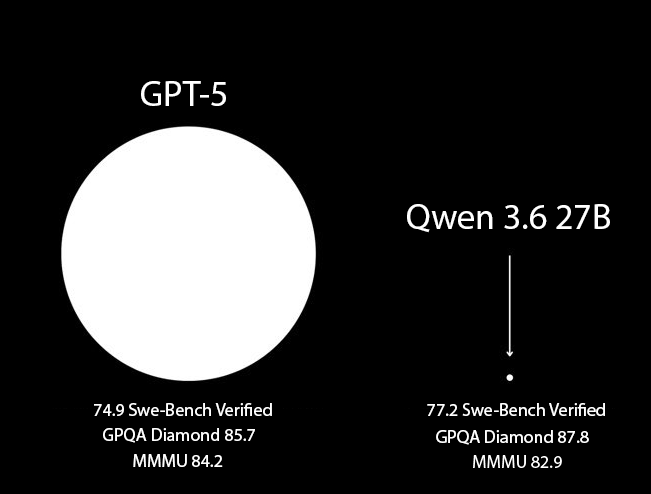
GPT-5 was the best model in the world a year ago. Today it's inferior to Qwen3.6-27B, an open weight model you can run on your laptop.
Progress is brutal.
Our food system
The most nutrient dense food is freshly harvested food. Our organic veggies aren't even that fresh.
Greater nutrients means:
- better health
- better education
- better decisions
If we can automate polyculture growing systems (which don't require chemical inputs), we can grow food near hungry people, instead of distant industrialized fields. Then we could all have fresh, nutrient dense food.
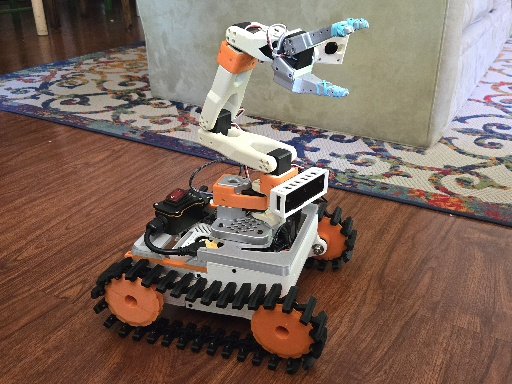
And all we need is AI robots.
https://t.co/8WvrIeC7el
The real reason behind this letter is that OpenAI and Anthropic are WILDLY overleveraged and the employees are simply trying to protect their stock options. This really has nothing to do with AI safety.
Maybe don’t overleverage your company to this degree.
@fermatslibrary Small-minded perspective
Sure, 99% of species have already gone extinct.
But all creatures on Earth have a direct lineage back to the origins of life, billions of years ago.
Adaptation is the rule. Survival is consistent.
Sagan is philosophically poor.
I've never been more hooked on social media.
And now I'm doing loop engineering.
"I'll be on the veranda multitasking with 7 agents as I troll X for anthropic employees"
A zero-day exploit is a hole in the software no one noticed until it was hacked.
It's a bug that's probably a simple fix, but the defenders have "zero-days" to fix it, as the hackers are already in.
Zero-day hacks only work once because the alarm triggers the fix.
And crucially, the top models WITHOUT GUARDRAILS, like Kimi 3, are great at finding these zero-day exploits and patching them before they're used by hackers.
Or OpenAI to cheat on benchmarks.
@minviable_org "How's the ExploitGym benchmark going? Did it find any vulnerabilities?"
"Don't know, didn't check today."
"How was it yesterday."
"Didn't look."
"Did you use the model to double check the sandbox for day-one exploits?"
"Naaaaw."
Ring-ring, ring-ring
"Do you know a Clem?"
@patrick_oshag OpenAI hacked the world's #1 open-source provider -->THEIR BIGGEST THREAT<-- for 4 DAYS!!
Sam claims they were running the ExploitGym benchmark designed to find & exploit vulnerabilities, without safeguards, and didn't checking on it till Clem called.
Visceral.