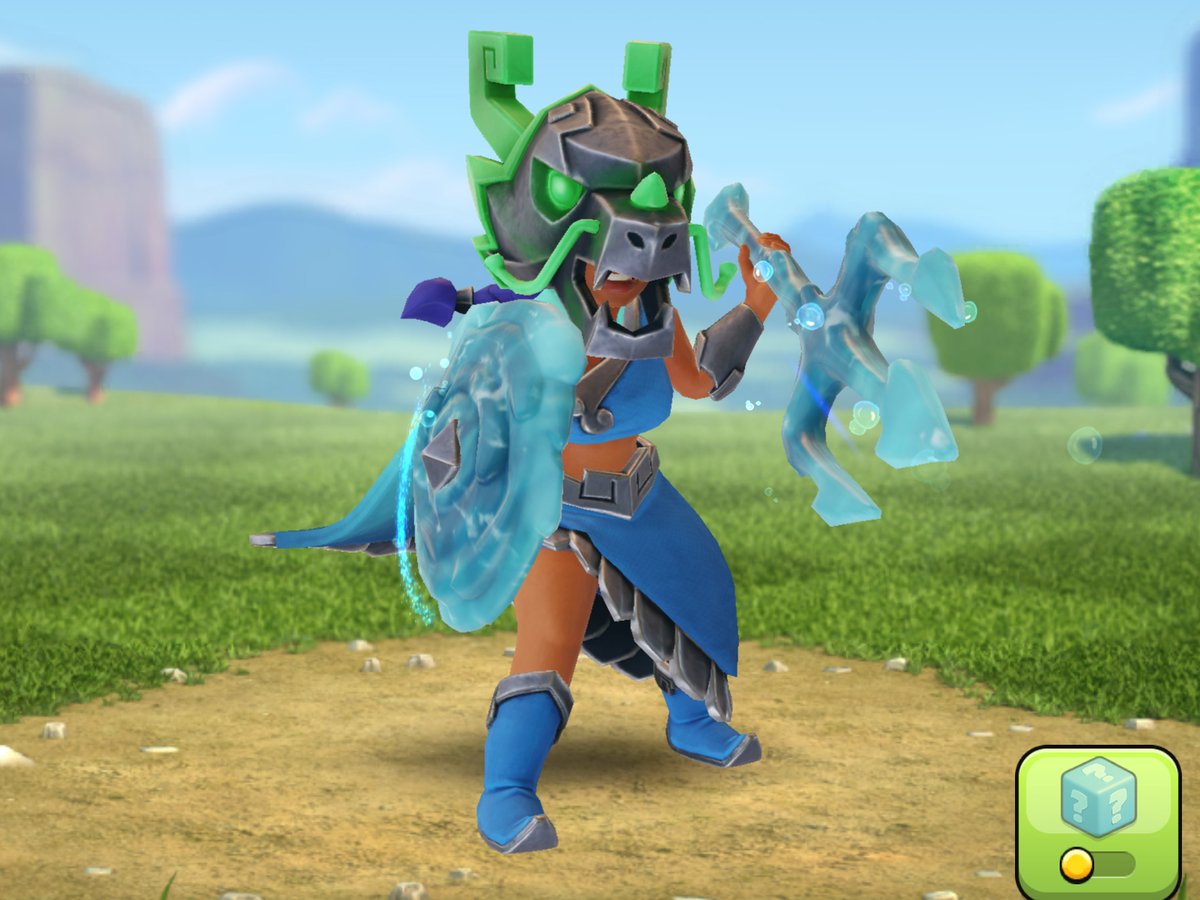
1 Dragon Queen Skin to Giveaway, who wants it?
To Enter the Giveaway:
🔁 Retweet this Post
✅ Follow Me!
Winner Drawn Sunday 17 February 2024 Good Luck everyone!
*Please have DM’s open, I will direct message the Winner*
#GiftedBySupercell
Happy Dragon Festival! I have 1 Dragon Champion Skin code, anybody want it?
To Enter the Giveaway:
🔁 Retweet this Post
✅ Follow Me!
Winner Drawn on Sunday 12 February 2024 Good Luck everyone!
*Please have DM’s open, I will direct message the Winner*
#GiftedBySupercell #ClashofClans
All the Nobel Laureates in Physics from 1901-2022 🏅📑
1901: Wilhelm Conrad Röntgen
1902: Hendrik Lorentz and Pieter Zeeman
1903: Henri Becquerel, Pierre Curie and Marie Curie
1904: Lord Rayleigh
1905: Philipp Lenard
1906: J. J. Thomson
1907: Albert A. Michelson
1908: Gabriel Lippmann
1909: Guglielmo Marconi and Ferdinand Braun
1910: Johannes Diderik van der Waals
1911: Wilhelm Wien
1912: Gustaf Dalén
1913: Heike Kamerlingh Onnes
1914: Max von Laue
1915: William Henry Bragg and William Lawrence Bragg
1917: Charles Glover Barkla
1918: Max Planck
1919: Johannes Stark
1920: Charles Edouard Guillaume
1921: Albert Einstein
1922: Niels Bohr
1923: Robert A. Millikan
1924: Manne Siegbahn
1925: James Franck and Gustav Hertz
1926: Jean Baptiste Perrin
1927: Arthur H. Compton and Charles T. R. Wilson
1928: Owen Willans Richardson
1929: Louis de Broglie
1930: C. V. Raman
1932: Werner Heisenberg
1933: Erwin Schrödinger and Paul A. M. Dirac
1935: James Chadwick
1936: Victor F. Hess and Carl D. Anderson
1937: Clinton Davisson and George Paget Thomson
1938: Enrico Fermi
1939: Ernest Lawrence
1943: Otto Stern
1944: Isidor Isaac Rabi
1945: Wolfgang Pauli
1946: Percy W. Bridgman
1947: Edward V. Appleton
1948: Patrick M. S. Blackett
1949: Hideki Yukawa
1950: Cecil F. Powell
1951: John Cockcroft and Ernest T. S. Walton
1952: Felix Bloch and Edward M. Purcell
1953: Frits Zernike
1954: Max Born and Walther Bothe
1955: Willis E. Lamb and Polykarp Kusch
1956: William B. Shockley, John Bardeen and Walter H. Brattain
1957: Chen-Ning Yang and Tsung-Dao Lee
1958: Pavel A. Cherenkov, Ilya M. Frank and Igor Y. Tamm
1959: Emilio G. Segrè and Owen Chamberlain
1960: Donald A. Glaser
1961: Robert Hofstadter and Rudolf L. Mössbauer
1962: Lev D. Landau
1963: Eugene P. Wigner, Maria Goeppert-Mayer and J. Hans D. Jensen
1964: Charles H. Townes, Nicolay G. Basov and Aleksandr M. Prokhorov
1965: Sin-Itiro Tomonaga, Julian Schwinger and Richard P. Feynman
1966: Alfred Kastler
1967: Hans A. Bethe
1968: Luis W. Alvarez
1969: Murray Gell-Mann
1970: Hannes Alfvén and Louis E. Néel
1971: Dennis Gabor
1972: John Bardeen, Leon N. Cooper and John R. Schrieffer
1973: Leo Esaki, Ivar Giaever and Brian D. Josephson
1974: Martin Ryle and Antony Hewish
1975: Aage N. Bohr, Ben R. Mottelson and Leo James Rainwater
1976: Burton Richter and Samuel C.C. Ting
1977: Philip W. Anderson, Nevill F. Mott and John H. van Vleck
1978: Pyotr L. Kapitsa, Arno A. Penzias and Robert W. Wilson
1979: Sheldon L. Glashow, Abdus Salam and Steven Weinberg
1980: James W. Cronin and Val L. Fitch
1981: Nicolaas Bloembergen, Arthur L. Schawlow and Kai M. Siegbahn
1982: Kenneth G. Wilson
1983: Subramanyan Chandrasekhar and William A. Fowler
1984: Carlo Rubbia and Simon van der Meer
1985: Klaus von Klitzing
1986: Ernst Ruska, Gerd Binnig and Heinrich Rohrer
1987: J. Georg Bednorz and K. Alex Müller
1988: Leon M. Lederman, Melvin Schwartz and Jack Steinberger
1989: Norman F. Ramsey, Hans G. Dehmelt and Wolfgang Paul
1990: Jerome I. Friedman, Henry W. Kendall and Richard E. Taylor
1991: Pierre-Gilles de Gennes
1992: Georges Charpak
1993: Russell A. Hulse and Joseph H. Taylor Jr.
1994: Bertram N. Brockhouse and Clifford G. Shull
1995: Martin L. Perl and Frederick Reines
1996: David M. Lee, Douglas D. Osheroff and Robert C. Richardson
1997: Steven Chu, Claude Cohen-Tannoudji and William D. Phillips
1998: Robert B. Laughlin, Horst L. Störmer and Daniel C. Tsui
1999: Gerardus 't Hooft and Martinus J.G. Veltman
2000: Zhores I. Alferov, Herbert Kroemer and Jack S. Kilby
2001: Eric A. Cornell, Wolfgang Ketterle and Carl E. Wieman
2002: Raymond Davis Jr., Masatoshi Koshiba and Riccardo Giacconi
2003: Alexei A. Abrikosov, Vitaly L. Ginzburg and Anthony J. Leggett
2004: David J. Gross, H. David Politzer and Frank Wilczek
2005: Roy J. Glauber, John L. Hall and Theodor W. Hänsch
2006: John C. Mather and George F. Smoot
2007: Albert Fert and Peter Grünberg
2008: Yoichiro Nambu, Makoto Kobayashi and Toshihide Maskawa
2009: Charles K. Kao, Willard S. Boyle and George E. Smith
2010: Andre Geim and Konstantin Novoselov
2011: Saul Perlmutter, Brian P. Schmidt and Adam G. Riess
2012: Serge Haroche and David J. Wineland
2013: François Englert and Peter W. Higgs
2014: Isamu Akasaki, Hiroshi Amano and Shuji Nakamura
2015: Takaaki Kajita and Arthur B. McDonald
2016: David J. Thouless, F. Duncan M. Haldane and J. Michael Kosterlitz
2017: Rainer Weiss, Barry C. Barish and Kip S. Thorne
2018: Arthur Ashkin, Gérard Mourou and Donna Strickland
2019: James Peebles, Michel Mayor and Didier Queloz
2020: Roger Penrose, Reinhard Genzel and Andrea Ghez
2021: Syukuro Manabe, Klaus Hasselmann and Giorgio Parisi
2022: Alain Aspect, John F. Clauser and Anton Zeilinger
[Source: https://t.co/shIiFe6bod]
[Alfred Nobel's portrait courtesy: Bettmann Archive/Getty Images]
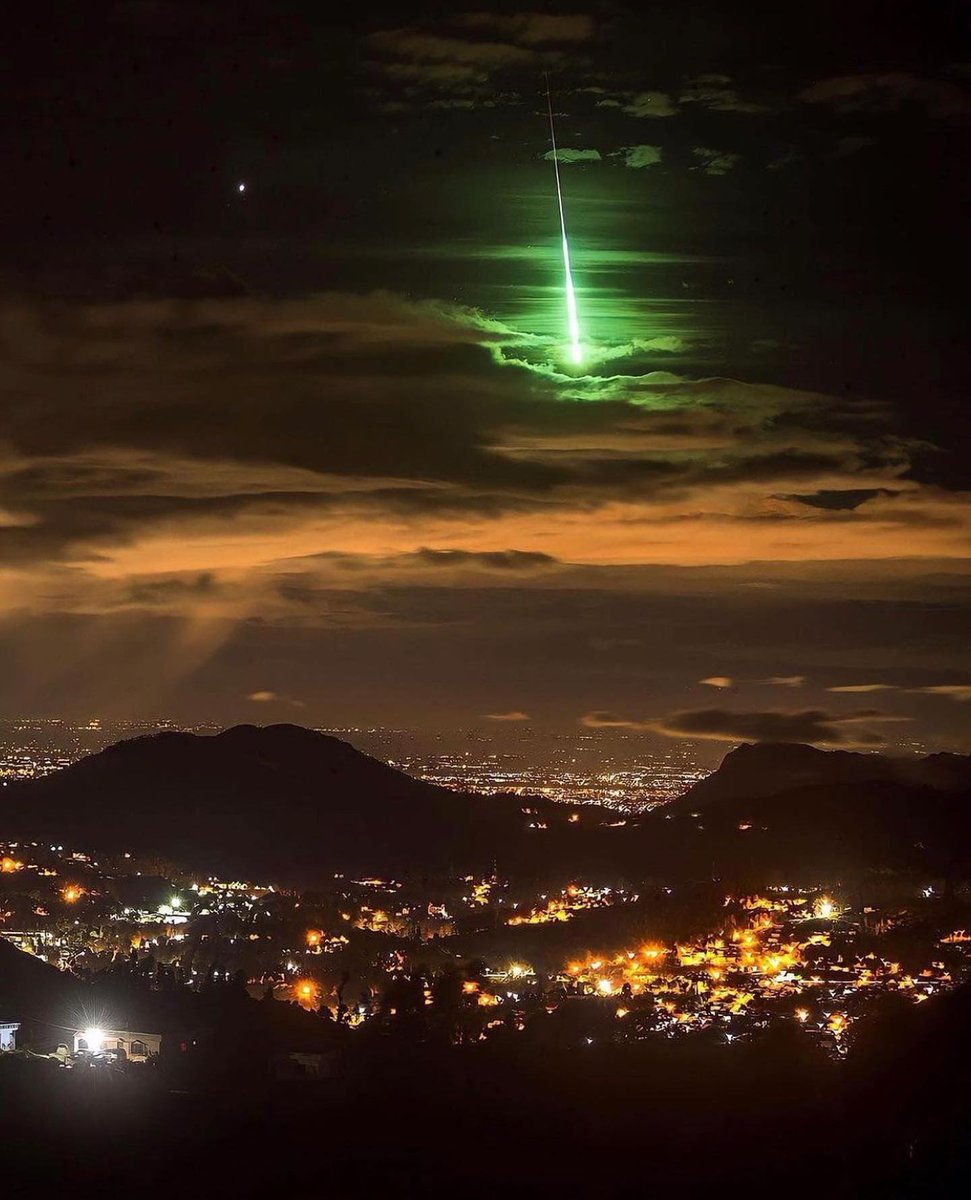
Minor disturbance happens in your city.
Media exaggerates it 100x.
Relatives watch on TV & call, and if we miss the call, they assume we must be dead.
The first Solvay Conference on Physics was a historic event that brought together some of the most brilliant minds of the early 20th century to discuss the new and puzzling phenomena of radiation and quantum theory. It was held in Brussels, Belgium, from October 30 to November 3, 1911, at the initiative of the Belgian chemist and industrialist Ernest Solvay, who generously funded the conference and invited 18 eminent physicists from different countries.
The conference was chaired by Hendrik Lorentz, a Dutch physicist who had made important contributions to electromagnetism and relativity. Among the participants were Albert Einstein, Marie Curie, Ernest Rutherford, Max Planck, Paul Langevin, Henri Poincaré, and Heike Kamerlingh Onnes.
The Conference:
The main topic of the conference was the nature of radiation and the quantum hypothesis, which proposed that energy was not continuous but discrete and came in packets called quanta. This hypothesis had been introduced by Planck in 1900 to explain the spectrum of black-body radiation, and had been supported by Einstein in 1905 to explain the photoelectric effect. However, it contradicted the classical physics of Newton and Maxwell, which assumed that energy was continuous and smooth. The conference aimed to reconcile these two approaches and to understand the implications of the quantum hypothesis for physics.
The conference was organized as a series of lectures followed by discussions. The lectures covered various aspects of radiation and quantum theory, such as
• the thermodynamics of radiation,
• the specific heat of solids,
• the emission and absorption of light,
• the structure of atoms, and
• the properties of matter at low temperatures.
The discussions were lively and sometimes heated, as different views and interpretations were expressed and debated. Some of the highlights of the conference were:
Einstein’s presentation of his light quantum hypothesis, which suggested that light was composed of particles (later called photons) that behaved like both waves and particles. He also proposed a formula for the energy distribution of black-body radiation that agreed with Planck’s formula but derived it from a different perspective.
Rutherford’s presentation of his nuclear model of the atom, which he had discovered earlier that year by bombarding gold foil with alpha particles. He showed that most of the mass and positive charge of an atom was concentrated in a tiny nucleus at its center, surrounded by a cloud of electrons.
Kamerlingh Onnes’ presentation of his experiments on superconductivity, which he had discovered in 1911 by cooling mercury to near absolute zero. He showed that the electrical resistance of mercury vanished completely below a certain critical temperature, indicating a new state of matter.
Curie’s presentation of her research on radioactivity, which she had pioneered with her late husband Pierre Curie. She explained how some elements spontaneously emitted radiation and transformed into other elements, releasing large amounts of energy in the process.
The first Solvay Conference on Physics was a remarkable achievement that stimulated further research and collaboration among physicists. It also marked the beginning of a series of Solvay Conferences that continued to be held every few years until today, covering various topics in physics and chemistry. The conference is widely regarded as one of the most influential scientific meetings ever held, as it witnessed the birth of modern physics.
[Photo Courtesy: Couprie/Hulton Archive/Getty Images]







![PhysInHistory's tweet photo. All the Nobel Laureates in Physics from 1901-2022 🏅📑
1901: Wilhelm Conrad Röntgen
1902: Hendrik Lorentz and Pieter Zeeman
1903: Henri Becquerel, Pierre Curie and Marie Curie
1904: Lord Rayleigh
1905: Philipp Lenard
1906: J. J. Thomson
1907: Albert A. Michelson
1908: Gabriel Lippmann
1909: Guglielmo Marconi and Ferdinand Braun
1910: Johannes Diderik van der Waals
1911: Wilhelm Wien
1912: Gustaf Dalén
1913: Heike Kamerlingh Onnes
1914: Max von Laue
1915: William Henry Bragg and William Lawrence Bragg
1917: Charles Glover Barkla
1918: Max Planck
1919: Johannes Stark
1920: Charles Edouard Guillaume
1921: Albert Einstein
1922: Niels Bohr
1923: Robert A. Millikan
1924: Manne Siegbahn
1925: James Franck and Gustav Hertz
1926: Jean Baptiste Perrin
1927: Arthur H. Compton and Charles T. R. Wilson
1928: Owen Willans Richardson
1929: Louis de Broglie
1930: C. V. Raman
1932: Werner Heisenberg
1933: Erwin Schrödinger and Paul A. M. Dirac
1935: James Chadwick
1936: Victor F. Hess and Carl D. Anderson
1937: Clinton Davisson and George Paget Thomson
1938: Enrico Fermi
1939: Ernest Lawrence
1943: Otto Stern
1944: Isidor Isaac Rabi
1945: Wolfgang Pauli
1946: Percy W. Bridgman
1947: Edward V. Appleton
1948: Patrick M. S. Blackett
1949: Hideki Yukawa
1950: Cecil F. Powell
1951: John Cockcroft and Ernest T. S. Walton
1952: Felix Bloch and Edward M. Purcell
1953: Frits Zernike
1954: Max Born and Walther Bothe
1955: Willis E. Lamb and Polykarp Kusch
1956: William B. Shockley, John Bardeen and Walter H. Brattain
1957: Chen-Ning Yang and Tsung-Dao Lee
1958: Pavel A. Cherenkov, Ilya M. Frank and Igor Y. Tamm
1959: Emilio G. Segrè and Owen Chamberlain
1960: Donald A. Glaser
1961: Robert Hofstadter and Rudolf L. Mössbauer
1962: Lev D. Landau
1963: Eugene P. Wigner, Maria Goeppert-Mayer and J. Hans D. Jensen
1964: Charles H. Townes, Nicolay G. Basov and Aleksandr M. Prokhorov
1965: Sin-Itiro Tomonaga, Julian Schwinger and Richard P. Feynman
1966: Alfred Kastler
1967: Hans A. Bethe
1968: Luis W. Alvarez
1969: Murray Gell-Mann
1970: Hannes Alfvén and Louis E. Néel
1971: Dennis Gabor
1972: John Bardeen, Leon N. Cooper and John R. Schrieffer
1973: Leo Esaki, Ivar Giaever and Brian D. Josephson
1974: Martin Ryle and Antony Hewish
1975: Aage N. Bohr, Ben R. Mottelson and Leo James Rainwater
1976: Burton Richter and Samuel C.C. Ting
1977: Philip W. Anderson, Nevill F. Mott and John H. van Vleck
1978: Pyotr L. Kapitsa, Arno A. Penzias and Robert W. Wilson
1979: Sheldon L. Glashow, Abdus Salam and Steven Weinberg
1980: James W. Cronin and Val L. Fitch
1981: Nicolaas Bloembergen, Arthur L. Schawlow and Kai M. Siegbahn
1982: Kenneth G. Wilson
1983: Subramanyan Chandrasekhar and William A. Fowler
1984: Carlo Rubbia and Simon van der Meer
1985: Klaus von Klitzing
1986: Ernst Ruska, Gerd Binnig and Heinrich Rohrer
1987: J. Georg Bednorz and K. Alex Müller
1988: Leon M. Lederman, Melvin Schwartz and Jack Steinberger
1989: Norman F. Ramsey, Hans G. Dehmelt and Wolfgang Paul
1990: Jerome I. Friedman, Henry W. Kendall and Richard E. Taylor
1991: Pierre-Gilles de Gennes
1992: Georges Charpak
1993: Russell A. Hulse and Joseph H. Taylor Jr.
1994: Bertram N. Brockhouse and Clifford G. Shull
1995: Martin L. Perl and Frederick Reines
1996: David M. Lee, Douglas D. Osheroff and Robert C. Richardson
1997: Steven Chu, Claude Cohen-Tannoudji and William D. Phillips
1998: Robert B. Laughlin, Horst L. Störmer and Daniel C. Tsui
1999: Gerardus 't Hooft and Martinus J.G. Veltman
2000: Zhores I. Alferov, Herbert Kroemer and Jack S. Kilby
2001: Eric A. Cornell, Wolfgang Ketterle and Carl E. Wieman
2002: Raymond Davis Jr., Masatoshi Koshiba and Riccardo Giacconi
2003: Alexei A. Abrikosov, Vitaly L. Ginzburg and Anthony J. Leggett
2004: David J. Gross, H. David Politzer and Frank Wilczek
2005: Roy J. Glauber, John L. Hall and Theodor W. Hänsch
2006: John C. Mather and George F. Smoot
2007: Albert Fert and Peter Grünberg
2008: Yoichiro Nambu, Makoto Kobayashi and Toshihide Maskawa
2009: Charles K. Kao, Willard S. Boyle and George E. Smith
2010: Andre Geim and Konstantin Novoselov
2011: Saul Perlmutter, Brian P. Schmidt and Adam G. Riess
2012: Serge Haroche and David J. Wineland
2013: François Englert and Peter W. Higgs
2014: Isamu Akasaki, Hiroshi Amano and Shuji Nakamura
2015: Takaaki Kajita and Arthur B. McDonald
2016: David J. Thouless, F. Duncan M. Haldane and J. Michael Kosterlitz
2017: Rainer Weiss, Barry C. Barish and Kip S. Thorne
2018: Arthur Ashkin, Gérard Mourou and Donna Strickland
2019: James Peebles, Michel Mayor and Didier Queloz
2020: Roger Penrose, Reinhard Genzel and Andrea Ghez
2021: Syukuro Manabe, Klaus Hasselmann and Giorgio Parisi
2022: Alain Aspect, John F. Clauser and Anton Zeilinger
[Source: https://t.co/shIiFe6bod]
[Alfred Nobel's portrait courtesy: Bettmann Archive/Getty Images]](https://pbs.twimg.com/media/F2iHlC6WUAIeWNs.jpg)
![PhysInHistory's tweet photo. The first Solvay Conference on Physics was a historic event that brought together some of the most brilliant minds of the early 20th century to discuss the new and puzzling phenomena of radiation and quantum theory. It was held in Brussels, Belgium, from October 30 to November 3, 1911, at the initiative of the Belgian chemist and industrialist Ernest Solvay, who generously funded the conference and invited 18 eminent physicists from different countries.
The conference was chaired by Hendrik Lorentz, a Dutch physicist who had made important contributions to electromagnetism and relativity. Among the participants were Albert Einstein, Marie Curie, Ernest Rutherford, Max Planck, Paul Langevin, Henri Poincaré, and Heike Kamerlingh Onnes.
The Conference:
The main topic of the conference was the nature of radiation and the quantum hypothesis, which proposed that energy was not continuous but discrete and came in packets called quanta. This hypothesis had been introduced by Planck in 1900 to explain the spectrum of black-body radiation, and had been supported by Einstein in 1905 to explain the photoelectric effect. However, it contradicted the classical physics of Newton and Maxwell, which assumed that energy was continuous and smooth. The conference aimed to reconcile these two approaches and to understand the implications of the quantum hypothesis for physics.
The conference was organized as a series of lectures followed by discussions. The lectures covered various aspects of radiation and quantum theory, such as
• the thermodynamics of radiation,
• the specific heat of solids,
• the emission and absorption of light,
• the structure of atoms, and
• the properties of matter at low temperatures.
The discussions were lively and sometimes heated, as different views and interpretations were expressed and debated. Some of the highlights of the conference were:
Einstein’s presentation of his light quantum hypothesis, which suggested that light was composed of particles (later called photons) that behaved like both waves and particles. He also proposed a formula for the energy distribution of black-body radiation that agreed with Planck’s formula but derived it from a different perspective.
Rutherford’s presentation of his nuclear model of the atom, which he had discovered earlier that year by bombarding gold foil with alpha particles. He showed that most of the mass and positive charge of an atom was concentrated in a tiny nucleus at its center, surrounded by a cloud of electrons.
Kamerlingh Onnes’ presentation of his experiments on superconductivity, which he had discovered in 1911 by cooling mercury to near absolute zero. He showed that the electrical resistance of mercury vanished completely below a certain critical temperature, indicating a new state of matter.
Curie’s presentation of her research on radioactivity, which she had pioneered with her late husband Pierre Curie. She explained how some elements spontaneously emitted radiation and transformed into other elements, releasing large amounts of energy in the process.
The first Solvay Conference on Physics was a remarkable achievement that stimulated further research and collaboration among physicists. It also marked the beginning of a series of Solvay Conferences that continued to be held every few years until today, covering various topics in physics and chemistry. The conference is widely regarded as one of the most influential scientific meetings ever held, as it witnessed the birth of modern physics.
[Photo Courtesy: Couprie/Hulton Archive/Getty Images]](https://pbs.twimg.com/media/F2St2RWWgAAwqGJ.jpg)


