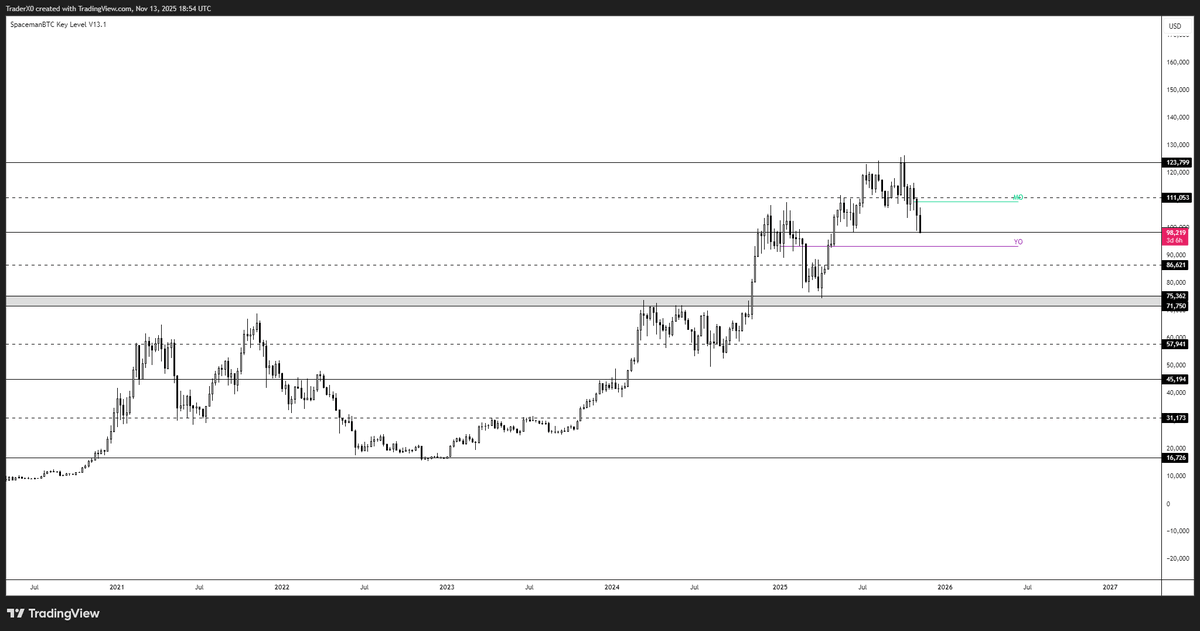
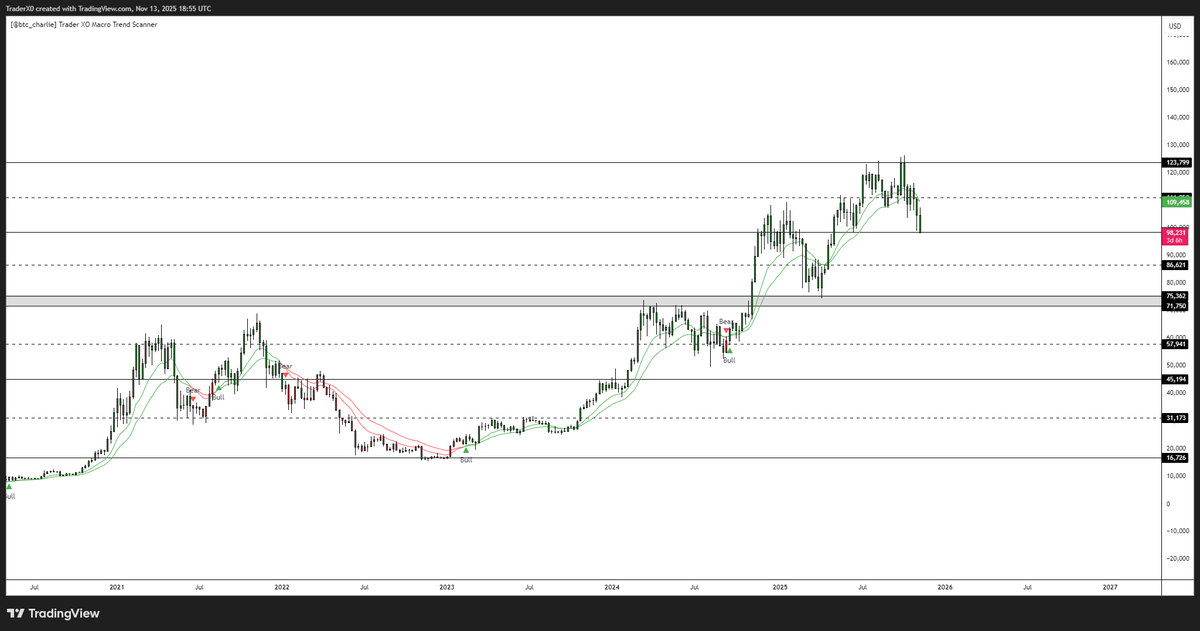
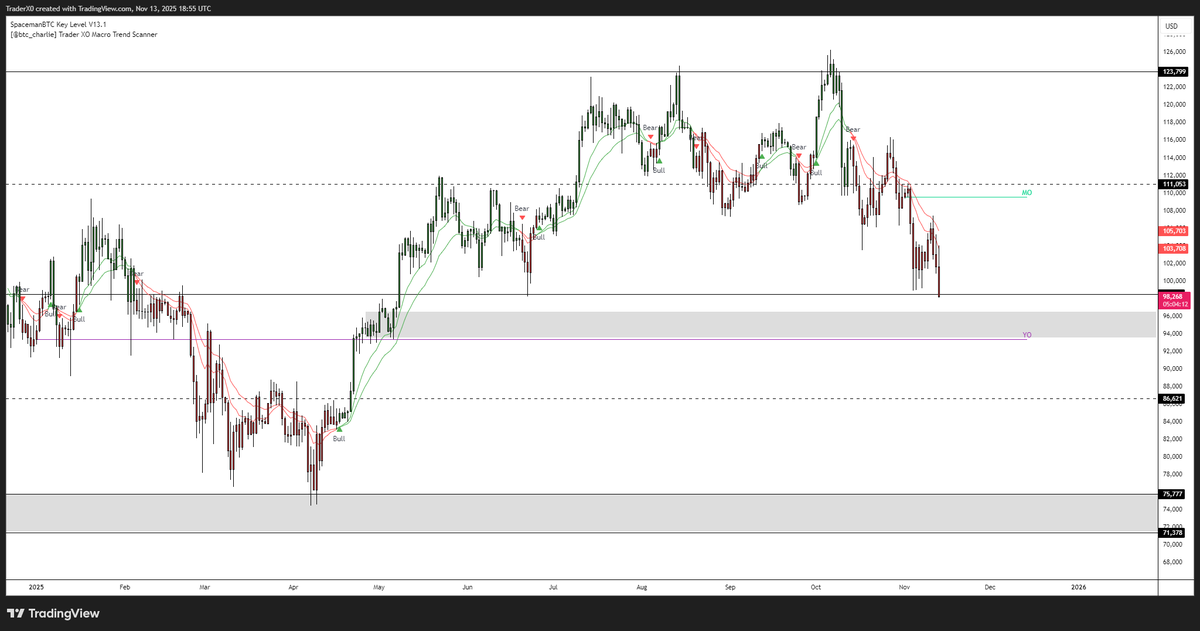
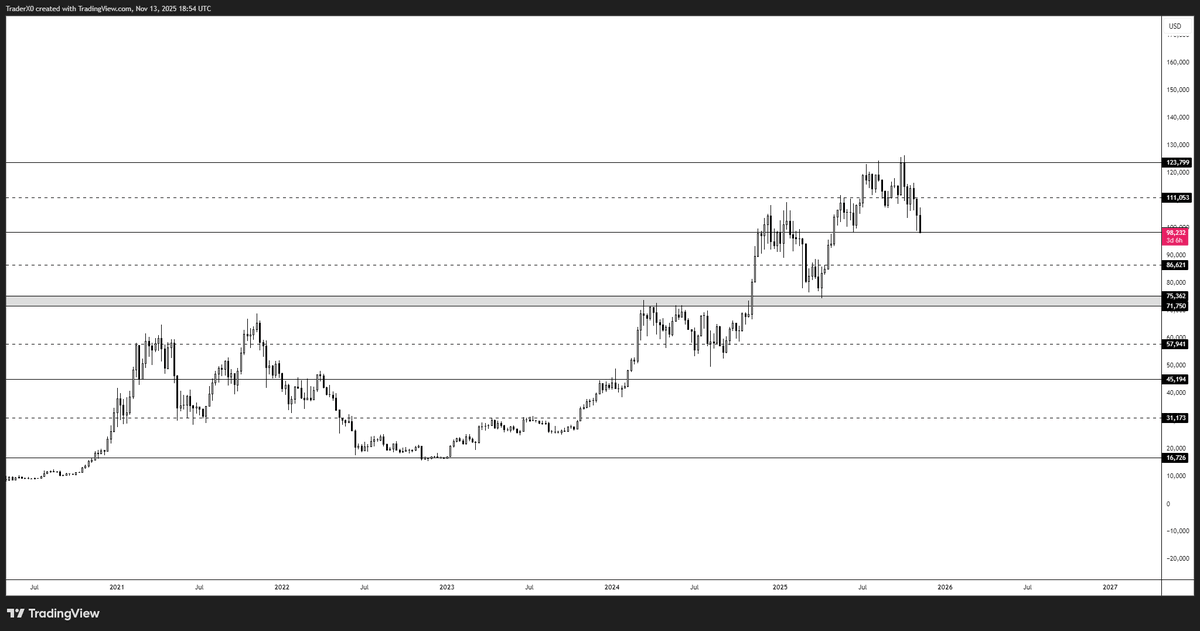
@follis_ There is realised price and theres another metric - I cant remember the name which is slightly lower than realised price... I used to track this in previous cycles... any reminders?
$QQQ Monthly Wave Count Update
The original count was published on 03/25/2023 when QQQ was trading near 312.
The first update was posted on 09/19/2024 when QQQ was trading near 491.
Today QQQ is trading above 700 and the larger degree 5th wave remains in progress.
This is not a trading wave count.
It is an investor map designed to identify the primary trend and the long-term path of least resistance.
Monthly wave counts are measured in years, not weeks. The objective is not to forecast the next pullback, but to track the progression of the larger secular advance as it unfolds over time.
With Q2 ending in a few weeks and the AI-driven expansion continuing across semiconductors, cloud infrastructure, and data centers, it is time to update the count and extend the 5th wave projection.
The market will continue to experience corrections, pullbacks, and periods of volatility along the way.
The larger framework remains intact.
$SPX $SPY
$es
Oct, Nov, Dec all traded above 6900 but failed to close above it based upon the monthly tf.
9 trading days left in Jan - failure to accept is the 4th rejection of the 6900-7000 level...
Key Inflection point...?
I'm interested in observing how price reacts at the 21 weekly ema - give or take thats around 6700 level should it trade there...
@Nebraskangooner Just curious I know you use measured moves as target. I’m assuming mid 50s but as it’s a potential multi year breakout do you expect a stronger reaction
Insilico Terminal Advent Calendar - Day 5 🎄
(special episode today of)
Insilico Terminal Podcast Episode 13 - @Trader_XO
00:00:00 Intro, Trader XO background, CS/Banking origins, 2017 bull run luck, losing it all in 2018
00:06:10 The 90% failure rate, why normal thinking loses, embracing uncertainty, risk management as survival
00:13:50 Defining Edge, expectancy formula, speed of understanding, pattern recognition vs. predicting
00:20:10 The Trading Process, 6-pillar framework, trading as a professional sport
00:32:20 Psychology deep dive, myth of "controlling" emotions, A-Game vs. C-Game
00:50:08 The "Reset" phase, dissecting a recent tilt, danger of short-circuiting, recovering from losses
00:58:05 Essential library, top book recs, leveraging LLMs/ChatGPT for coding edge
01:07:42 Routine & Execution, building situational awareness, dynamic risk sizing, adding to winners
01:21:50 Strategy creation, 15 principles, defining hypothesis, volatility regimes, building a living playbook
01:34:50 Closing thoughts, avoiding crypto-twitter envy, journaling joy, focusing on longevity over quick wins
If trading hasn't delivered what you had hoped for this year
There is little point in carrying on repeating the same mistakes
Instead, take some time
And prep for 2026 so you hit the ground running when the new cycle begins
Brush up on your knowledge of how markets function, casual TA, momentum cycles, price reversal patterns and flow
Sharpen your axe
There's a lot of edge in trade management because it's where many traders fuck up)
When day trading I aim to never rely on a stop to manage my trade for me. I use my flow framework & basic structure logic like I drew below to decide to stay in or manually cut my position
Is price grinding against my entry or is momentum shifting?
I expect proper reactions from my entry & if I don't get that it means I'm probably wrong
Why wait 10min to get stopped out eating full 1R loss + slippage when I know I'm probably wrong
When starting out set position size based on hard stop
When you pull this off you min/max EV balancing the pros/cons from probabilities & R:R
I've been teaching this logic for years because it made a big difference for me
It's funny, this edge came from necessity of the Bitmex days because getting stopped on size meant you were eating a lot of slippage 4/5 times
If you want me to share my flow framework run up the likes
When I look back at my own trading journey, and at the journeys of so many traders around me, it’s clear that the way most discretionary retail traders start out is just fundamentally flawed.
In my early days, there was no real structure or process to follow. Everything seemed built for failure, largely because of the same recycled garbage being peddled everywhere, that includes various courses or groups without any real purpose of professional structure - key word ‘professional’
Everyone talks about “edge” and “strategy,” but few ever address how to actually think and operate like a trader.
Over time, you begin to realise what truly matters, the mindset, the approach, and how to build a sustainable career in this game.
No single book or course can teach you that, and they’re not meant to.
Most of what’s out there leans heavily towards technical analysis or trading psychology and mindset, without ever integrating them in a way that reflects the real demands of trading.
Real progress only comes once you start unlearning the misinformation and begin thinking about the game in a more structured and professional way.
The biggest hurdle isn’t the market, it’s the flawed way of thinking most traders start with which is covered well in the book Best Loser Wins by Tom Hougaard and ‘why normal thinking doesn’t win the trading game.’
That last phrase was key for me personally, once you truly understand why, the mindset starts to shift, or at least something clicks.
It’s a great read but don’t expect it to transform your trading overnight, but it does make you question how to approach this game, it’s not the only way of course….
But anyway… it’s a tough game to crack without a professional approach…. Is my 1 cent
Thanks for reading my ramblings…
Cheers