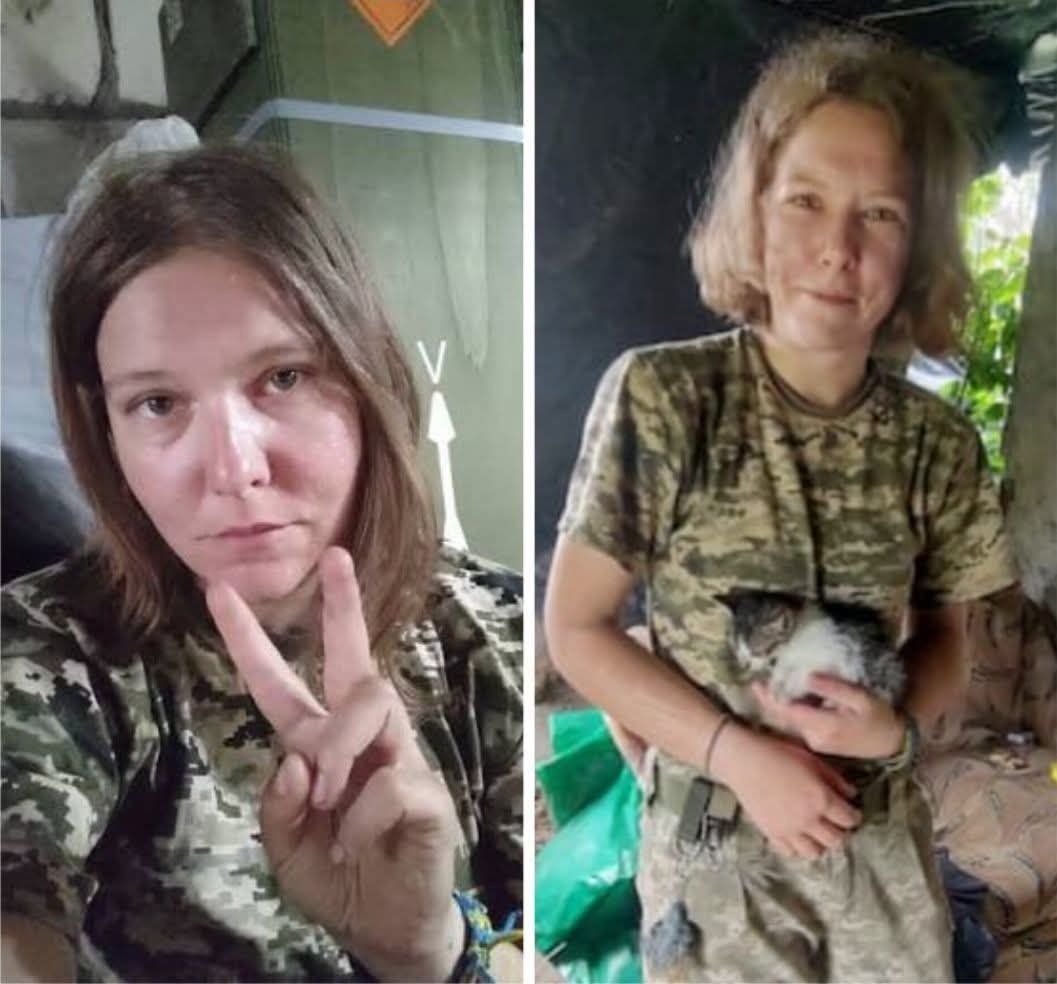
Her name was Savita Wagner. She was 36 years old.
She was German.
Until 2022, Savita had never been to Ukraine. She had no friends here.
Then she saw Bucha after its liberation.
And that was enough for her to realise she could no longer stand on the sidelines.
At first, she delivered humanitarian aid to Ukrainians.
And then she took a step that not everyone would dare to take:
she joined the Ukrainian army.
‘Karpatska Sich’.
Call sign — ‘Zmiya’.
Savita became a combat medic.
She ran under fire to reach the wounded.
She applied tourniquets.
She pulled her comrades to safety.
She saved lives in a place where she herself could have lost hers at any moment.
She came to Ukraine and
died defending people she had never even known before.
Three weeks before her death, Savita met her mum in Kyiv.
And Savita said these words to her:
‘Mum, I’m defending Europe’s freedom.’
And she returned to the front line once more.
Under Russian fire, a wounded comrade needed help.
Savita did not abandon him.
She went after him into the line of fire.
And this time, she did not return.
Savita could have stayed in Germany.
She could simply have sympathised with Ukraine.
She could have helped with money or humanitarian aid.
But she chose otherwise – to risk her own life for the freedom of people she had never met.
And she paid the ultimate price for that choice.
Savita Wagner — German by birth. A Ukrainian heroine by choice.
May as many people as possible learn her name today.
Savita Wagner.
A heroine who saved others until the very end.
🇺🇦🕯️ Eternal memory. Eternal honour.
He deceived the occupiers and saved 52 children.
Volodymyr Sahaidak was the director of a children's rehabilitation center in Stepanivka, near Chornobaivka.
When russia launched its full-scale invasion, 52 children aged 3 to 18 were living there.
Almost the entire staff fled. Only three adults stayed.
The older children cooked, cleaned, and cared for the younger ones.
What they feared most wasn't the shelling, even though Chornobaivka Air Base was nearby and they witnessed every explosion.
They were terrified of being taken to russia.
Before russian soldiers arrived, Volodymyr had already made his move.
The children had quietly been taken in by grandparents, aunts, uncles, and other relatives.
Only five boys remained.
He told the occupiers it wasn't an orphanage — it was a rehabilitation center.
They believed him.
They took 66 personal files and left empty-handed.
Later, russian propaganda branded him "Kherson's chief Nazi" and demanded he face a "new Nuremberg."
For two and a half months under occupation, he barely saw his own family.
He drove food through russian checkpoints himself because even volunteers were too afraid.
The children were fed.
They were safe.
They survived.
Today, the center is empty.
But two former residents — 14-year-old Dana and 9-year-old Imir — have found a permanent foster family in Uman.
Before leaving, they gave Volodymyr a photo frame with family pictures...
...and empty spaces reserved "for new children."
Volodymyr Sahaidak saved 52 children from russian occupation.
Never forget his name.
This is Ukraine.
For months, the situation on the Sloviansk front has been deteriorating
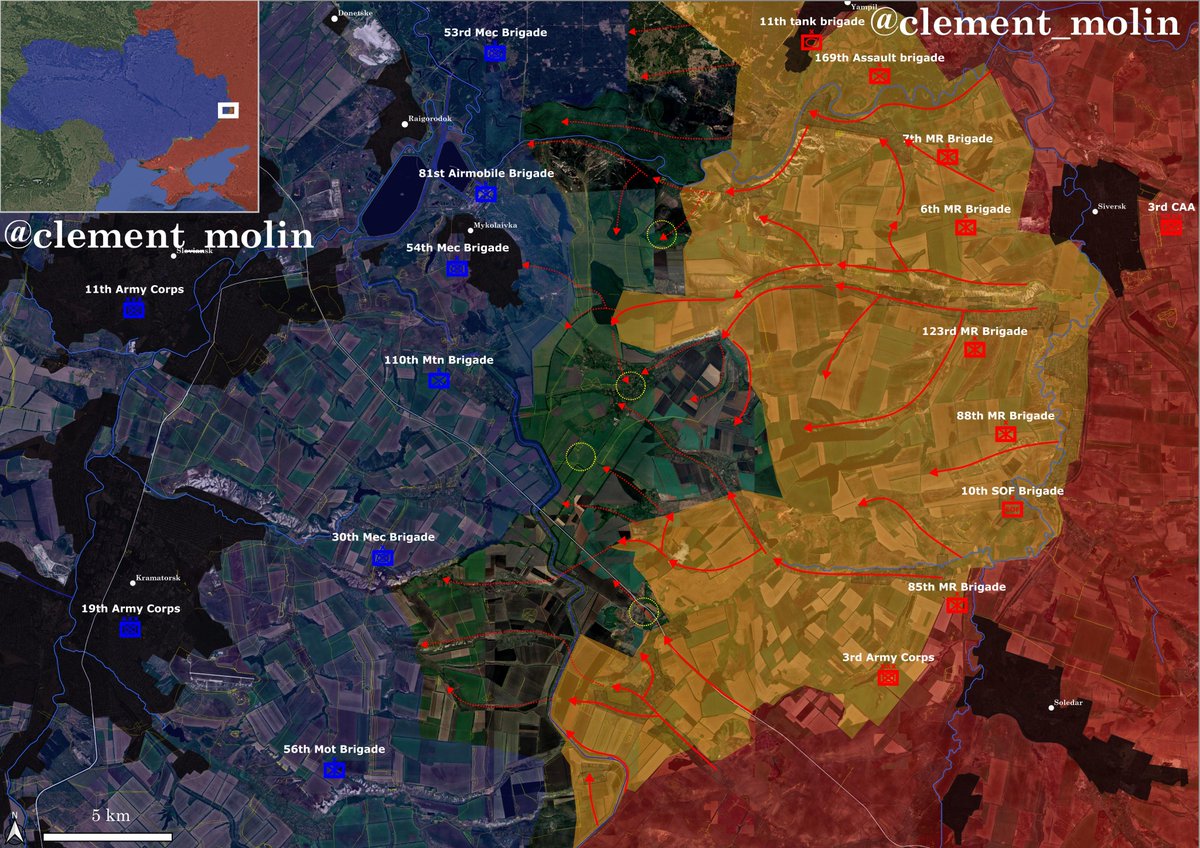
The new Chief of the General Staff of the Ukrainian 🇺🇦Army, Mykhailo Drapaty, must respond as the first Russian 🇷🇺 units have reached approximately 10 km east of Sloviansk and Kramatorsk.
Since the fall of Siversk in December 2025, attributed to errors by several local commanders, this front has been the most successful for the Russian army throughout 2026.
Not only have Russian forces managed to consolidate their hold on Siversk, which had resisted them for three years, but they have also pushed 10 to 15 km westward, drawing significantly closer to the last major urban centers of the Donbas: Sloviansk and Kramatorsk. While a future assault on the cities from the east seems unlikely due to the terrain, this strategic position allows the Russians to monitor and bomb the urban area and its logistical supply lines.
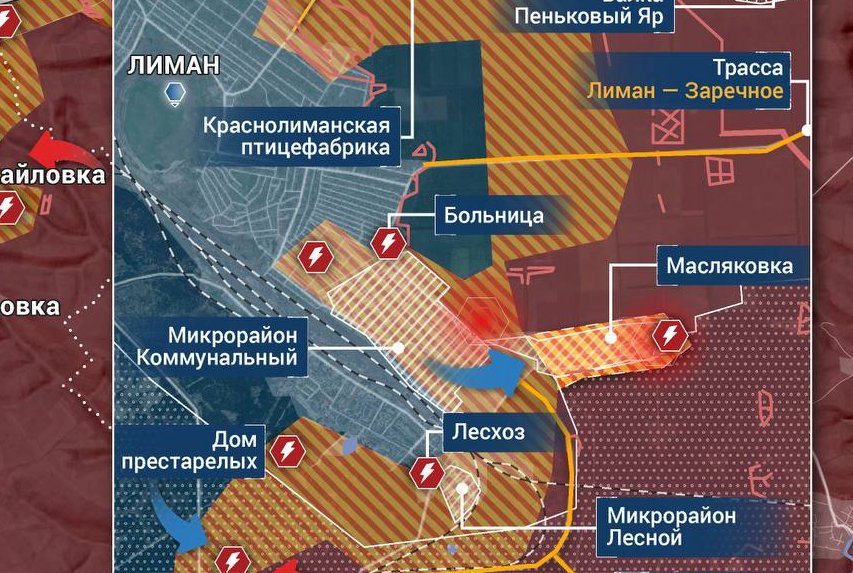
Three weeks ago, the first Russian infiltrators were captured in Mykolaivka, a town about 10 km east of Sloviansk. Recently, Russian soldiers have been spotted in buildings on the eastern edge of the town; this could signal the imminent start of the battle for the town, which serves as the eastern gateway to Sloviansk. Russian forces are advancing on Mykolaivka along two main routes, following the Siverskyi Donets River and moving through forests via Kryva Luka, Pyskunivka, and Starodubivka, while taking cover in houses and wooded areas. Countering these infiltrations is difficult due to the dense forests along the Donets River.
The second infiltration route runs through a forest north of Rai Oleksandrivka. Russian forces have been actively using this forest for over a month to enter Rai Oleksandrivka. This small village, seemingly insignificant at first glance, is actually of strategic importance, as the surrounding high ground overlooks the city of Sloviansk. In recent weeks, Russian forces have been consolidating their hold on the village and the surrounding heights, even though Ukrainian troops still maintain positions in many areas.
Further south, the situation is hardly better. Russian forces are infiltrating daily along the Donets Canal, with some units crossing this canal, which serves as a makeshift fortification, to advance toward Kramatorsk. Several villages west of the canal have thus shifted into the "gray zone," a source of growing concern for the Ukrainian command. If these infiltrations continue, we could see the first Russian soldiers in the Bilenke district of Kramatorskbefore the end of the year.
Why is the situation so difficult for the Ukrainians? First, the geography complicates the Ukrainian defense: the Donets Canal aids the Ukrainian defense just as much as it facilitates the Russian offensive. The situation here mirrors the one described yesterday, but in reverse. Crossing the canal, reaching Mykolaivka, and massing troops there is a highly complex undertaking. The Russian army will face the same challenge: crossing the canal, particularly around the Sloviansk power plant and its network of waterways, will come at a very high cost, especially given the extensive fortifications the Ukrainians have built in the area over recent months. Consequently, it is highly unlikely that the battle for Sloviansk will begin this year, not least because the fighting in Mykolaivka is likely to be prolonged.
Another key factor is the high frequency of Russian airstrikes targeting forests and buildings, particularly in Mykolaivka, as illustrated in the map included in the following tweet.
Ultimately, Ukrainian resources in the area are insufficient - comprising only five or six brigades - though doing better is difficult given the local logistical challenges. Russian losses in the sector are significant, particularly when troops are forced to advance across open ground; nevertheless, this has not halted their steady progress this year.
In the coming weeks, attention must shift to the Donbas, specifically the area between the Donets River and Dobropilla, where the Russian army is concentrating its forces. Elsewhere, however, potential offensive opportunities are opening up for Kyiv.
Thank you for following this new analysis. Sources include open source data, sattelite images, geolocated videos and some private sources.
For the past six months, the Ukrainian 🇺🇦 army has been on the offensive along a 50-kilometer-wide front, gradually retaking villages lost the previous year.
With no official statements and very few videos available, little is known about this "offensive." I have therefore gathered as much information as possible to discuss it.
In 2025, the Russian army doubled its rate of advance compared to 2024. Yet, it was not in the Donbas that they were advancing the most. Very early in the year, they seized Velyka Novosilka and pushed north toward Komar and west toward Huliaipole. By the year's end, the situation for Ukraine was critical: defensive lines facing south had been overrun from the east, and the Russian army was steadily closing in on Zaporizhzhia, a city of 800,000 inhabitants.
After the capture of Huliaipole, everyone expected Pokrovsk'e, Ternuvate (already infiltrated at the time), and then Orikhiv to fall, placing the Russian army at the gates of Zaporizhzhia by the end of the year. Yet, seven months later, the situation remained unchanged; the Russians are still stalled west of Huliaipole. Worse, they have lost significant territory further north, bringing a halt to this offensive, which, while secondary to the main Donbas campaign, had nonetheless committed a massive force, including five armies and an army corps.
🔸So, what happened?
It began in February, when several air-assault brigades repositioned to the region, launched an armored assault under cover of fog, deploying their infantry into contested villages, often behind the initial Russian infiltrators. The villages were methodically cleared, and Ukrainian soldiers began infiltrating southward themselves. In March, they were positioned east and west of Uspenivka, blocking Russian attempts to advance toward Pokrovske and Ternuvate.
In response to this offensive, the Russian army sends several naval infantry brigades and divisions, as well as the 68th Army Corps, as reinforcements.
Starting in April, air assault brigades repositioned further north with the mission of advancing on Komar. The goal of this redeployment was to prevent the 90th Tank Division from shifting its assets toward Dobropilla. There was no mechanized offensive this time, as the terrain, specifically the presence of several rivers, most notably the Vovtcha, precluded it. Instead, small Ukrainian infantry groups managed to gradually infiltrate as far as the next river, the Mokri Yali. It is important to understand that, despite having been in the area for at least eight months, Russian forces had been unable to consolidate their positions; a network of rivers complicated logistics, and the small size of the villages made it impossible to concentrate large numbers of troops.
Consequently, the Ukrainians were able to advance relatively stealthily behind enemy lines, reaching the Mokri Yali River. A strict information blackout was imposed in the area. Apart from a single video (since deleted) showing Ukrainian troops raising a flag over a liberated village, the Ukrainians released nothing regarding an operation that had already been underway for three months. For their part, the Russians continued to obscure the situation: the Vostok Group released only videos that were difficult to geolocate and persisted in sending "suicide" flag-bearers troops, who would reach Iskra and raise the Russian flag, creating an illusion of control.
On the map, I have roughly depicted the situation as it has stood over the last few weeks, relying primarily on a handful of geolocated videos, satellite imagery showing air and artillery strikes, and scattered social media statements. Simply put, little is known about the actual state of the front, other than the fact that Ukrainian forces are at the gates of Komar, a move that has forced the 90th Tank Division to keep half its strength committed to that sector.
What I am certain of is that all Russian troops positioned north of the Vovcha River (in Ivanivka) or the Solena (in Novopavlivka) have either been killed or captured, judging by the number of Russian air strikes, at least a hundred, carried out in the area. Consequently, the section of the "New Donbass Line" in this sector has held for the tenth consecutive month. It is certain that the Ukrainians have retaken control of the few villages to the south, given the air strikes observed in the zone. For the time being, I will respect Ukrainian OPSEC protocols and refrain from providing further details regarding an ongoing operation, as long as more confirmation are not coming.
🔸You might be wondering how such an operation is structured.
The Ukrainians are making extensive use of drones to establish a wide exclusion zone in the sector, extending particularly along the river as far as Velyka Novosilka. The operation is proceeding cautiously, with small infantry teams advancing gradually, supported by artillery positioned in the woods to the west and occasional Ukrainian air strikes on Russian drone operator positions in Komar.
Overall, it is important to understand that this operation is taking place because the Russian army is unable to bring reinforcements to the front. Furthermore, anti-tank ditches prevent any Russian mechanized or motorized assault aimed at delivering reinforcements. To understand the disarray within the local command, one need only look at its use of air power. Air strikes are being carried out daily deep behind the lines, as far as Prossiana and Chaplyne, 35 to 40 km from the front. While the goal is to hinder the Ukrainian presence, these strikes primarily highlight the ineffectiveness of Russian drones in the sector, particularly the Molniya models.
To conclude, this operation not only gained time for Ukraine to further fortify the Pavlohrad direction, it is a direct push in the foot of Russian forces, which can continue further this summer and later in the autumn. I'll continue to monitor this and wait for more official informations regarding the situation here.
Thank you for reading !
@Master_Crt@Dispropoganda Following the Belgian takeover, colonial administrators passed structural reforms to dismantle Leopold's rubber monopolies.
In 1910, the Belgian colonial government officially decreed the abolition of the forced labor tax system.
Sweden detained the tanker Jin Hui near Trelleborg after authorities said it was suspected of sailing under a false flag and lacked insurance. The vessel is under EU, UK, and Ukrainian sanctions and is believed to be linked to Russia’s shadow fleet. #Sweden
We made 42% for SOF vehicles & generators! Amazing teamwork 💪 Let’s hit 43% today, just $120 needed!
PayPal: https://t.co/aiufkbQu3T
Revolut: https://t.co/ogWfT6gFfg
BMAC: https://t.co/k85qMT62dr
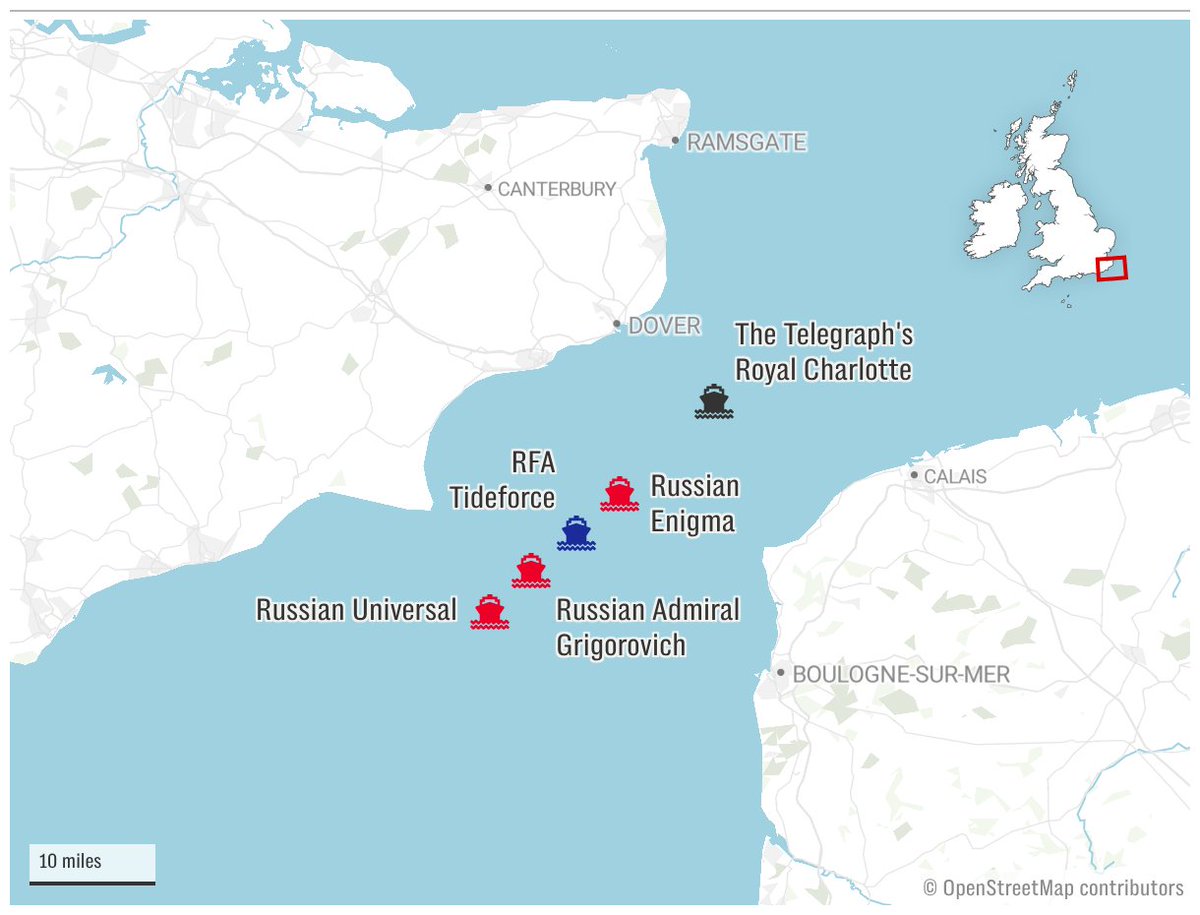
Russian Navy frigate Admiral Grigorovich escorts sanctioned oil tankers through the English Channel, accompanying vessels linked to Russia’s shadow fleet. The move signals direct defiance of UK plans to intercept sanctioned ships transiting its waters. #Russia
I don’t know what to do anymore.
I have 7,000 followers…and only ~200 people see these posts.I feel completely helpless.
The guys need a pickup.They are waiting.And I can’t even get this post seen.
If you see this — please… don’t scroll.
I can’t do this alone.
🅿️ [email protected] 🇺🇦
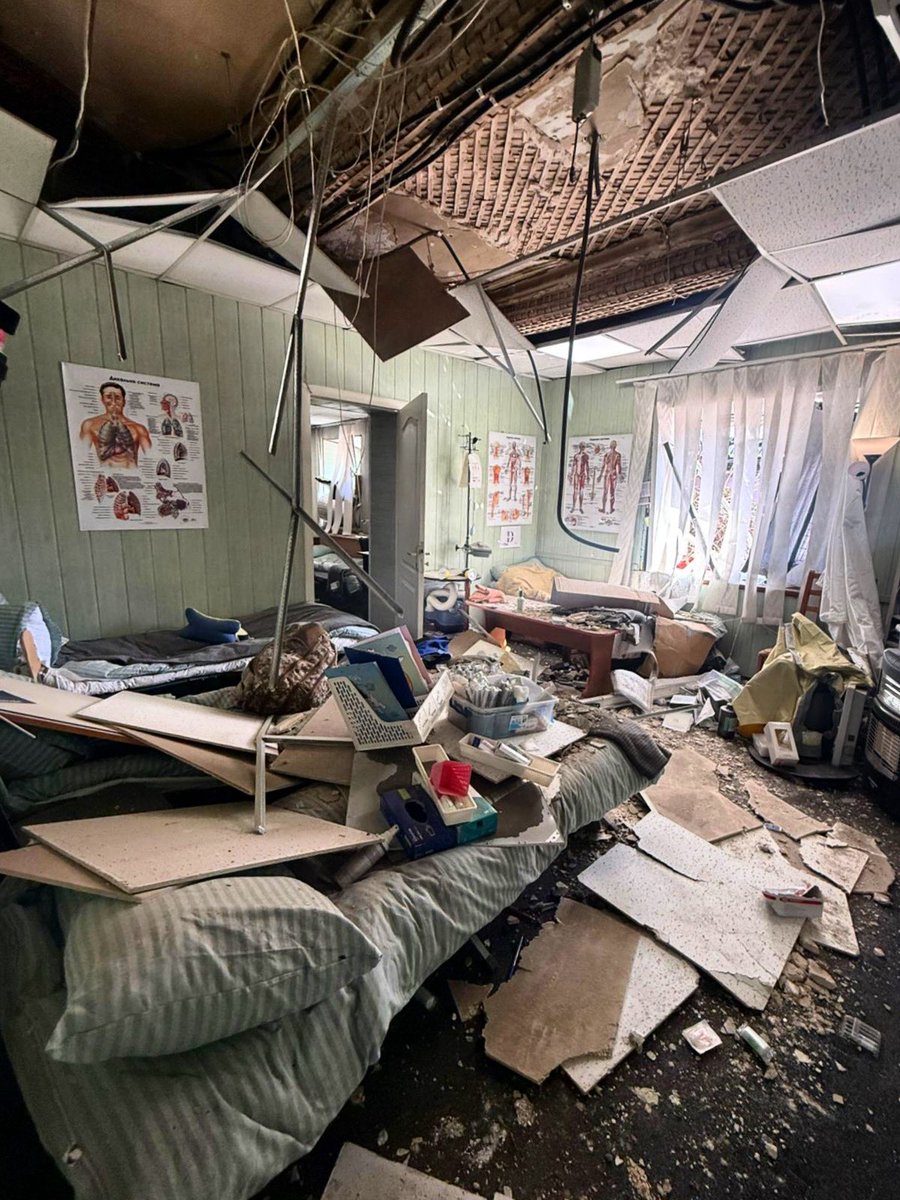
Yesterday at approximately 13:00, two KAB-250 aerial bombs struck my medical point.
The first detonation occurred while I was on the porch organizing medical supplies. Inside, my nurse @once_upon_a_travel_nurse was caring for recovering servicemen, assisted by @ryeioww. Another female soldier was preparing food. Two servicemen under active care were present, including one with severe combat injuries resulting in blindness and loss of function in one leg.
Immediately after the first strike, my nurse and I established verbal contact and confirmed that all personnel were alive. Without hesitation, the team responded with discipline and composure. We began evacuating the wounded from the structure, moving them across the street while coordinating transport for further evacuation.
During this process, a second bomb struck.
The second impact, a FAB-250, is a 250-kilogram high-explosive aerial bomb carrying approximately 120 kilograms of explosive material, designed to destroy infrastructure and fortified positions with a blast radius of roughly 120 meters. It detonated directly at the rear of the medical point.
The explosion caused a structural collapse. The ceiling fell onto my nurse, who, despite the impact, continued providing care. I sustained shrapnel injury to the thigh. Vivi maintained focus and continued assisting with the evacuation, ensuring the wounded were loaded into a vehicle.
All vehicles at the site were destroyed. The medical point was completely demolished.
Despite the scale of the strike, all personnel survived. The strength and resilience of my amazing girls is unmatched, and without them, the outcome would have been much different
SO UNUSUAL footage from Ukraine!
I have not seen a tank on the battlefield since Fall 2025. Moreover, a UKRAINIAN TANK, assaulting russian position in the field. It's insane.
I think the unmanned aspect clears the way for Ukrainian mechanized actions right now. Good stuff.
We see our home planet as a whole, lit up in spectacular blues and browns. A green aurora even lights up the atmosphere. That's us, together, watching as our astronauts make their journey to the Moon.
We launched Artemis II yesterday. Now what?
Four astronauts recently launched from @NASAKennedy to embark on a mission around the Moon. But liftoff was just the beginning.
Dear Mr. Armin Papperger, CEO of Rheinmetall,
When you referred to Ukrainian drone manufacturers as “Ukrainian housewives with 3D printers” you revealed just how deeply the European defense establishment still fails to understand the nature of modern warfare.
This is not about emotion. It is about battlefield reality. Here are the facts your industry refuses to acknowledge:
In 2025 alone, Ukrainian drones carried out 819,737 confirmed strikes. They caused 90 percent of all Russian combat losses, more than all other weapons systems combined.
TAF alone produces up to 100к FPV drones monthly. In any given 90-day period, my company’s products alone achieve more confirmed strikes than your entire fleet of equipment has across its full combat history in every conflict. And most importantly, I built this company and achieved these results in two years, not fifty. Think about that.
Our drones generate more kinetic effect in three months than your flagship platforms have in half a century.
Why? Because the battlefield has changed, and your business model has not.
•Russian electronic warfare has made GPS-guided Western munitions such as Excalibur and GMLRS nearly ineffective.
•Expensive and complex systems designed for wars with air superiority and traditional peer-to-peer combat have become easy prey for drones costing $500, attacking them from above.
•The cost-to-effect ratio has been turned upside down: one 120 mm Rheinmetall shell or one anti-tank missile costs more than a dozen of our drones, and yet our drones still win.
This is not a “Lego game.” It is industrial Darwinism in real time. We iterate every week. We print parts in basements and ship 100к strike systems per month, while your engineers still require three to five years and hundreds of millions of euros in certification costs for even a minor upgrade.
The war in Ukraine is not a temporary anomaly. It is the first true drone-industrial war. And it has already proven that outdated European platforms, no matter how expensive or “serious” they may seem, are becoming less and less relevant unless they integrate the very technologies you mock.
So when you say, “this is not innovation,” I hear something else: “We do not want to admit that the future is being written in Ukrainian workshops, not in Düsseldorf boardrooms.”
#MadeByHousewives is trending for a reason. Because these “housewives” destroy more enemy equipment every month than entire European armies do in full campaigns. And they do it while your industry continues to sell 20th-century solutions at 21st prices.
The invitation remains open, Mr. Papperger. Stop laughing at the kitchen table. Come and learn how tomorrow’s war is actually being fought. Because the next time someone asks, “Who needs tanks in the age of drones?”, the answer may be simpler than you think: Whoever still believes in 1979 will lose to whoever is building in 2026.
With respect, but with facts,
Oleksandr Yakovenko “Ukrainian housewives”
Founder TAF
OK, so Karoline Leavitt asked Getty Pictures to delete this unflattering photo of her, so this is me telling you all NOT to RT and share this many times all over the place.
Whatever you do, DON'T RT this.
Thank you for your attention to this matter. 😏