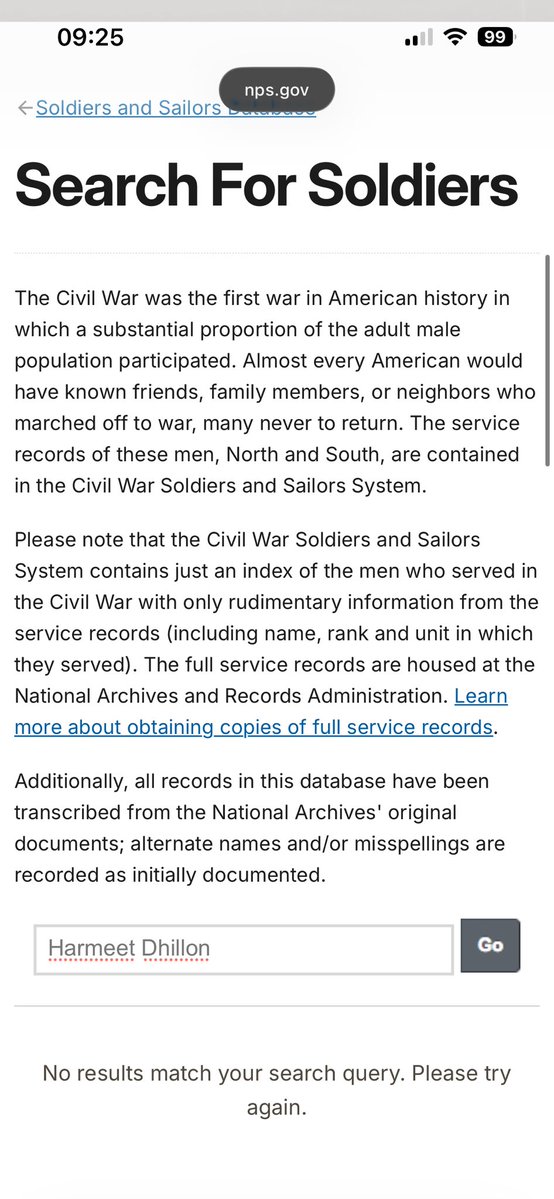
@Kaizerrev No, we don’t have “shared history”. Let’s just pick a random third world shithole out of a raffle ticket bin and send her there expeditiously
There’s a boomer fudd rso at my local indoor range that always gives me shit about the “one shot every 3 seconds” rule, when I’m not really even trying to rapid fire who looks just like the guy on the left.
Half the reason I set up my own range on my property was not to have to listen to him.
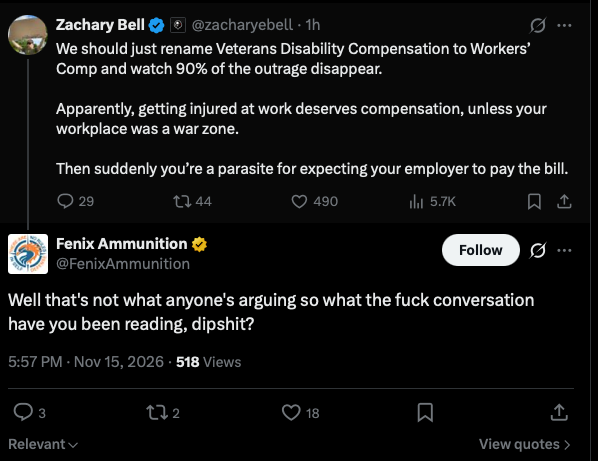
Honestly more than anything I feel bad for his employees that will soon find themselves unemployed because the retard owner doesn’t know when to stop spouting his mouth off on twitter…
I don't know why he's taking it this direction, but crashing out on literally the nicest guy on the internet is probably not the way to go. This will not end well.
Seriously the K/D for French troops in battle during the campaigns in Egypt were absolutely insane. Pyramids 29 French KIA vs almost 10,000 Mamelukes.
Jaffa was 50 French KIA vs 2,000 Ottomans, plus another 2,000 ottoman prisoners the French executed afterwards. Same story with Mount Tabor, etc.
The weather and disease killed far more men than the Muslims, and Napoleon would of taken Acre of not for the British reinforcing it with several ships-of-the-line, hundreds of royal marines, vast supplies, and capturing the French siege guns before the siege even started
The armistice ending World War I was signed at about 5am today in 1918, inside a railway car in the Compiègne forest. But it didn't take effect until 11am.
Those six hours killed thousands of men. Commanders on both sides kept attacking right up to the deadline, and the last day of the war produced roughly 11,000 casualties, more than D-Day.
Private George Ellison was killed near Mons at 9:30am, the last British soldier to die, almost exactly where the British Army fired its first shots of the war in 1914.
American Henry Gunther charged a German machine gun position at 10:59. The Germans reportedly tried to wave him off. He was shot one minute before the war ended.
Then 11am came and the Western Front went silent for the first time in four years.
Far from the front, in a military hospital in Pasewalk, a German corporal temporarily blinded by a gas attack heard the news. He later wrote that he hadn't wept like that since standing at his mother's grave. He came out of that hospital convinced Germany hadn't been beaten on the battlefield but betrayed at home. The "stab in the back" myth would become the foundation of everything he built.
The peace treaty only made it worse. Versailles was signed on June 28, 1919, five years to the day after Franz Ferdinand was shot in Sarajevo. Germany had to accept blame for the war, give up territory, shrink its army, and pay massive reparations. French Marshal Ferdinand Foch, the man who had accepted Germany's surrender in that railway car, reportedly looked at the treaty and said: "This is not peace. It is an armistice for twenty years."
He was off by about two months.
In June 1940, after German troops crushed France in six weeks, that corporal had the same railway car pulled out of its museum and put back on the exact spot in the Compiègne forest. He sat in the same chair Foch had used in 1918 and made France sign its surrender inside it.
Then he had the car hauled to Berlin as a trophy. It was destroyed before the end of the war.
108 years ago today the guns went quiet. The war was over. It just didn't stay that way.
@WeaponOutfitter This is why I’m so glad I have well water and a creek on my property… obviously you want to have a way to power the well pump and water filtration/purification for the creek water but it’s still much easier than having to store hundreds of gallons of water.
No it isn't. You know nothing of colonial era or Napolionic era warfare. The reason the British are marching towards the opposing force in a tight ordered formation is to concentrate fire on the opposing line, then initiate a boyonet charge, likely followed by a cavalry charging mopping up the rest.
The redcoats here are not firing first for a reason. Everyone has one shot. The opposing force is in a dilemma, the worst thing you can create for an enemy. If the opposing force waits too long to volley fire, too many British regulars will get too close, opening them up to a bayonet charge before they can reload. If they fire too soon, the Regulars can advance quickly WHILE they reload. They will then be that much closer while still having loaded muskets with a pokey bit at the muzzle.
What the brits will do here is advance to 50 yards or closer, fire every single musket at once in a giant volley, then charge with bayonets, hopefully routing the enemy. So why do they march in tight ordered columns? The volley fire. One Brown Bess fired on its own does nothing to the opposing line as a whole. 1000 of them fired at the line cuts loads of men down all at once. It concentrates fire.
Historically this worked quite well until the advent of repeating firearms, machine guns, breach loaded artillery and air power. You not understanding something doesn't make it wrong and stupid. The British Empire conquered half the world doing this.