"Renewable energy is a myth."
Geologist and energy researcher Scott Tinker breaks down how our energy systems actually work, drawing on decades of research and real-world data to show why the conversation around renewables is far more nuanced than most people realise.
This is one of those conversations that will make you rethink the way you see energy.
Don't miss the full episode tonight, Wednesday 29th July, at 7PM UK | 2PM ET on YouTube, Facebook and X.
I'm not a racist. I'm a culturalist
I believe some cultures are superior to others
For example, I prefer cultures that do not encourage wife beating, paedophilia, clitorectomies, stoning and constant inflation of the male ego
I am also aware of the difference between Islamoscepticism and Islamophobia
Notice that hate does not come into this
Only moral preferences
@AlecLace@TRobinsonNewEra Like most EU countries, Spain routinely votes for globalist leftists, Marxist greens, and fake conservatives.
In between elections, they gripe about the politicians they voted for.
The Spanish in particular deserve their governments, together with their new gifted citizens.
The king of Morocco pardoned almost 3k criminals just yesterday, including convicted terrorists, to mark "Throne Day".
And they're now forcing their way into Spain.
Let that f*cking sink in!
Seen on Faceache and redeployed here.
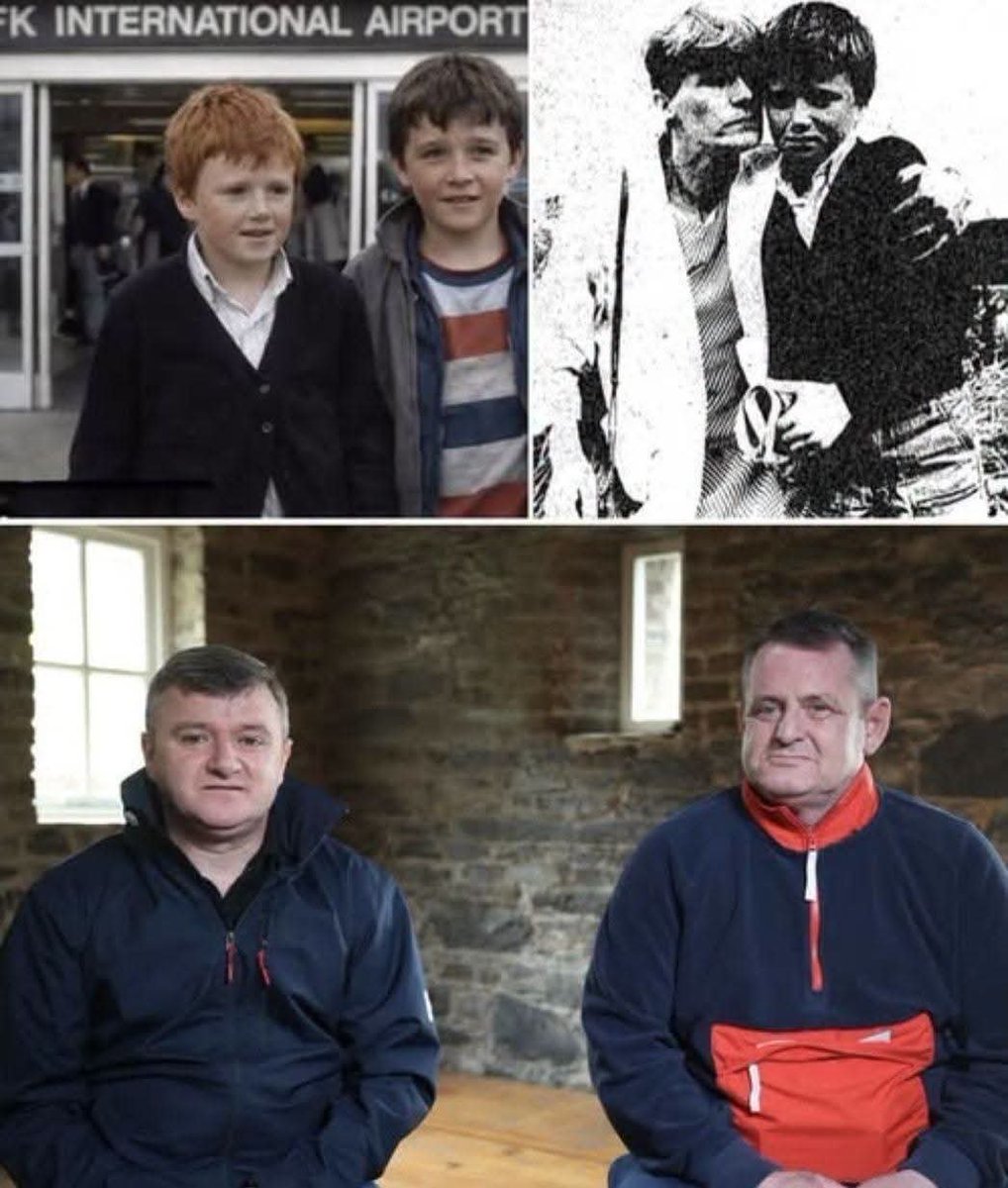
Two Dublin boys left home to play before dinner.
The next time their parents saw them...
They were returning from New York.
In August 1985, ten-year-old Keith Byrne’s mother told him not to go far because dinner was nearly ready.
Keith met his 13-year-old friend, Noel Murray, and the two boys began an adventure so unbelievable that even Margaret Thatcher reportedly questioned whether it had really happened.
They had no passports.
No tickets.
Almost no money.
But Keith had one dream.
He wanted to travel to America and meet B.A. Baracus from The A-Team.
The boys boarded a DART train without paying and travelled from their Dublin neighbourhood to Dún Laoghaire. From there, they slipped onto a ferry to Holyhead, avoided ticket inspectors and caught another train across Britain.
By the time they reached London, they had only a few coins collected from public fountains.
Most children would have turned around.
Keith and Noel went to Heathrow Airport.
They asked a stranger where he was travelling.
“New York,” he answered.
Perfect.
The boys followed passengers toward an Air India flight and told staff that their parents were walking behind them. Somehow, nobody demanded their documents, and the two children boarded a Boeing 747 bound for America.
During the flight, they watched the James Bond film A View to a Kill. They were also served an Indian curry that Keith later remembered as far too spicy.
“The plane was only half full, so no one came near us.”
Hours later, they landed at JFK Airport.
When an official became suspicious, the boys ran. They wandered through the airport before eventually heading outside, amazed by New York’s yellow taxis and enormous buildings.
A police officer stopped them and asked where they were going.
They claimed they were meeting their mother in the city.
After more questions, the truth finally came out.
They were alone.
The boys were taken to a police station while authorities contacted Ireland, Britain and their terrified families. Because an Air India aircraft had been bombed only weeks earlier, officials carefully investigated whether their journey had any dangerous motive.
It did not.
They were simply two children looking for B.A. Baracus.
Air India placed them in a guarded suite at a five-star hotel, where they were given movies, McDonald’s and more food than they could eat.
“They fed us like lords. We loved it.”
Their guards even took them sightseeing and bought them “I Love New York” shirts before they were flown home to an enormous crowd of reporters.
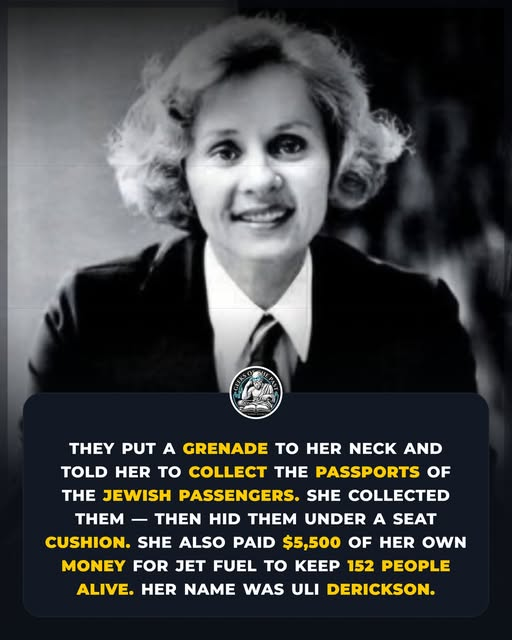
Her name was Uli Derickson.
She was born in Germany, immigrated to America, married, had a young son in New Jersey, and worked as a purser for TWA. On the morning of June 14, 1985, she was working a scheduled flight from Athens to Rome — breakfast trays being cleared, coffee smell in the cabin, 153 passengers settling into their seats.
Then two men sprinted up the aisle.
One held a 9mm pistol. The other held a grenade with the pin already pulled. They slammed Uli against the galley wall, forced their way into the cockpit, struck the pilot with the gun, and ordered the aircraft diverted to Beirut. The hijackers spoke Arabic and German. Of the entire crew, only Uli spoke German.
She became the sole line of communication between the men with the weapons and the people in the seats.
The first test came quickly. The hijackers ordered her to collect all passports and separate out those belonging to Jewish passengers. She walked down the aisle with a plastic bag, opening document after document. When she found passports with Israeli stamps or Jewish-sounding names, she did not put them in the bag.
She slipped them under an empty seat cushion.
She handed the bag to the hijackers. They didn't notice the missing names.
The plane flew erratically — Beirut to Algiers and back, over and over, for more than two weeks. In Algiers, the fuel ran out. The ground crew refused to pump without immediate payment. The hijackers threatened to start executing passengers. TWA had no mechanism to authorize an emergency international transaction in real time.
Uli reached into her purse and pulled out her personal Shell Oil credit card.
She handed it out the cockpit window. The ground crew ran the charge — $5,500 for jet fuel. The pump turned on. The plane could keep flying. One hundred fifty-two people stayed alive because a flight attendant had a credit card.
On the tarmac in Beirut, the hijackers identified an American Navy diver named Robert Stethem — 23 years old, unarmed, his military ID giving him away. They bound his hands with elastic luggage cords and beat him with metal armrests torn from the seats. Uli physically inserted herself between the blows and the passenger, absorbing hits to her own body trying to shield him.
It wasn't enough. They shot Robert Stethem and threw his body onto the tarmac. Uli was forced to close the door behind him.
She sat in the jump seat, covered in his blood. One of the hijackers pointed his gun at her and demanded she sing him a German folk song to calm his nerves.
She sang "Muss i denn."
Her voice shook. He lowered the weapon.
For 17 days she stood in that aisle. She translated demands to control towers. She negotiated the release of passengers at each stop. She bandaged head wounds with cloth torn from galley supplies. She wiped blood from people's faces. She kept talking, kept translating, kept the fragile thread of communication from breaking — because if it broke, people would die.
By the end, 152 of the 153 people on that plane were alive.
When she stepped off the aircraft in Algiers on the final day, she was dehydrated and bruised, still carrying the plastic bag of hidden passports.
She went back to New Jersey. She went back to work. She transferred to Delta Airlines and flew international routes until she retired.
In 1989, she stood in a German courtroom and pointed her finger at the man who had held the grenade to her neck and forced her to sing in a blood-stained cabin. He received a life sentence. He was paroled in 2005.
The Navy named a ship after Robert Stethem. The USS Stethem still sails.
Uli Derickson received the Department of Transportation's Award for Outstanding Achievement — one of the few civilians ever to receive it.
She was ordered to hand over the passports of the people they wanted to kill.
She hid them under a seat cushion instead.
🚨UNBELIEVABLE: 18-year-old mother Sarah McKinley made a split-second decision to defend her 3-month-old infant when an intruder armed with a 12-inch hunting knife tried breaking into her home on New Year's Eve.
Just one week after losing her husband to cancer, Sarah was home alone with her baby in Blanchard, Oklahoma, when two men began aggressively trying to smash through her doors. Panicked, she barricaded the door with a couch, grabbed a shotgun, and called 911. In audio that quickly went viral across the nation, Sarah asked the operator: "I've got two guns in my hand, is it OK to shoot him if he comes in this door?"
The dispatcher responded: "You do what you have to do to protect your baby." The moment the intruder kicked through the door with the knife raised, Sarah fired, stopping the threat instantly. Prosecutors later ruled her actions completely justified under home defense laws.
A mother's instinct and the fundamental right to protect your family in your own home.
Welcome to Ireland....
- Your taxi driver from the airport is Nigerian man.
- When you arrive at the hotel, you are checked in by a Ukrainian woman.
- After settling in you take a walk to Arnotts, but there are 40 people from the Congo outside doing a voodoo ritual because one of their people died while shoplifting.
- Later, on the way to an Irish pub, you pass the mosque, the vape shops, the kebab shops and oh so many Turkish barbers.
- When you arrive, you are served a terrible pint of Guinness by a middle-aged Brazilian woman.
- Afterwards, you want some fish and chips, but the chip shop is owned by a group of men from Afghanistan so you return to the hotel and go to sleep.
- The next day you visit the Phoenix Park, but you leave immediately after you are approached by what looks like a gang of Somali pirates.
- So you head to the historic GPO, the base of the Irish rebellion, to take some pictures you will cherish forever. Unfortunately it's dole day, so 200 Africans are queueing up outside for their free money.
- For your second night you travel to rural Ireland, where you are due to meet Paddy, your Airbnb owner. But it turns out Paddy is actually an Indian man and he owns 12 Airbnb's in this small Irish town.
- On day 3 you wake up and travel to the scenic Powerscourt Waterfall, but you are greeted by 500 Pakistanis who are cooking goats and blasting Islamic music.
- On the taxi trip back you are driven by a 73-year-old man from Bangladesh who arrived in Ireland 3 weeks ago. His cousin is the Mayor of a rural village in County Cork.
- Becoming frustrated with your "Irish trip" you decide to spend the night in, and luckily the Rose of Tralee is live on TV, but the Dublin Rose is a Somali Muslim.
- Day 4, you wake up and book a flight to Poland. You will never visit Ireland again.
🚨 BREAKING:
Meanwhile in China 🇨🇳
A new Chinese achievement for humanity:
Zhejiang University develops a liquid to treat and repair teeth, where just two drops can regrow tooth enamel very similar to the original.
Sehr traurig.
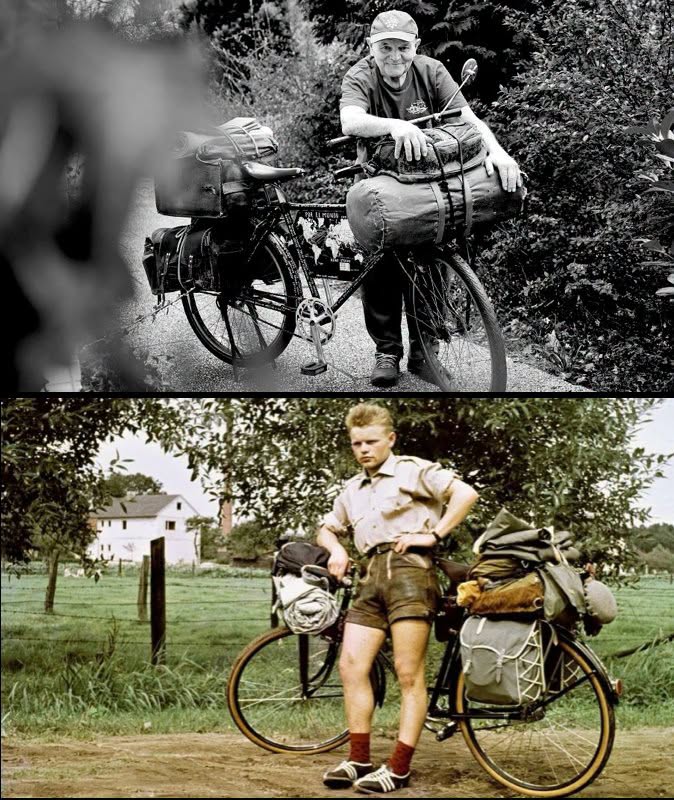
Vor wenigen Tagen ist der legendäre Radreisefahrer Heinz Stücke gestorben. 51 Jahre lang radelte er ohne Unterbrechung um die Welt, auf allen Kontinenten und legte dabei unglaubliche 648.000 Kilometer zurück. Heinz hat eine ganze Generation mit seinen Reisen inspiriert.
Das untere Bild zeigt Heinz im Jahr 1962 bei seinem Aufbruch, lange bevor Social Media jeden Winkel dieser Erde ausgeleuchtet hatte. Es muss eine unglaubliche spannende und abenteuerliche Zeit zum Radreisen gewesen sein.
Es gibt eine ganz tolle Dokumentation über Heinz und seine Reise auf Netflix. „The man who wanted to see it all“. Sie begleitet ihn nach seiner Rückkehr nach über 50 Jahren und blickt auf seine Reise und sein Leben zurück. Große Empfehlung!
Jetzt ist er im Alter von 86 Jahren in seiner Heimat Hövelhof gestorben. Möge er in Frieden ruhen.
Quelle: Facebook
Jane Michelle Arc, a trans identifying software engineer from San Francisco, “fled” the US last year after Trump won, seeking asylum in the Netherlands over fears of persecution
Now placed in Ter Apel, the country’s largest asylum center, surrounded by migrants from war torn regions, the Red Cross has pulled its own aid workers out due to violence, and stabbings have become routine
Arc’s own words: “I will be hurt or killed”
Turns out the danger wasn’t Trump. It was never Trump