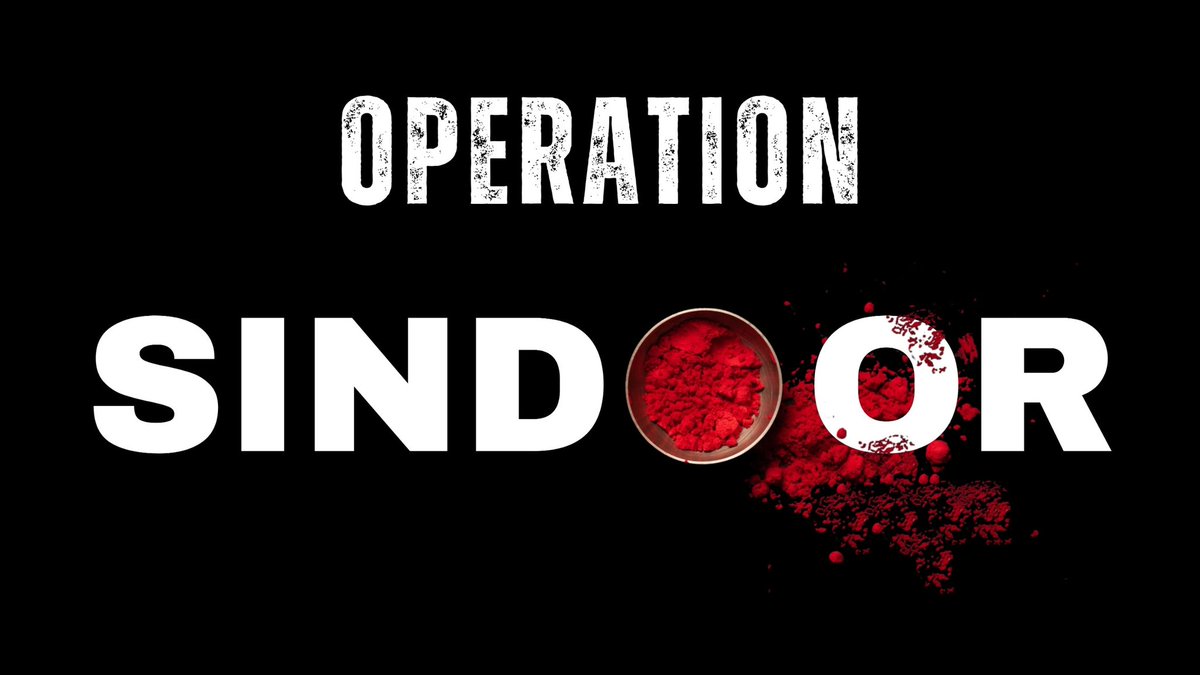
OPERATION SINDOOR
#JusticeServed
Target 3 – Mehmoona Joya Terrorist Camp at Sialkot.
Distance – 12 Km from International boundary.
Key training centre of Hizbul Mujahideen.
Used as control centre for revival of terrorism in Jammu and Kashmir.
DESTROYED AT 1.11 AM on 07 May 2025.
#OperationSindoor
#IndianArmy
@DefenceMinIndia@SpokespersonMoD@HQ_IDS_India@IAF_MCC@indiannavy
OPERATION SINDOOR
#JusticeServed
Target 2 – Gulpur Terrorist Camp at Kotli.
Distance – 30 Km from Line of Control (POJK).
Control Center and Base of Lashkar-e-Taiba (LeT)
Used for revival of terrorism in Jammu and Kashmir.
DESTROYED AT 1.08 AM on 07 May 2025.
#OperationSindoor
#IndianArmy
@DefenceMinIndia@SpokespersonMoD@HQ_IDS_India@IAF_MCC@indiannavy
OPERATION SINDOOR
#JusticeServed
Target 1 – Abbas Terrorist Camp at Kotli.
Distance – 13 Km from Line of Control (POJK).
Nerve Centre for training suicide bombers of Lashkar-e-Taiba (LeT).
Key training infrastructure for over 50 terrorists.
DESTROYED AT 1.04 AM on 07 May 2025.
#OperationSindoor
#IndianArmy
@DefenceMinIndia@SpokespersonMoD@HQ_IDS_India@IAF_MCC@IndiannavyMedia
"Travel is fatal to prejudice, bigotry, and narrow-mindedness. Many of our people need it sorely on these accounts. Broad, wholesome, charitable views of men and things cannot be acquired by vegetating in one little corner of the earth all one's lifetime." -Mark Twain
To all those hounding for a quote -
“The mainstream media at this point is nothing but a miscommunication arm of the ruling party. They are vultures who report on issues that dont matter to the people of this country. If they all shut shop from tomorrow till eternity they will be doing favour to the country, its people & their own children”
Every community needs a soul, and that soul is shaped by its arts and entertainment. For Gujaratis, tradition has long revolved around Garba and religious festivities—beautiful, but confined to familiar rhythms. Culture, however, is more than just tradition. It is the living, breathing essence of a people—their stories, their emotions, their imagination. And for Gujaratis, that essence has often been overshadowed by something else: commerce.
While we built empires in distant lands, we borrowed our melodies from Punjab, our emotions from Bollywood, and our cinematic grandeur from the South. We admired, consumed, and invested in others’ dreams, but rarely nurtured our own. Our wealth became our identity, and in its dazzling reflection, our artistic expression dimmed.
This is why Gujarat has yet to produce an artist who fills stadiums with nothing but their own originals, a filmmaker whose stories reshape perspectives, or a performer whose presence alone electrifies a crowd. Because for too long, art here was measured not by its depth, but by its returns. Our films thrive today not because of a cultural awakening, but because business minds finally see numbers in them—numbers that became the lifeblood of our people.
But in the cracks of this capitalistic foundation, there are rebels. The ones who don’t ask what the audience wants, but what needs to be said. The ones who create not to sell, but to shake, to move, to ignite. They are the architects of the culture we desperately need—the culture that will outlive balance sheets and quarterly profits.
Let the capitalists continue their trade, let them multiply their wealth. But let them also recognise the artists—the ones who dream in Gujarati, who bleed stories, who stand on stage and give their souls without compromise. Because no civilisation is remembered for its stock markets, but for the art it leaves behind. It’s time for Gujarat to give its artists their due.