@travisdevitt If you are active manager benchmarked against QQQ and are underweight, isn’t not owning it the same as being short? If so, reported SI prob understated.
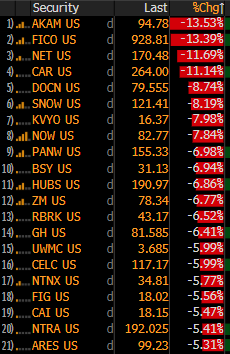
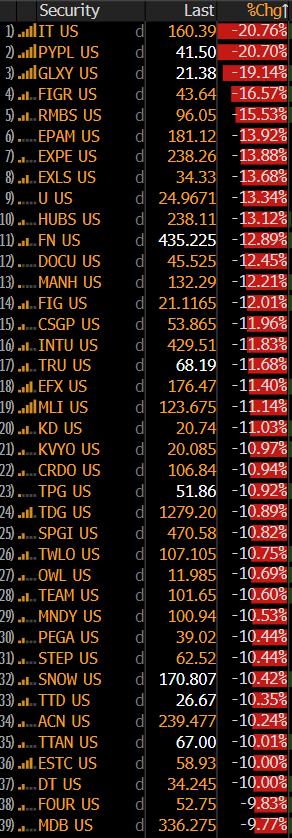
My fav part of recovery rallies is that they are 2x as ferocious as the selloffs that preceded them. Market structure has changed. Props to anyone successfully managing an idio short book.
@Bkclaims@Will_Schryver Seems like the play is: use a vehicle that has been granted low cost of capital to acquire a bunch of cyclically depressed businesses that historically have been charged a high cost of capital. Use the scale to get synergies. Wait for end mkt recovery.
@McNamara_Brief @BillAckman BTW, I totally understand why it may be a good idea to re-privatize the GSEs even if it is not the way to maximize NPV to govt.
Def think it is harder to do if hedge funds are enriched by it, esp before midterms.
What I don’t get about the Ackman GSE plan: under current PSPA terms, once GSE hit capital targets, treasury effectively sweeps ~100% of net income forever via the senior pref.
So why would the govt voluntarily deem the pref repaid and thus ending up w 80% of the GSEs (instead of 100%), while letting hedge funds capture a massive windfall?
Seems way more likely to happen via court pressure than voluntarily…and especially unlikely before midterms.
The math on Fannie and Freddie is so dislocated it looks like a pricing error.
Fannie printed $14.4 billion in net income last year. Freddie printed $10.7 billion. Combined market cap on the pink sheets right now: ~$12 billion. The market is pricing $25 billion in annual earnings at a 0.48x multiple. Find me another 0.48x earnings multiple anywhere in American finance. It doesn't exist.
The dilution fear is the reason the stock is cheap and the reason the stock is wrong. Treasury put in $187 billion. The GSEs have swept back over $300 billion since 2012. That's an 11.6% IRR. If Treasury exercises its 79.9% warrants at today's price, the government's stake is worth ~$9.6 billion. If it exercises post-relist at 10x earnings, that stake is worth $200 billion. The difference is $190 billion. Washington doesn't leave $190 billion on the table to spite penny stock holders.
Capital requirements look scary until you do the arithmetic. The ERCF says $334 billion. They have $179 billion. The FHFA can lower Tier 1 to 2.5% without Congress. New target: ~$190 billion. Gap: $11 billion. One IPO closes it. One year of retained earnings closes it twice.
G-fees are already at 65 bps. Pre-crisis they were 20. The GSEs have been charging privatized pricing inside a conservatorship for 14 years. Credit losses outside of 2008 average under 5 bps. The margin is so fat that mortgage rates don't move at all on release.
So what are you actually buying at $5? A royalty on the American mortgage system. 65 bps on $7.5 trillion in outstanding MBS. $48 billion in gross annual revenue. Under 5 bps in historical losses. The most predictable spread in finance, backstopped by a guarantee both parties have publicly committed to preserving.
JPMorgan trades at 13x and takes real credit risk. Utilities trade at 15x with half the visibility. These two trade at 0.48x collecting tolls on other people's risk.
The second those warrants convert and the NYSE listing goes live, every index fund and pension fund with a financial sector mandate has to buy. Two of the ten most profitable companies in America, sitting on the pink sheets, waiting for one signature.
@McNamara_Brief @BillAckman The market value of the equity may be worth more with SPS being deemed repaid, but doesnt the govt get more value from the current state than the one proposed by ackman?
https://t.co/1n5cALmZUr
The below is according to grok. Why/where is this wrong?
Once the GSEs hit their regulatory capital target (ERCF or any lowered version), the 2021 PSPA amendment kicks in:
• The GSEs pay quarterly dividends to Treasury equal to the lesser of:
• 10% of the senior preferred liquidation preference (annual rate), or
• The quarterly increase in the GSE’s net worth (i.e., basically that quarter’s net income).
• 2025 actual combined net income: $25.1 billion ($14.4B Fannie + $10.7B Freddie).
• Current senior preferred liquidation preference: ≈ $373 billion combined at year-end 2025 (it grew by the full $25.1B retained earnings in 2025; it was ~$348B earlier in the year).
• 10% of $373B = $37.3 billion per year — larger than the $25.1B in earnings.
Result: The binding limit is the net-worth-increase cap, so Treasury receives essentially 100% of ongoing net income as dividends each quarter.
Government makes ≈ $25 billion per year (recurring cash dividends).
The GSEs’ net worth stays flat at the capital target; all future profits flow to Treasury. No 25 bps fee exists, and there are no common dividends or warrant monetization.
The below is according to grok. Why/where is this wrong?
Once the GSEs hit their regulatory capital target (ERCF or any lowered version), the 2021 PSPA amendment kicks in:
• The GSEs pay quarterly dividends to Treasury equal to the lesser of:
• 10% of the senior preferred liquidation preference (annual rate), or
• The quarterly increase in the GSE’s net worth (i.e., basically that quarter’s net income).
• 2025 actual combined net income: $25.1 billion ($14.4B Fannie + $10.7B Freddie).
• Current senior preferred liquidation preference: ≈ $373 billion combined at year-end 2025 (it grew by the full $25.1B retained earnings in 2025; it was ~$348B earlier in the year).
• 10% of $373B = $37.3 billion per year — larger than the $25.1B in earnings.
Result: The binding limit is the net-worth-increase cap, so Treasury receives essentially 100% of ongoing net income as dividends each quarter.
Government makes ≈ $25 billion per year (recurring cash dividends).
The GSEs’ net worth stays flat at the capital target; all future profits flow to Treasury. No 25 bps fee exists, and there are no common dividends or warrant monetization.